Antoaneta’s alarm beeps faintly from the bottom bunk at 7am but we snooze through it repeatedly. There’s no rush - we’re freed from bus schedules. All we need to do is start walking.
I can’t remember the last time I felt so good waking up. My medically and Dan-Brown-adjacently aided sleep was deep and uninterrupted. I could positively spring out of bed - but it’s also nice not to. When we do finally get up I hear that Antoaneta has not shared my miraculous experience, and has been tossing and turning sleeplessly all night.
The guest house offers coffee, individually packaged muffins and chocolate croissants. Never one to demure around free food, I load up in the moment and stuff a croissant in my pocket for later - that’s what you get for individually packaging them.
Before we leave I do something deeply shameful: I leave the Devil’s Granola on the guest house counter, invisibly among the edible snacks. I could tell you I thought maybe someone else would appreciate its… uniqueness. I could tell you I had paid too much for it to just drop it in the garbage. But those would be lies. In truth I believed the only way to be rid of it for good was to pass the curse on to another.
We end up leaving the guest house around 9. Our hiking days average to about 20km. Not serious distances but we want to give ourselves time to go at a slow pace, stop as often as we’d like, and allow for some difficult terrain. The stages actually time out perfectly for our approach: no need to haul out at the crack of dawn, no need to hustle, and we tend to arrive at our destinations in the late afternoon, just enough time to admire the town, sit for a drink, and have a leisurely dinner.
Today begins with a necessary backtrack to the beachside cafe from the day before. We stop again, this time for coffee and squeezed-to-order orange juice.
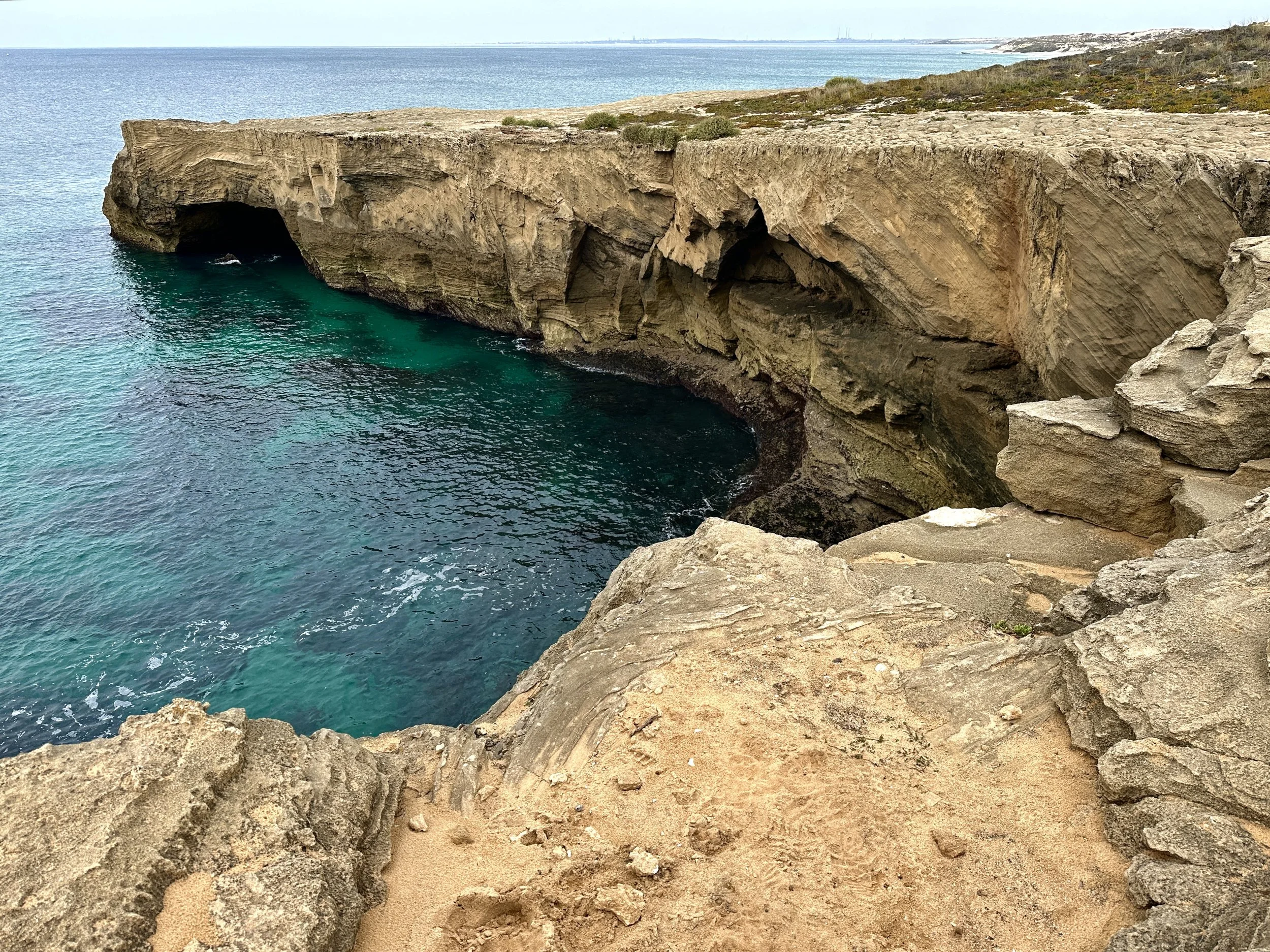
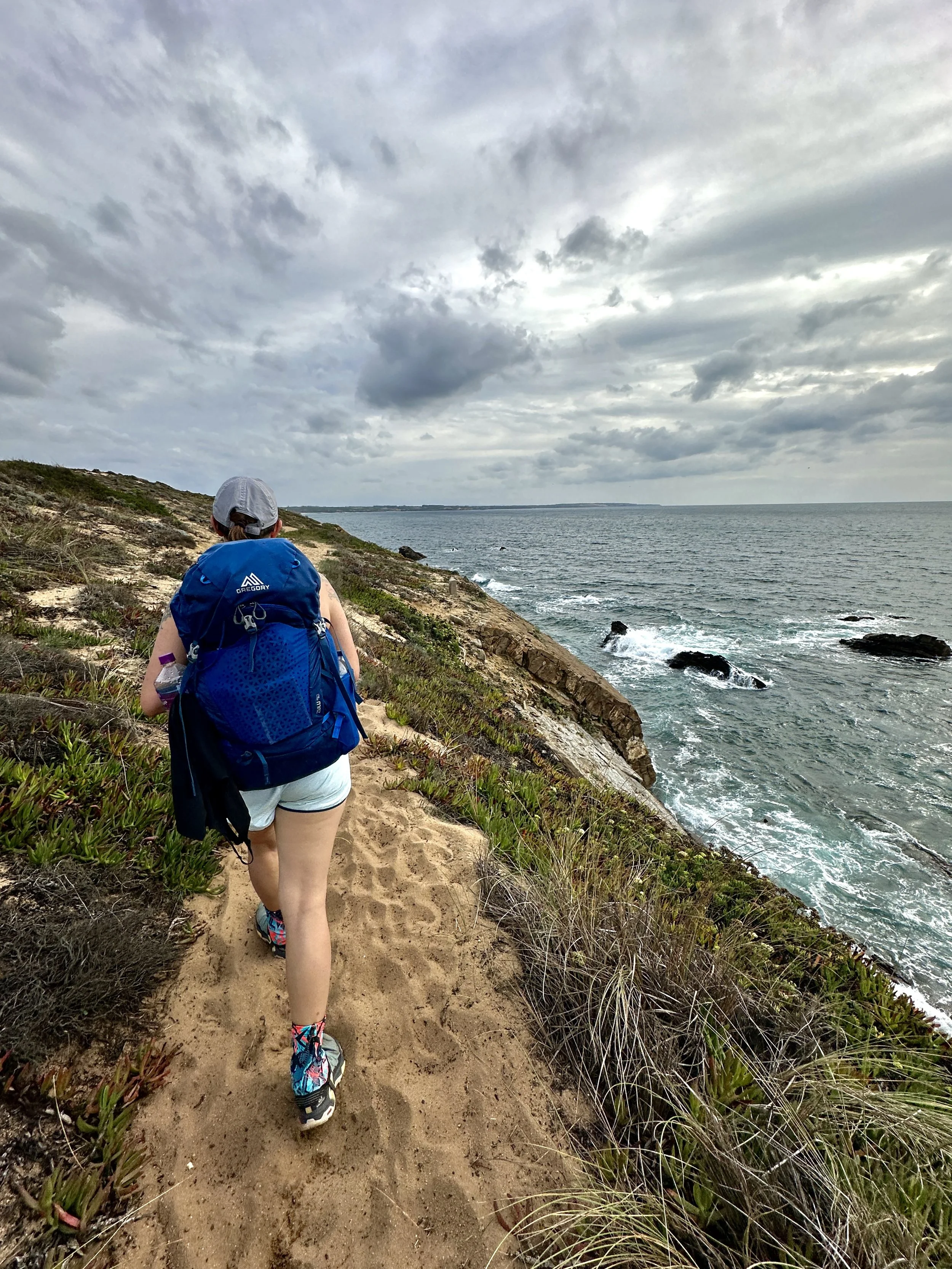
Now in new territory, the trail winds up and along the sea cliffs that will define much of the trip.
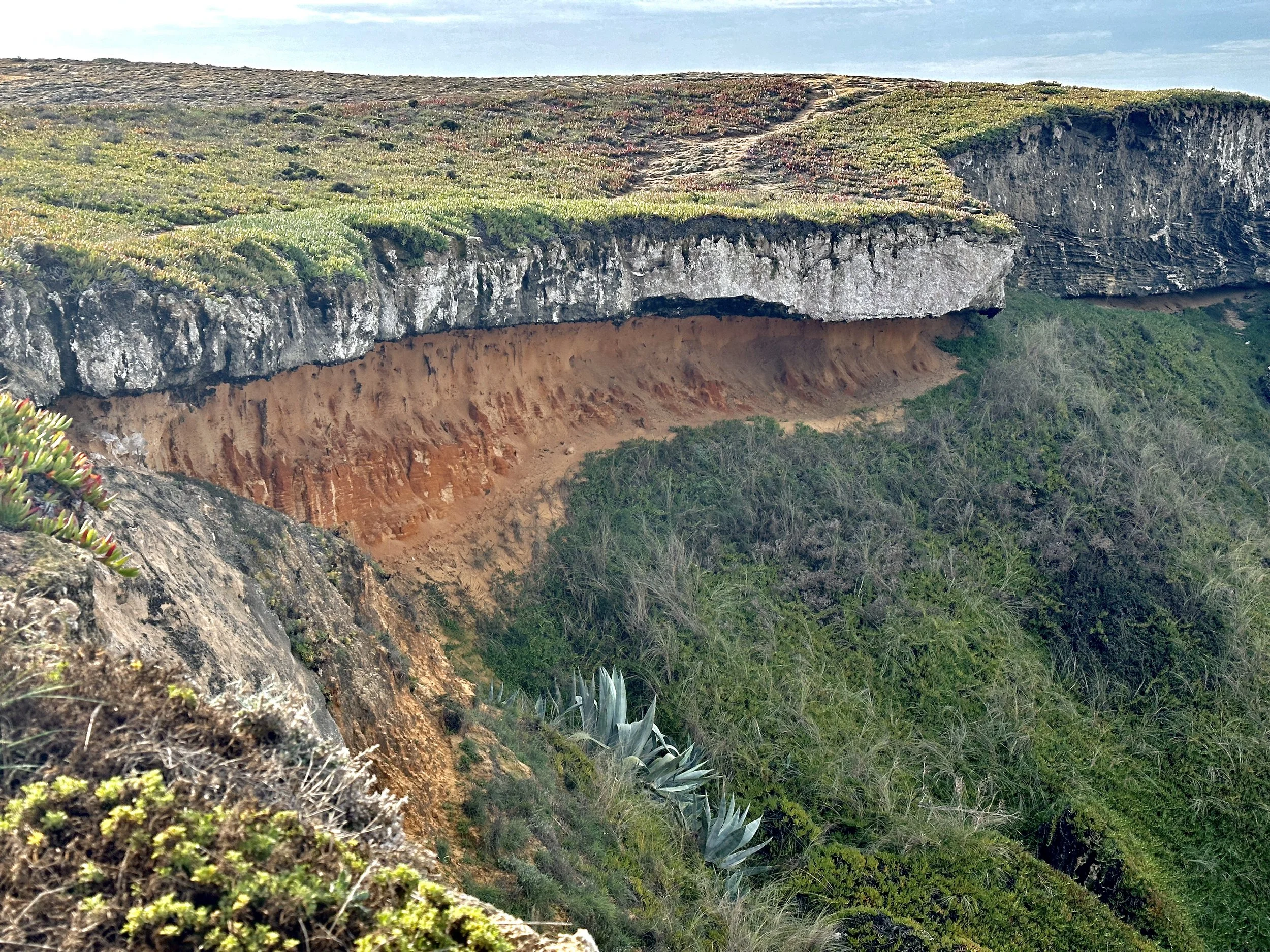
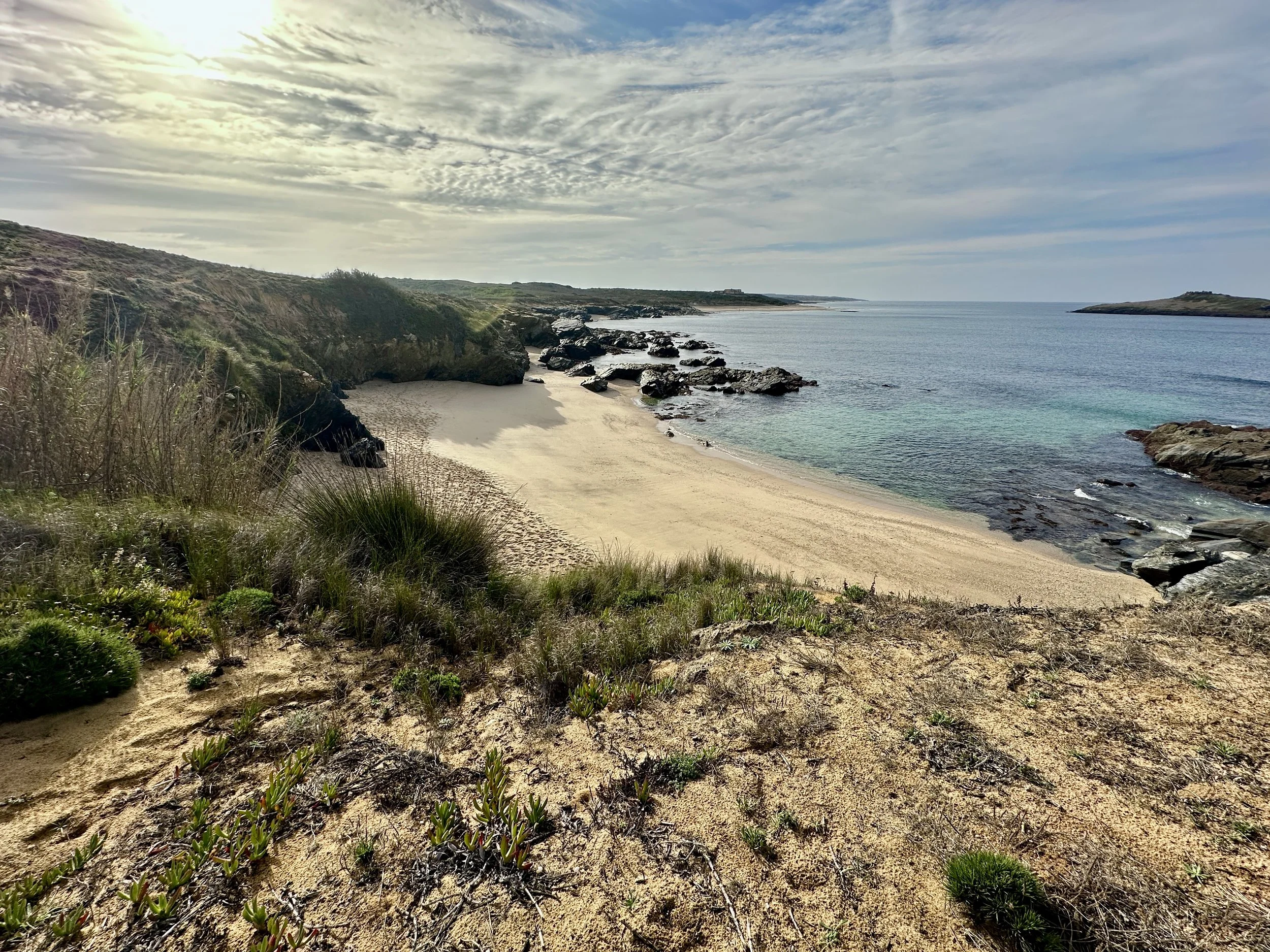
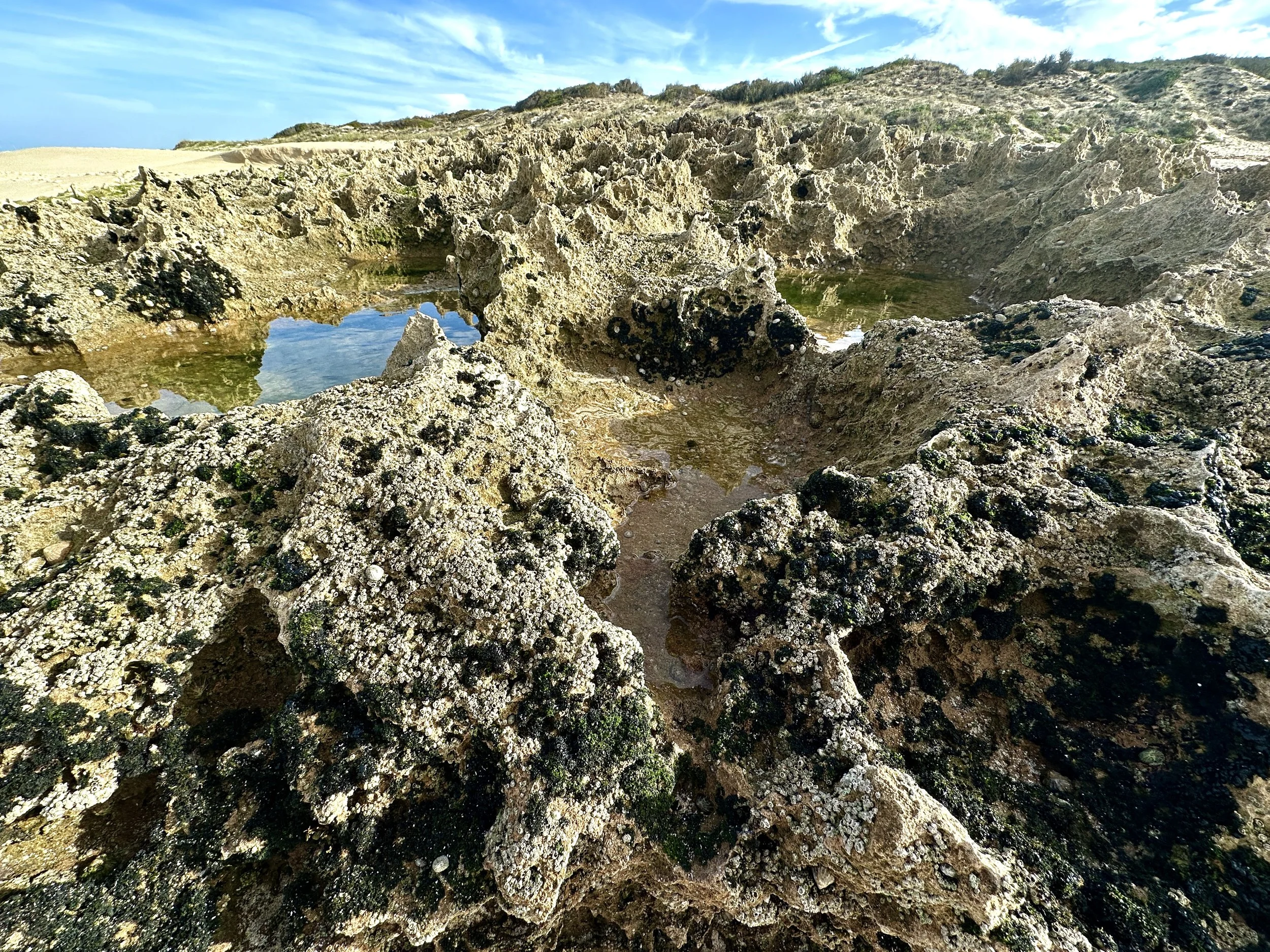
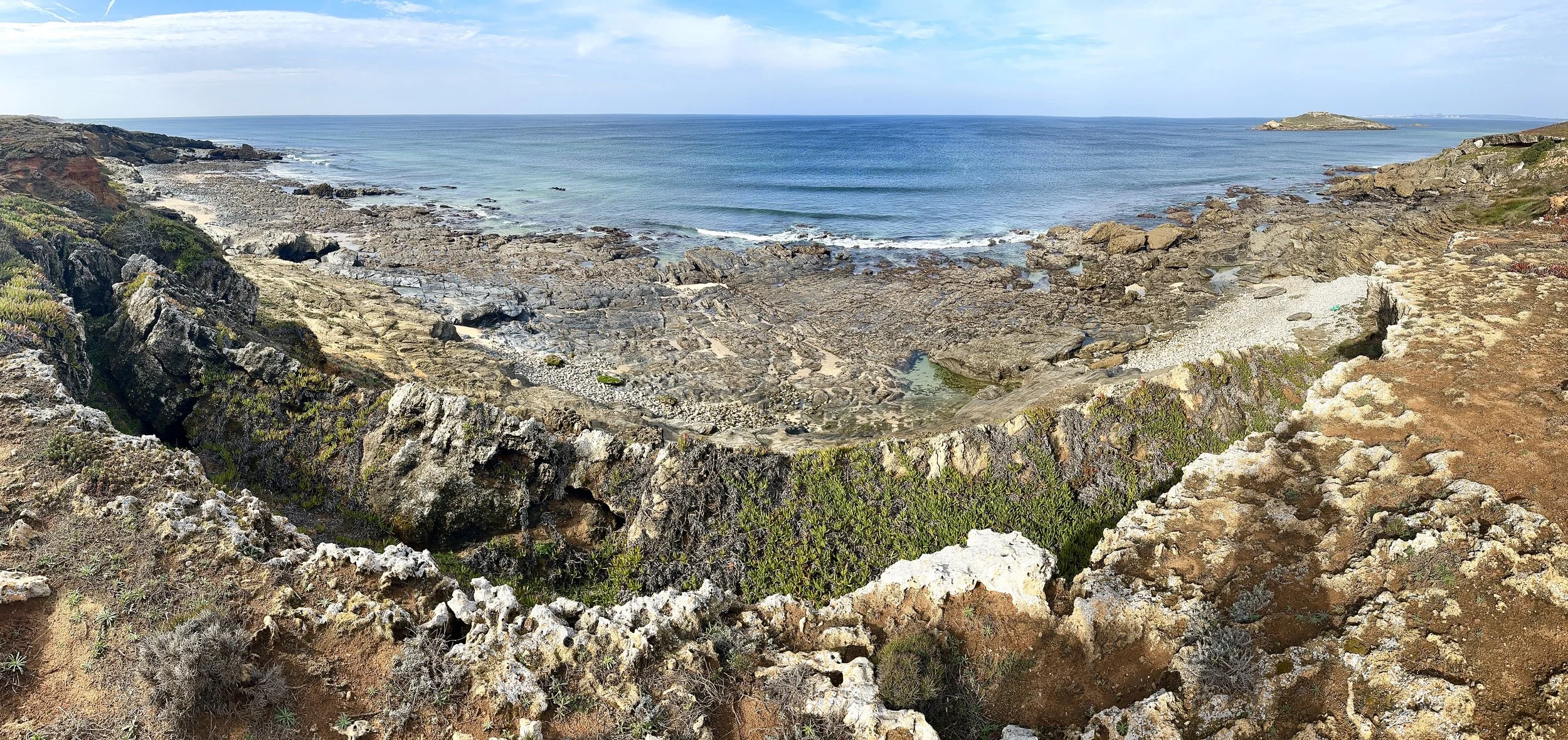
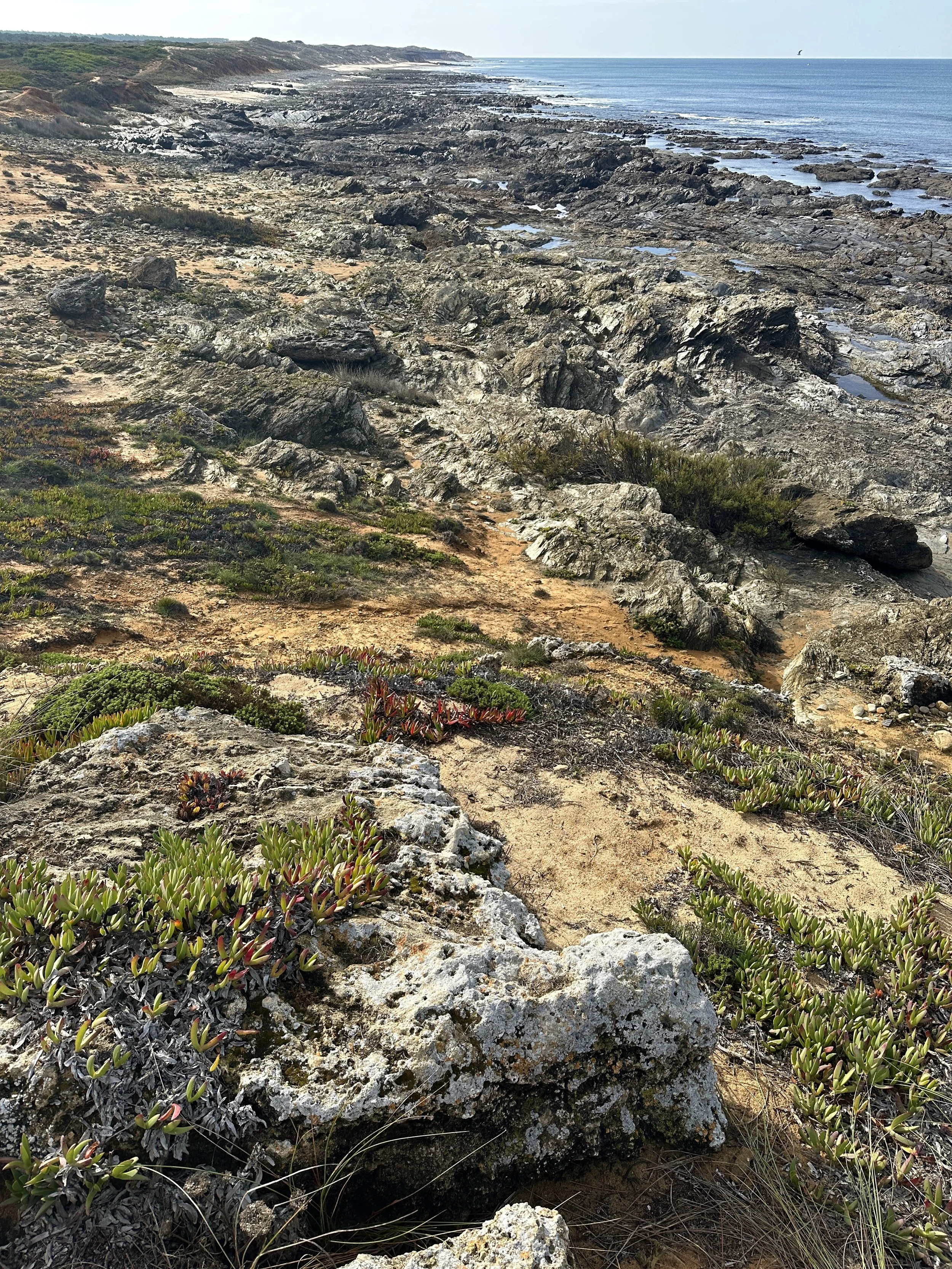
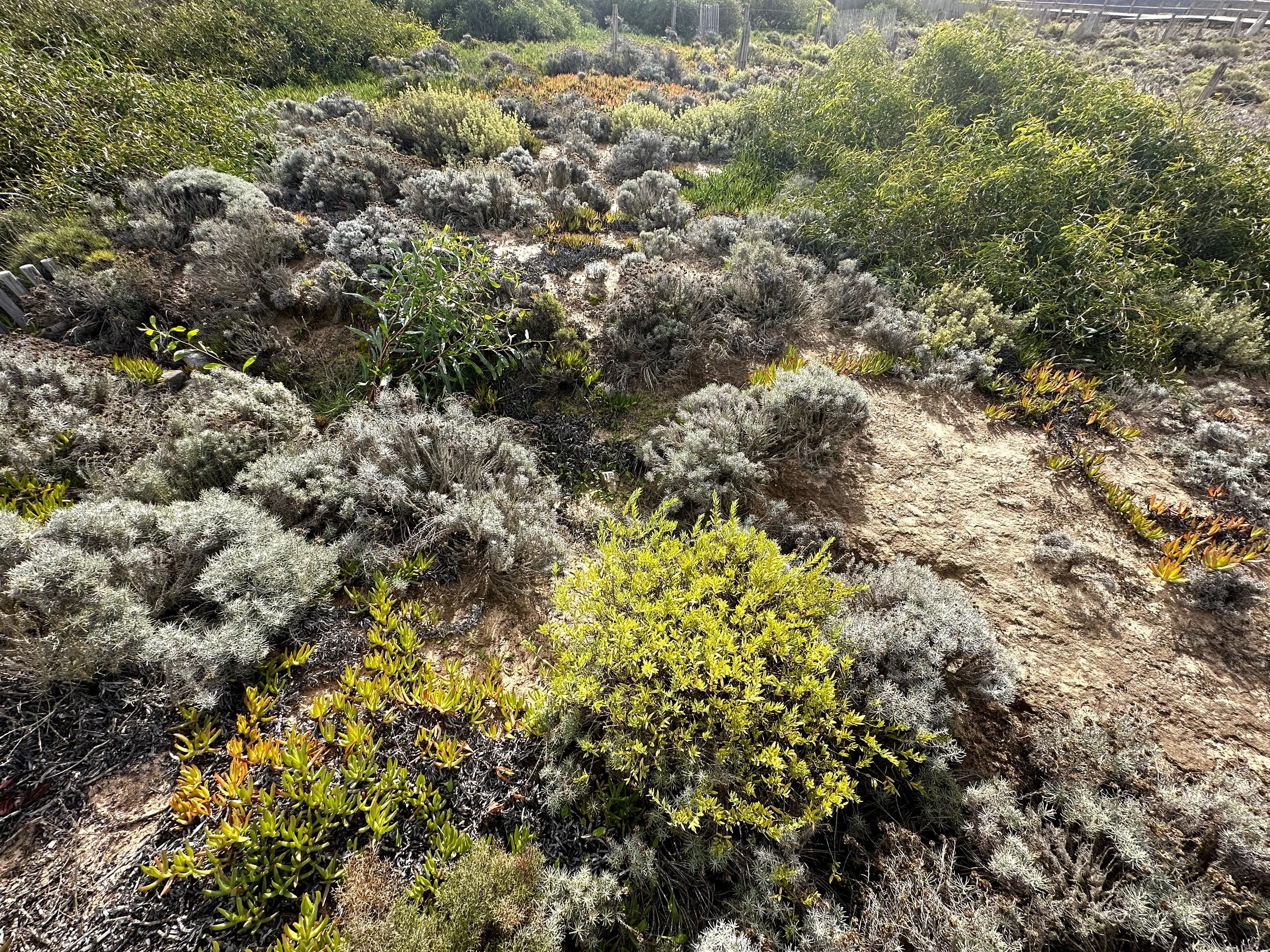
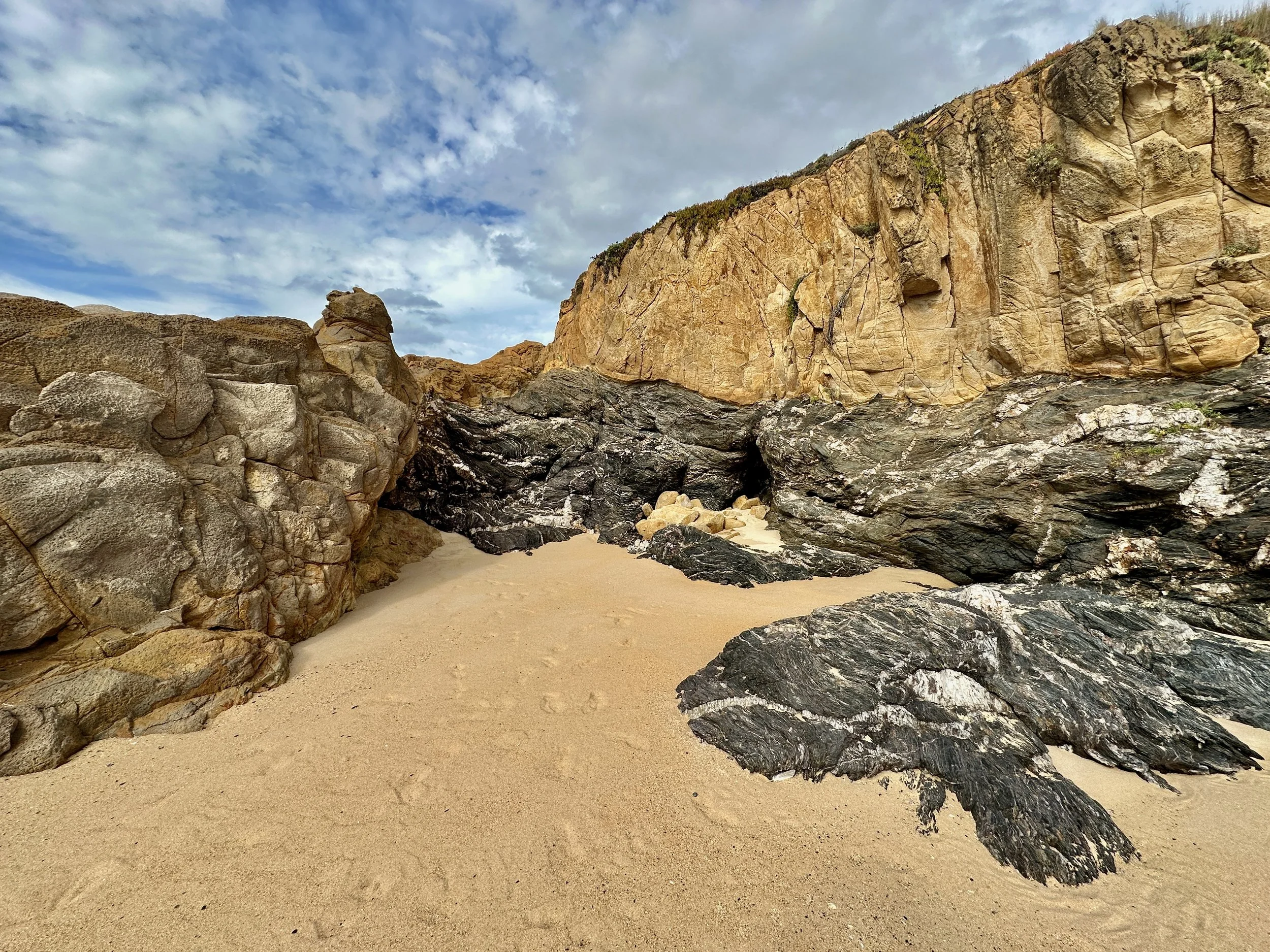
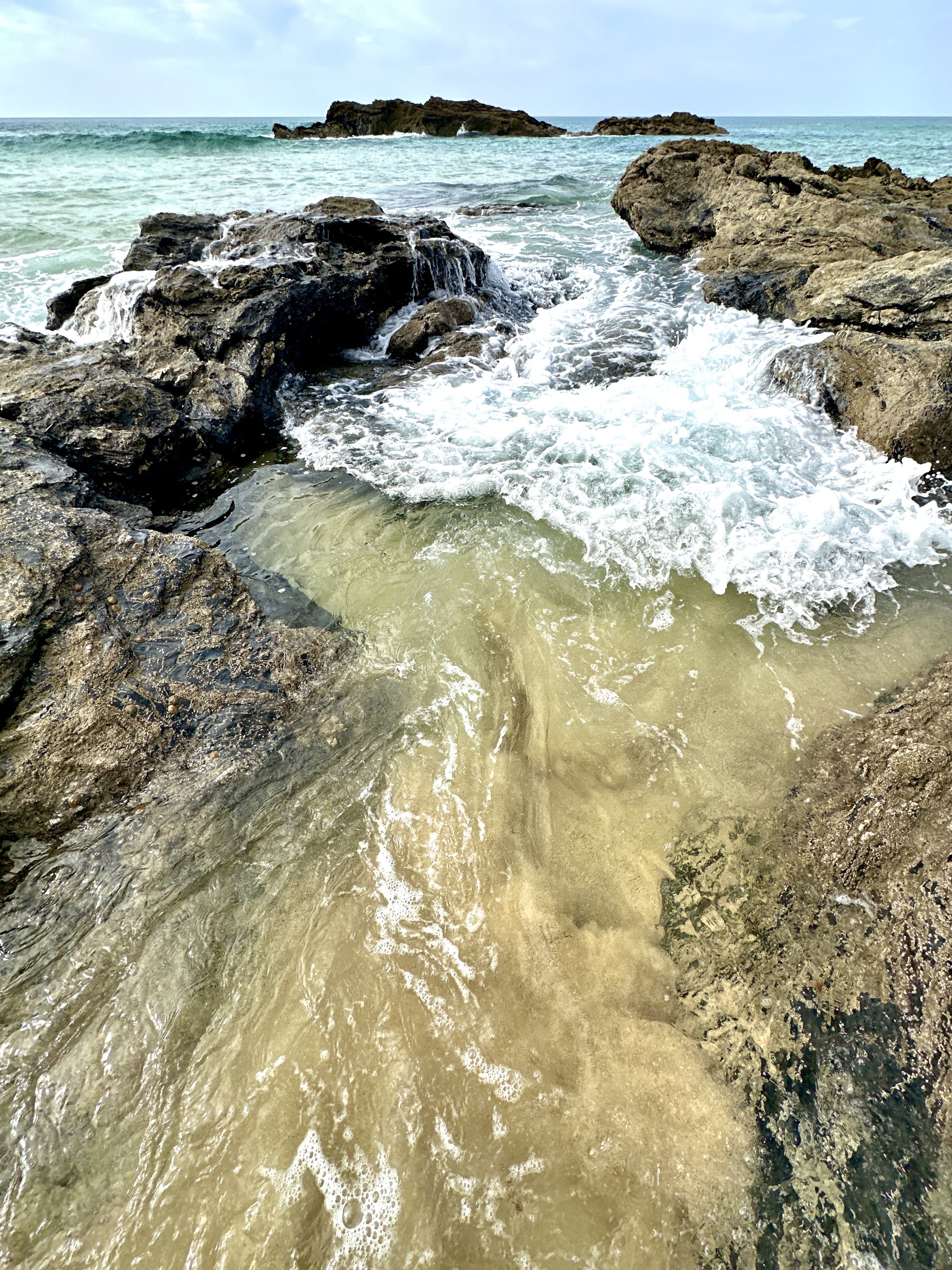
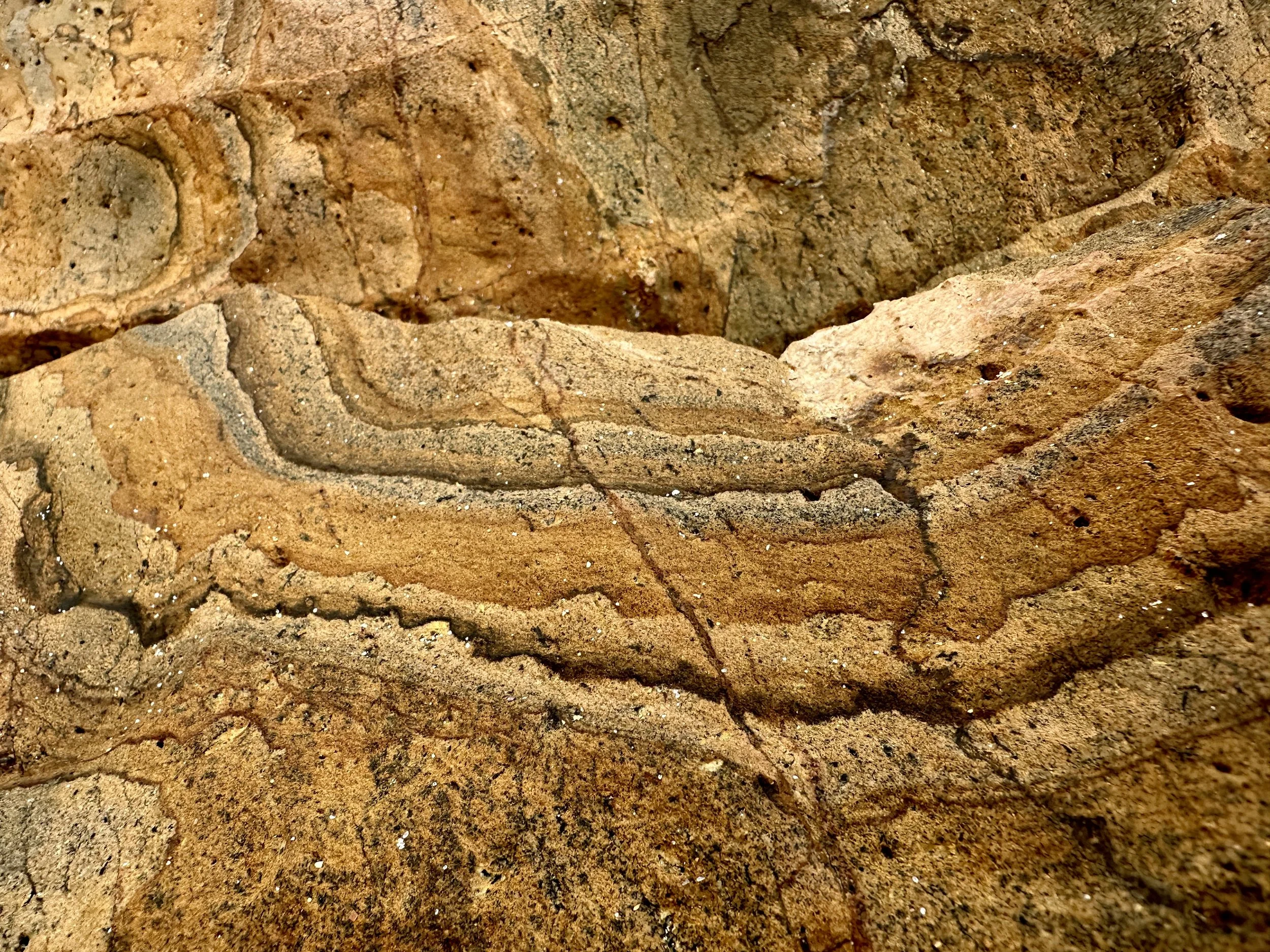
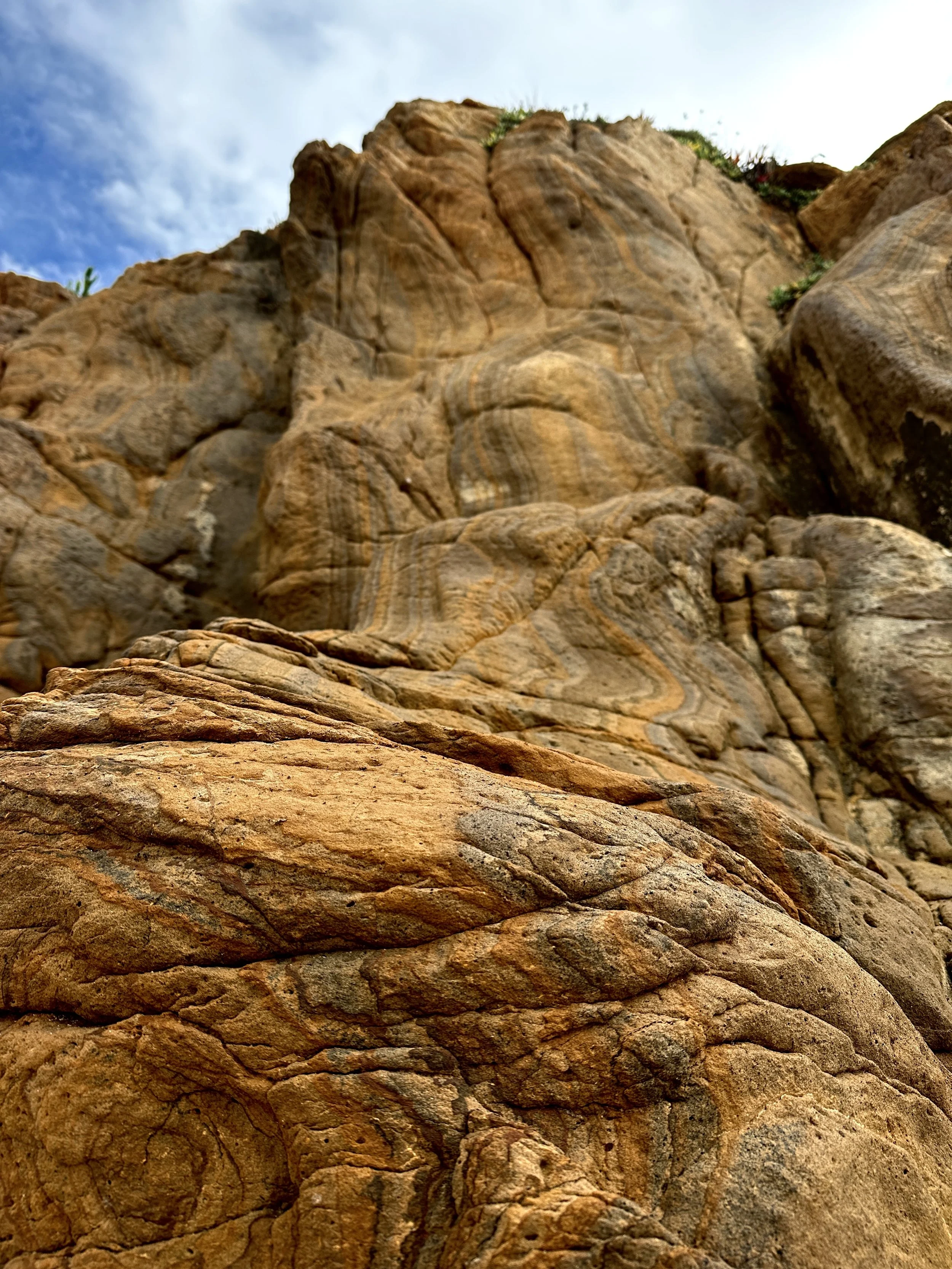
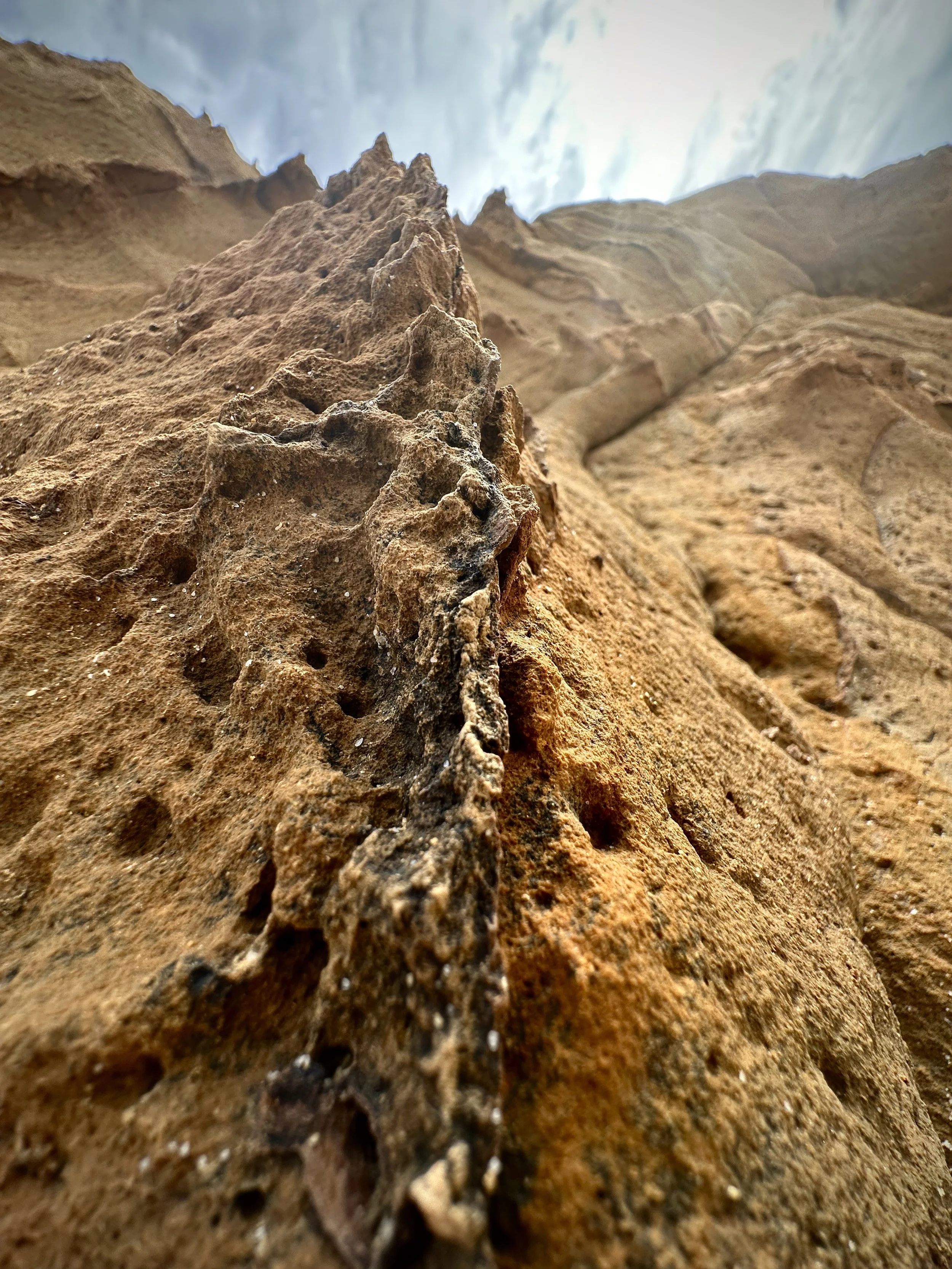
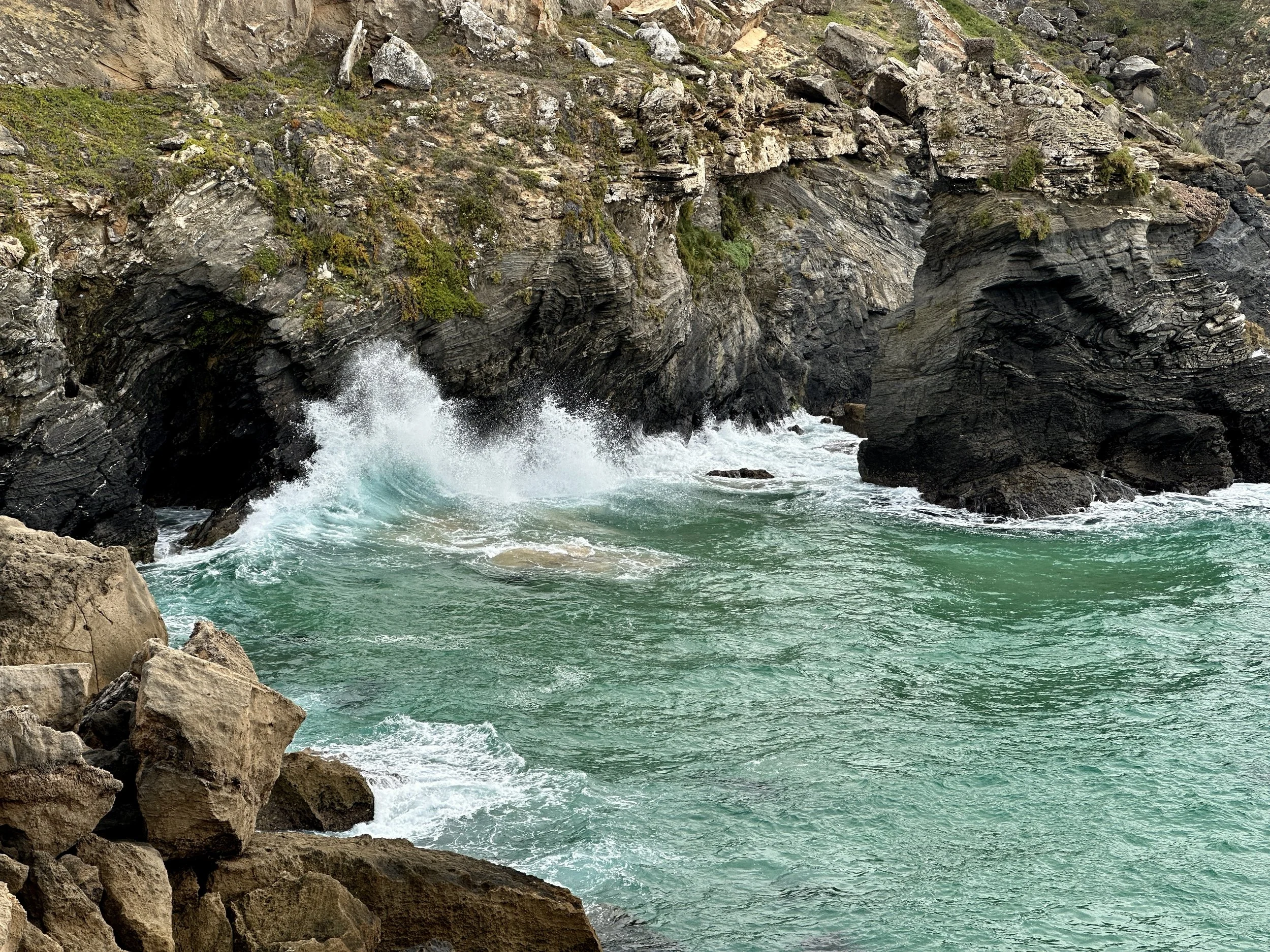
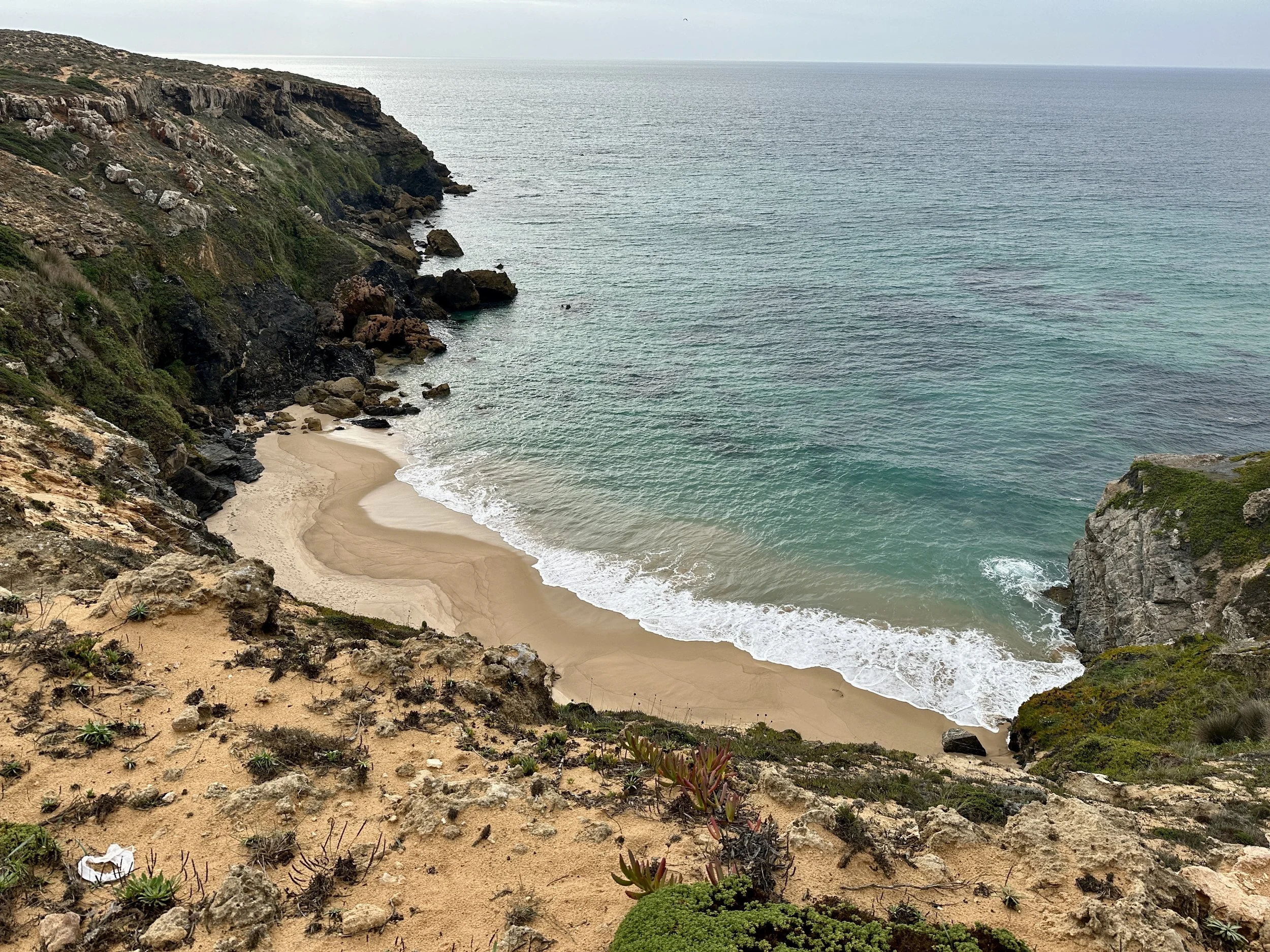
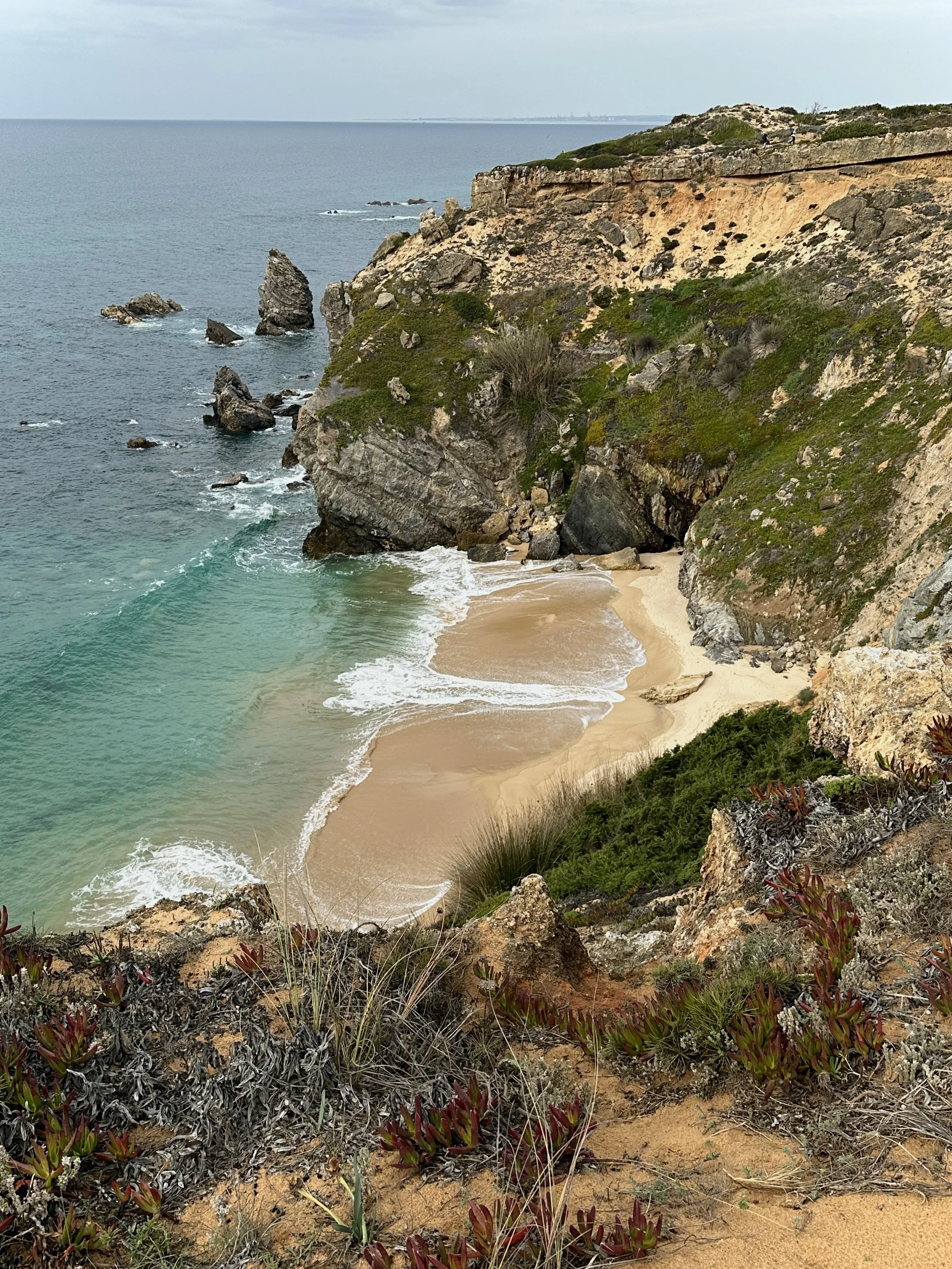
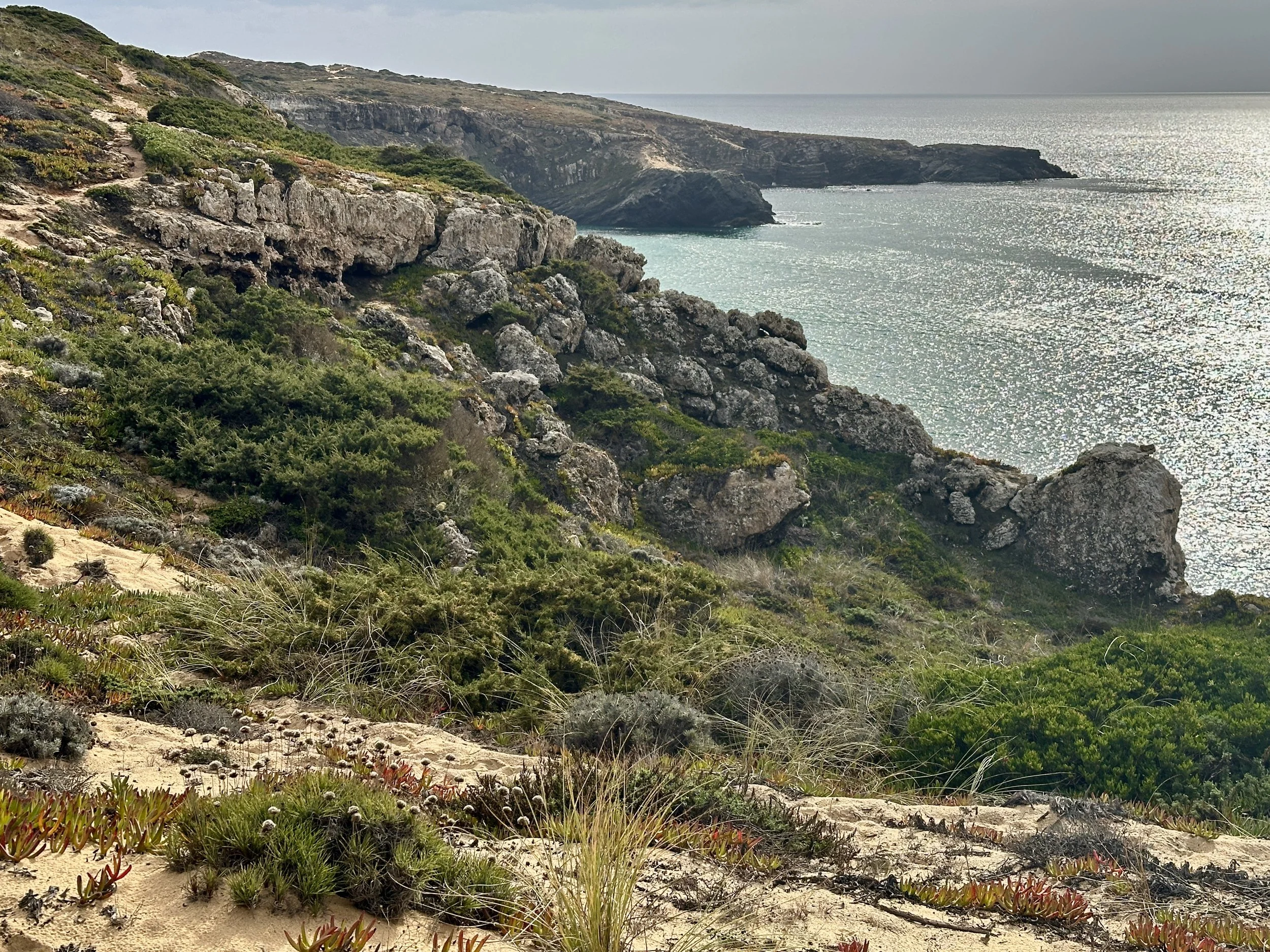
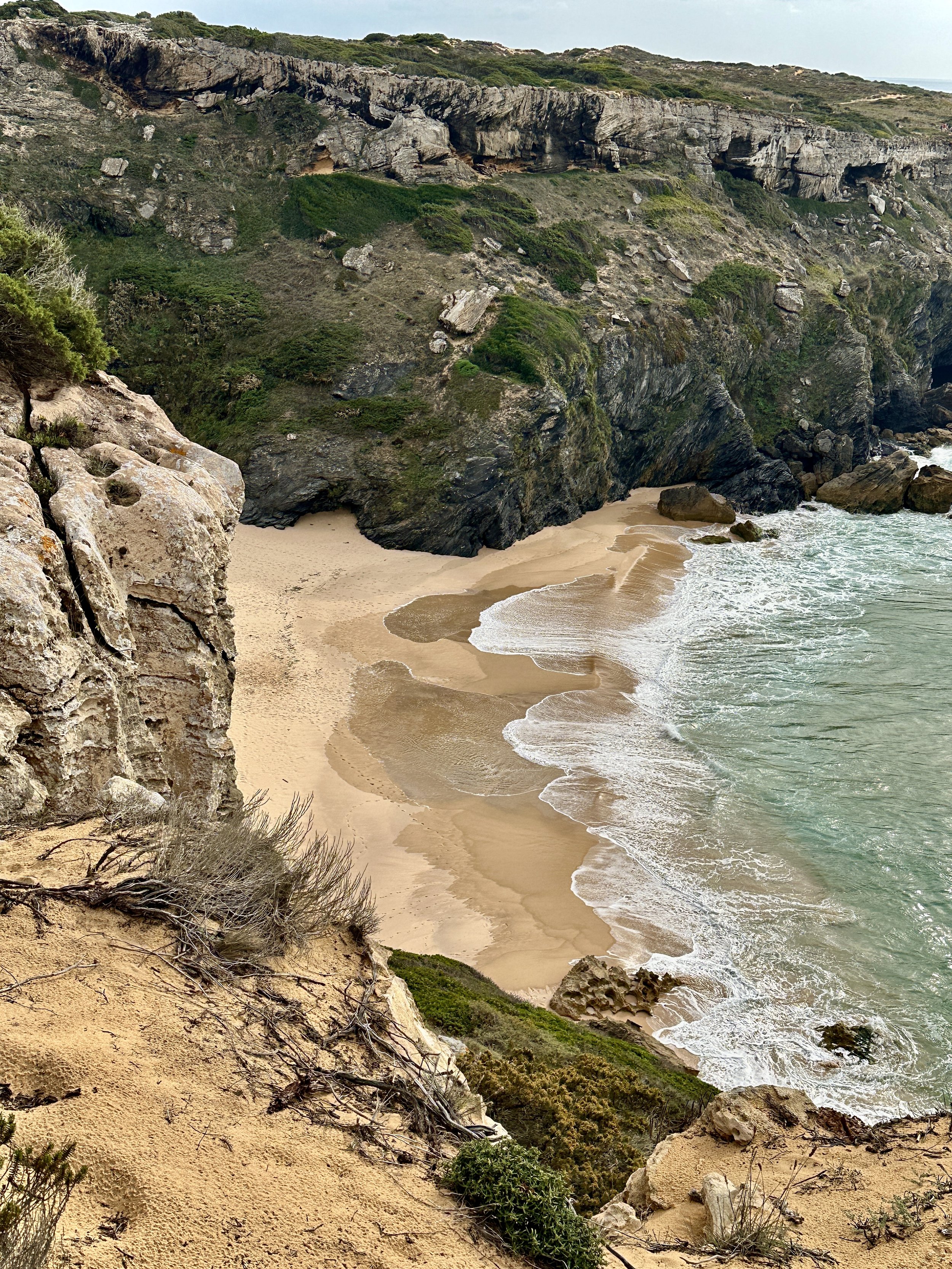
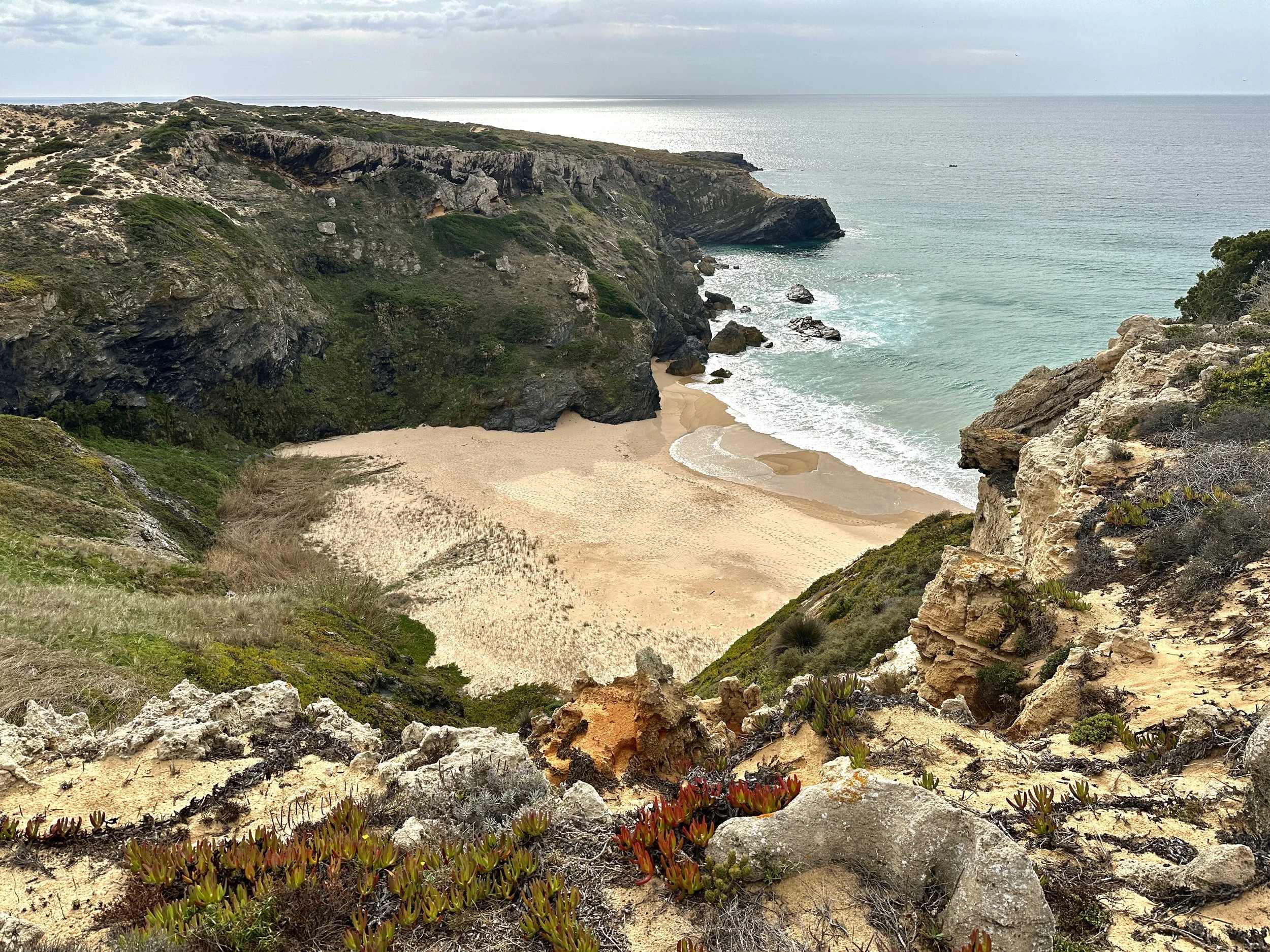
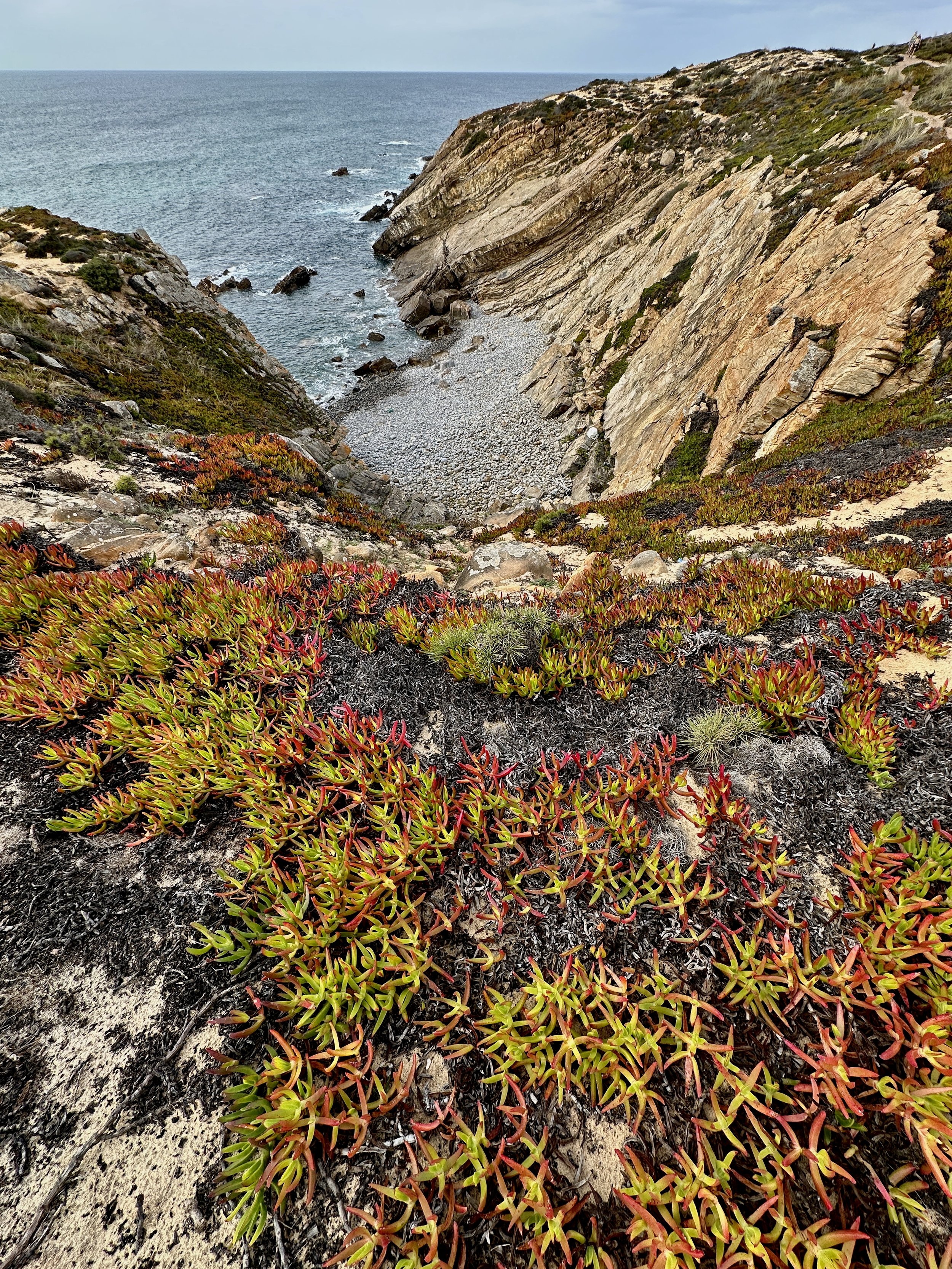
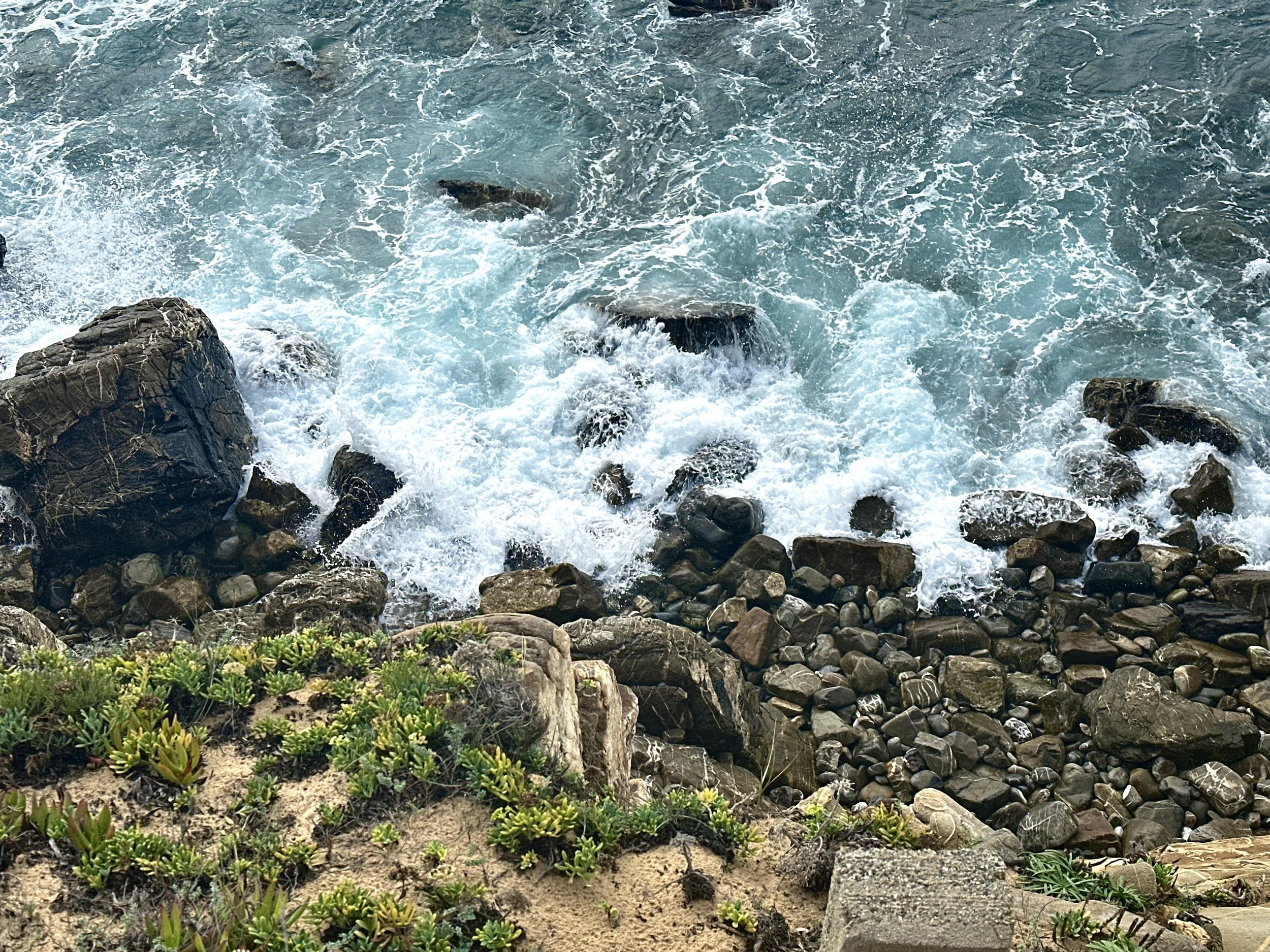
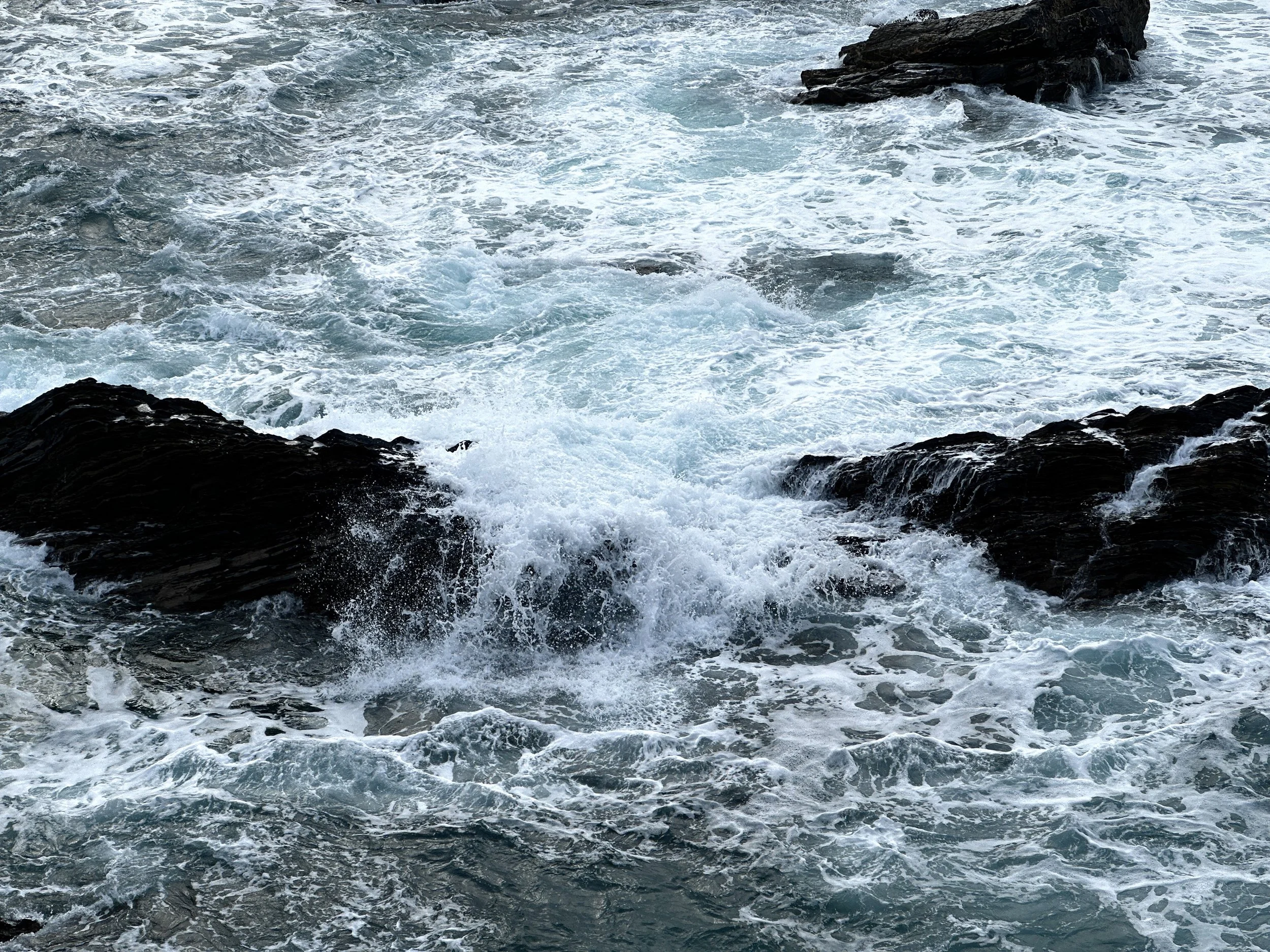
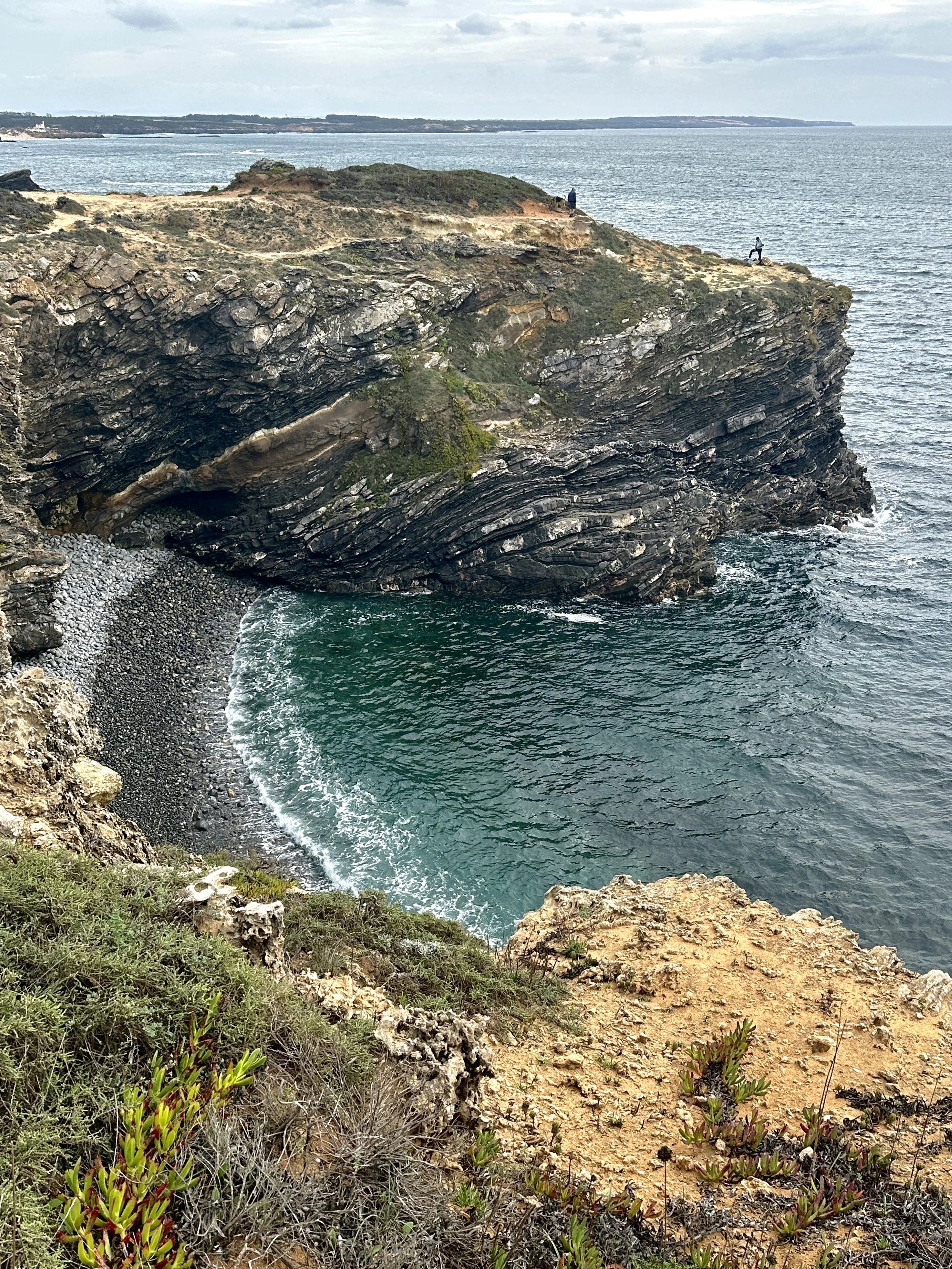
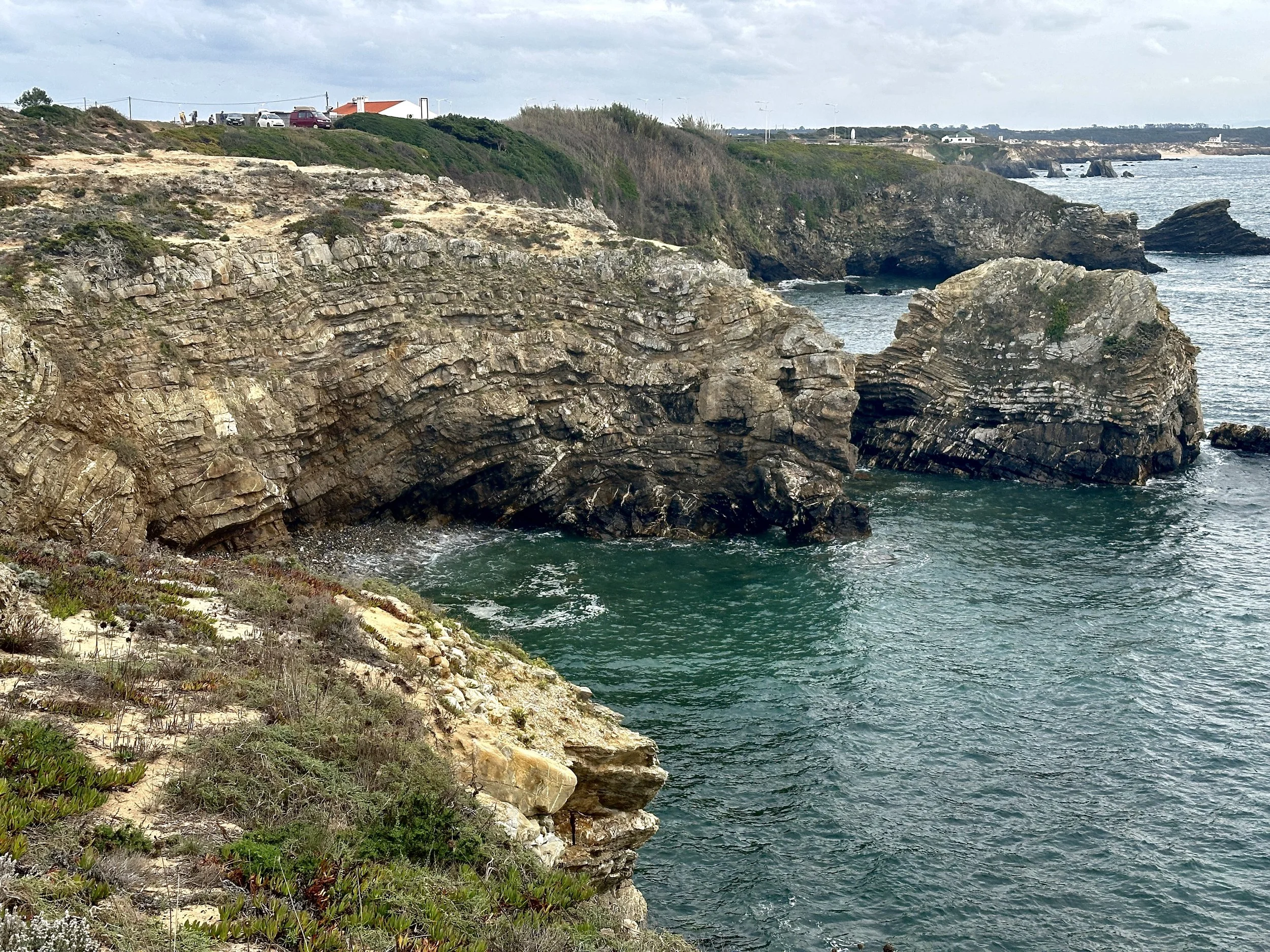
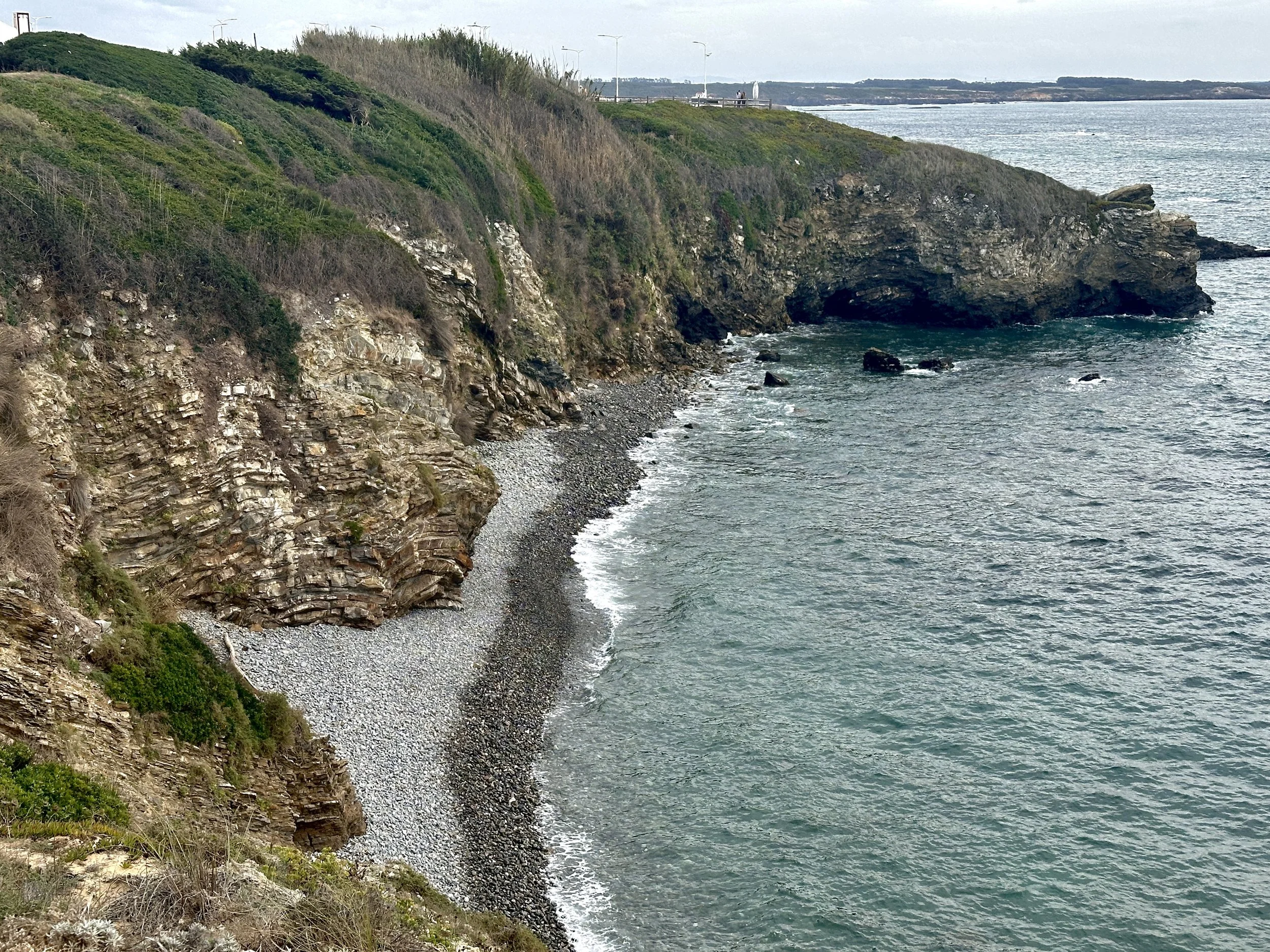
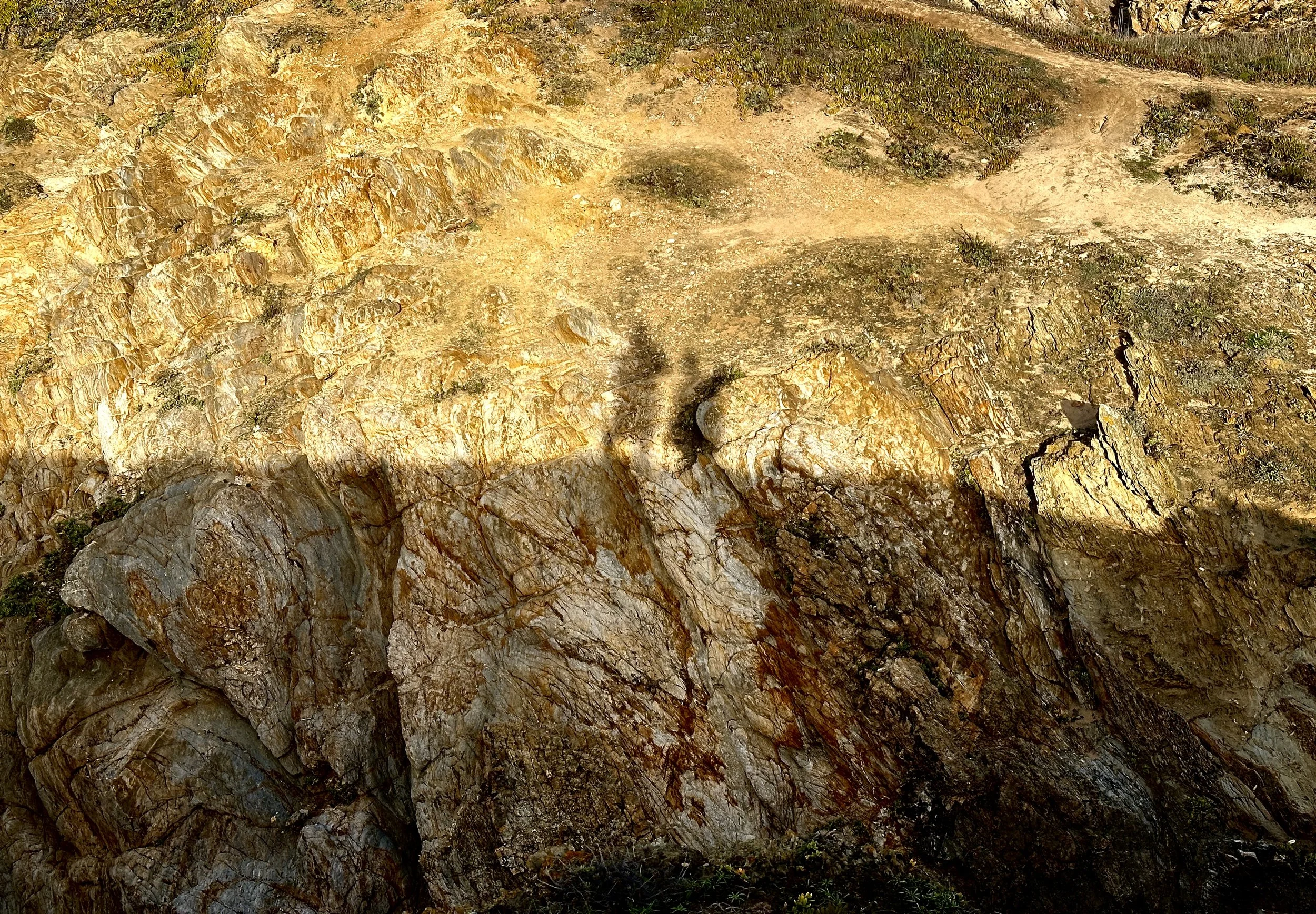
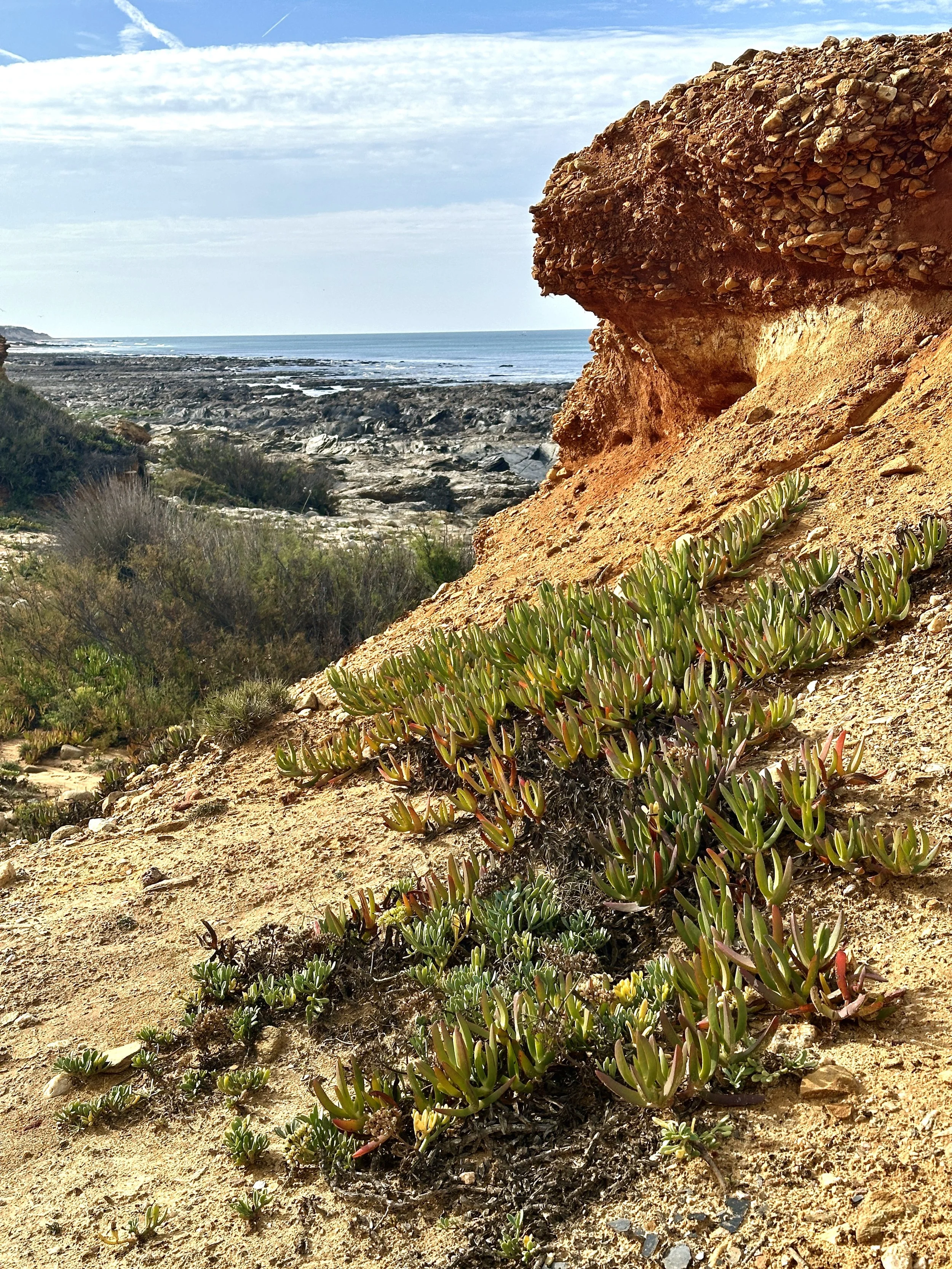
The environment is like nothing I’ve experienced before. Sharp thirty-meter bluffs, crags and pinnacles jut from churning azure water, interrupted occasionally by spotless arcs of sand. But atop the cliffs, the plateau is somewhere between dunes and badlands. The trail itself is deep, light fine-grained sand. Around us are sculpted formations of what looks like limestone and sandstone. And covering the ground is a carpet of low, hardy plants.
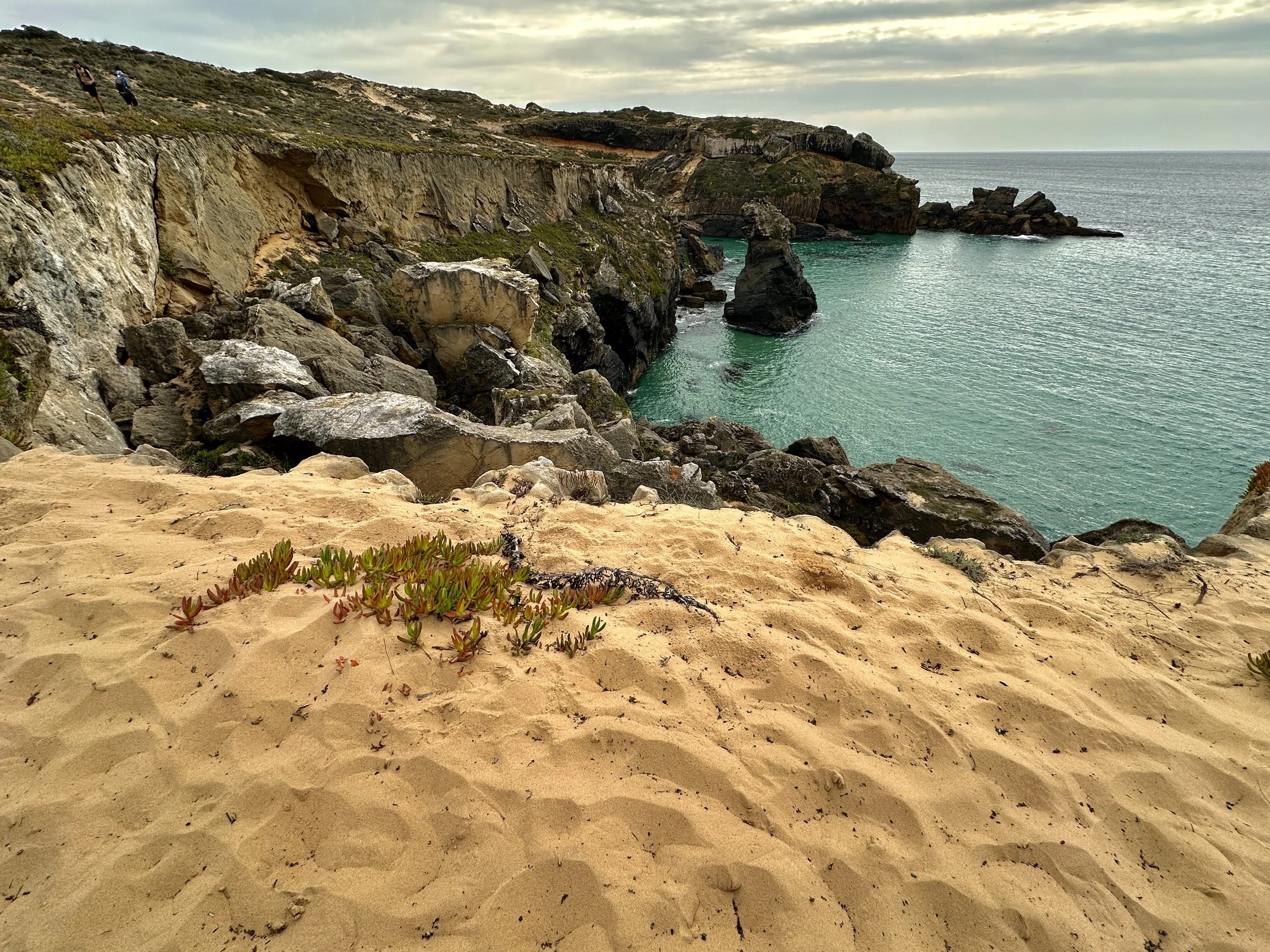
All this can add up to the surreal feeling that you’re walking on what feels like a beach, but thirty meters up, with a sheer drop to the water.
The dominant species is the sour fig, a prolific African succulent with fat triangular leaves that can range from deep forest green through yellow to fiery red. They’ll be a constant companion for the rest of the trip.
THE SOUR FIG
Native to South Africa but clearly is having an easy time invading Portugal. It’s also known as hottentot-fig, ice plant, highway ice plant, or vygie. It can grow a meter a year and grows year-round. Individual plants can expand out to 50 meters in diameter.
In addition to the mediterranean, sour fig has made serious inroads in Australia, California, and has even been spotted in Ireland as a garden escapee. It’s an incredibly adaptive plant that can take root in relatively barren coastal sand dune environments or take over lush forest floors, forcing out other native species and creating monospecific zones. That makes it very hard to manage once it’s established itself.
The plants are at least edible (as we later tested), both the leaves and the fruit which is often made into jam. They also have some aloe-like medicinal uses - you can mix the juice of the plant into a lotion base to treat burns, cracked skin and lips, etc.
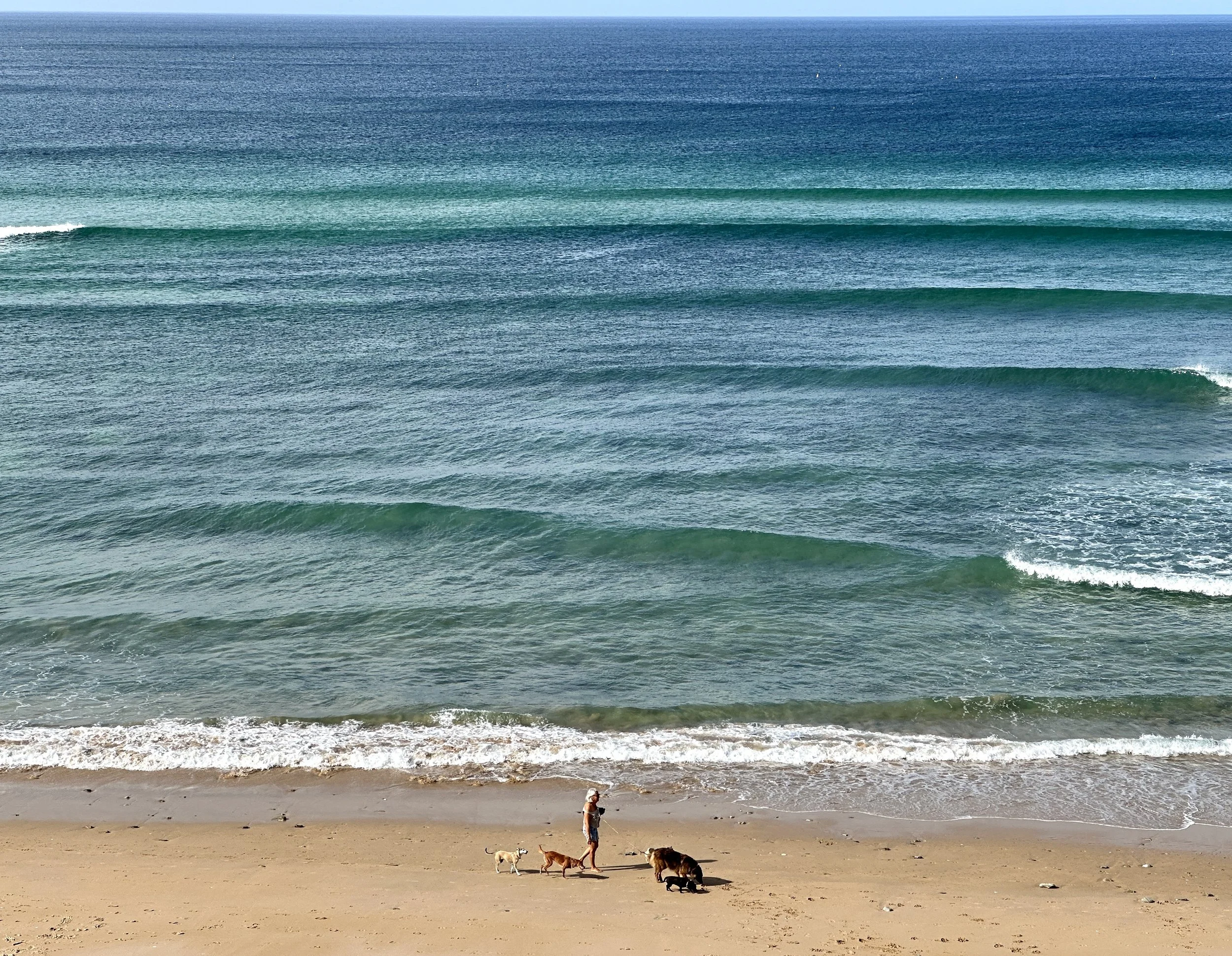
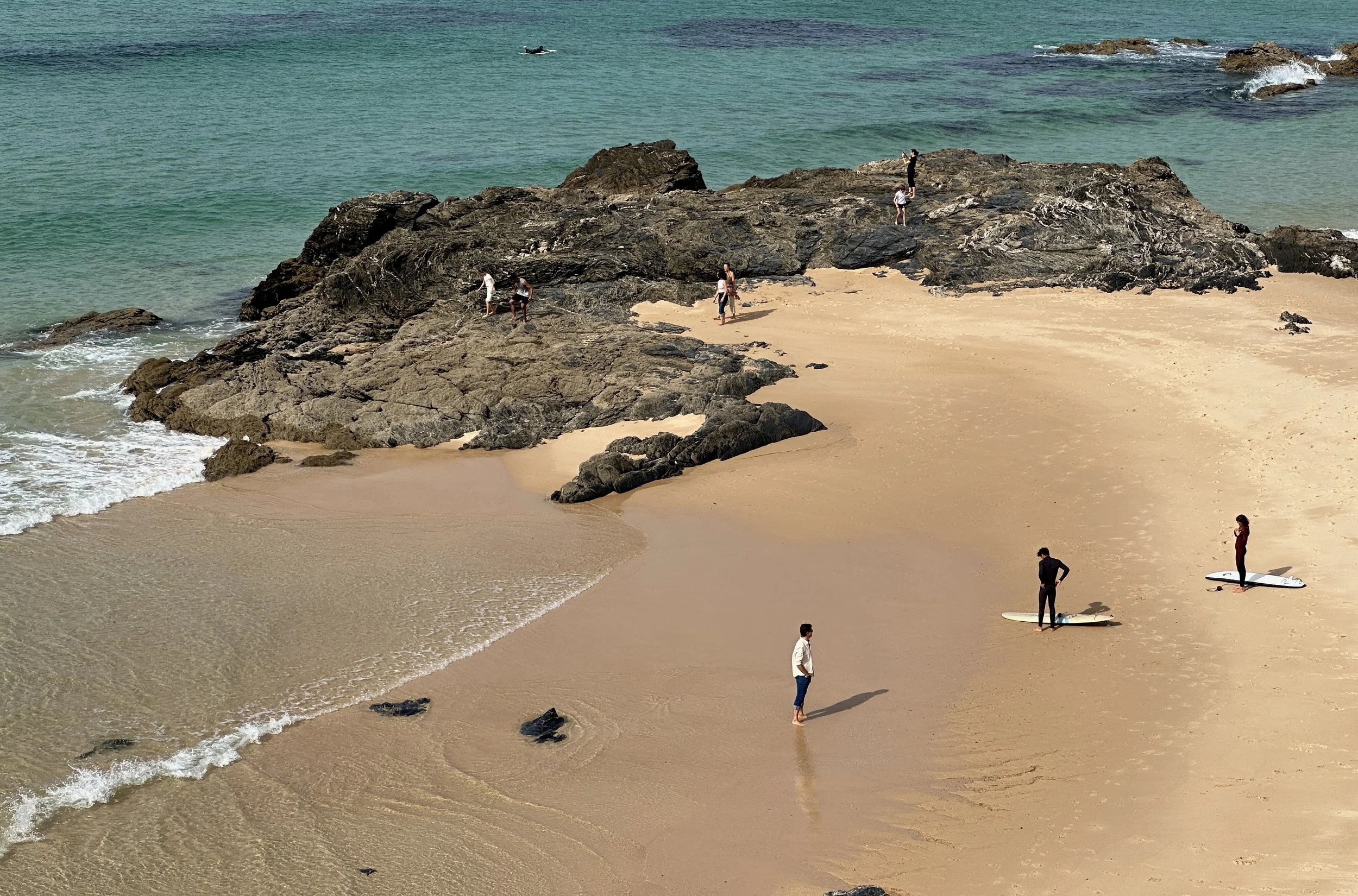
The path begins to alternate us between cliffside sections and dipping down to skirt the beaches. Here we see our first surfers - this part of Portugal is famous for surfing.
SURFING IN PORTUGAL
Portugal is a world-renowned surfing destination. Its waves are consistent year-round, its variety of beaches produce different levels of surf for different levels of skill, the angle of the surf as it hits the shore is ideal and the continental shelf geography off the coast produces very powerful waves.
In fact Nazaré (up the coast from Lisbon) has an underwater canyon off the shore that amplifies and compresses incoming surf to create the biggest surfable waves in the world. It’s home to the world record for largest wave surfed, 26.2 meters by Sebastian Steudtner in 2020.
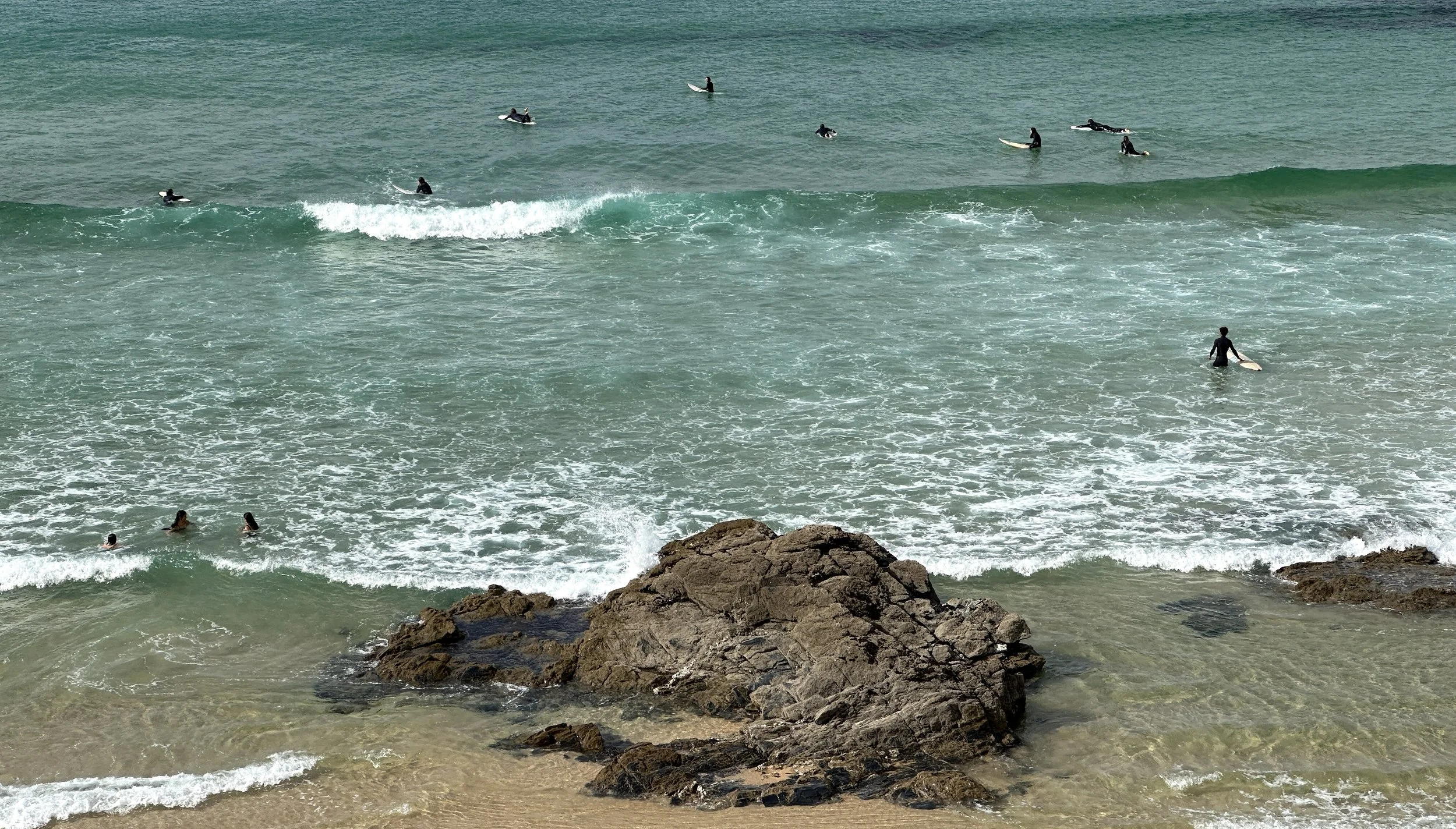
From here on most accessible beaches will be swarmed by surfers, providing constant entertainment when we take breaks.
The trail cuts inland for a long section of scrub and stunted trees among rolling dunes, but there’s no respite from the deep and fine sand we’re walking on… or, in. It makes every step a little more effortful and seems to engage atrophied muscles.
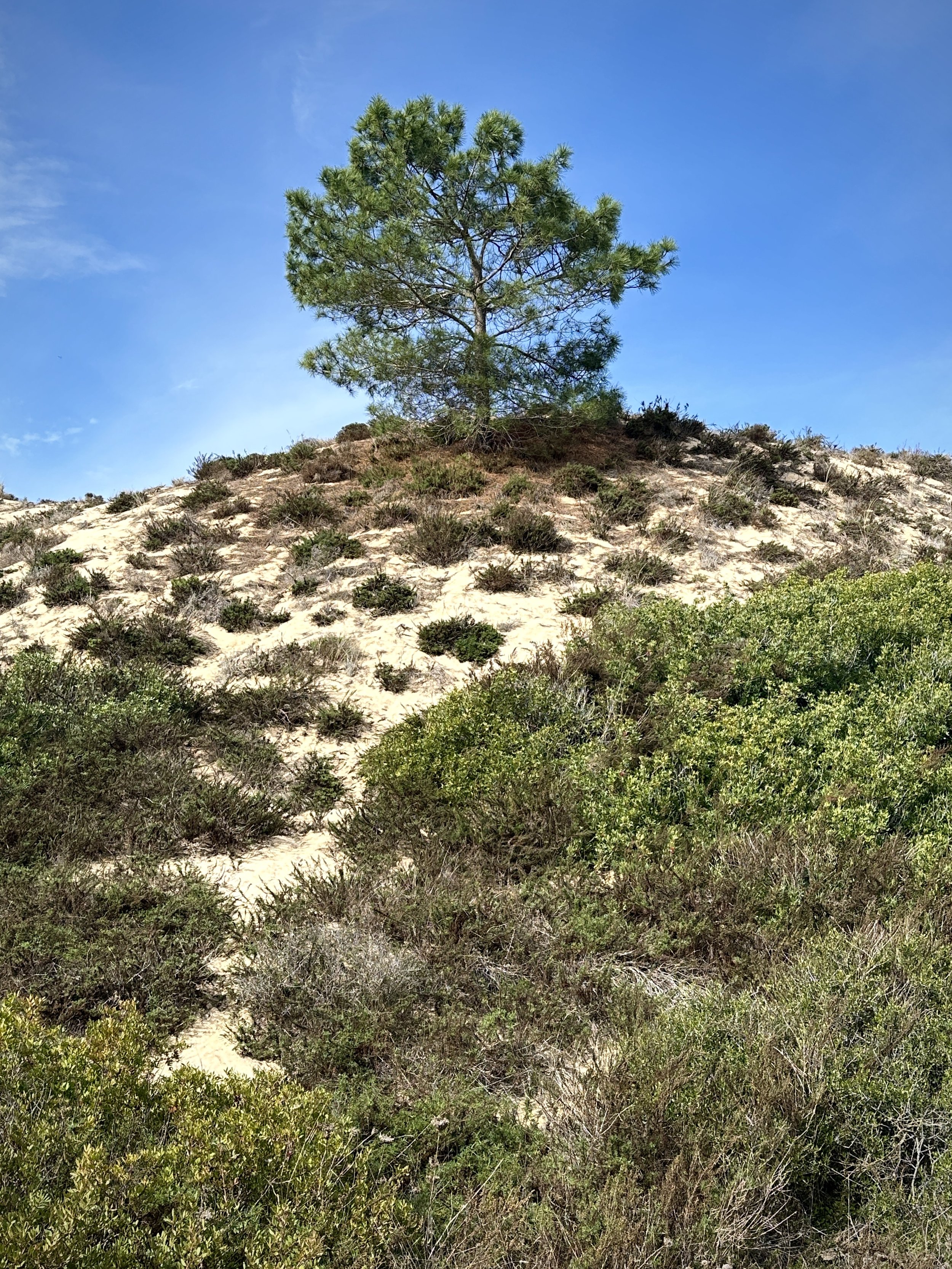
The coastal breeze dies down as we move further inland. The whole diversion becomes a sweaty slog. By the time we’re spat back out at the coast we’re very ready for a break. Conveniently, we’ve been spat at another picturesque beach.
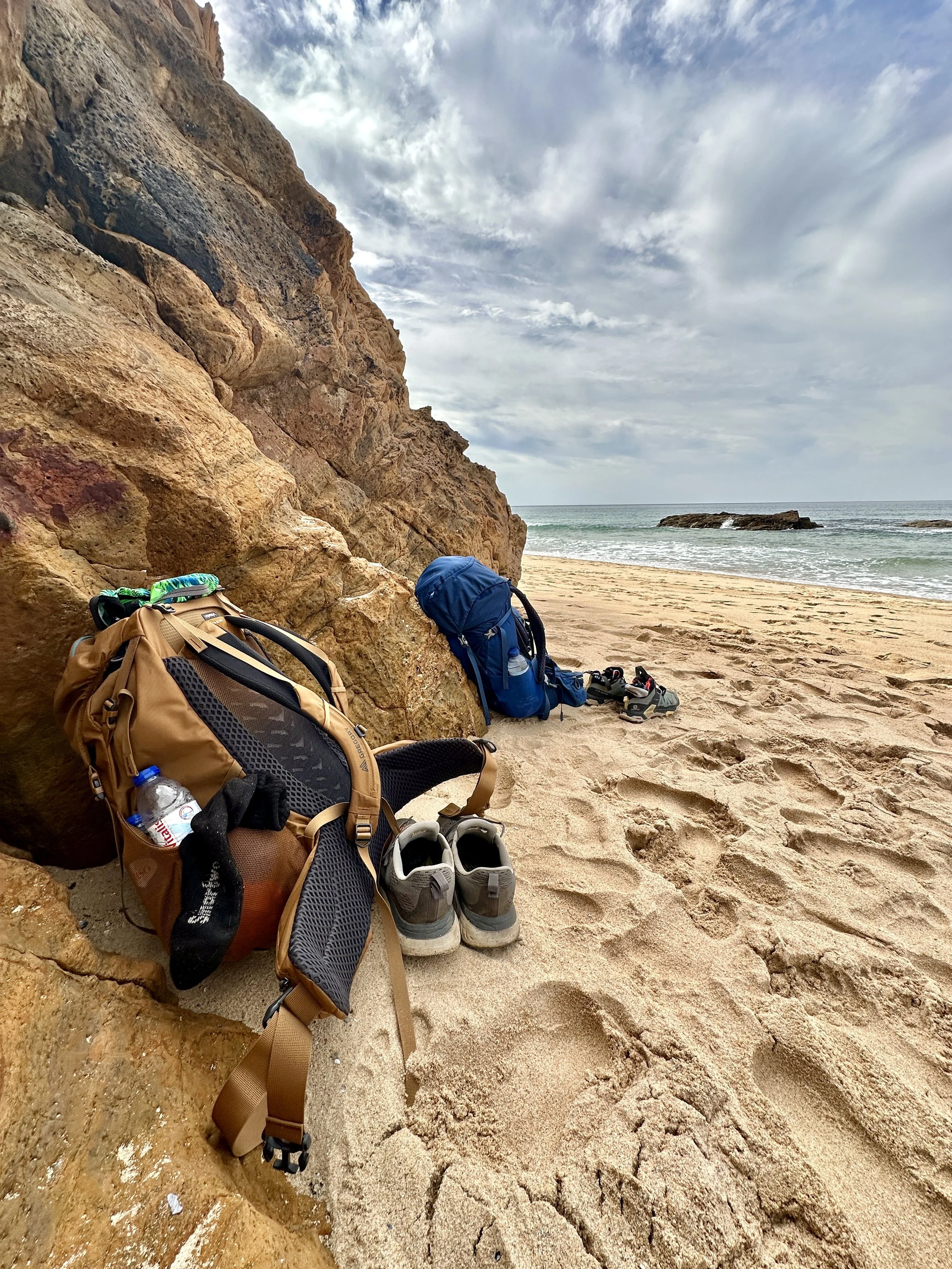
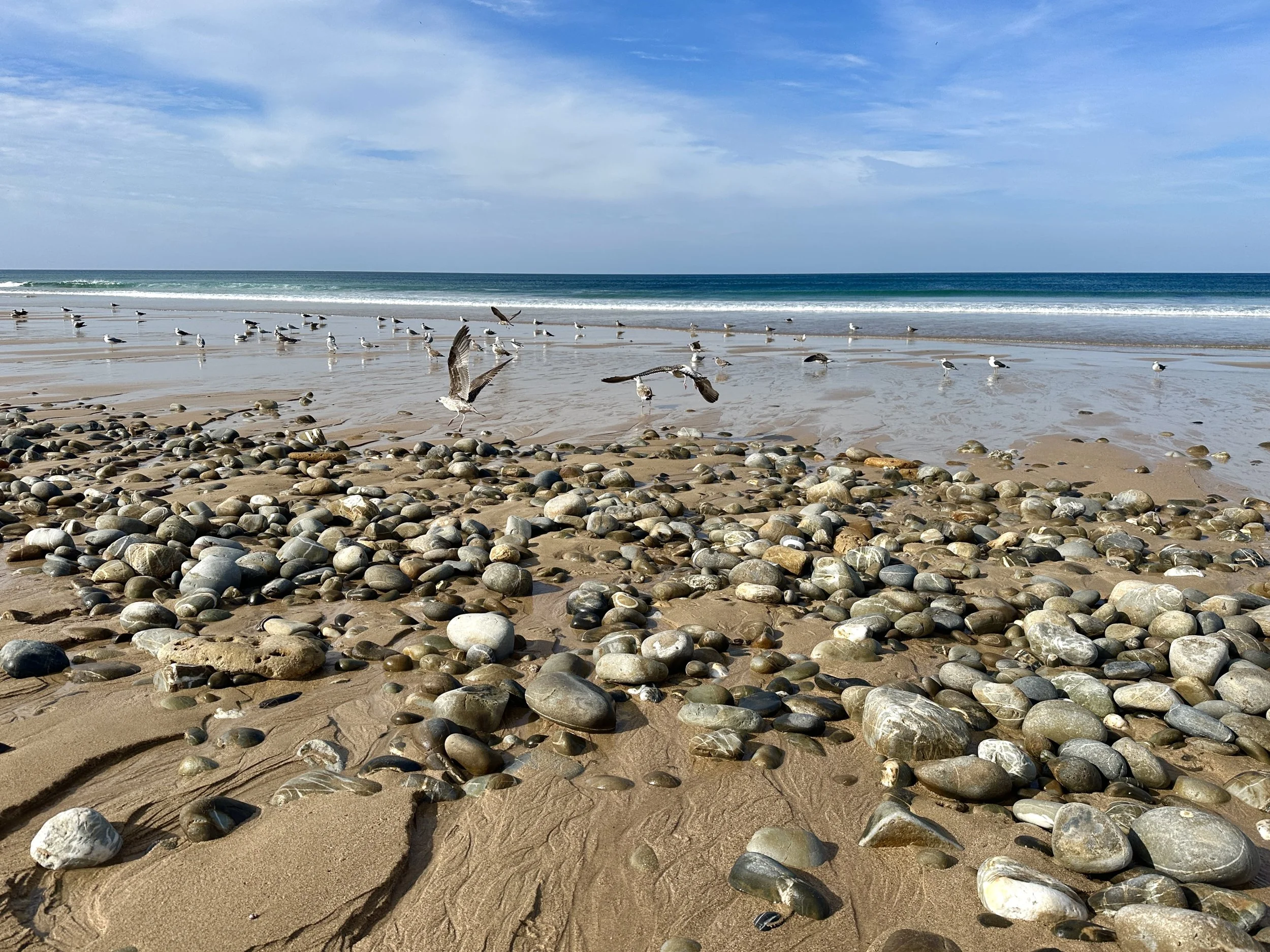
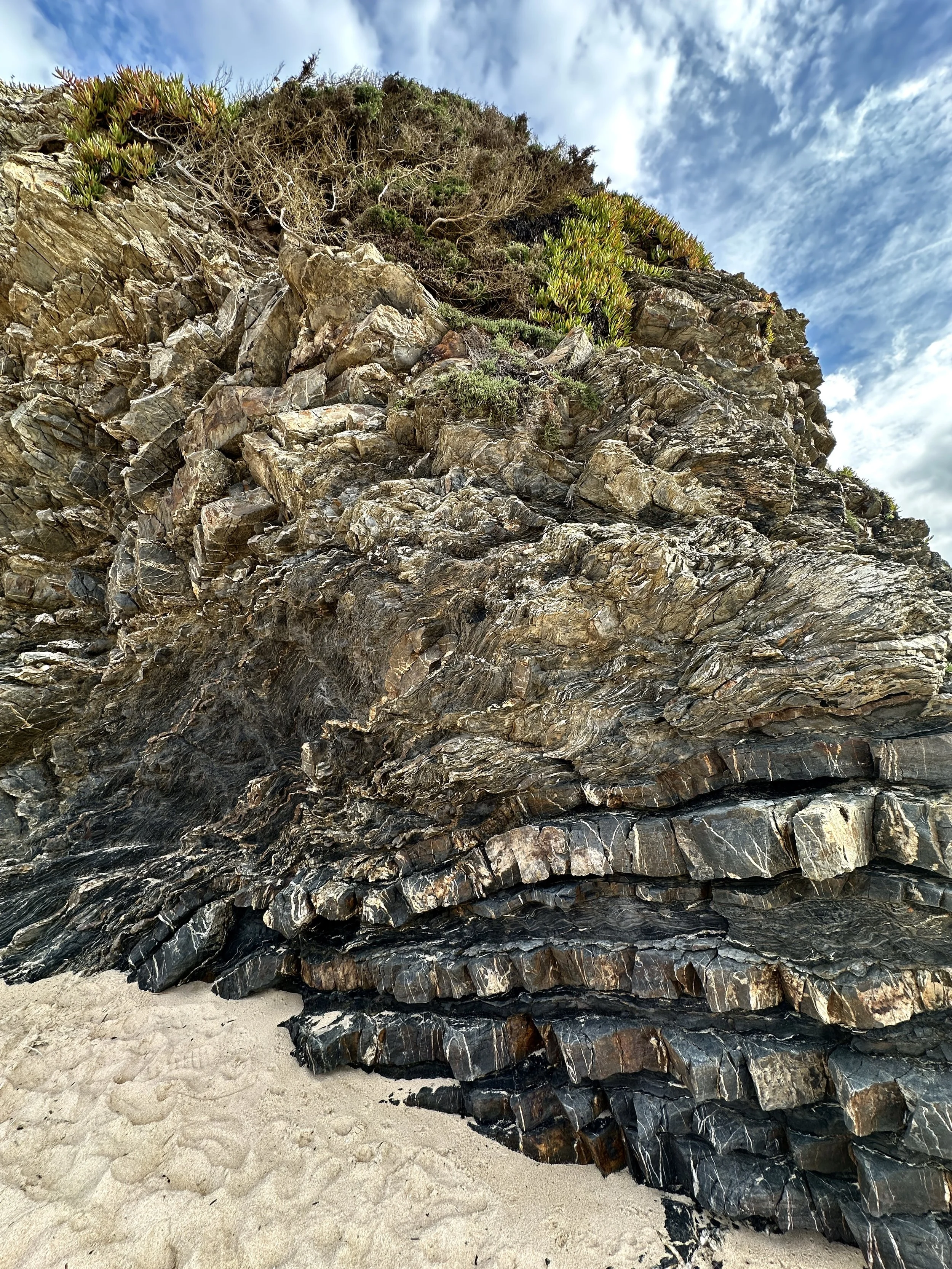
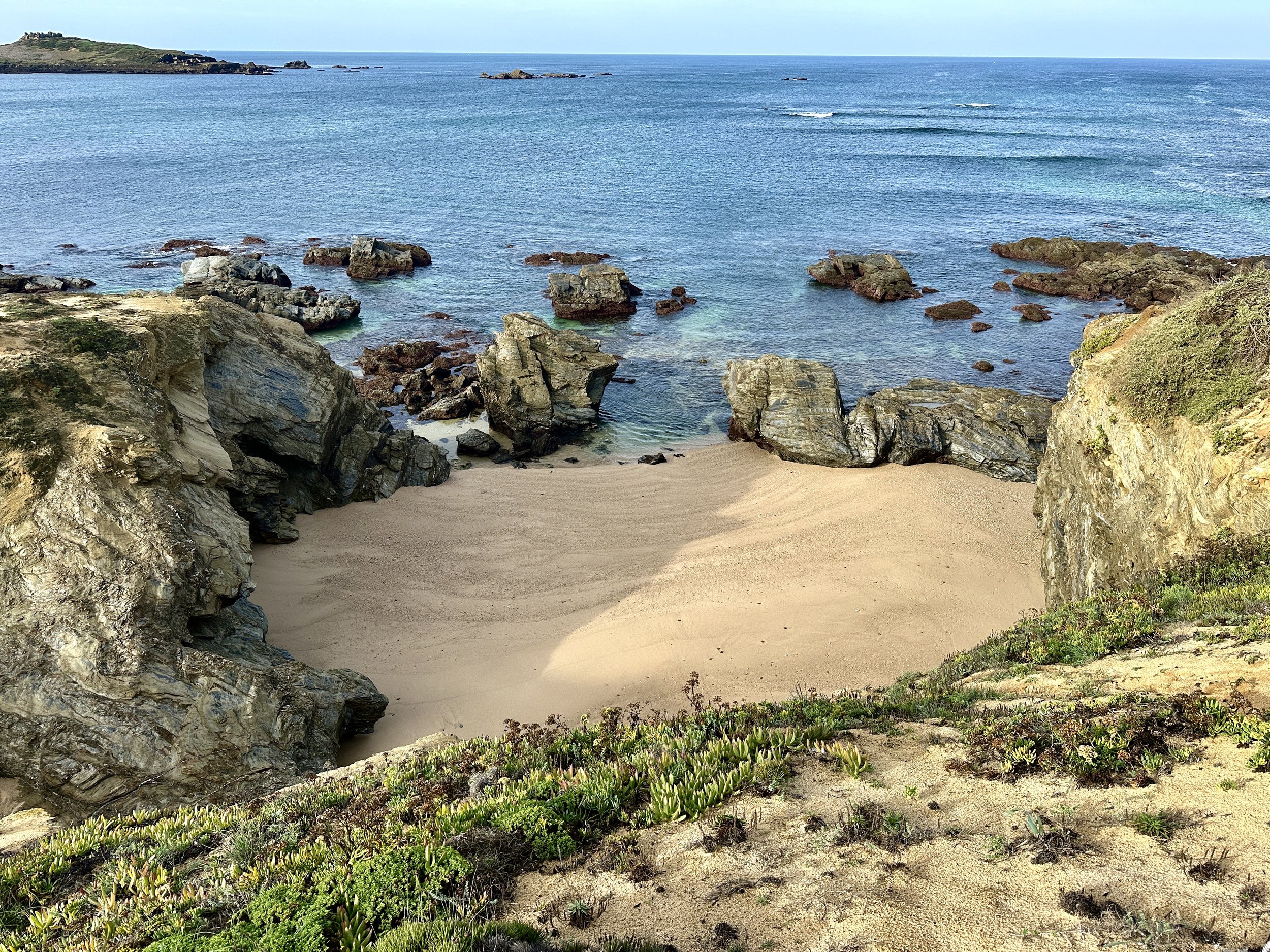
All the beaches we cross belong on postcards, and I think we’re benefitting from the off-season. Apart from cavorting groups of surfers they’re nearly empty. We drop our bags at our own private stretch of shoreline and banded sandstone cliffs.
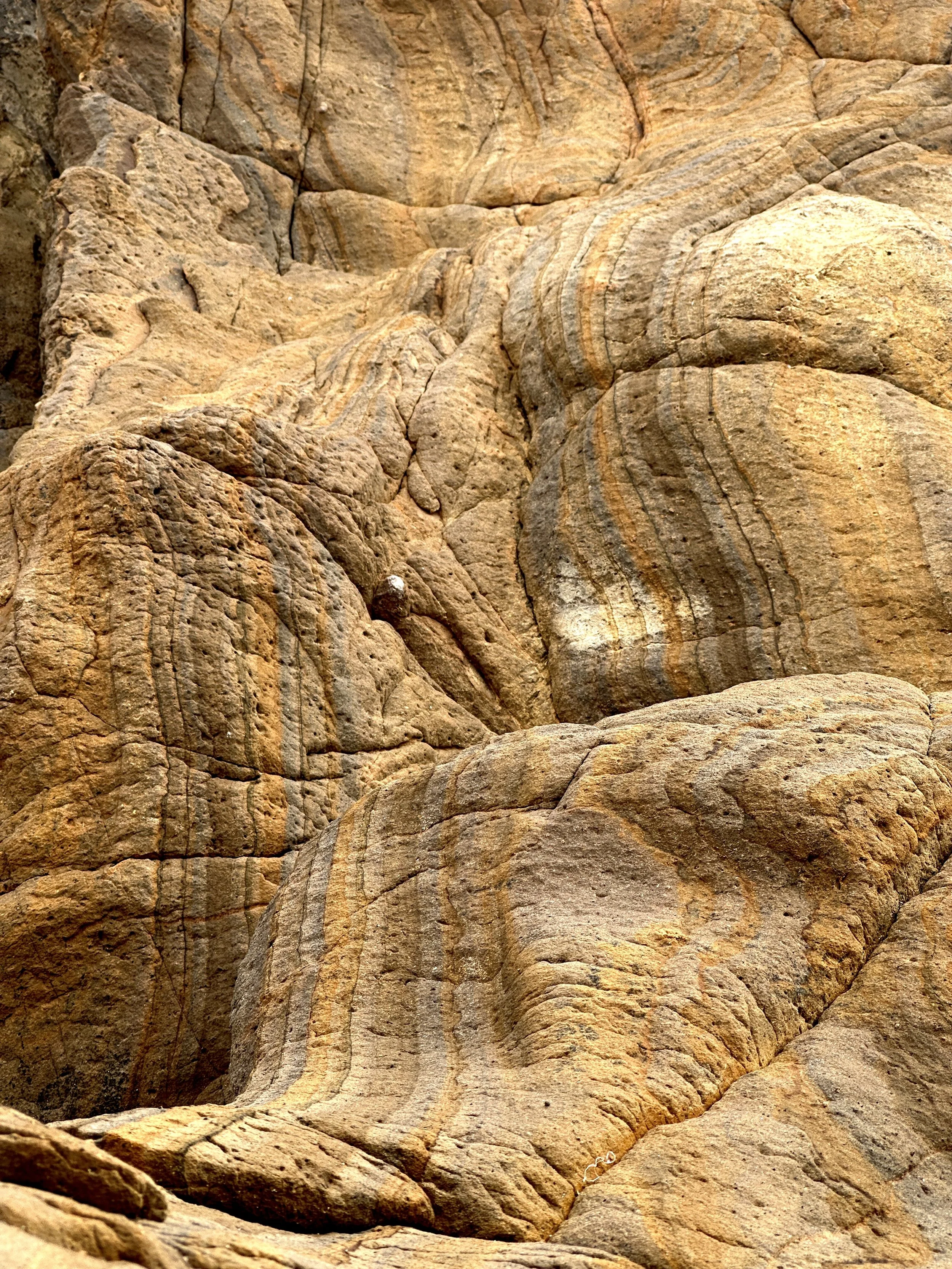
I go in up to my knees and determine the water to be: cold. Not freezing, but cold. Antoaneta throws caution to the wind and actually goes for a swim, amending that the water is: cold, but you get used to it.
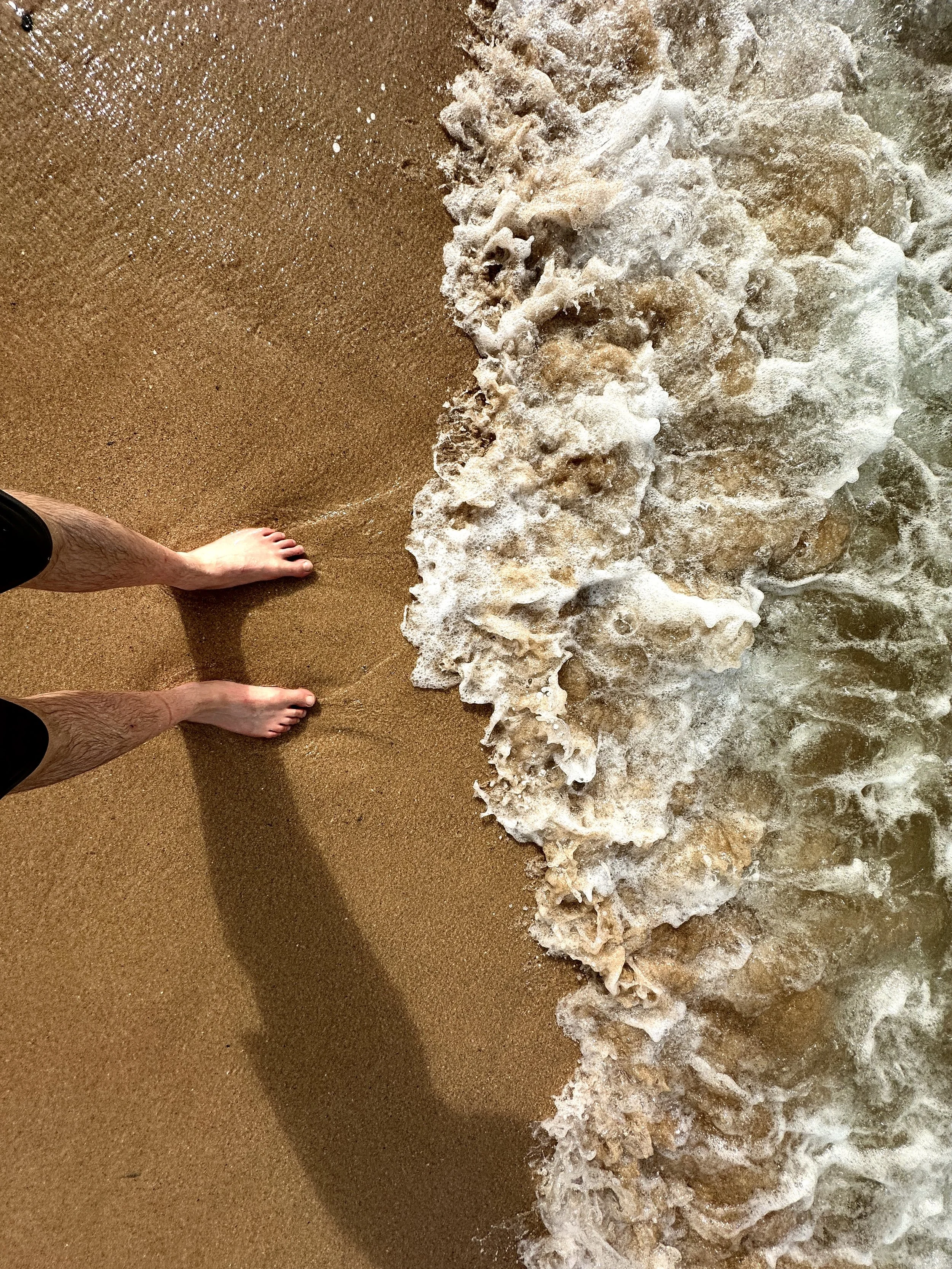
The temperature doesn’t concern me quite as much as hiking the rest of the day in wet clothes so I stick to knee-deep refreshment.
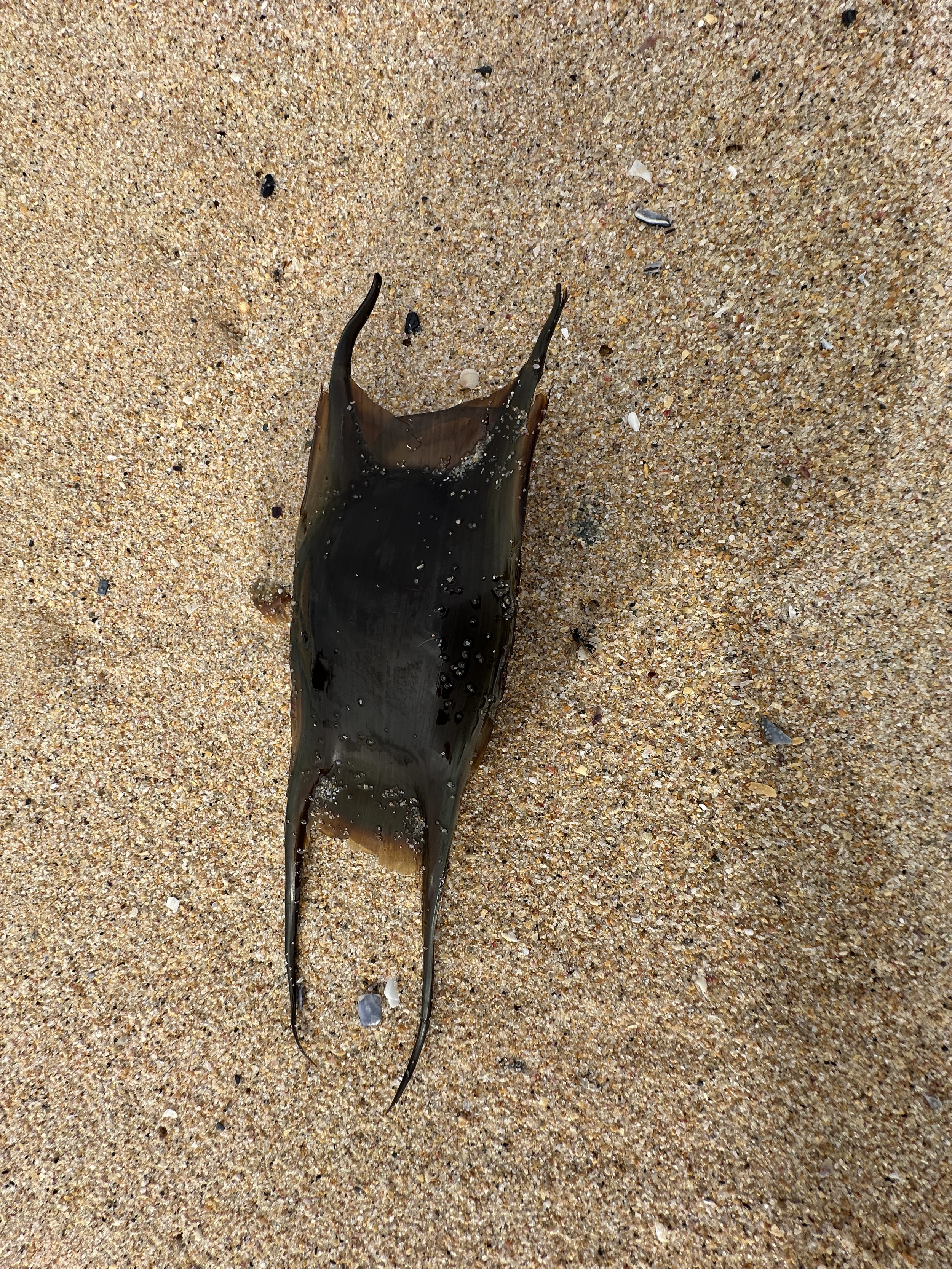
Refreshed, we strike out across the beach, where Antoaneta spots an egg case - shark, skate or ray, along with cuttle bones from cuttlefish that’ll be a frequent sight at the high tide line.
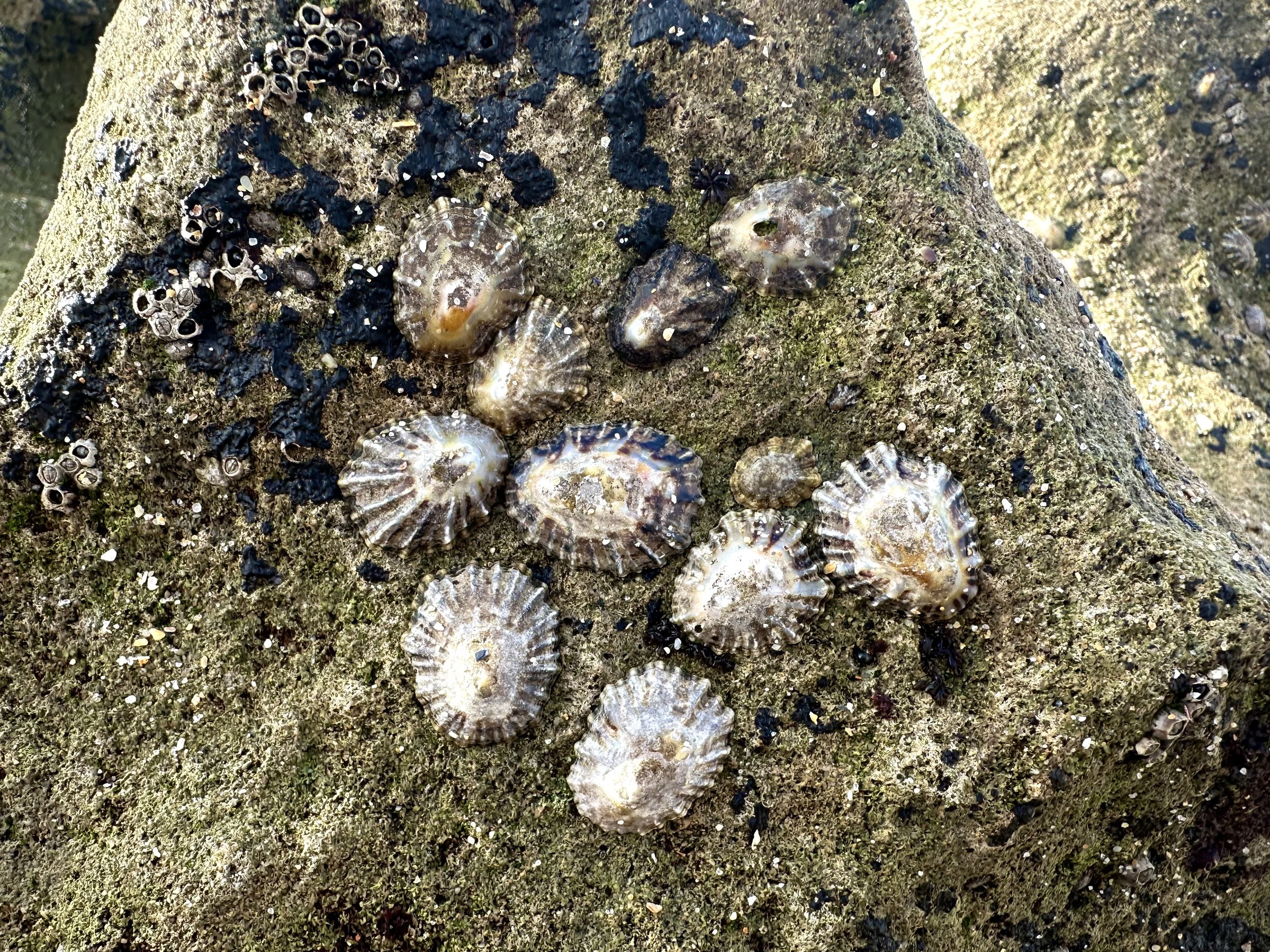
On the other side of the beach it’s back up to the clifftops again, where we see oddly specific proliferations of what I think are grove snails on posts.
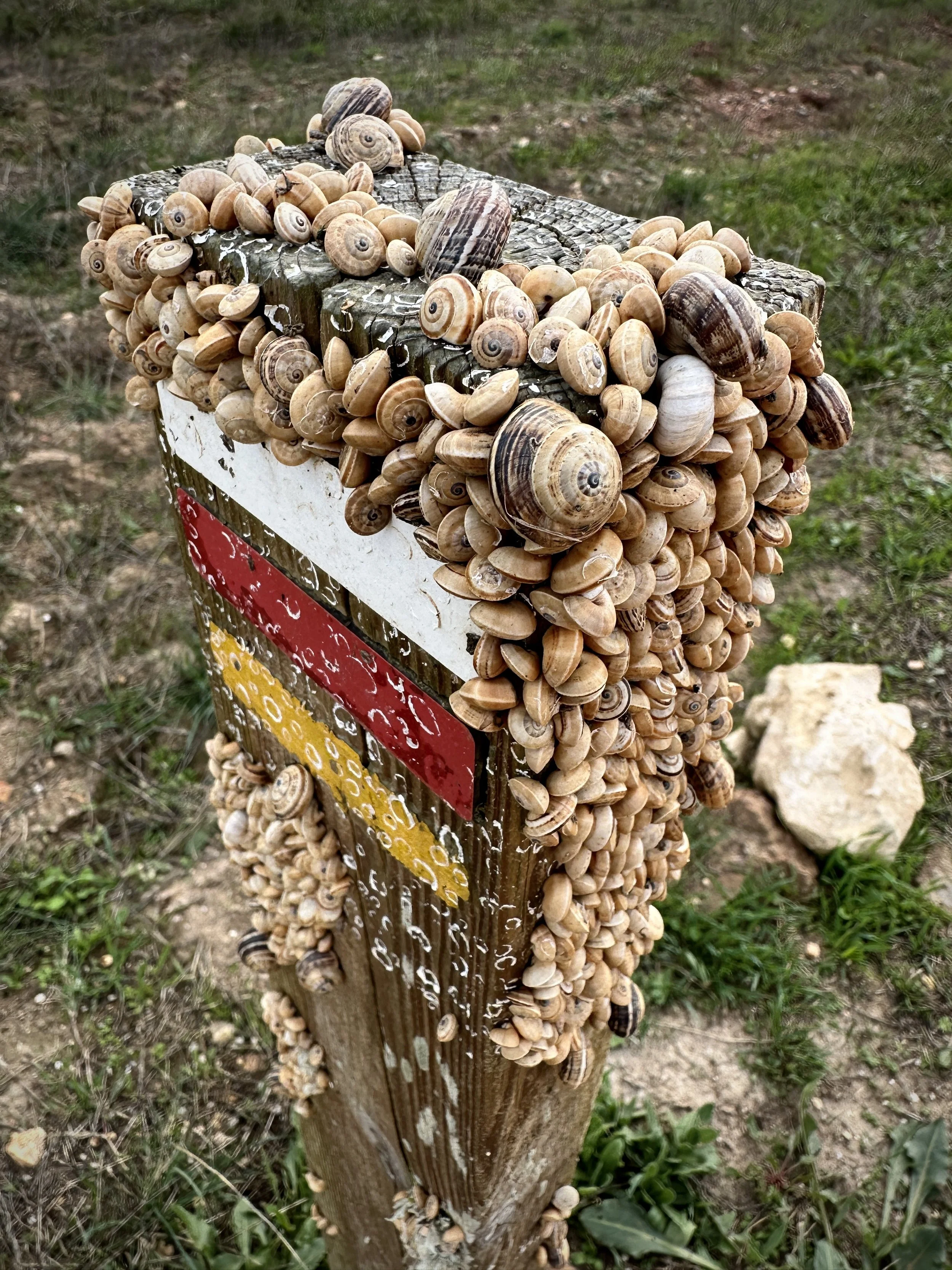
POST SNAILS
Snails exhibit this clustering behaviour as a bid for individual safety. Like schooling fish, if they gather together their individual chances of surviving a predator go up. These snails may also have been responding to the heat. When things get too toasty and they’re in danger of drying out, snails ‘glue’ themselves to a surface with a special sort of sealant they produce to close off their shells and retain the moisture inside.
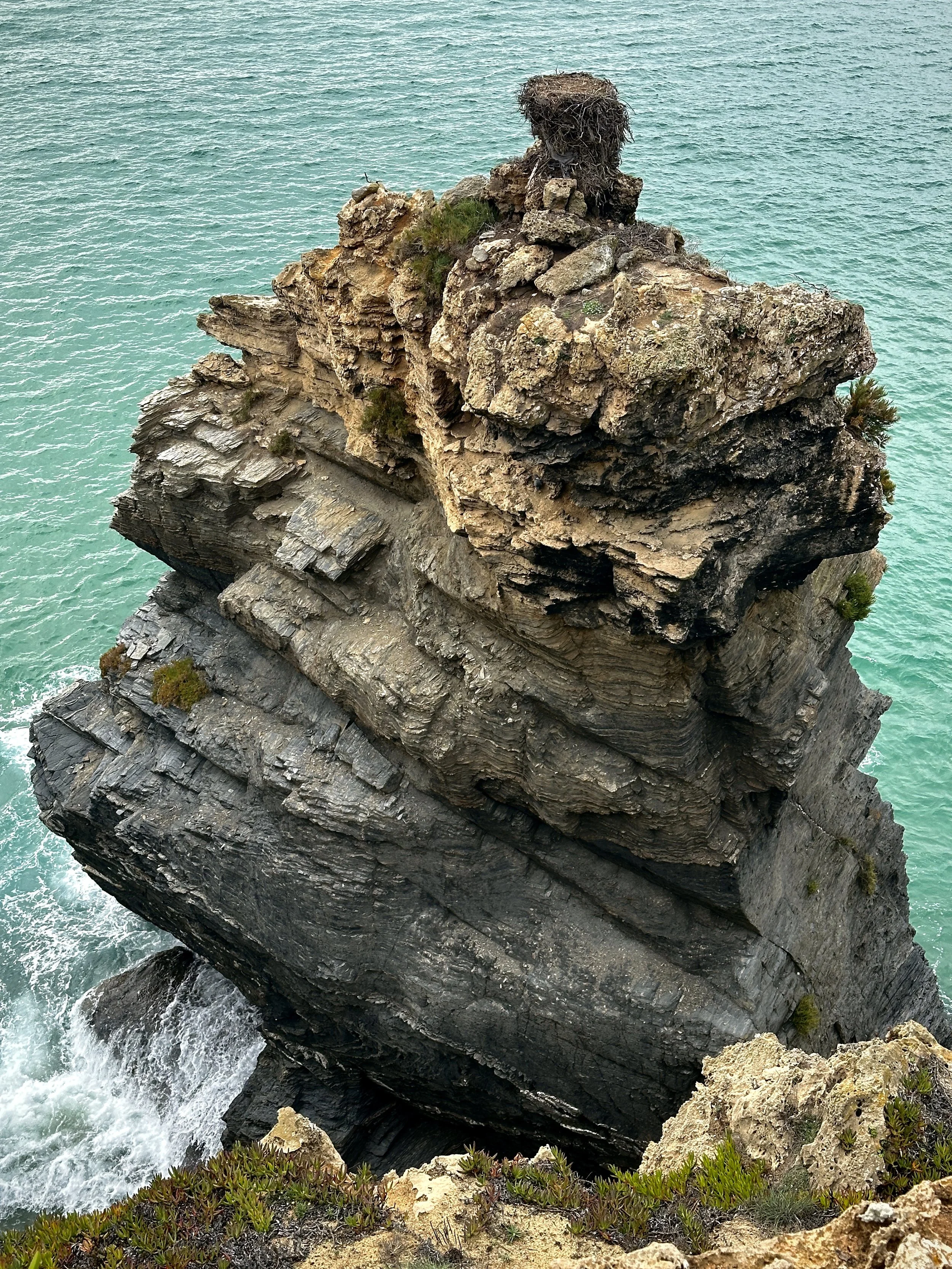
We also see our first coastal evidence of storks: a lonely, empty nest atop a pinnacle. Good sign, but I was promised flocks! Flocks!!
This is also when the trail gets a bit crowded. November is ‘off-season’ for tourists but also known for having some of the best hiking weather so maybe not a surprise. We begin to run afoul of big, mostly German and French hiking groups moving as one.
With the path frequently being single file, it’s a constant negotiation of letting them get ahead, taking opportunities to get ahead of them, striking far out ahead to lose them, then taking a break and winding up back in the midst of them again.
For all that, the company can be nice. Like-mindedness and unity of purpose breeds an effortless sort of camaraderie.
It’s also around here when I abandon my gaiters entirely. I made the effort, ordered them, tested them, wore them diligently for the first part of the day. But they simply cannot make up for my worn-out shoes. Sand is sneaking in regardless. Fortunately it’s so fine-grained that it lacks the grit to abrase or blister. I have to dump (dump) it out of my shoes every couple of hours, but it never crosses from inconvenient to painful.
After an extended cliffside section playing leapfrog with tour groups we’re at last diverted onto dirt roads approaching Vila Nova de Milfontes. But first, a restaurant. On its periphery we see a cat - then another, and another. There’s a collection of plastic tubs full of cat food on the side of the road. Someone’s taken it upon themselves to accommodate the local strays.
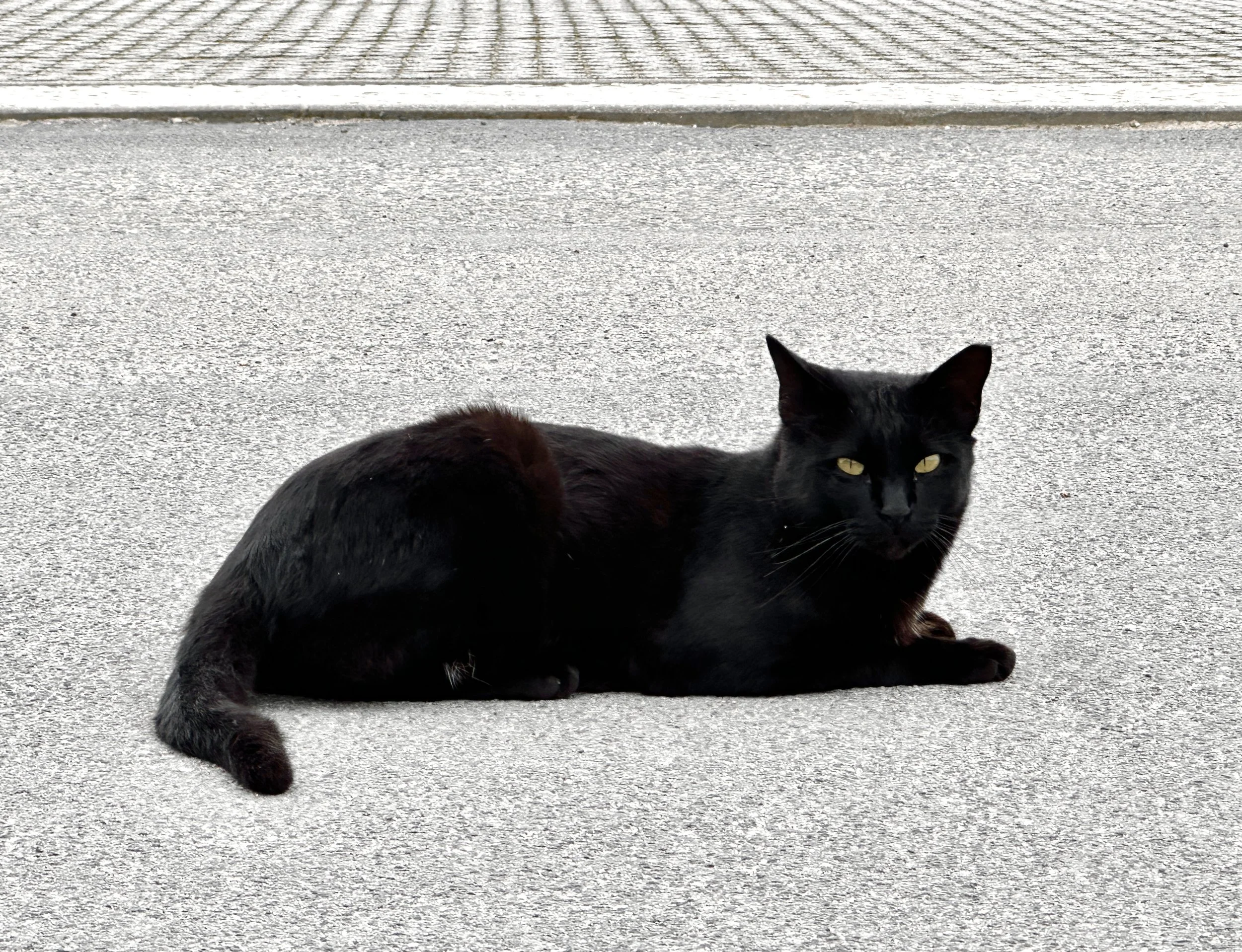
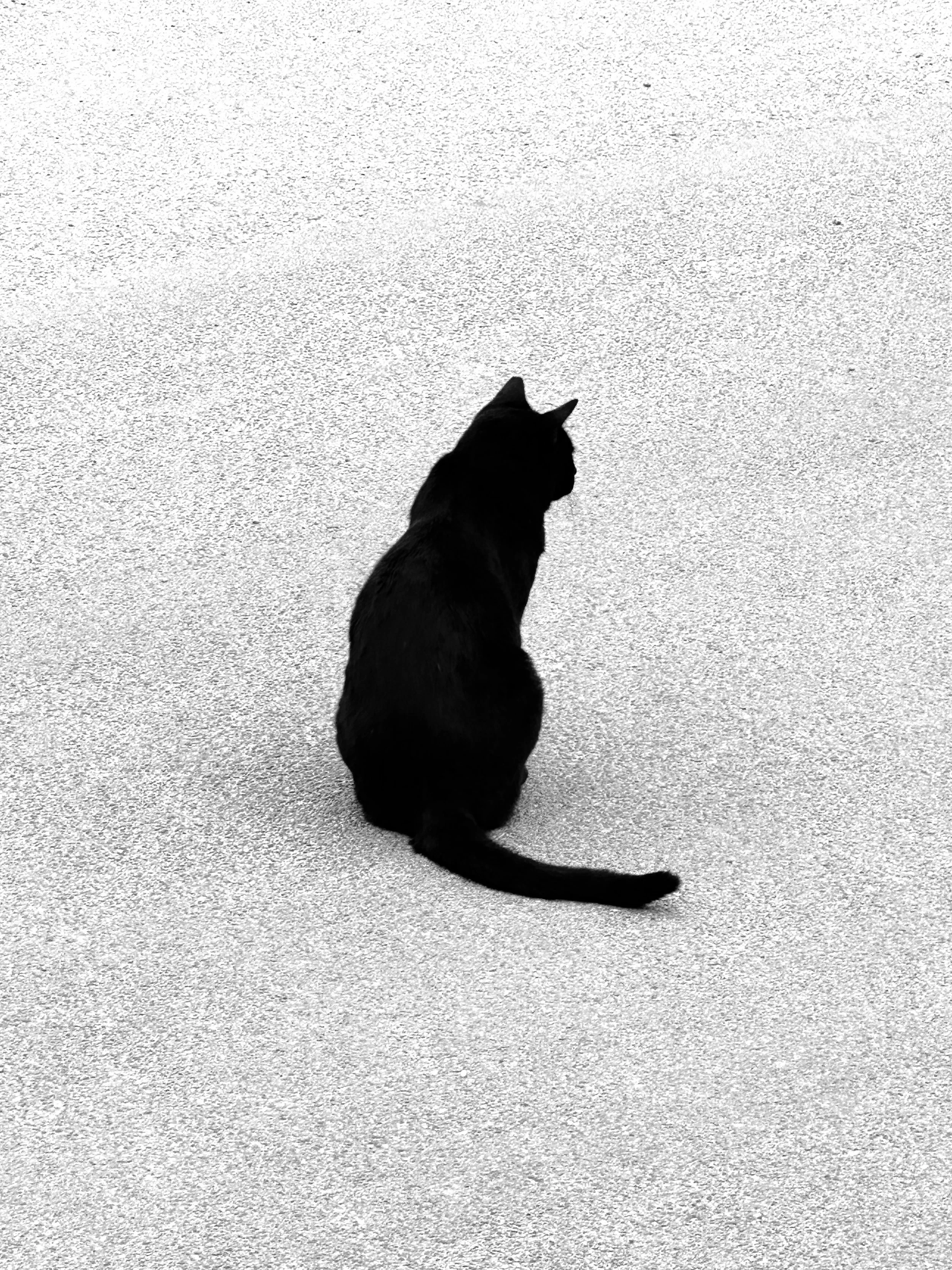
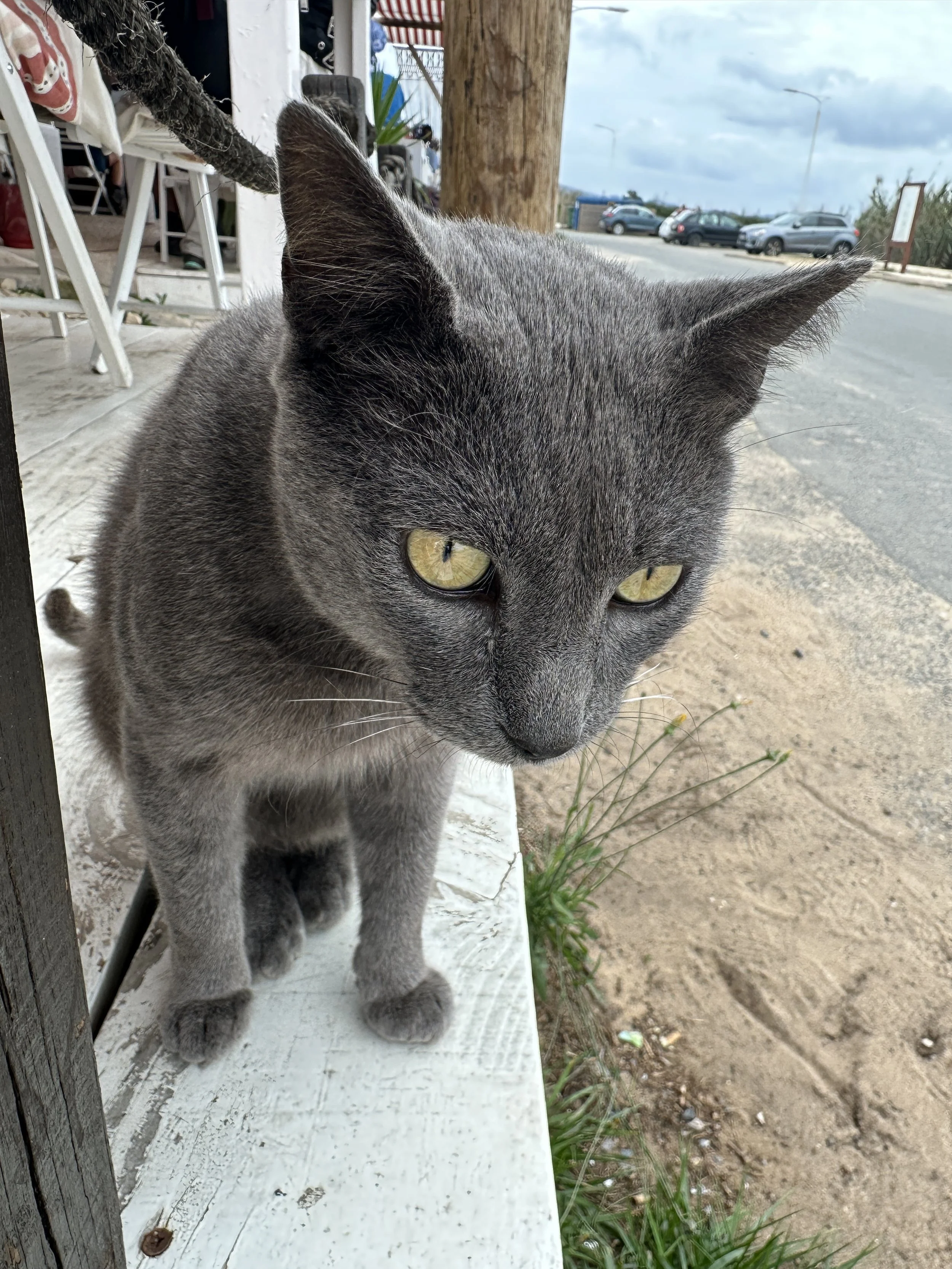
Throughout the trip, we see the Portuguese giving communal deference and respect to their shared cats in a way I’ve only otherwise seen in Turkey.
But there’s still hierarchy - lording above the strays is the restaurant’s gorgeous cream-coloured mas-cat.
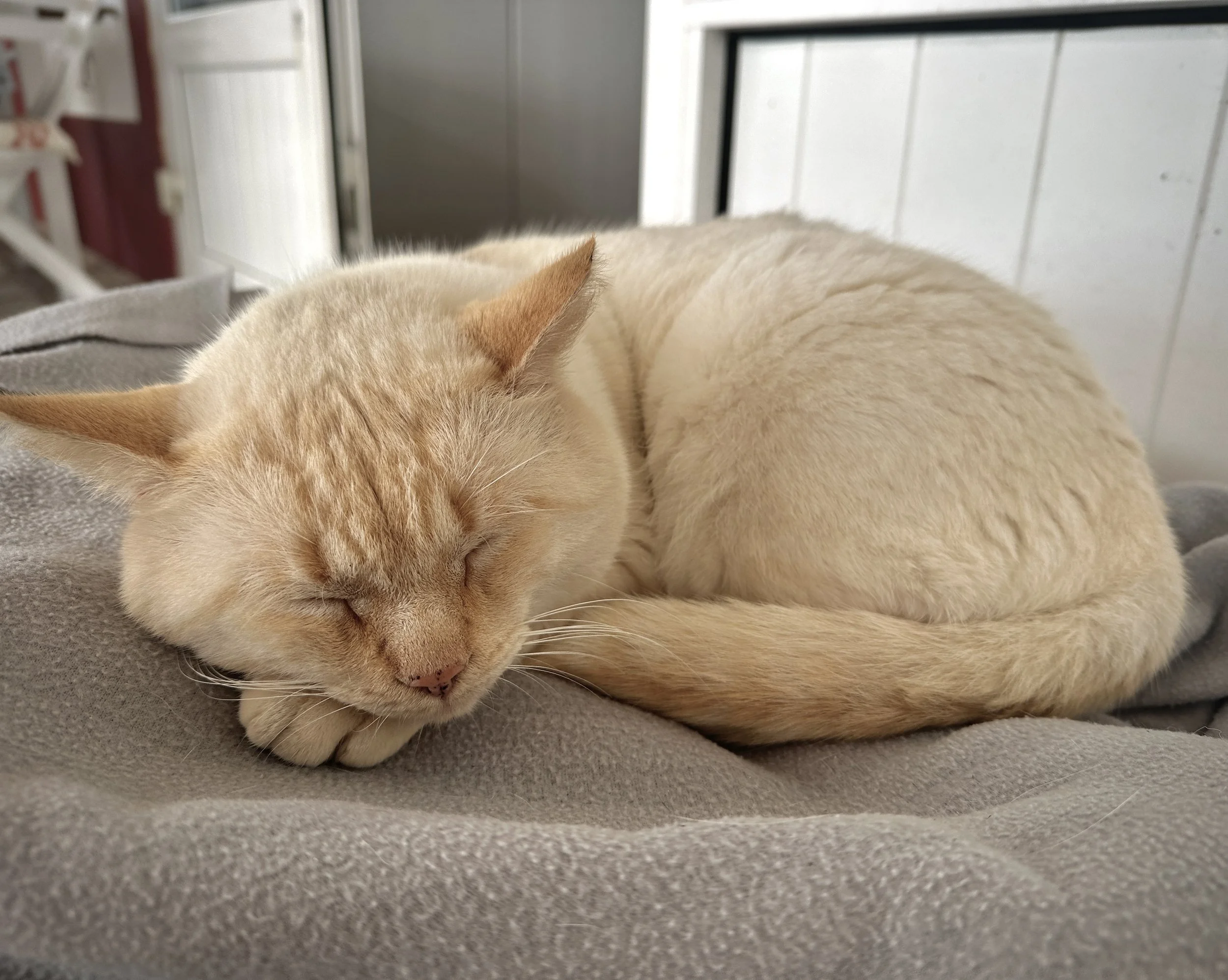
And as we sit for a drink a couple of the more courageous locals hop up on the restaurant chairs or hang out at the periphery, not asking for food but expecting it.
The last stretch into Vila Nova de Milfontes is a dull march through agricultural fields.
The outskirts don’t inspire confidence either: run-down houses, cracked pavement, a praying mantis on the side of a wall…
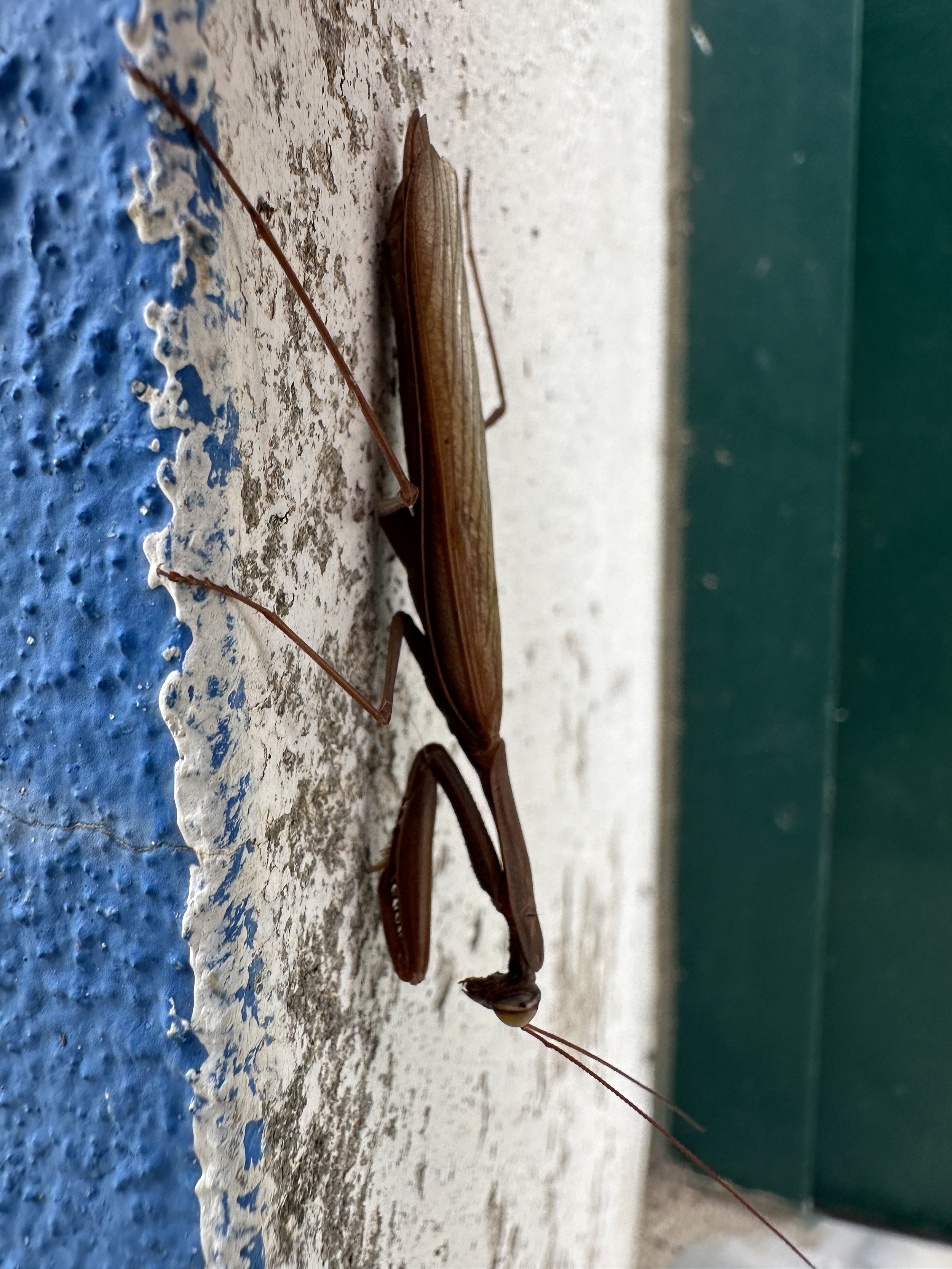
This is all in stark contrast to yesterday and Porto Covo’s small, clean village charm, not a mantis in sight. But we judge too soon. The beautiful town centre of Vila Nova de Milfontes reveals itself in winding streets through bright two-storey buildings.
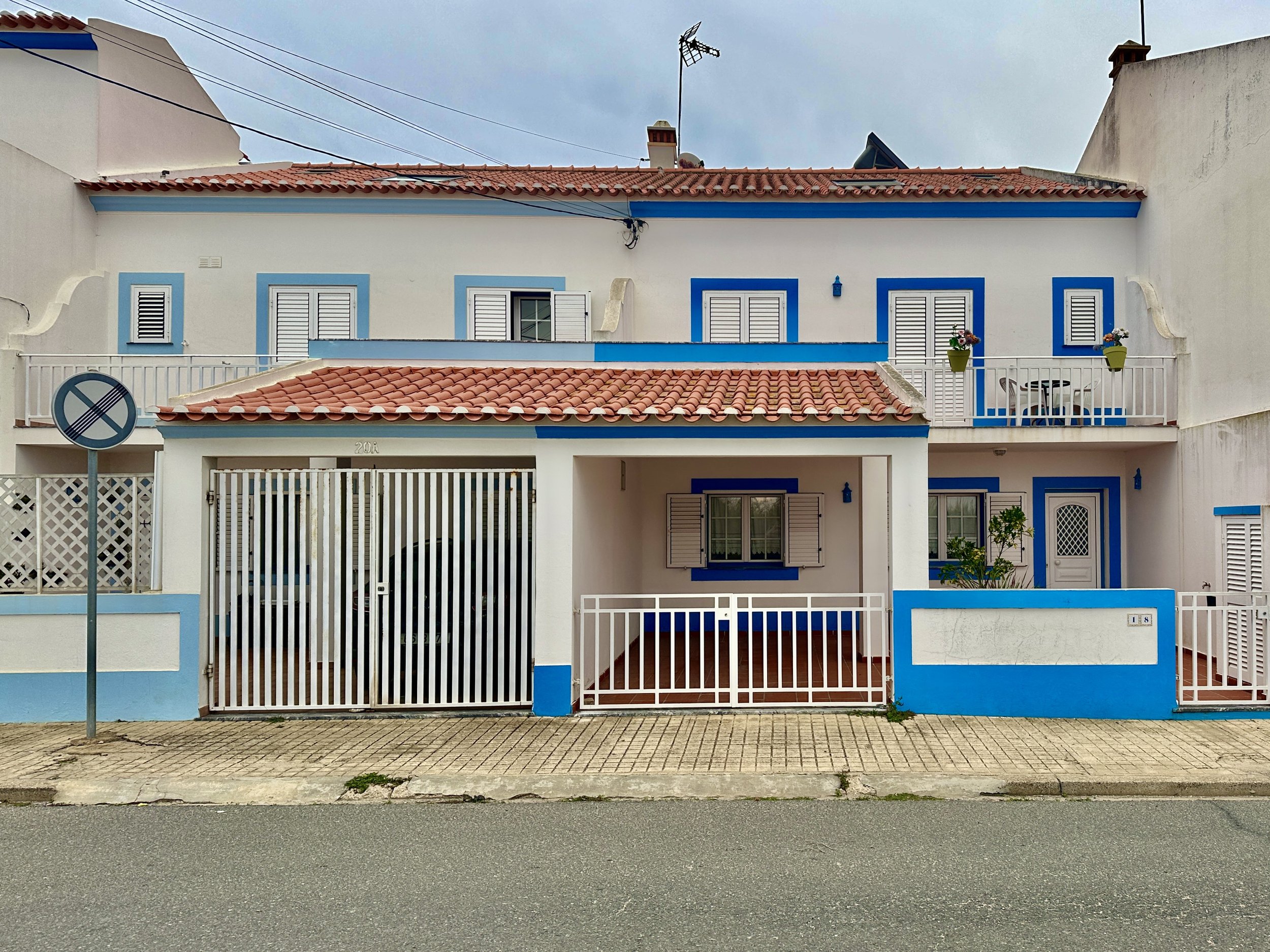
One of those is our labyrinthine guest house. We’re told to only exit and enter through one very specific door, then led on a weaving path to our room: a bathroom you could run laps in and a private balcony we take some time to luxuriate on.
Then it’s back out on the town. A mercato to replenish snacks and dinner at a nearby place our host recommended. It’s a cozy bistro atmosphere. I order a vegetarian option: a big fried breadcrumb fritter, mushroom stew and grilled corn. It’s unlike anything I’ve ever had before and unbelievably good.
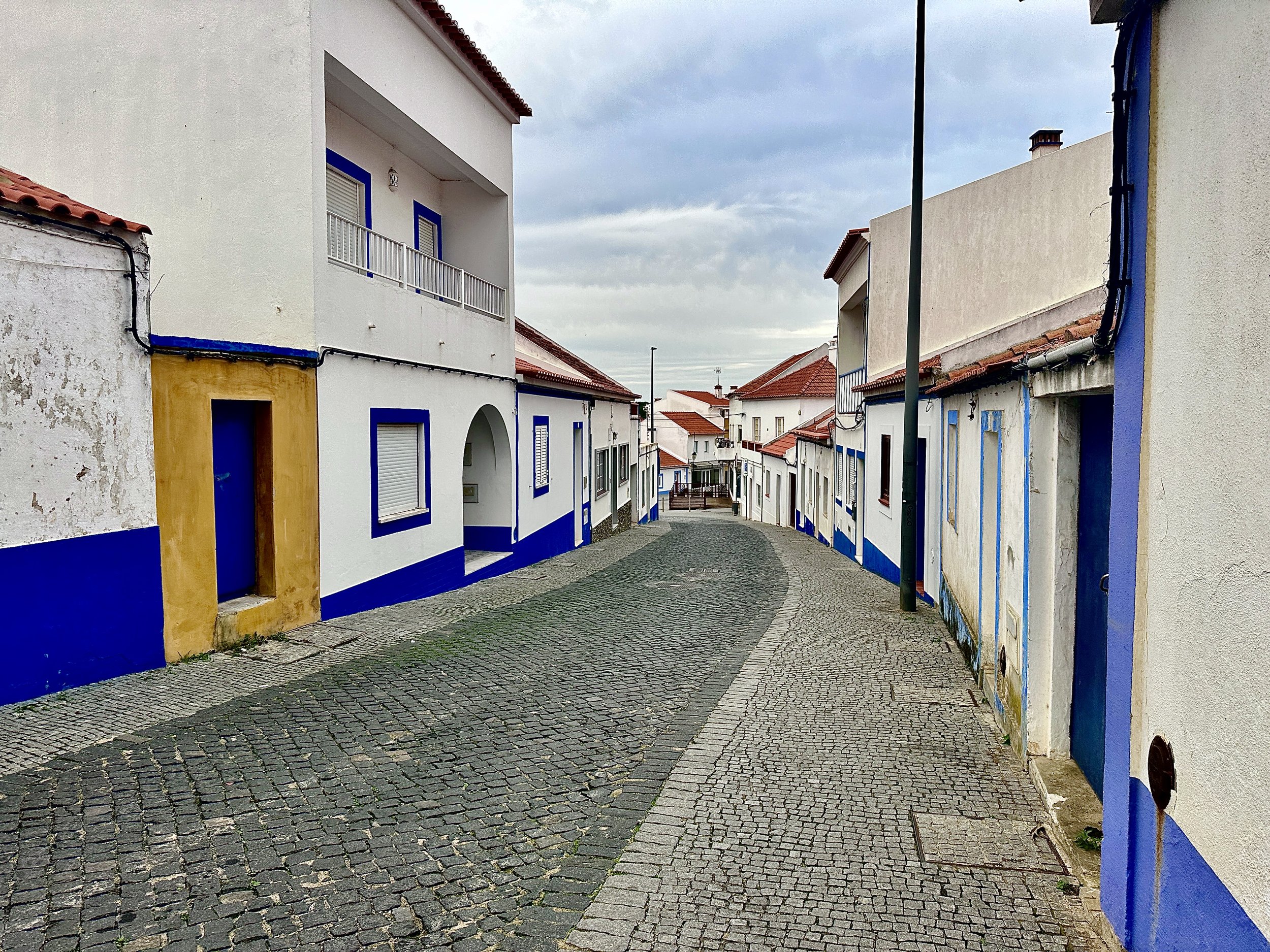
The perfect evening is only slightly soured, much like a fig, when we return to the guest house and our key doesn’t work in the door we left by. Did we use the wrong one? Is there something up with the keys? We circle the building and try two other doors - nothing. They had been very clear with us: Only Use This Door, and Do Not Call Us After 7. But with no options left we accept defeat and shamefully press the intercom. The harsh buzz is scolding.
A voice that sounds like it just woke up (It’s only 8 o’clock!) croaks in response. We sheepishly explain the situation and she directs us to the ‘right’ door with a weariness that says this happens a lot. To be fair to us: the building is a maze and the ‘right’ door is inset at the back of a dark cul-de-sac. So.
The key does, at least, work on that door. And the rest of the night is perfectly uneventful.