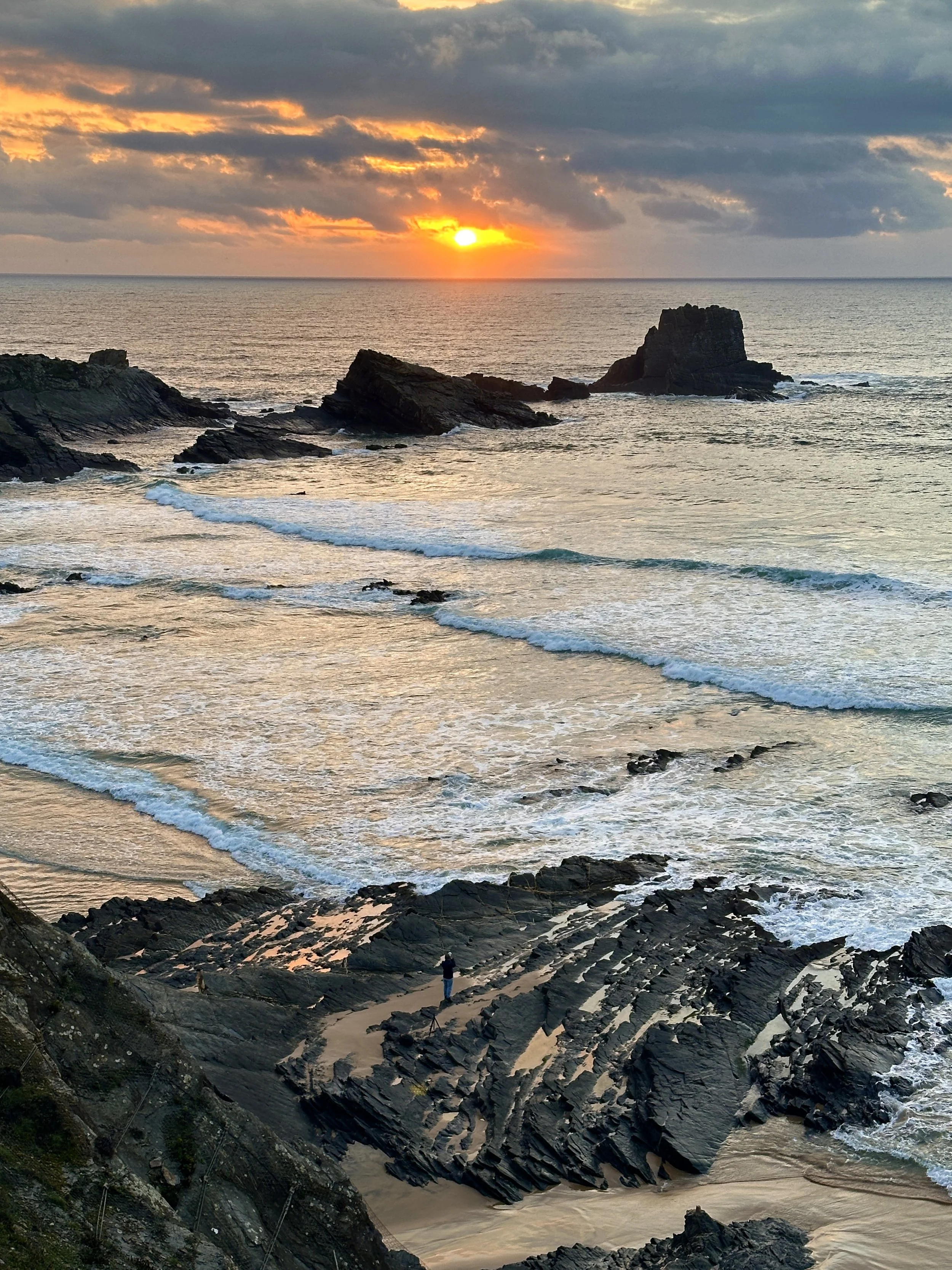
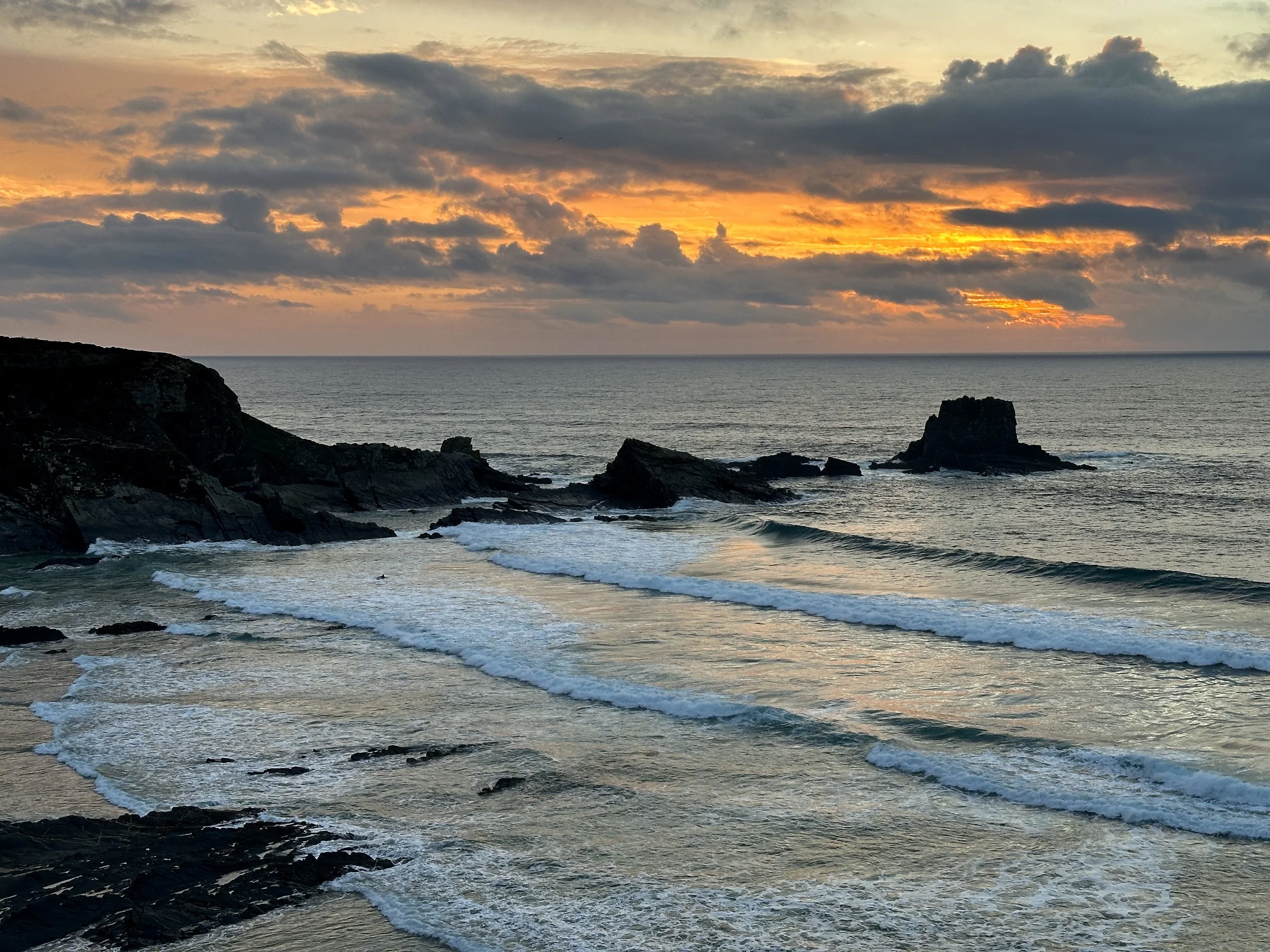
DAY 4 - VILA NOVA DE MILFONTES - CAB TO ALMOGRAVE, HIKE TO ZAMBUJEIRA DO MAR - 22.7km
The start of this stage presents a choice. Immediately south of Vila Nova de Milfontes is the imposing Mira River, which we need to cross. Option one is to take a wide detour east to a bridge and then reverse back to the coast on the other side. But someone’s also identified this untapped market of impatient hikers so option two is a little ferry service in town just to cross this river.
We choose option three: a cab to take us even further south to Praia do Almograve as our start point, where, if the literature is to be believed, the day’s hike starts to get good.
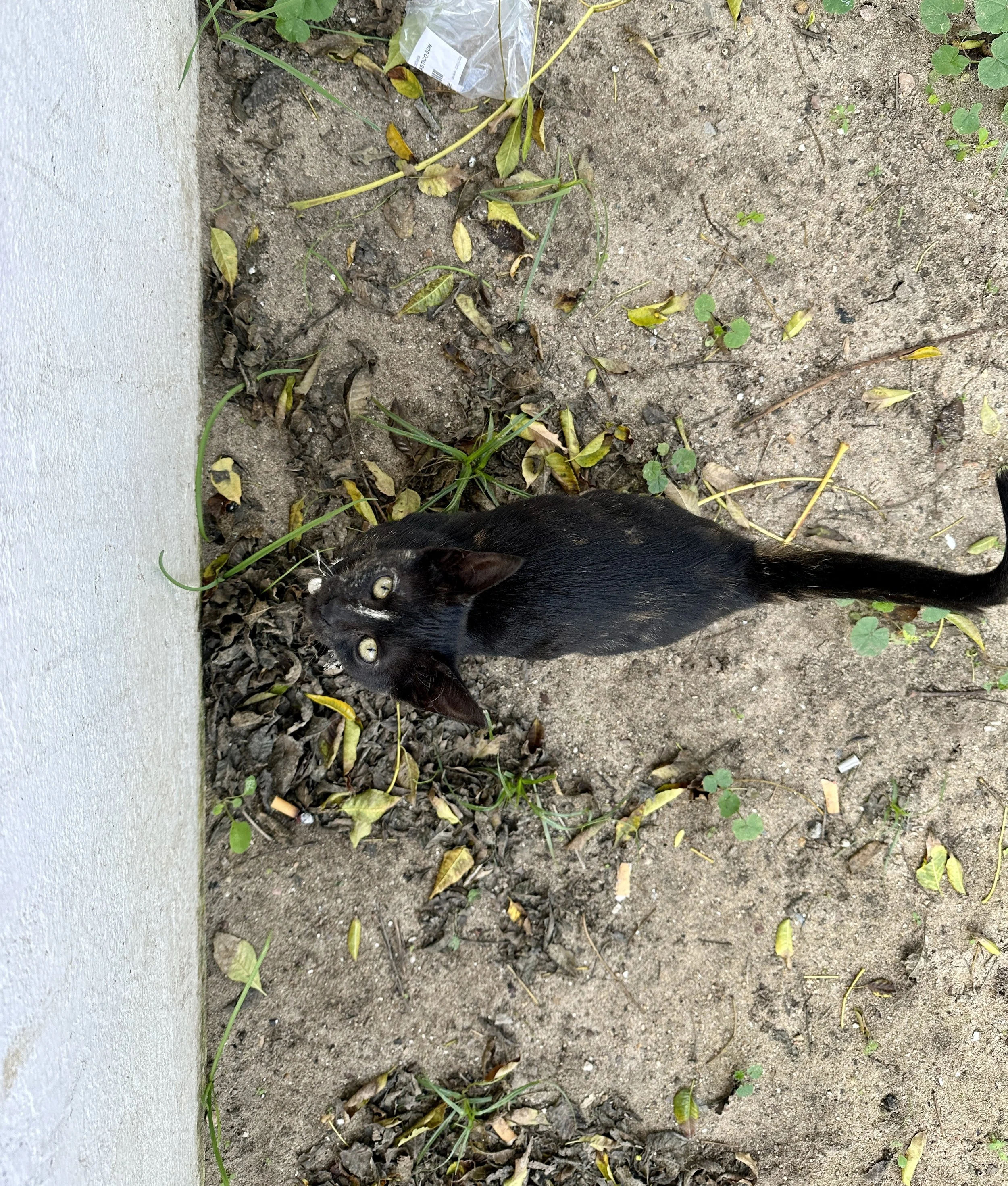
First though: pastelaria. We head up a main thoroughfare in Vila Nova de Milfontes, past a yard cat…
…to a bustling spot with a wide selection and a fresh Galão.
GALÃO
Galão became our drink of choice at cafes - similar to a caffè latte or cafe au lait, it’s made by adding foamed milk to espresso coffee. It is delicious, and we did not have a bad galão all trip.
And of course, pastels de nata. Plus an almond tart, another Portuguese specialty, boxed up as a luxury trail snack for later.
Back at the hotel I manage to get lost one last time between our room and reception. I go in at least three circles and am in the midst of begging for help from the cleaning staff when Antoaneta calls from the doorway under the big sign that says ‘RECEPTION’.
The woman at the counter calls the cab for us and we spend the fifteen minute wait perusing a gorgeous book in the lobby about the Rota Vicentina, complete with beautiful watercolour illustrations.
Our cab pulls out and winds through streets lined with hikers marching out of town - suckers. It’s a quick drive to Praia do Almograve and it gets us waaaay ahead of those pesky tour groups.
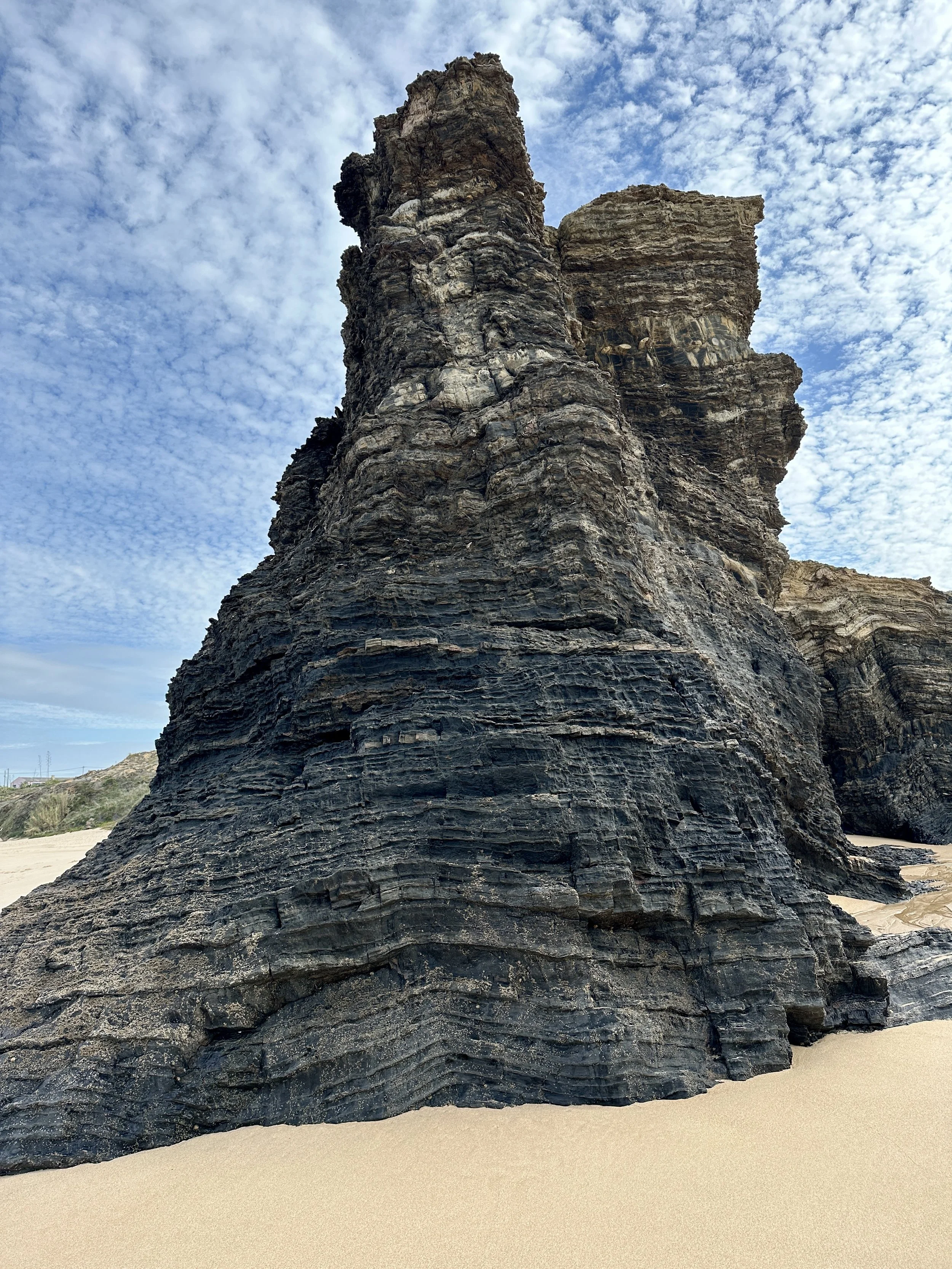
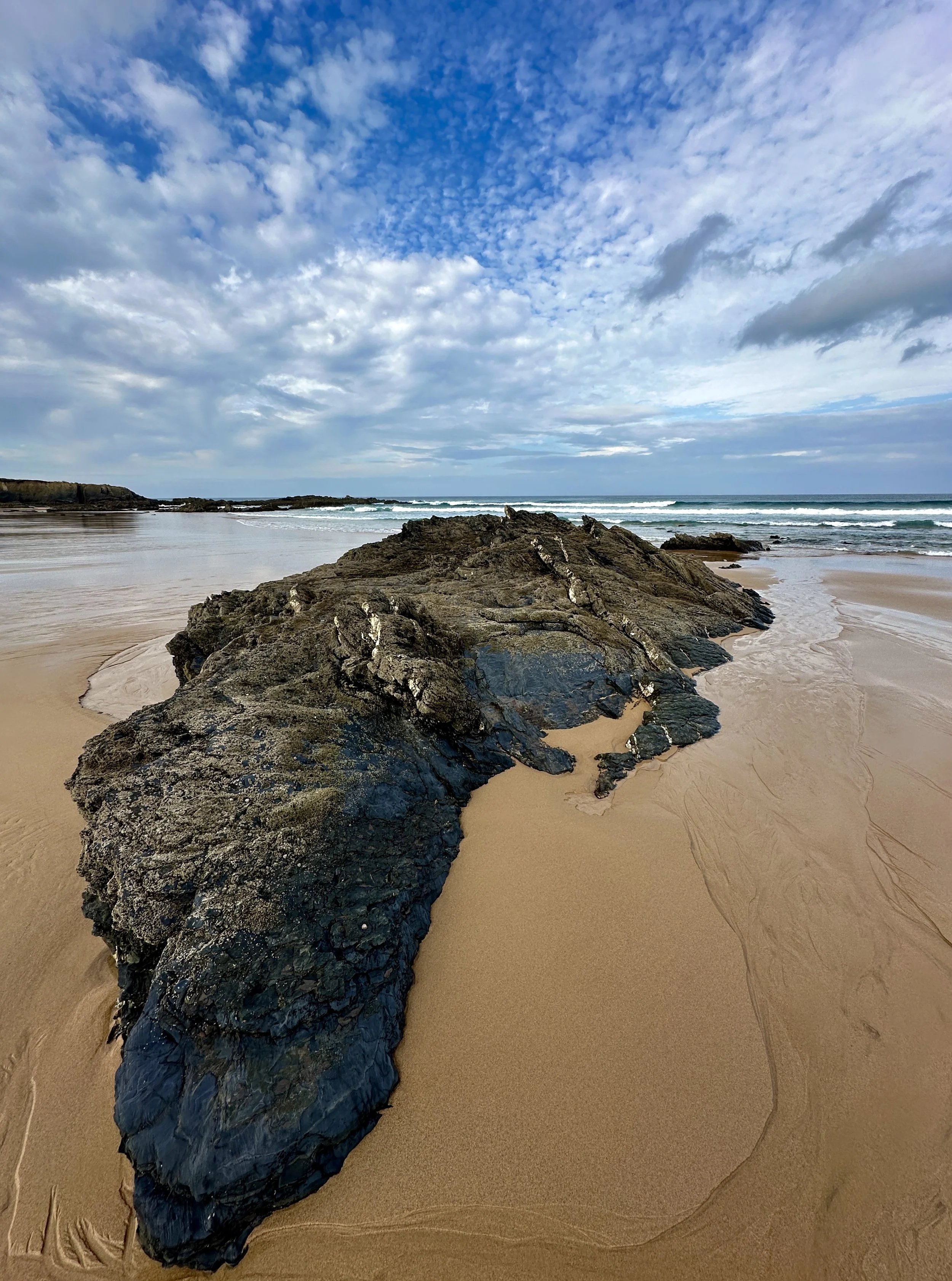
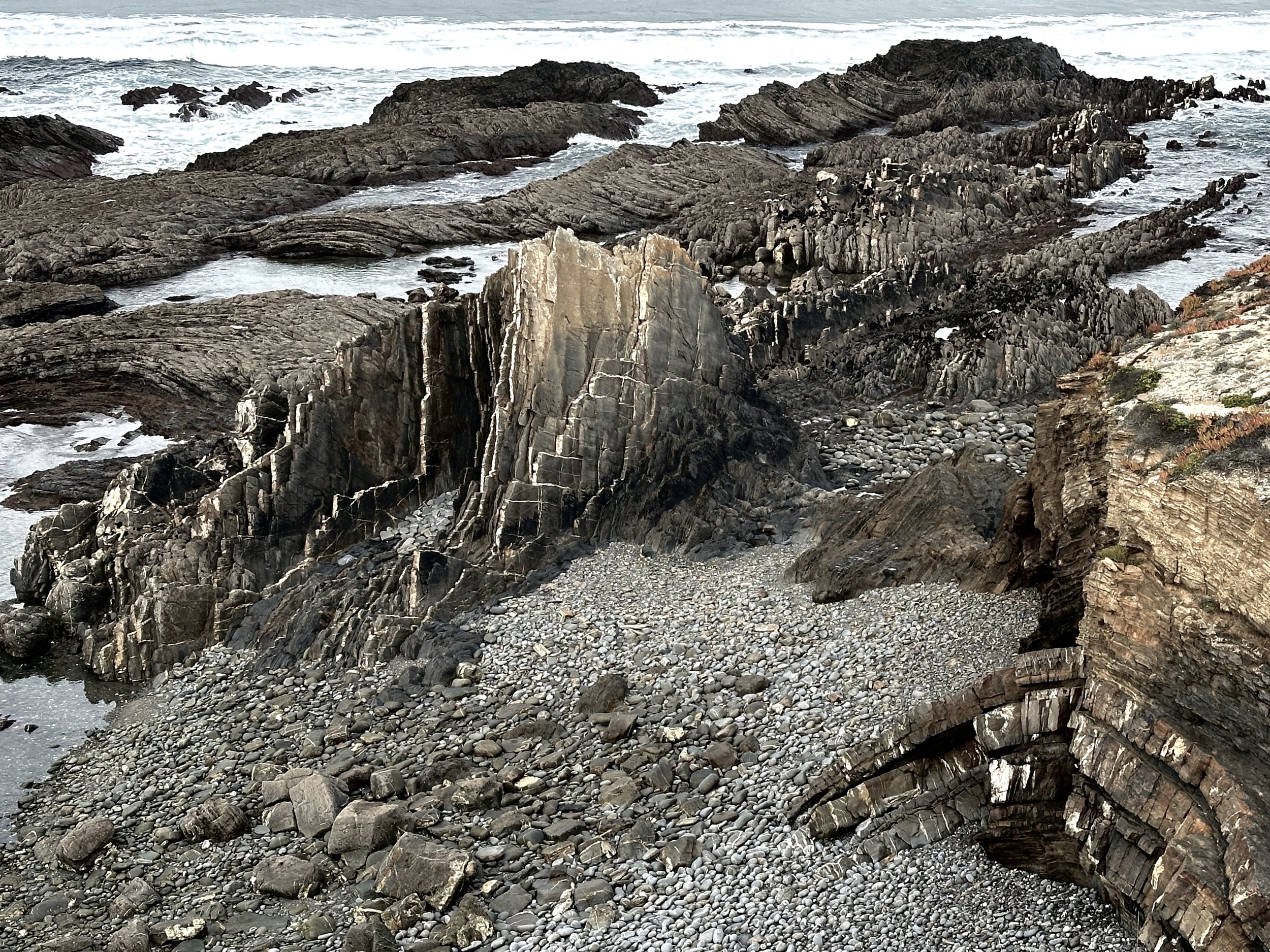
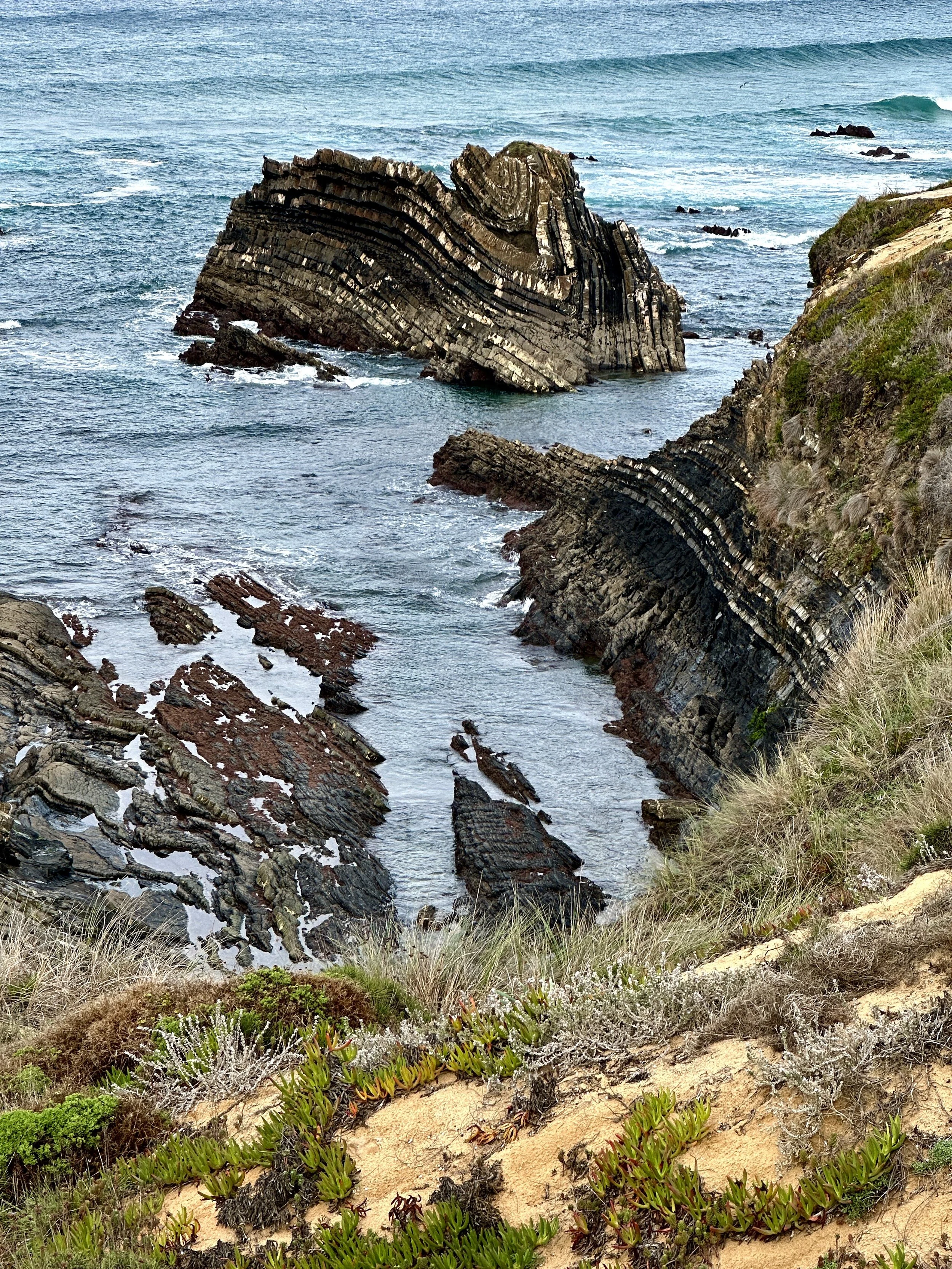
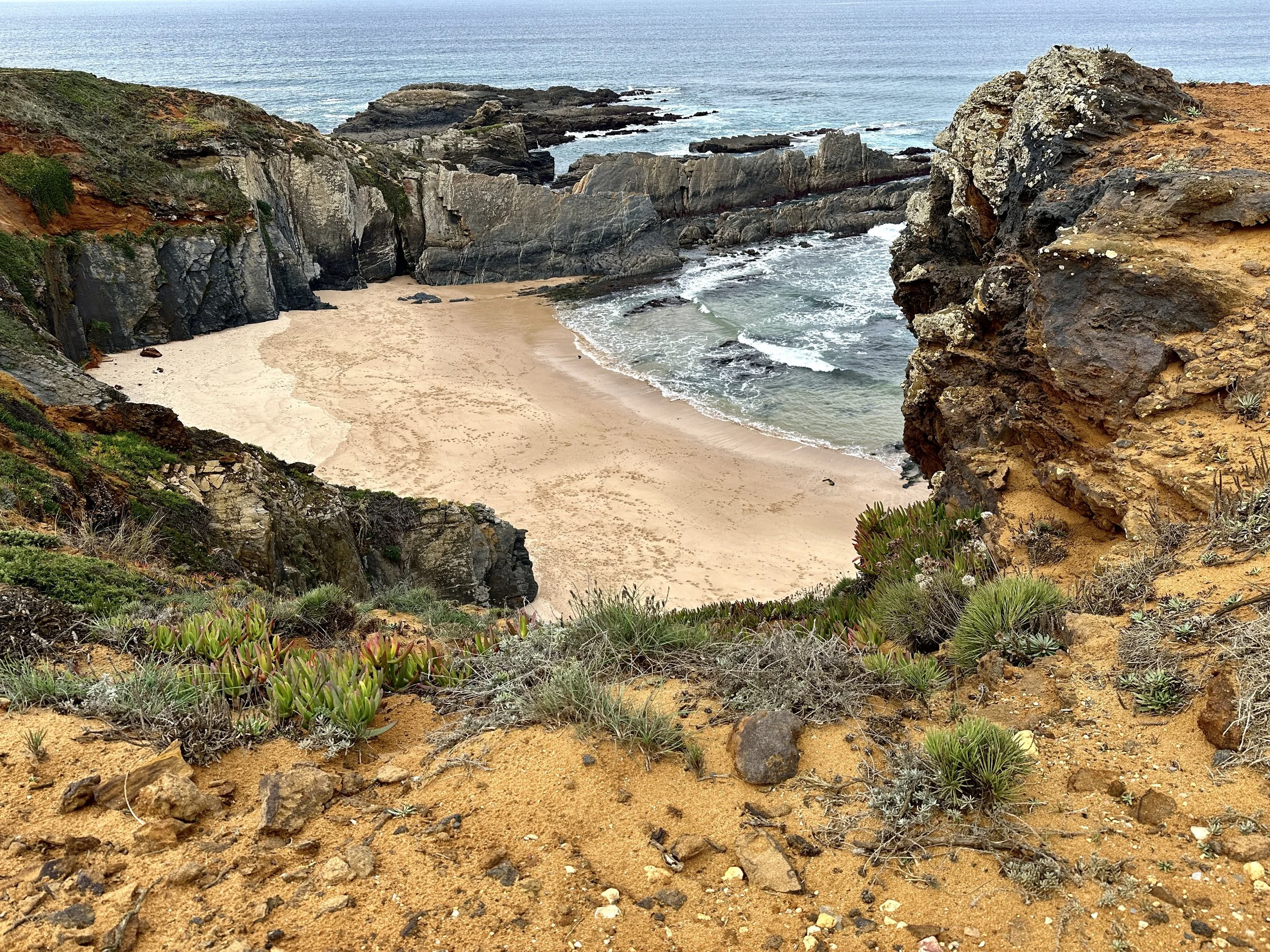
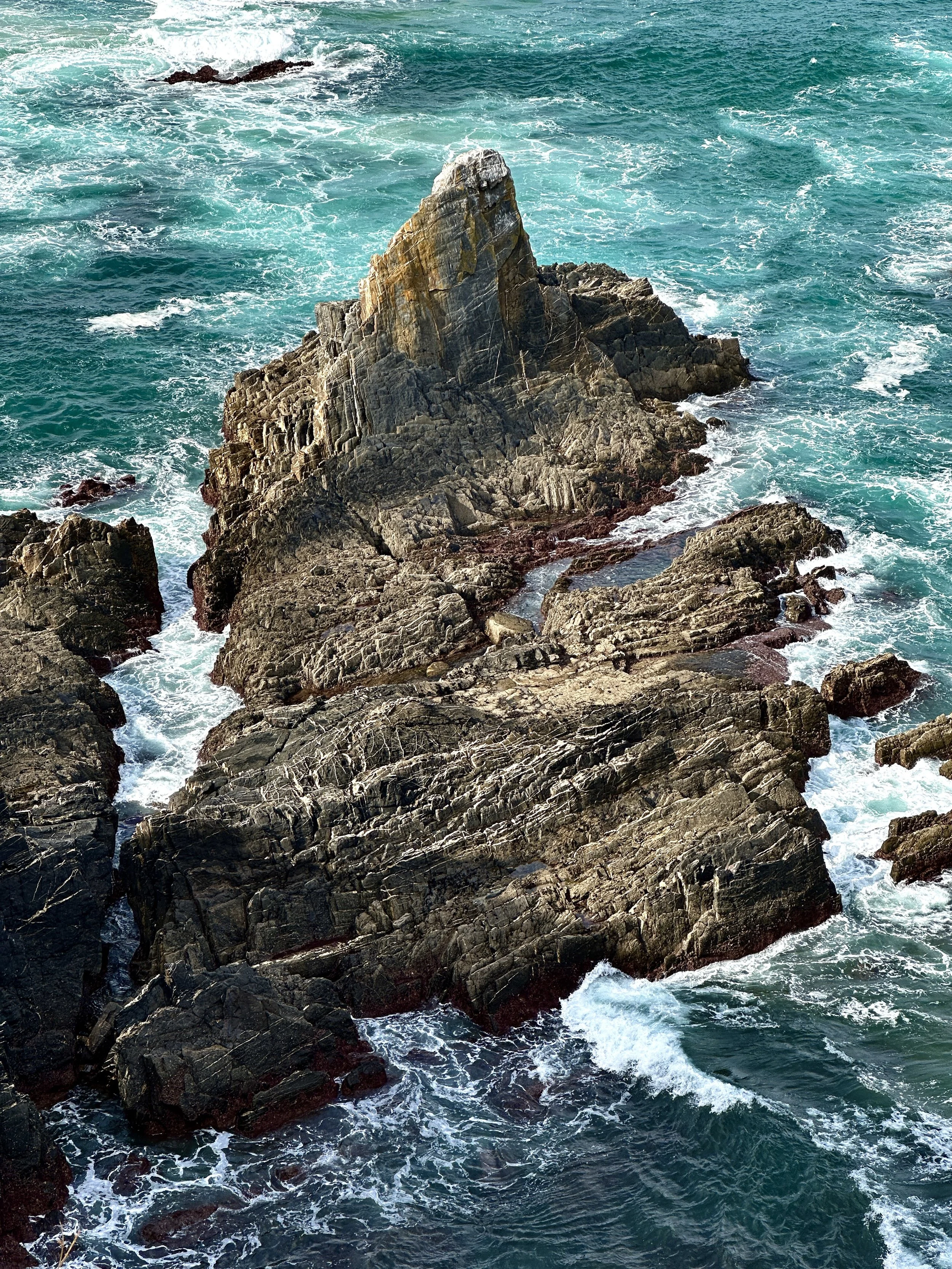
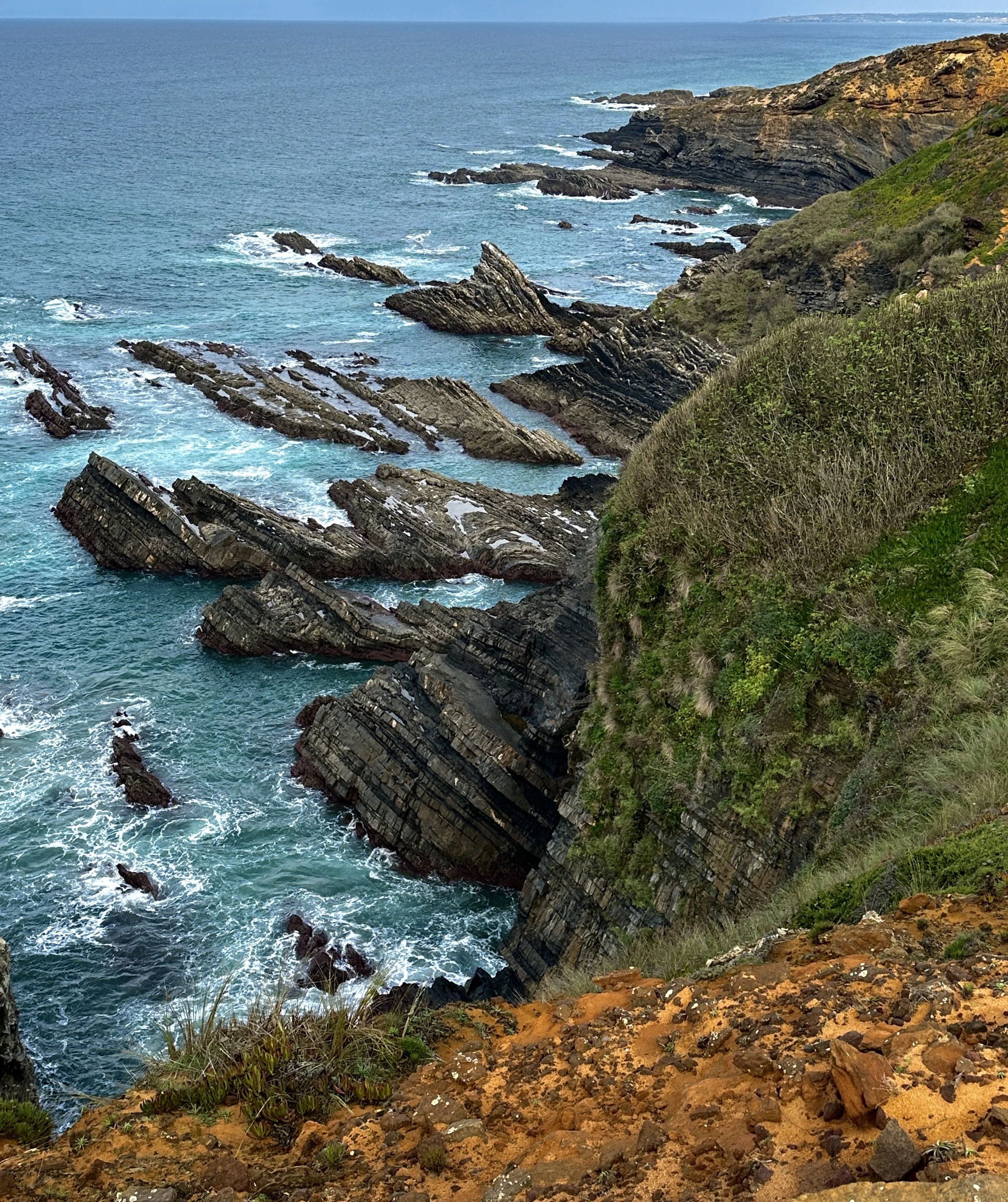
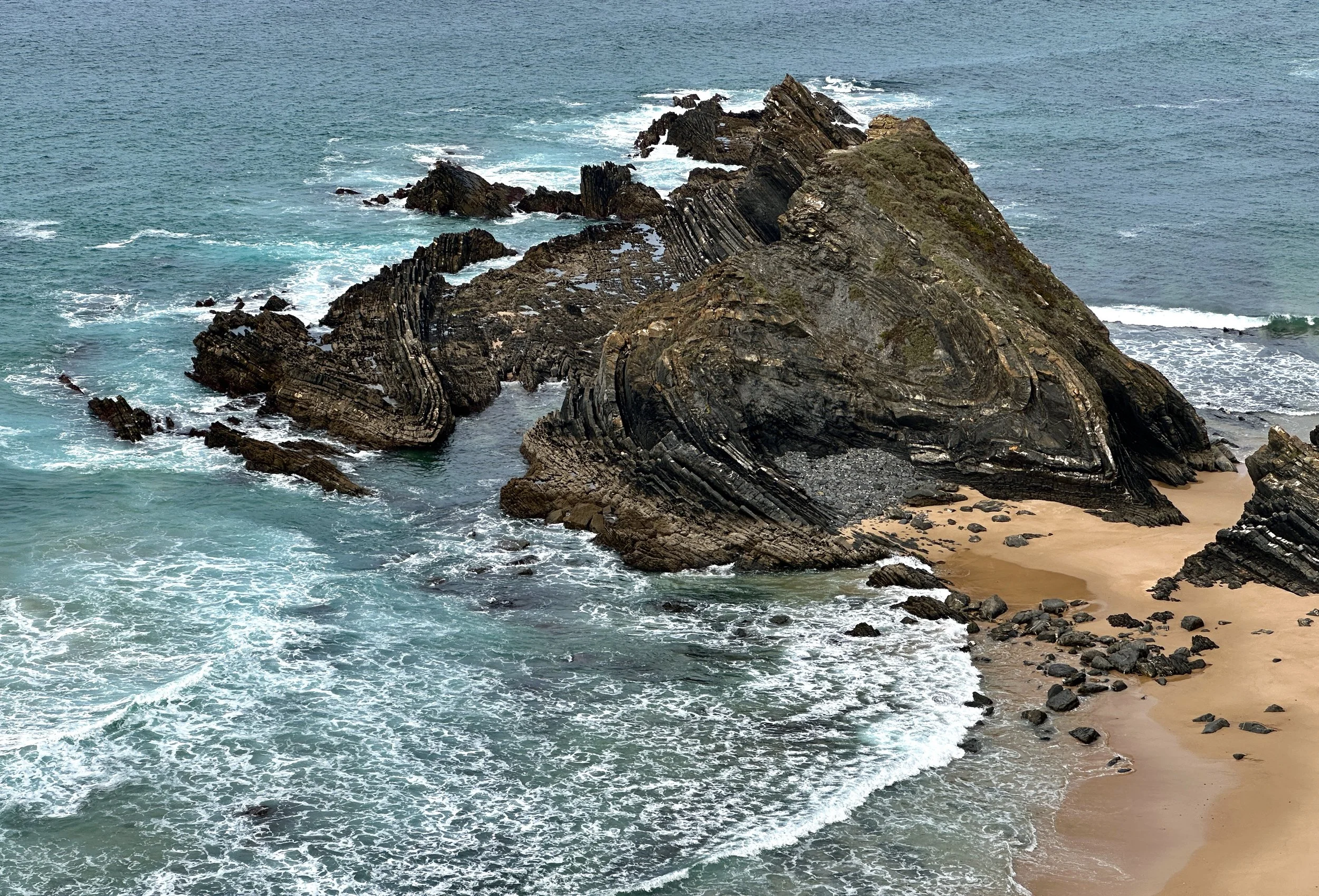
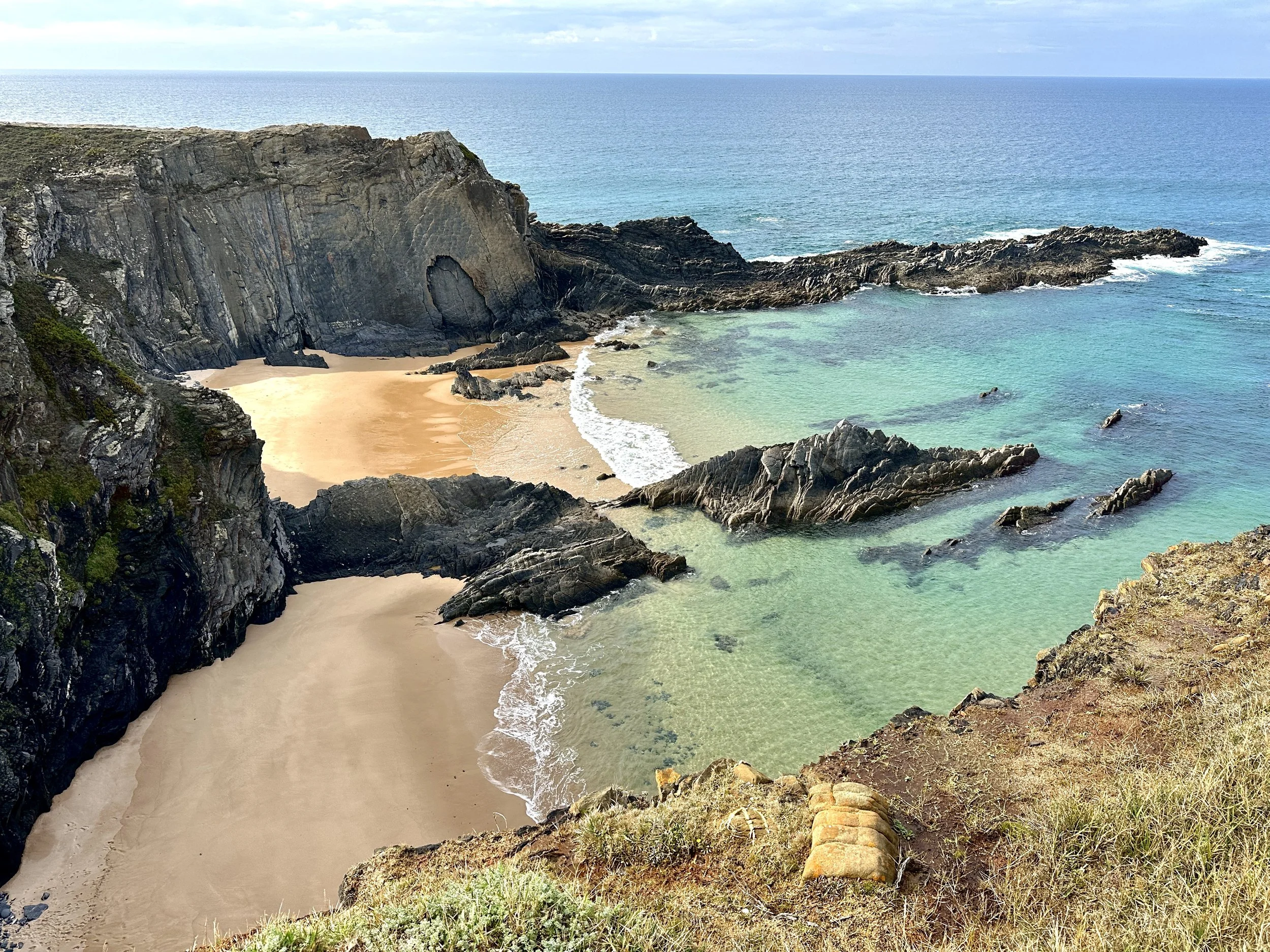
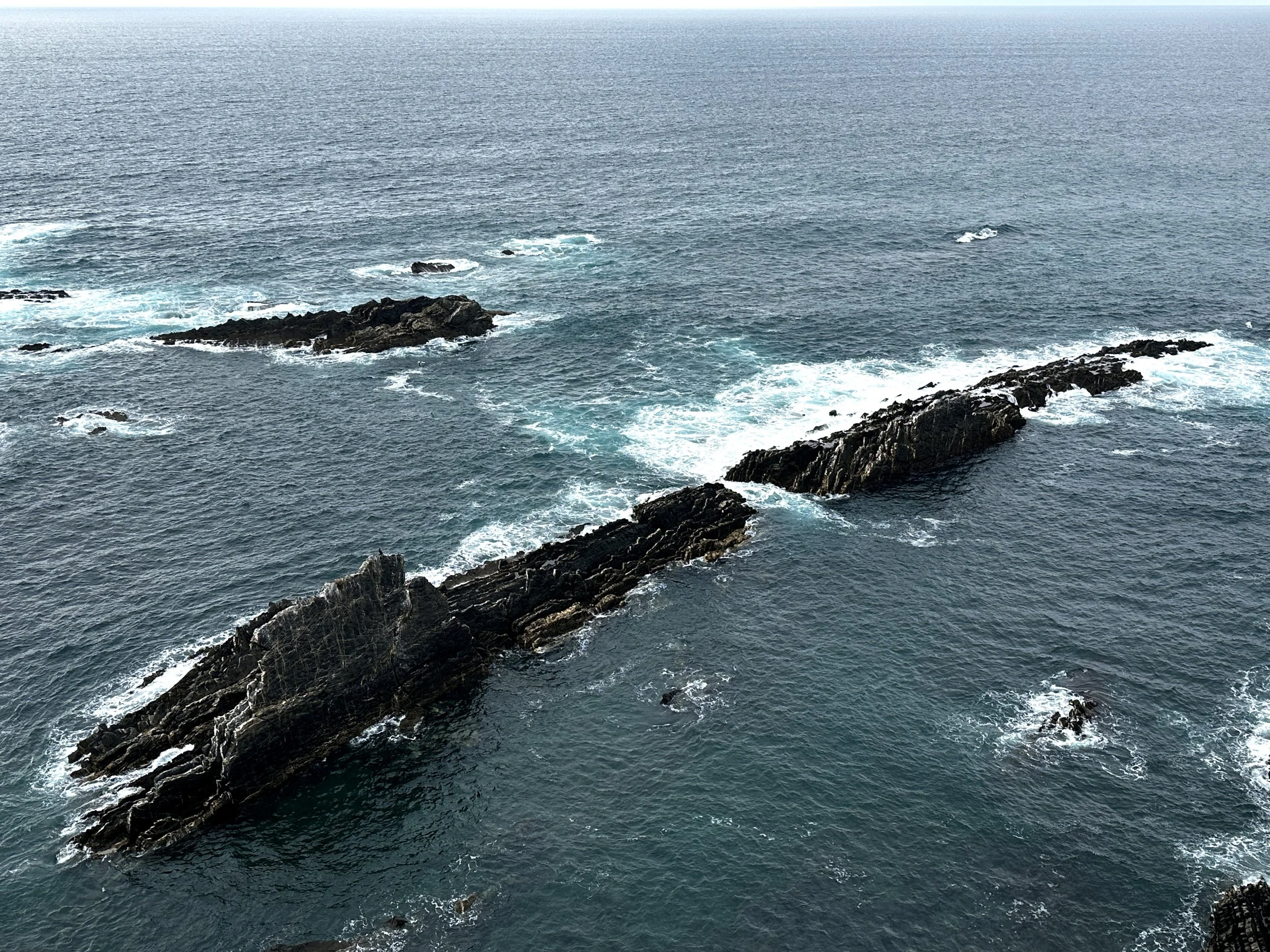
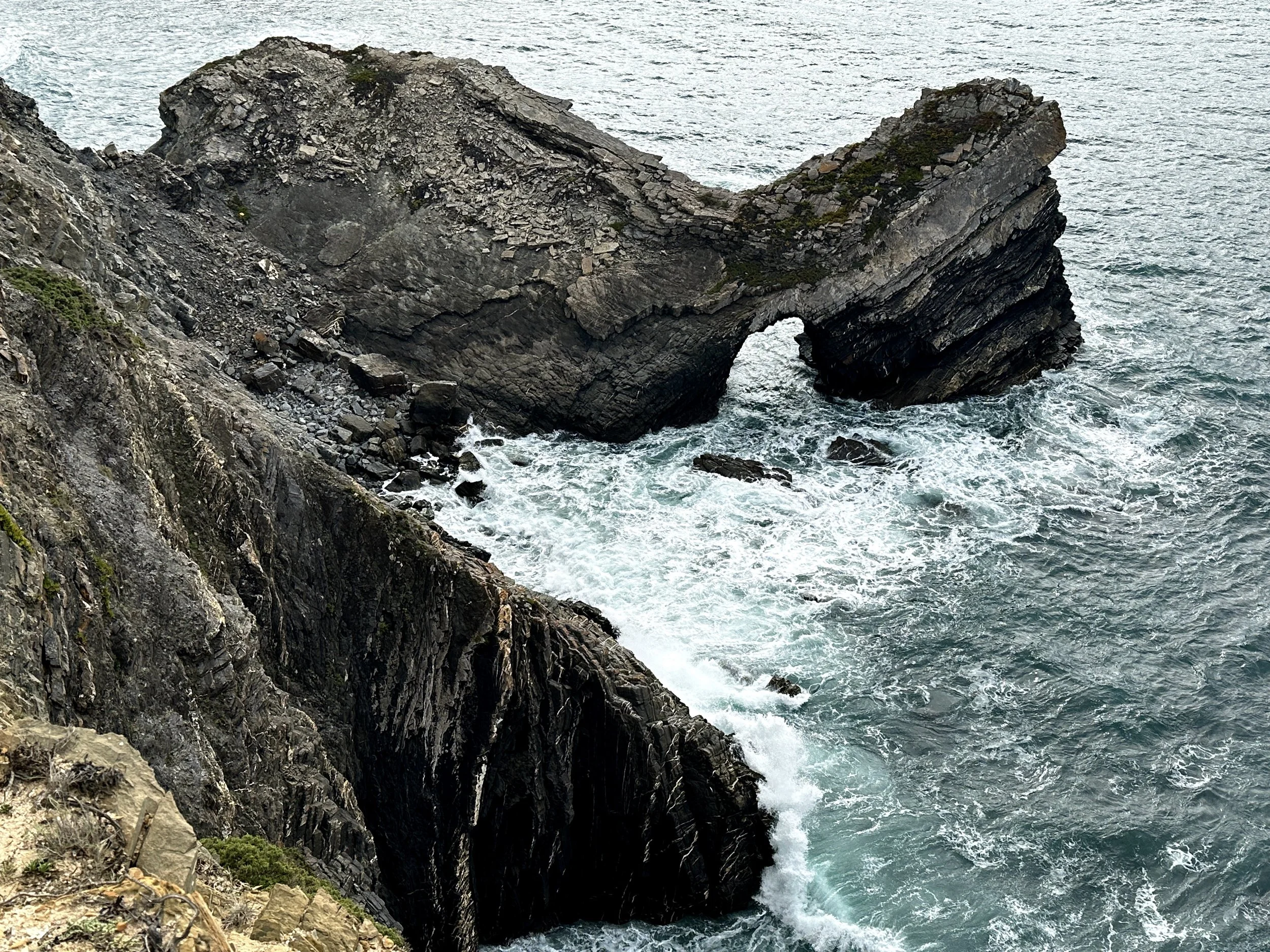
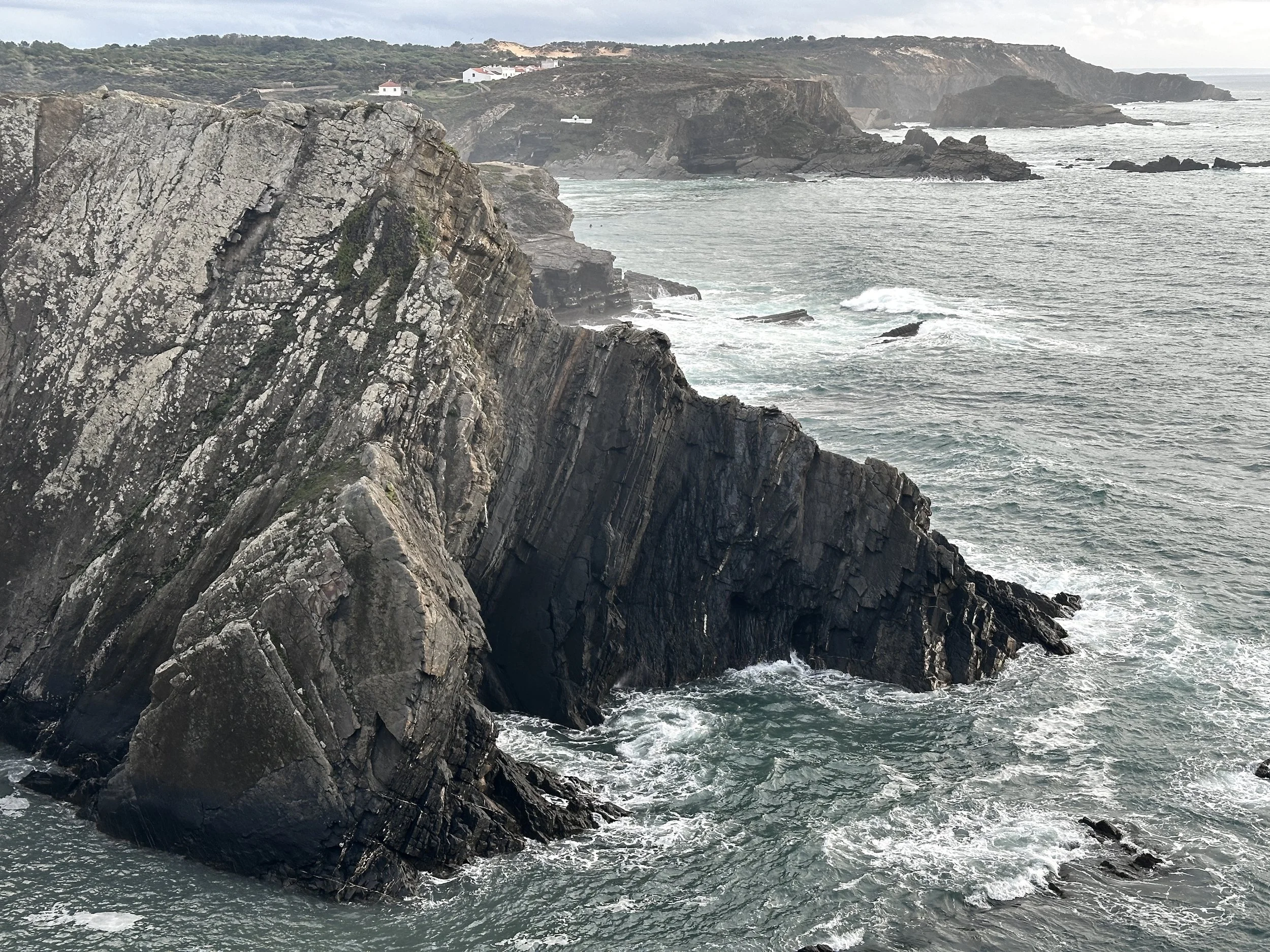
Here we drop down onto the beach among some stunning rock formations,
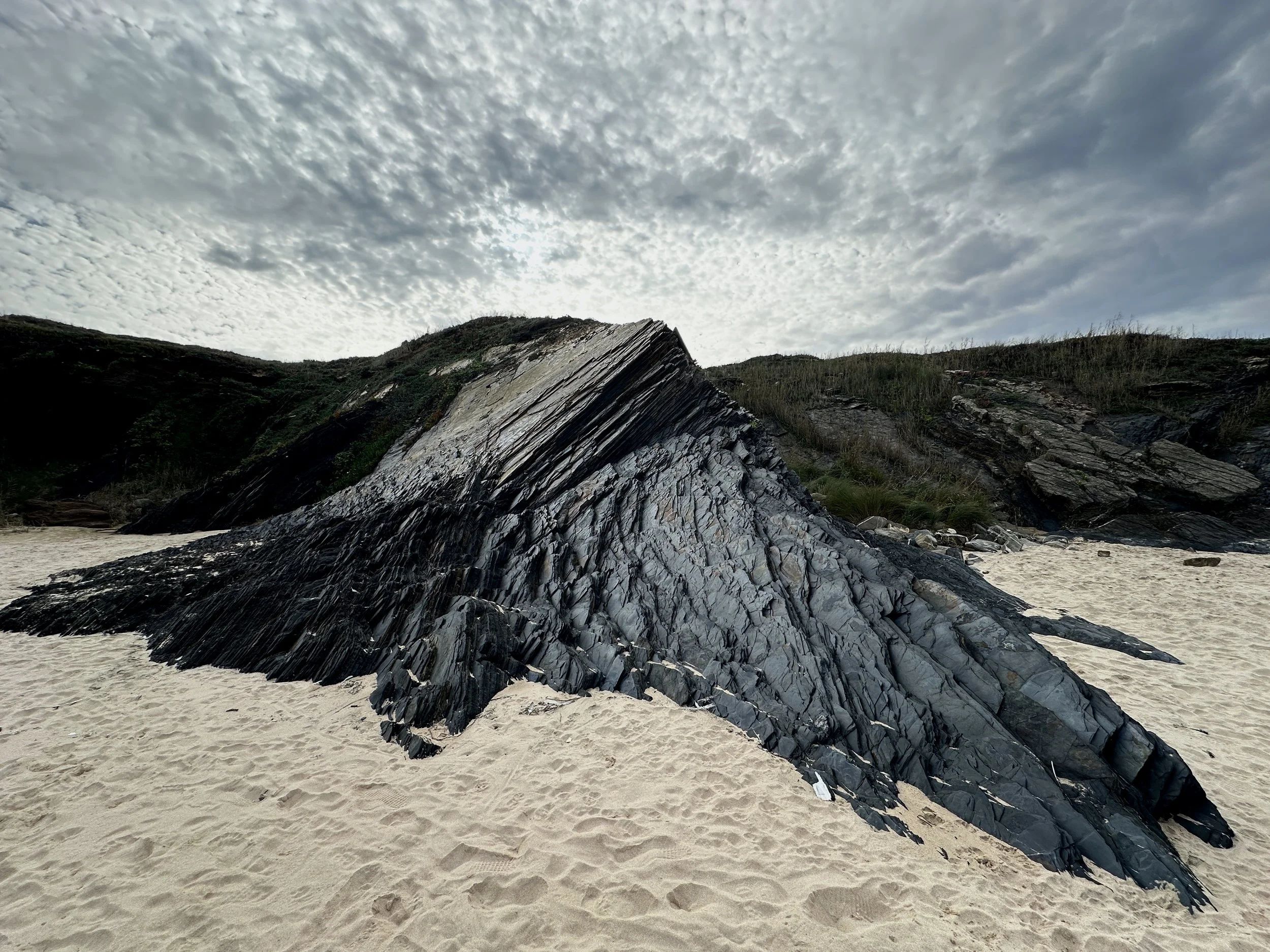
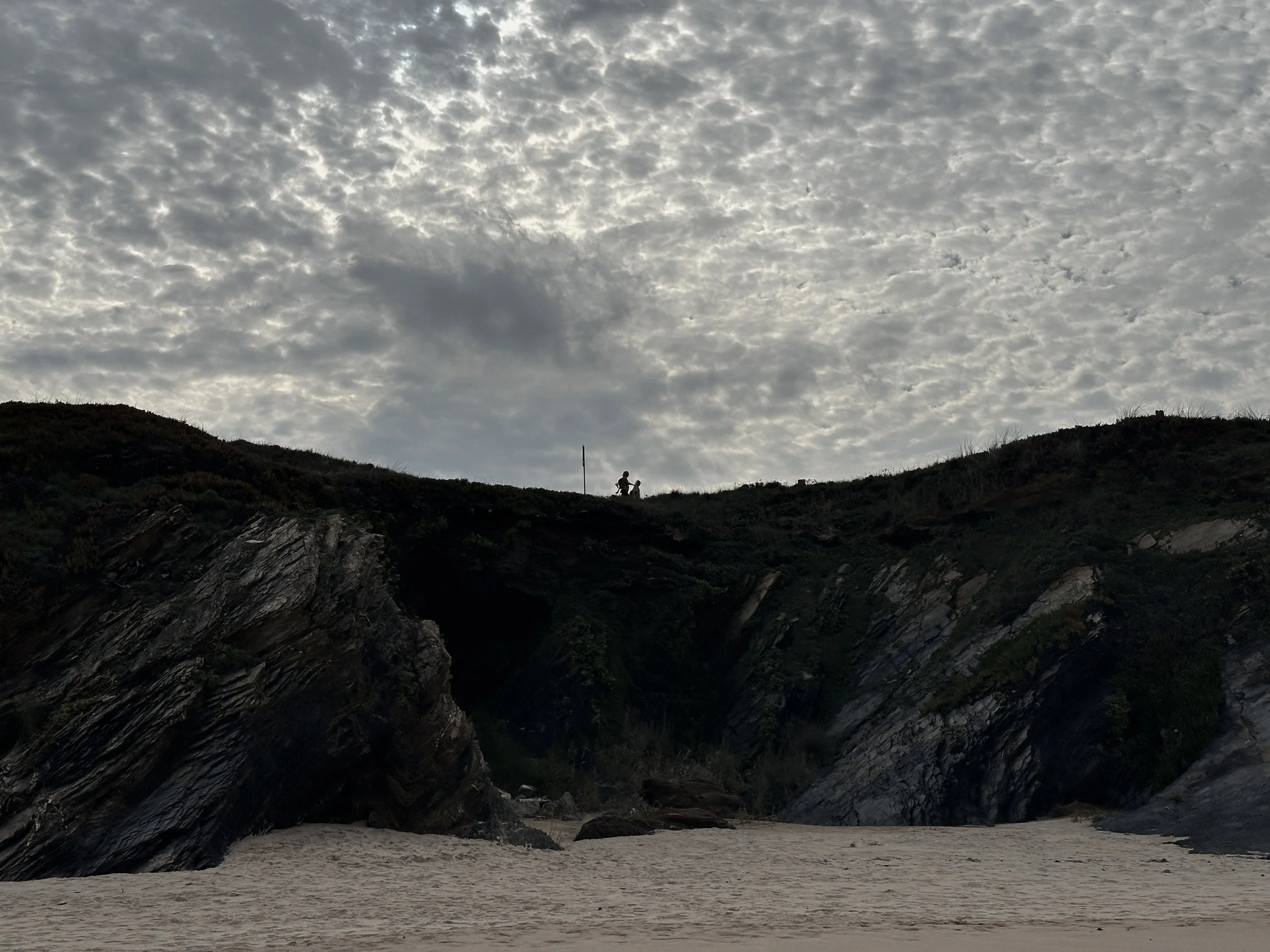
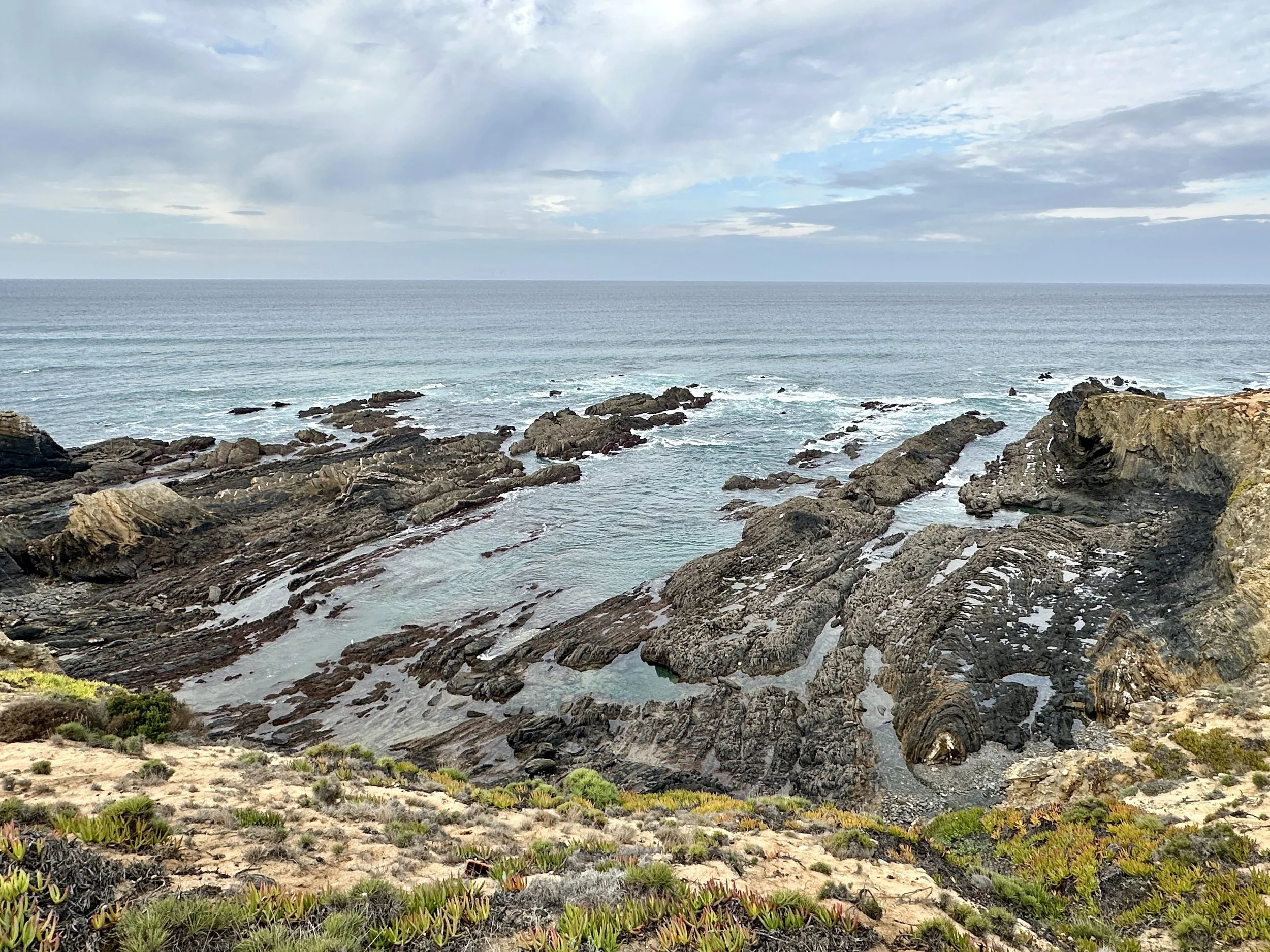
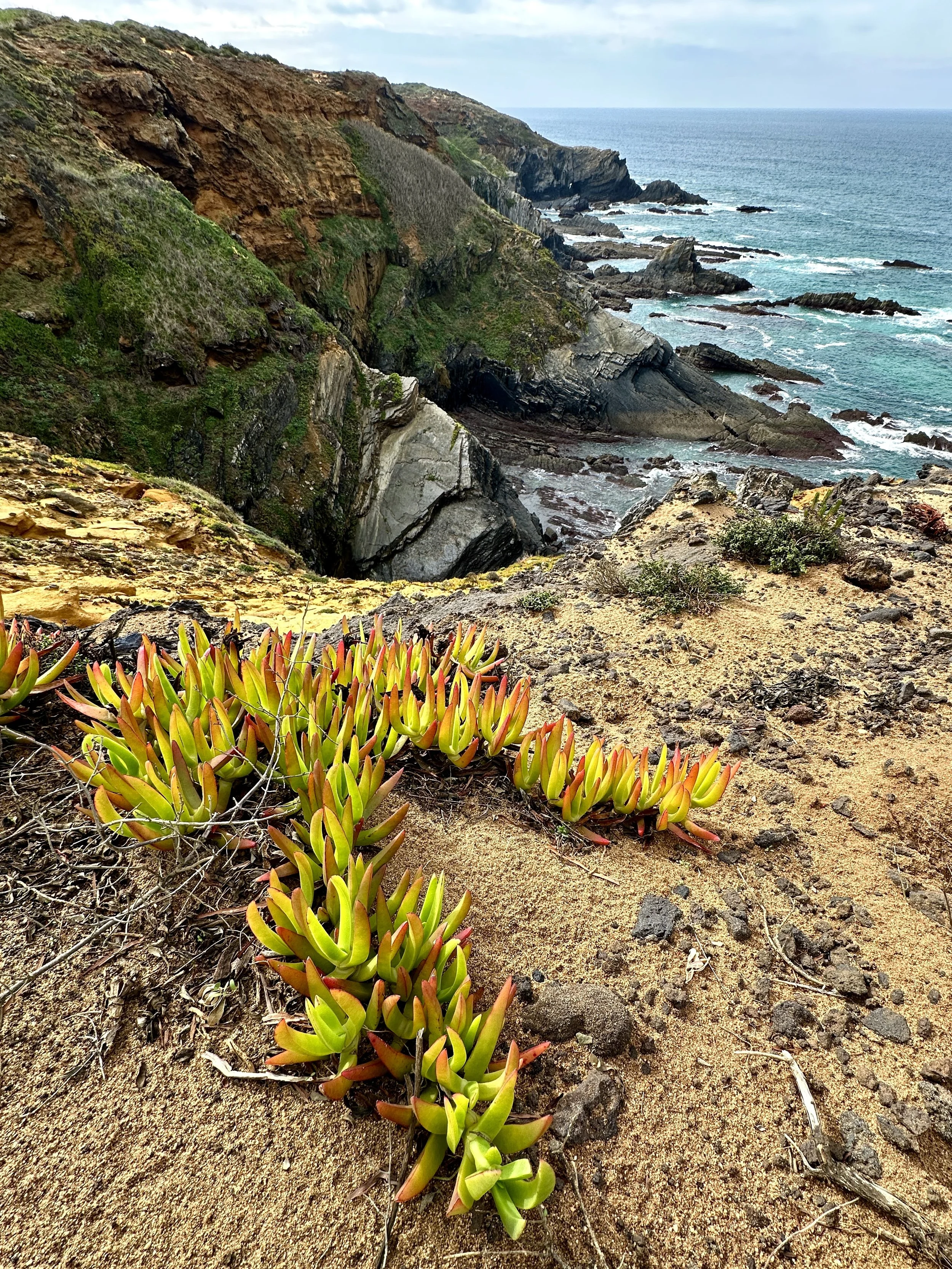
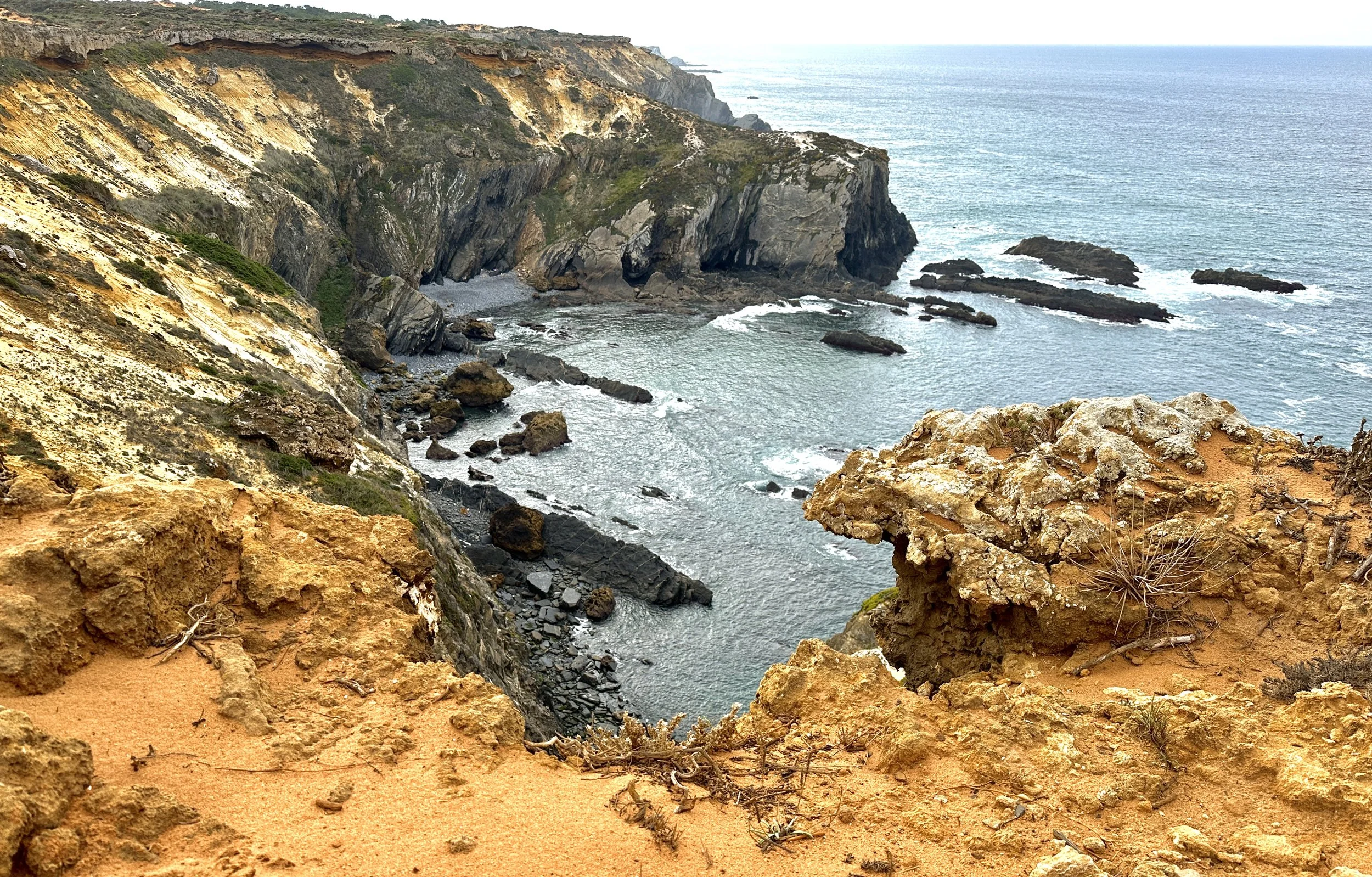
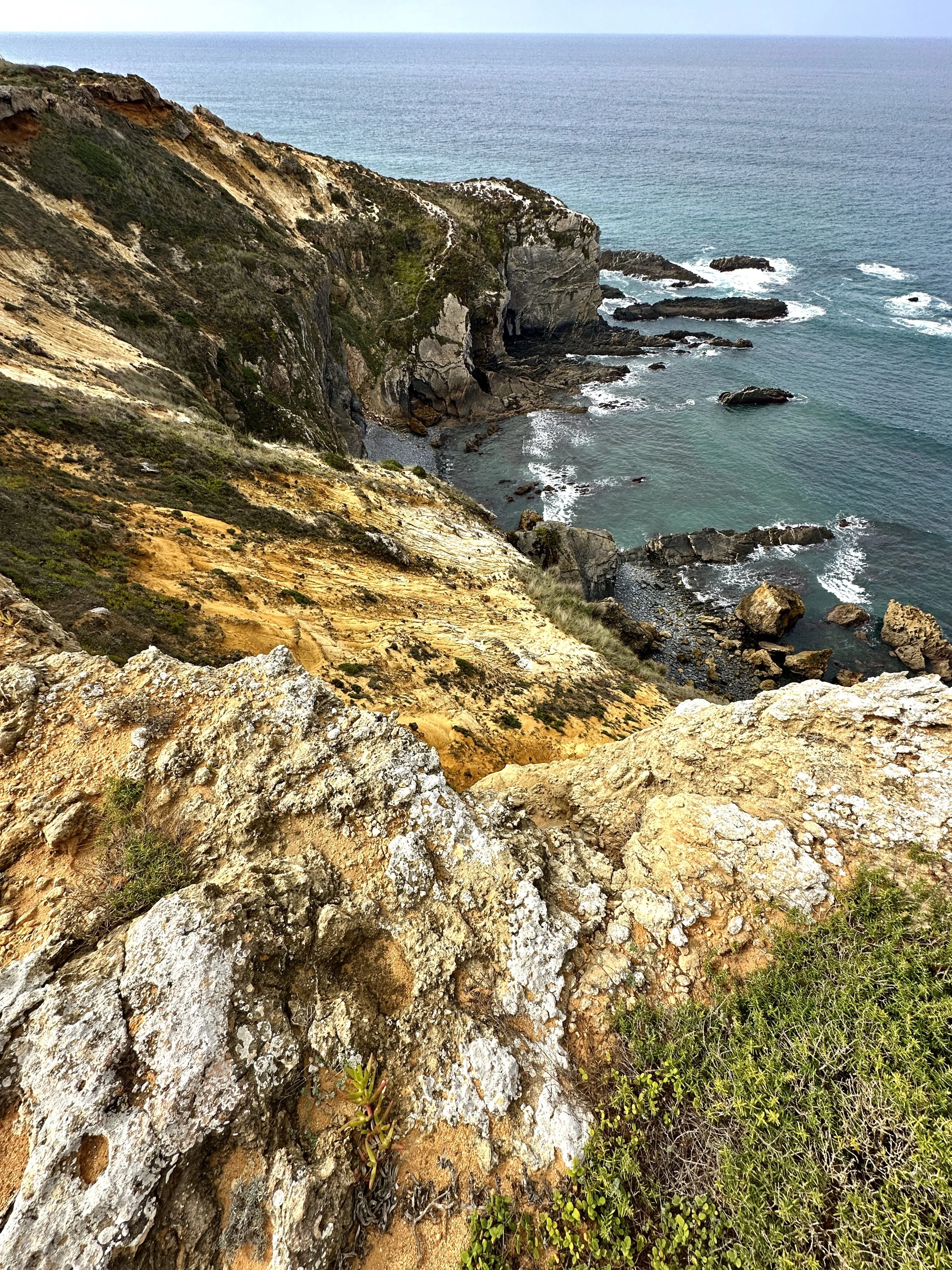
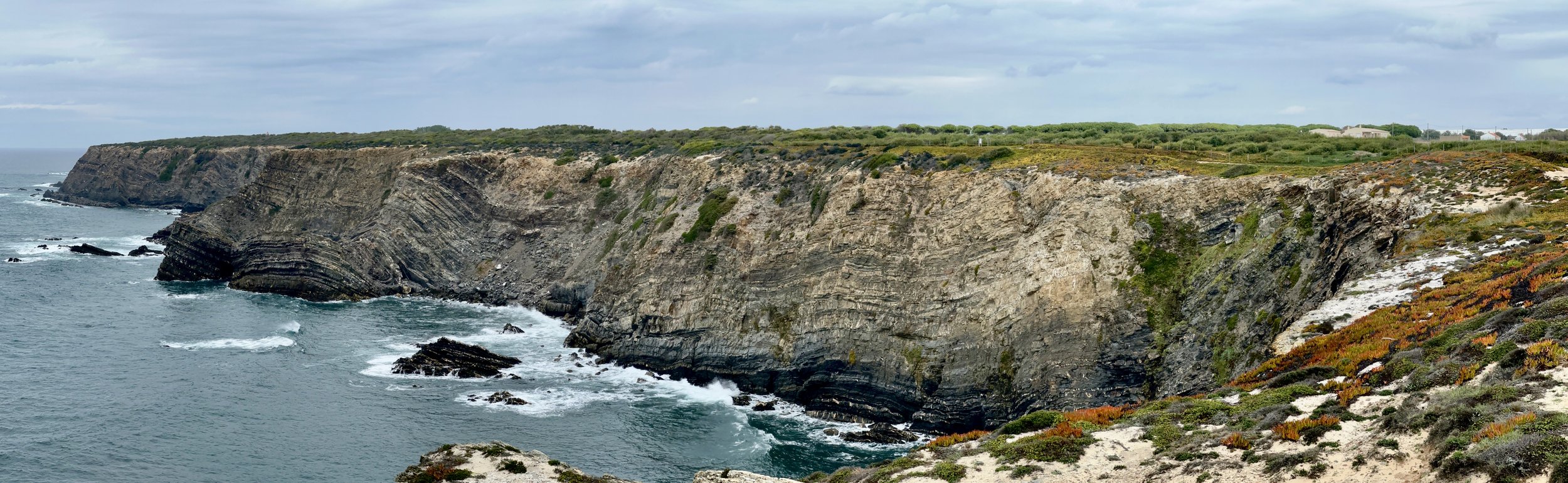
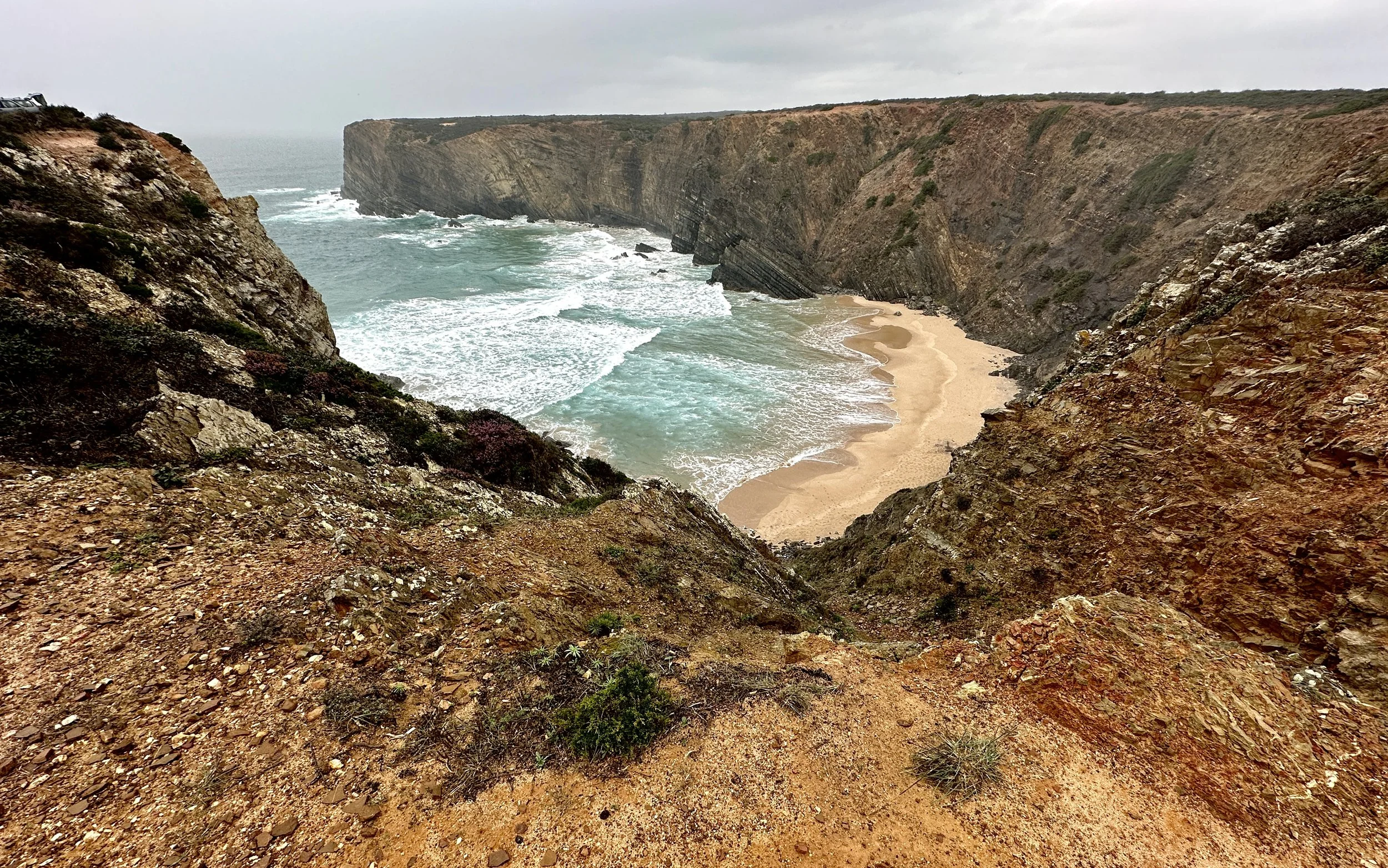
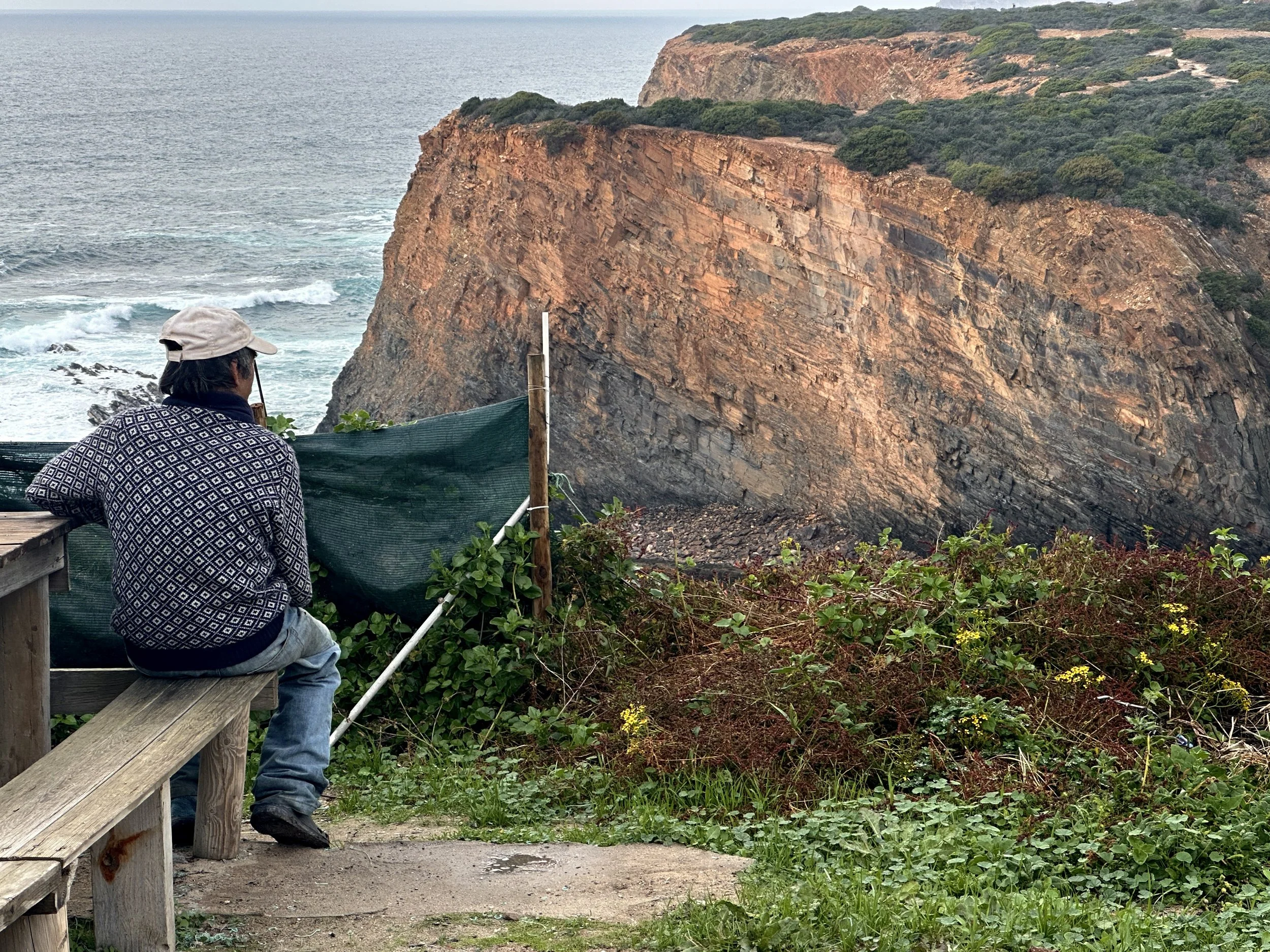
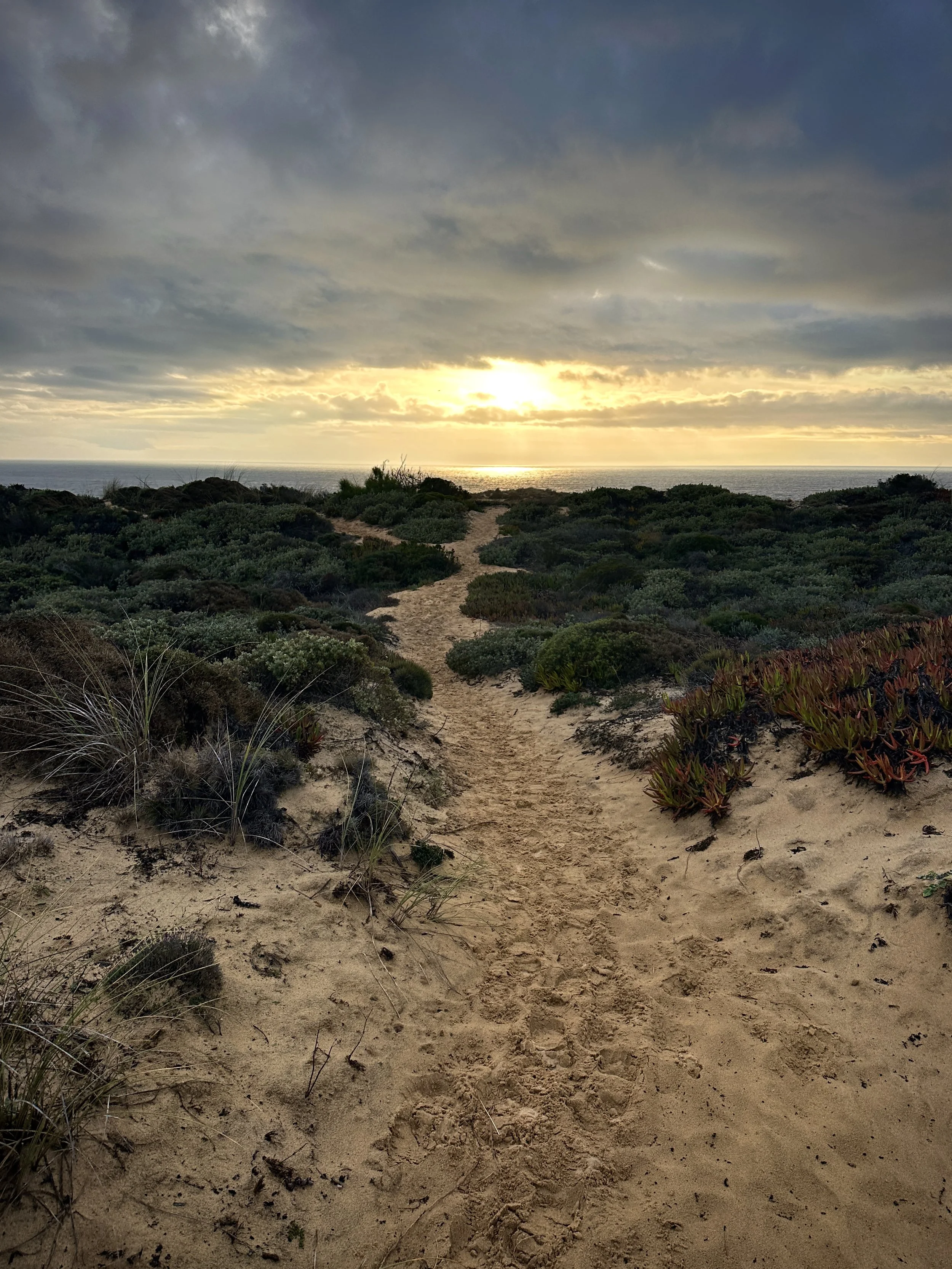
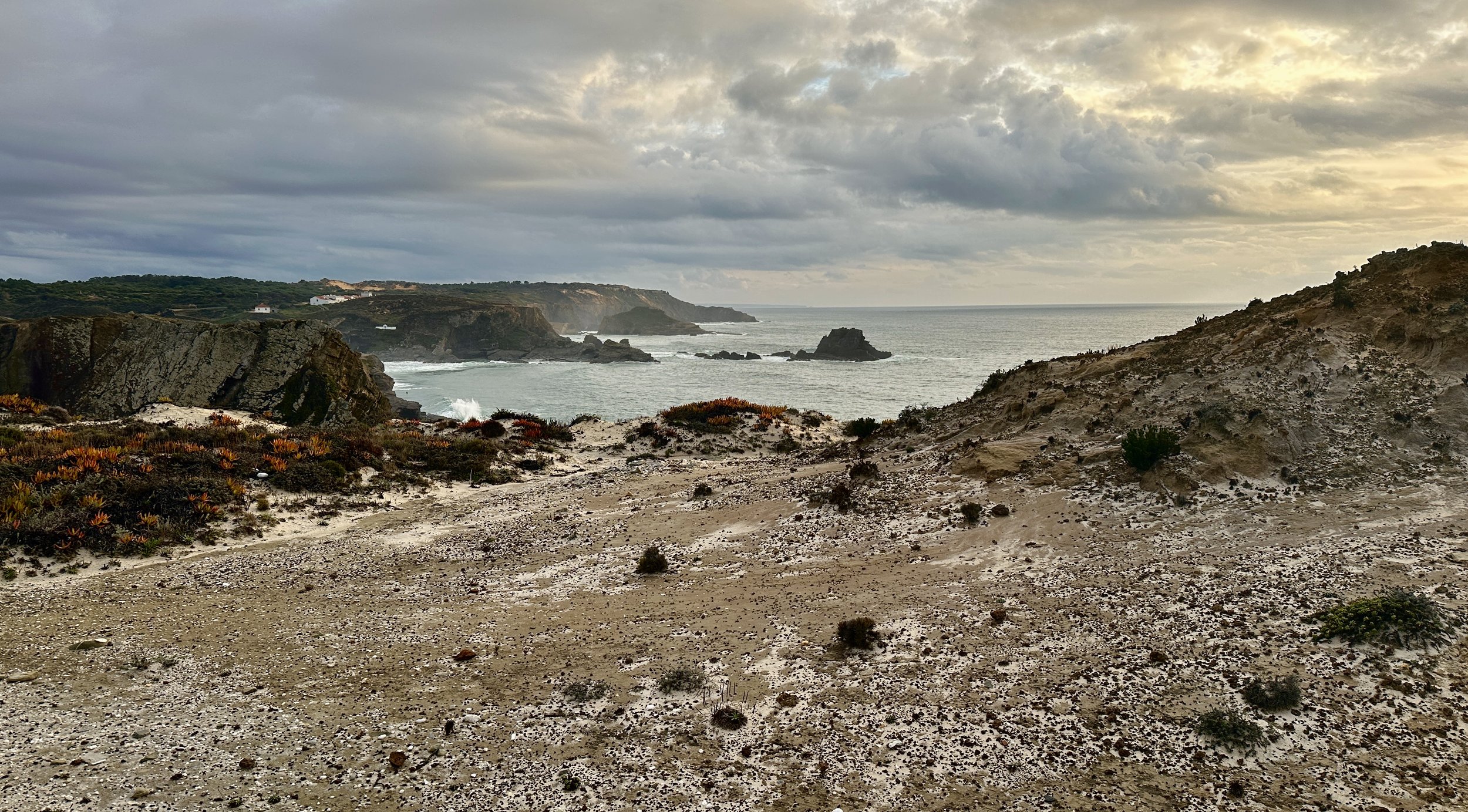
before returning to familiar clifftops. Familiar but subtly changed. The trail has a habit of reinventing itself geologically as we travel south.
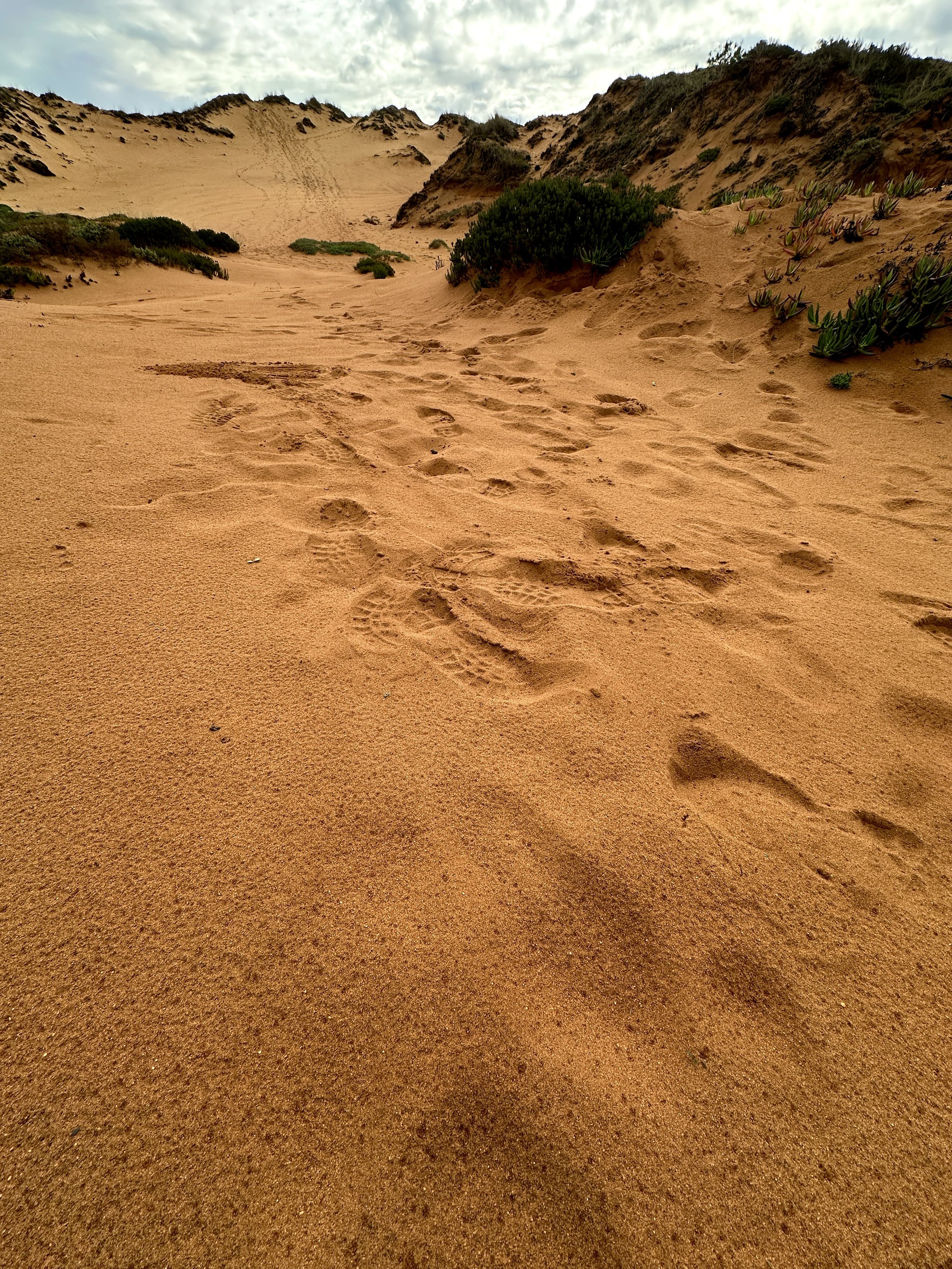
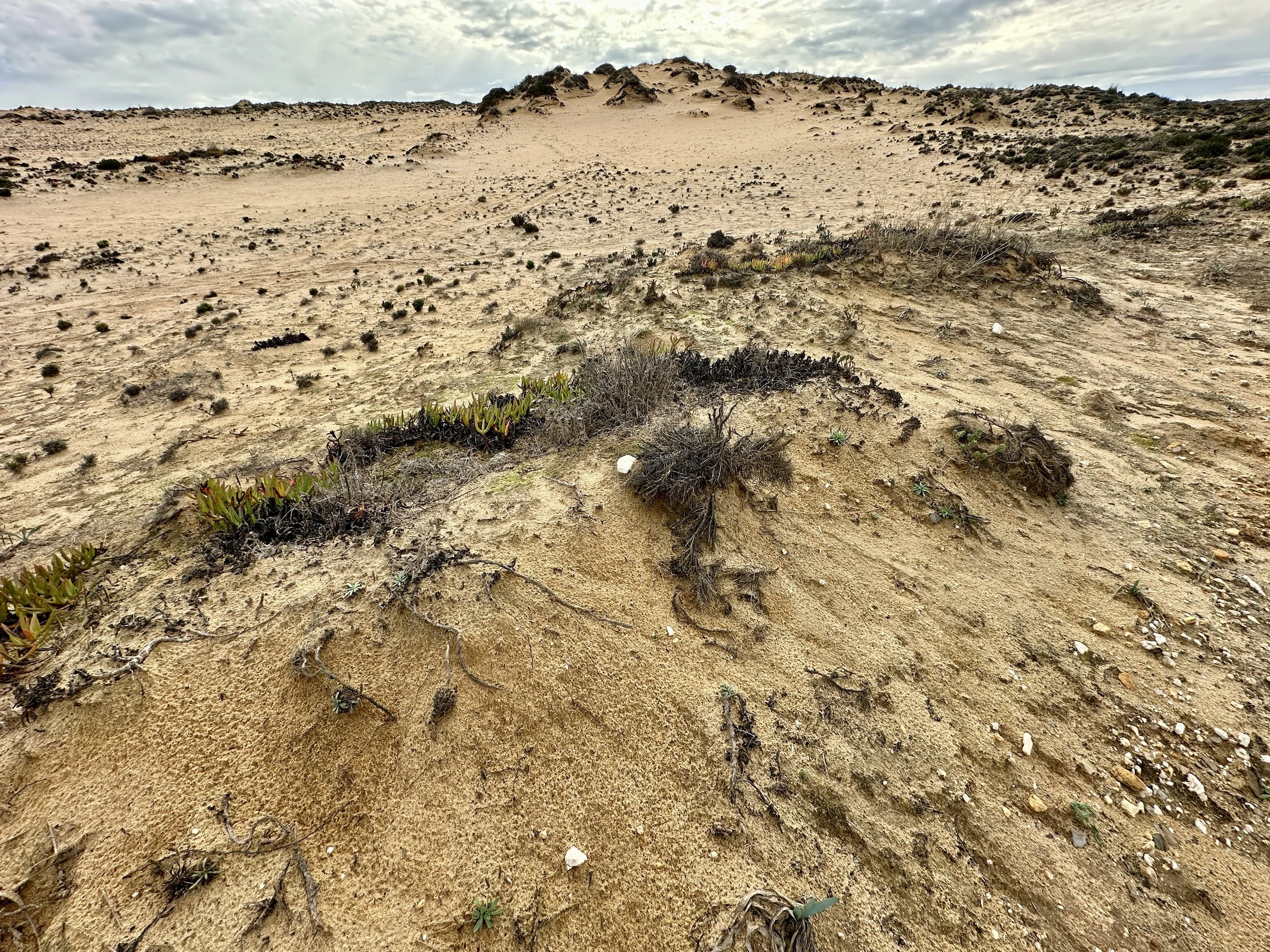
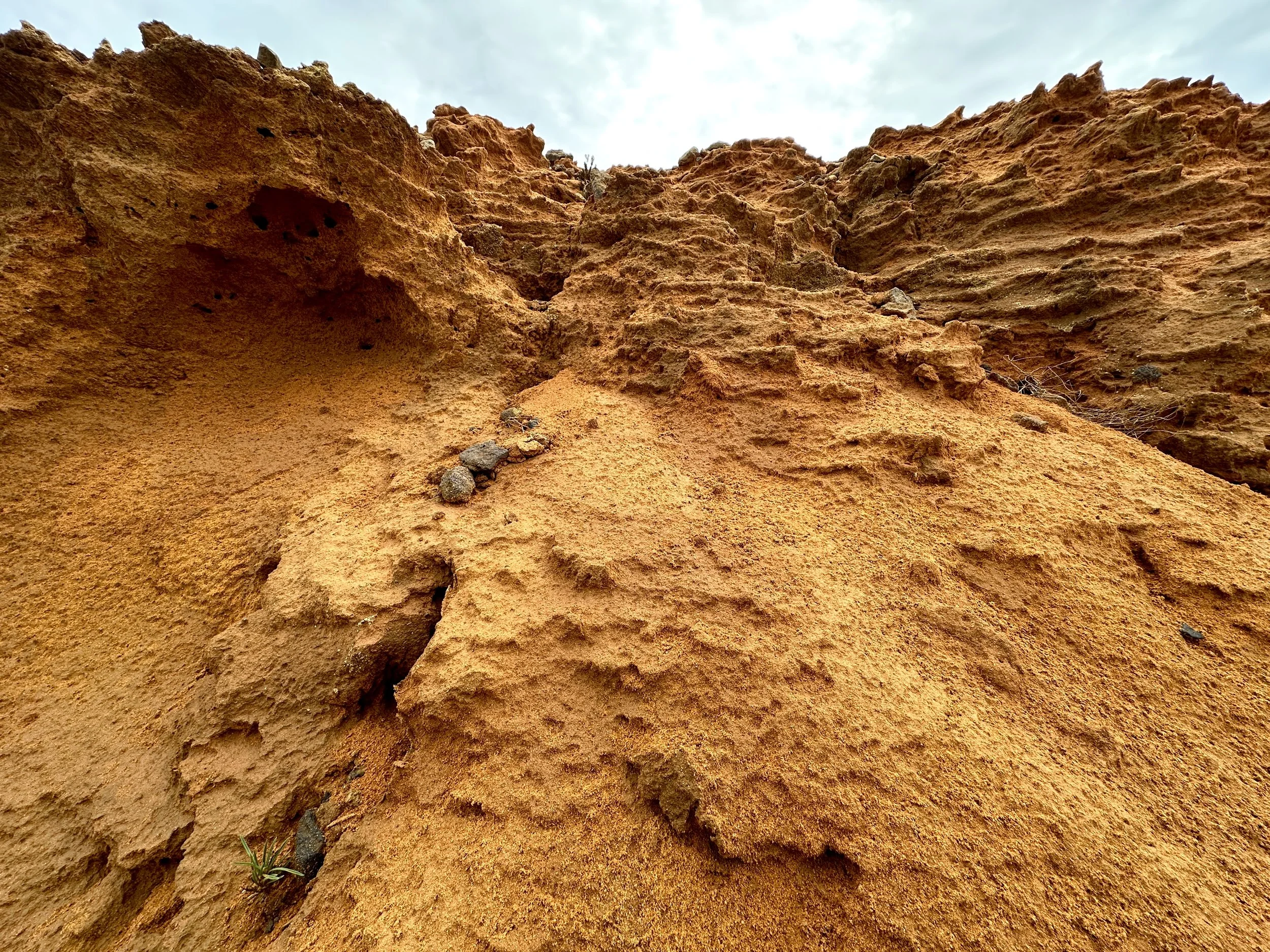
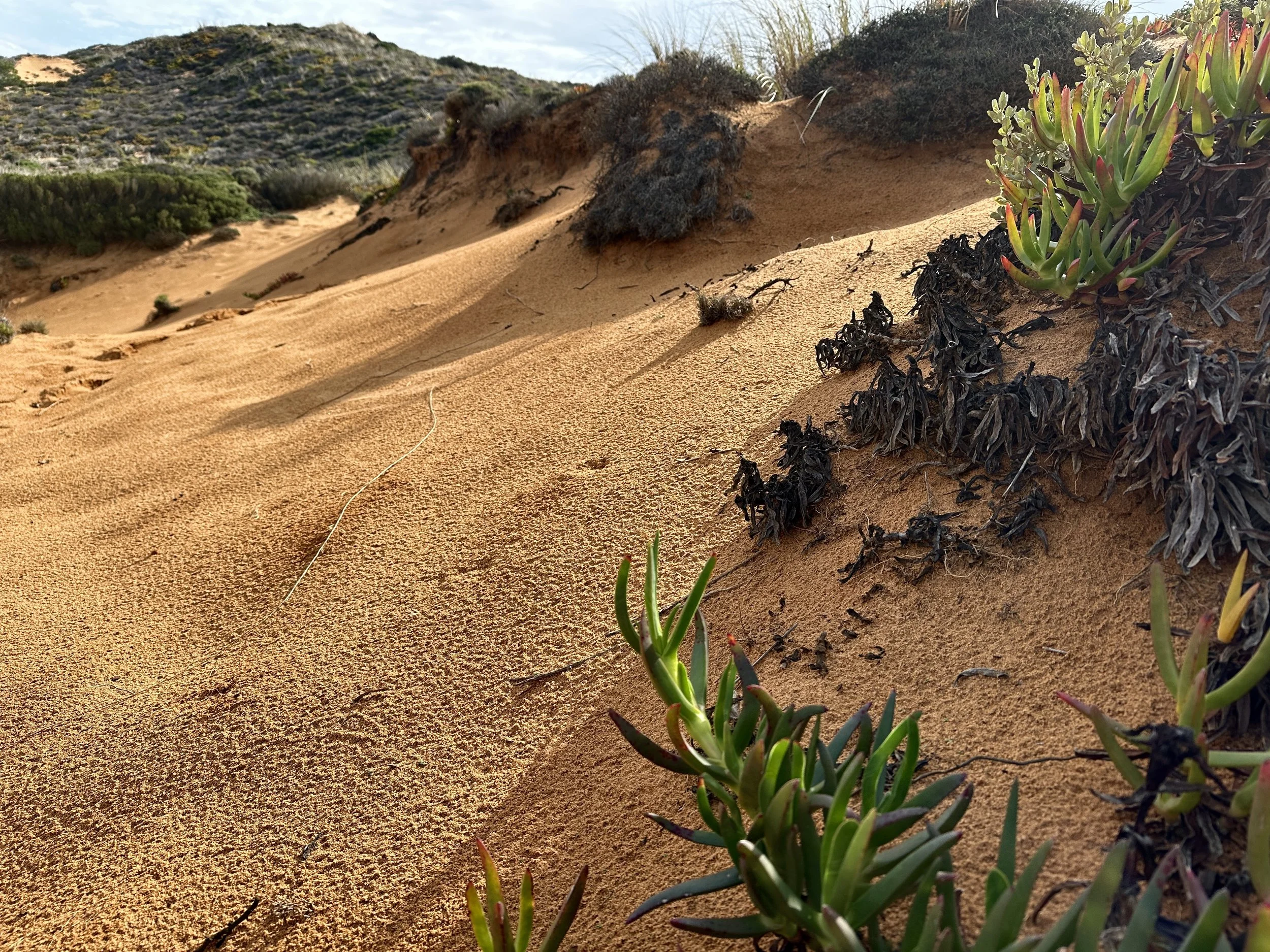
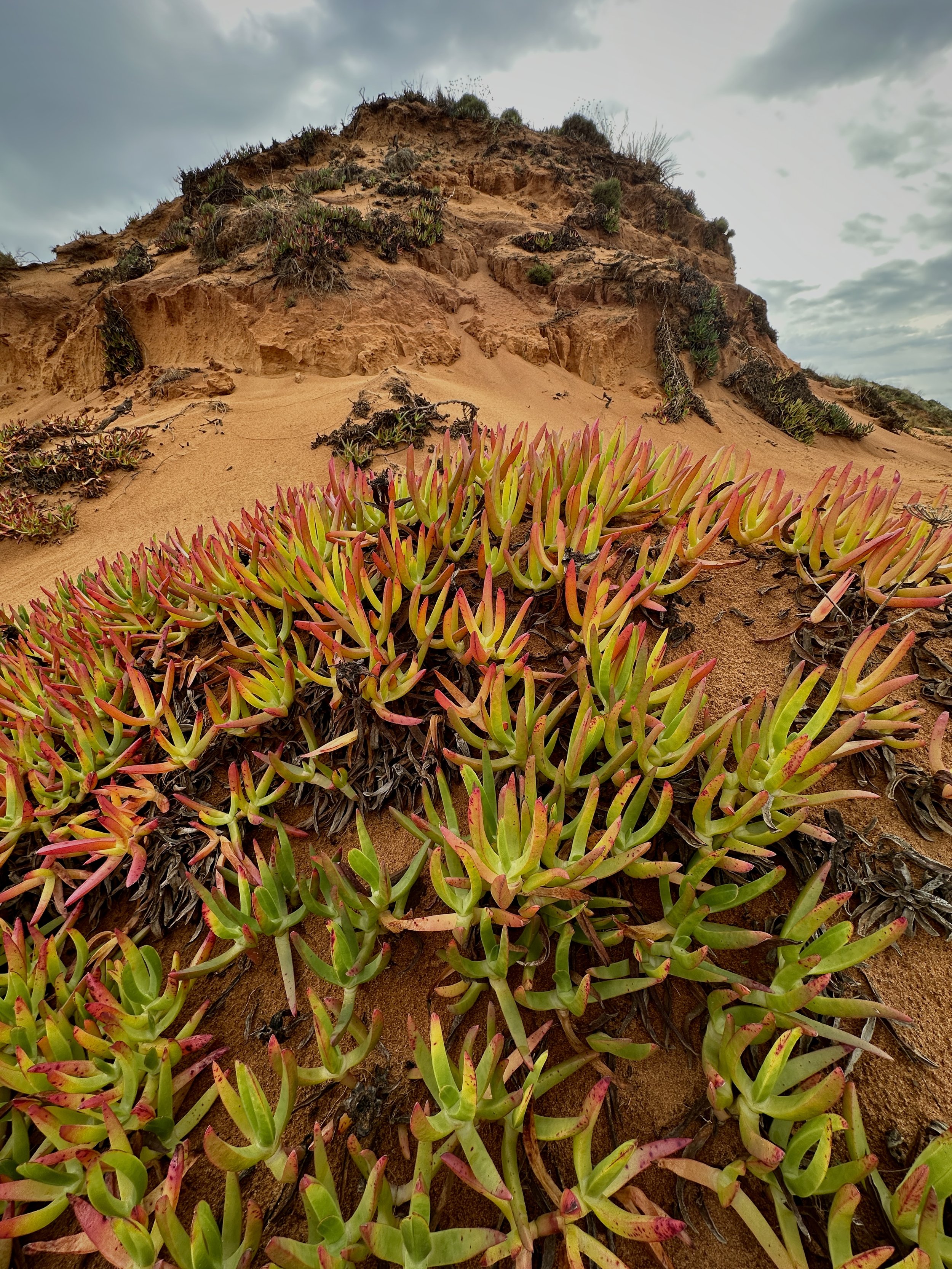
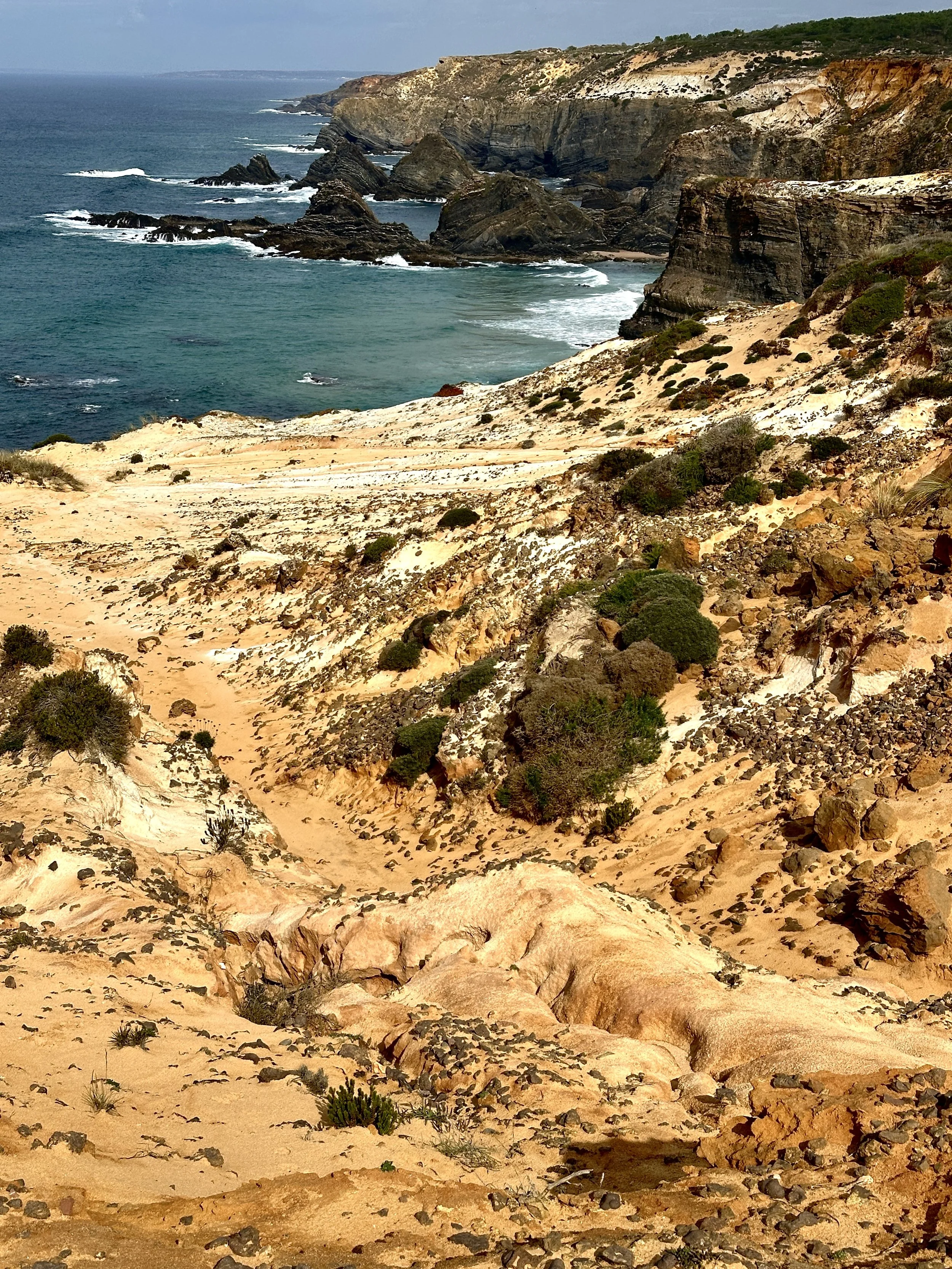
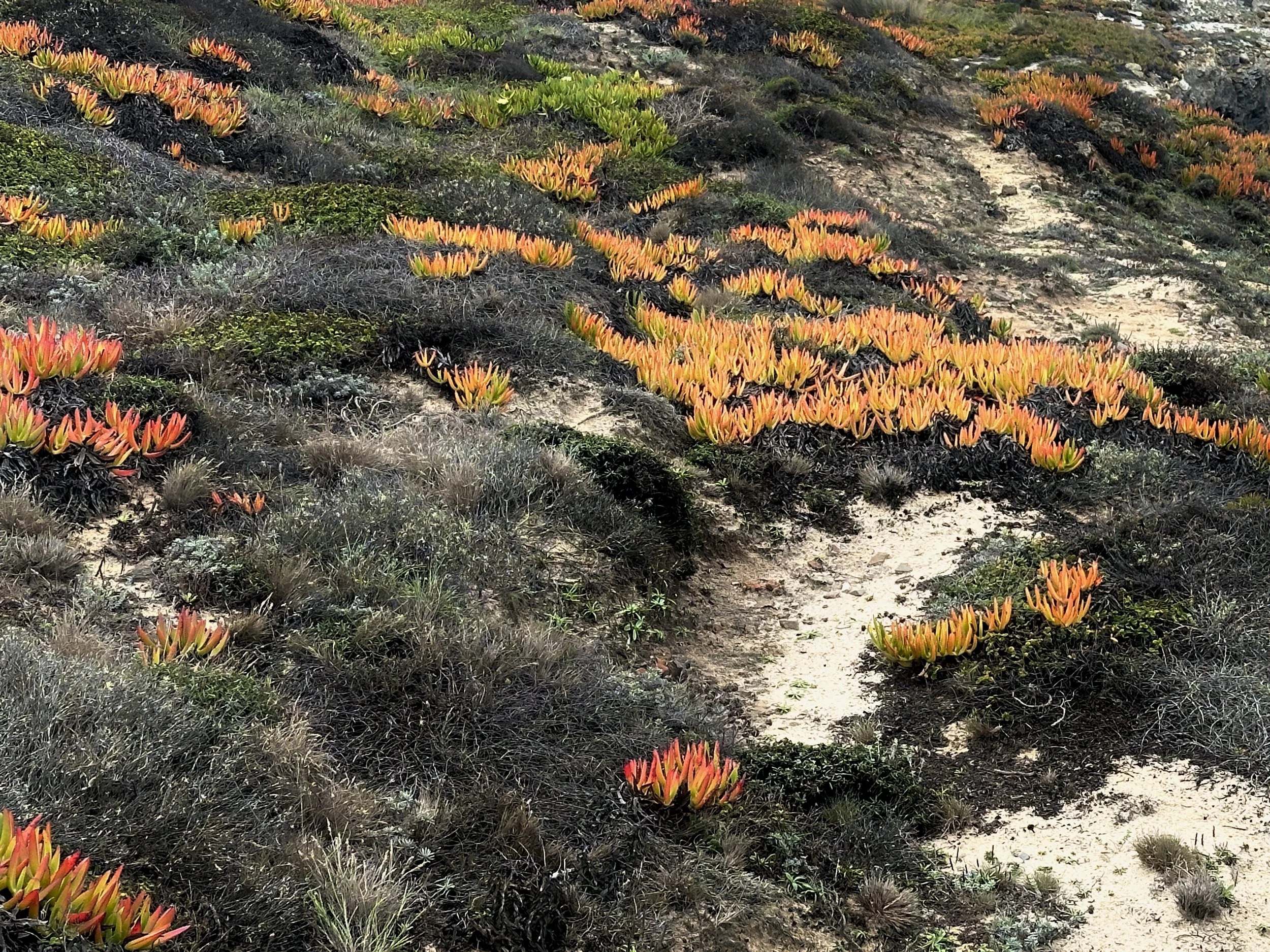
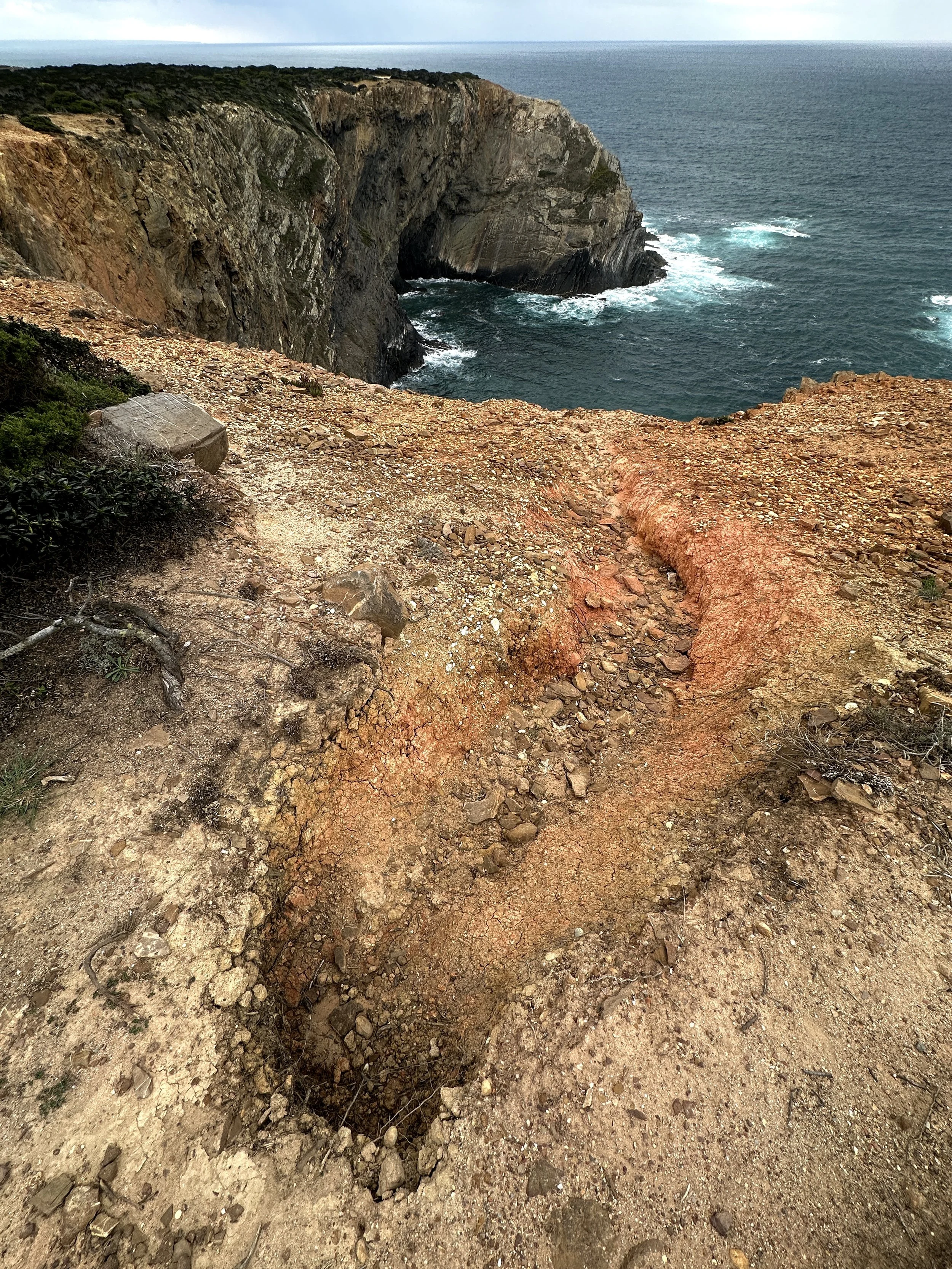
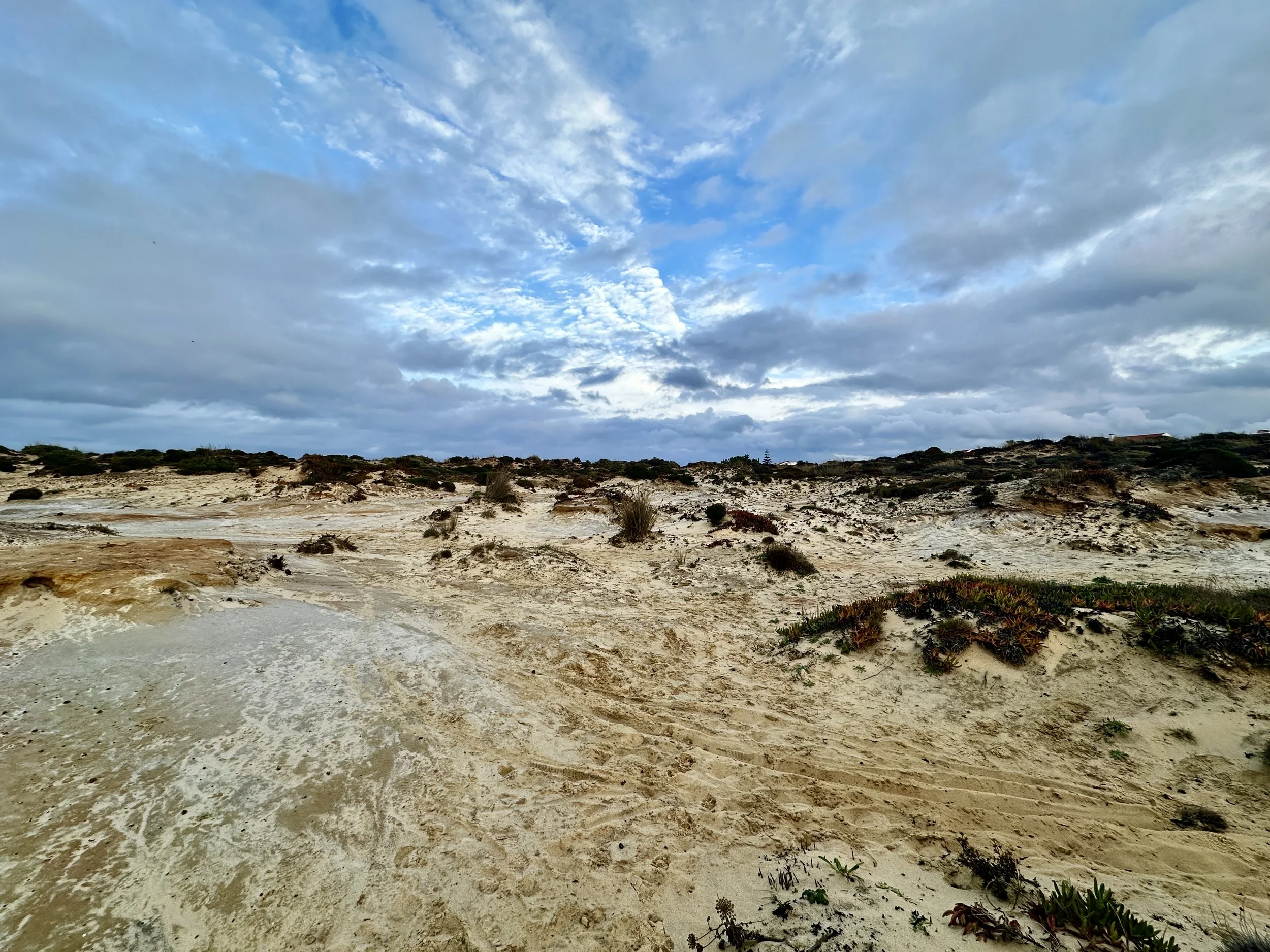
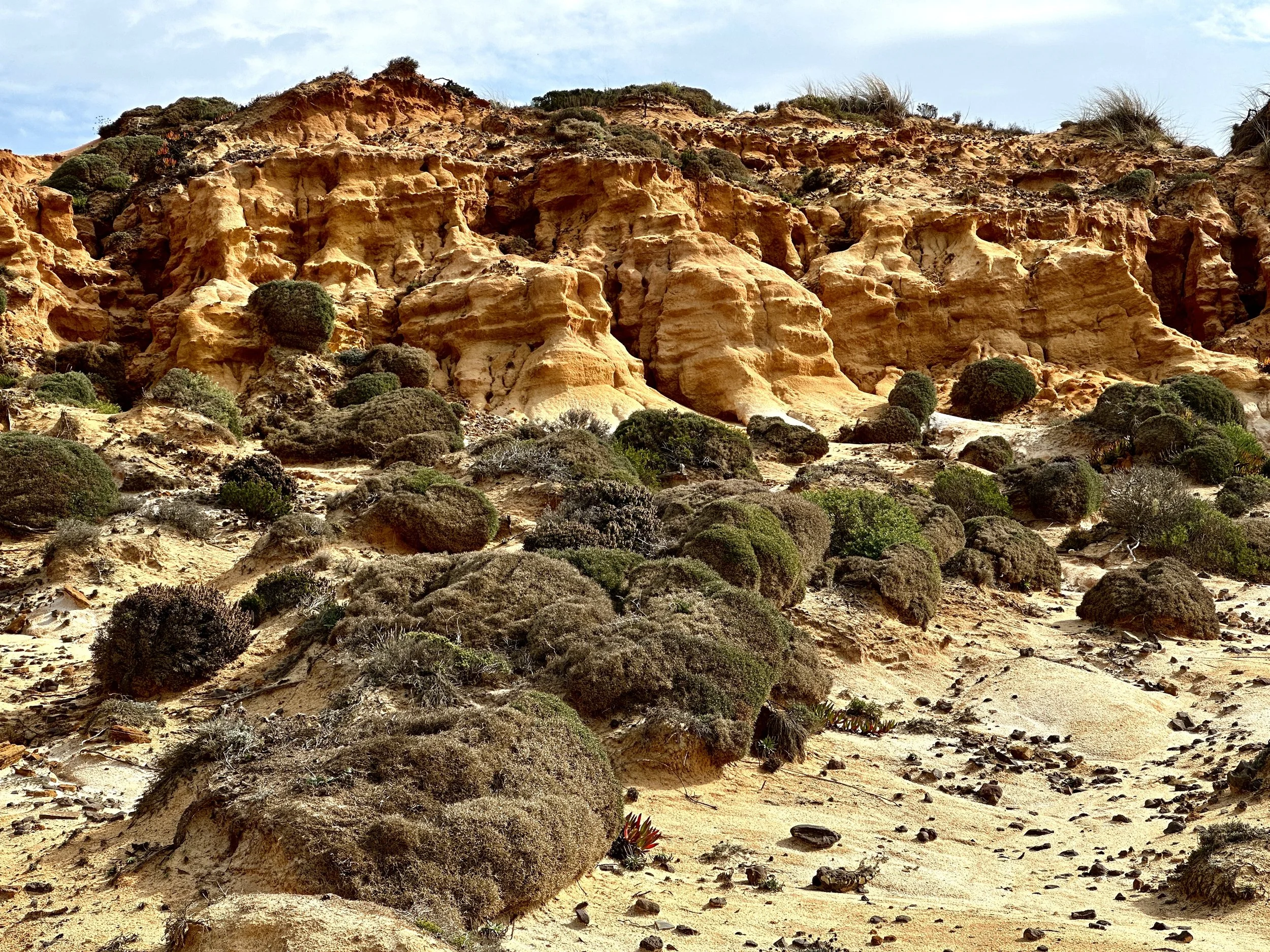
The sand is orange-red and much grittier. Not only does this change the colour palette of the day, it’s significantly more pleasant to walk on. While as deep as previous stages, it holds up better and you sink less. It makes a surprisingly big difference, given it’s still, y’know, sand.
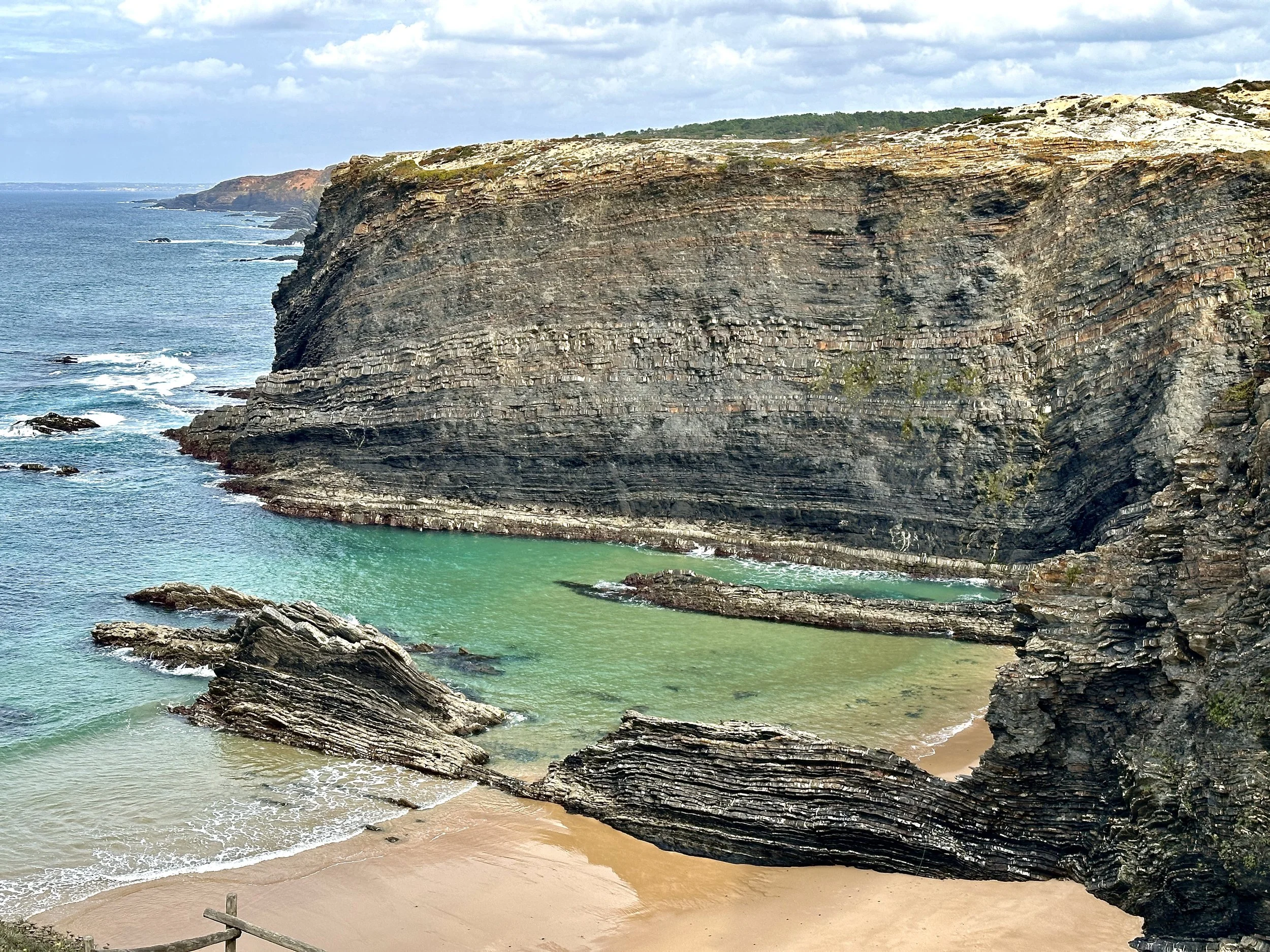
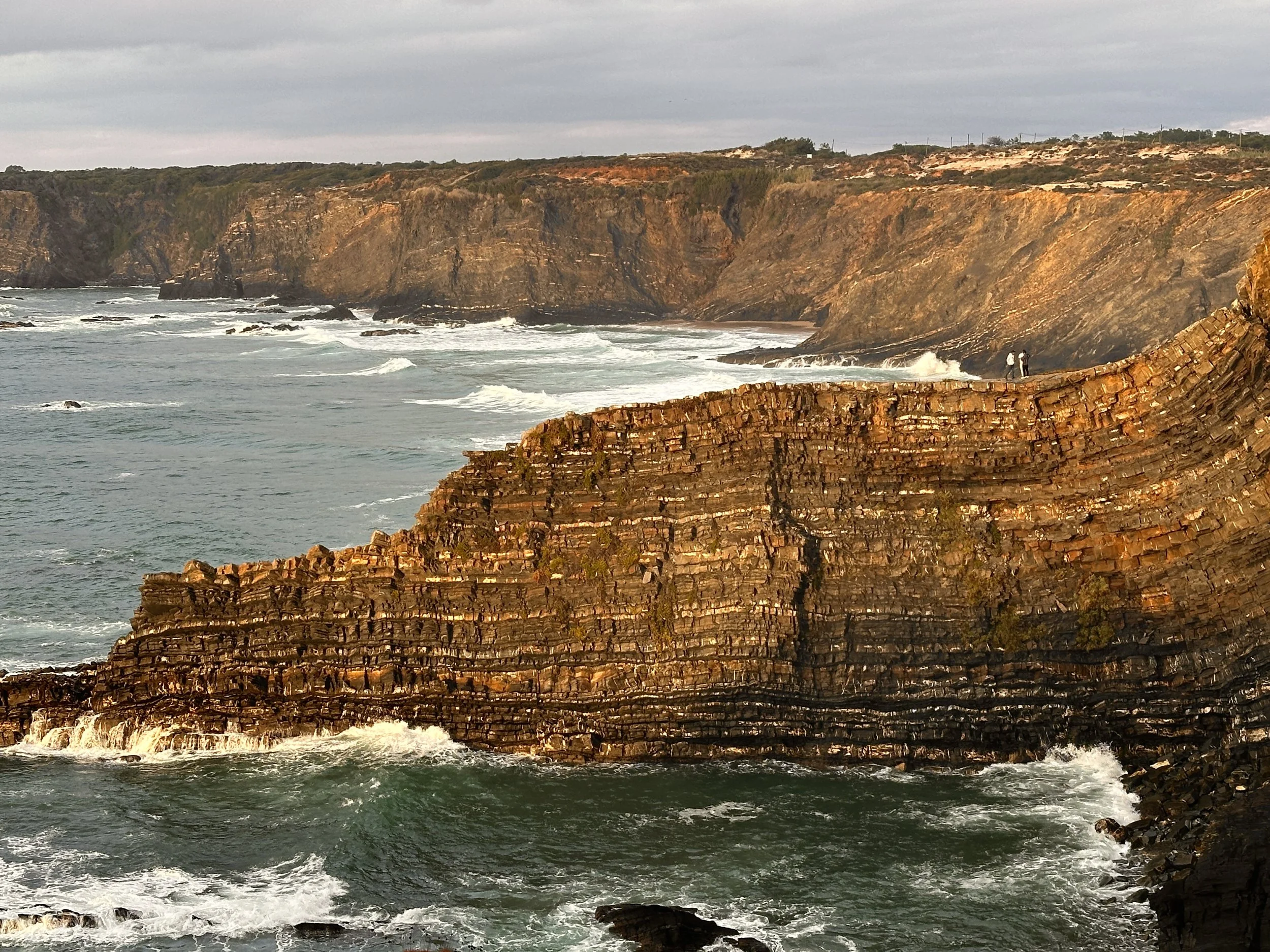
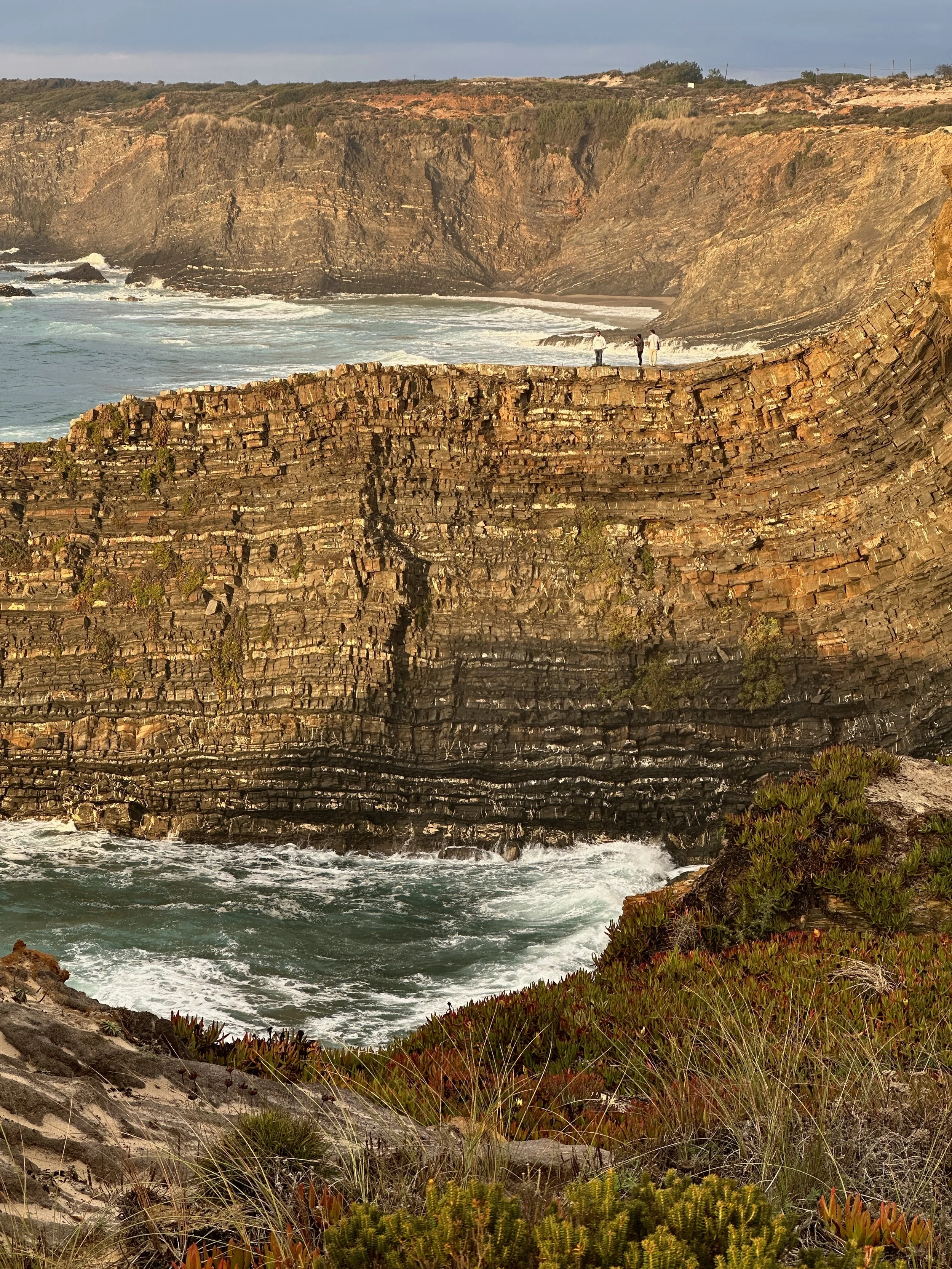
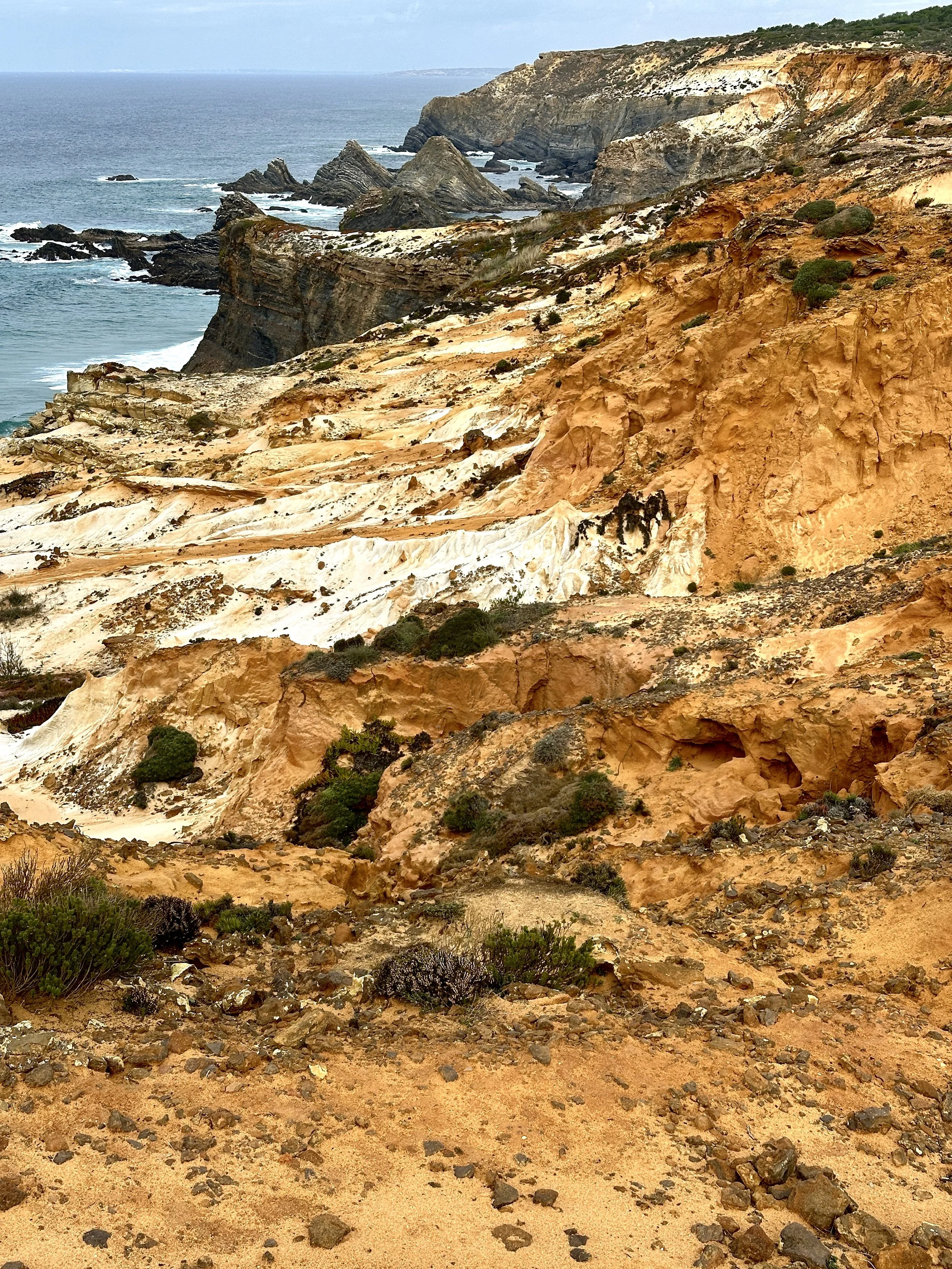
The change naturally extends to the wider geology - dominant red and orange sandstone features, much more badlands-like atop the plateau.
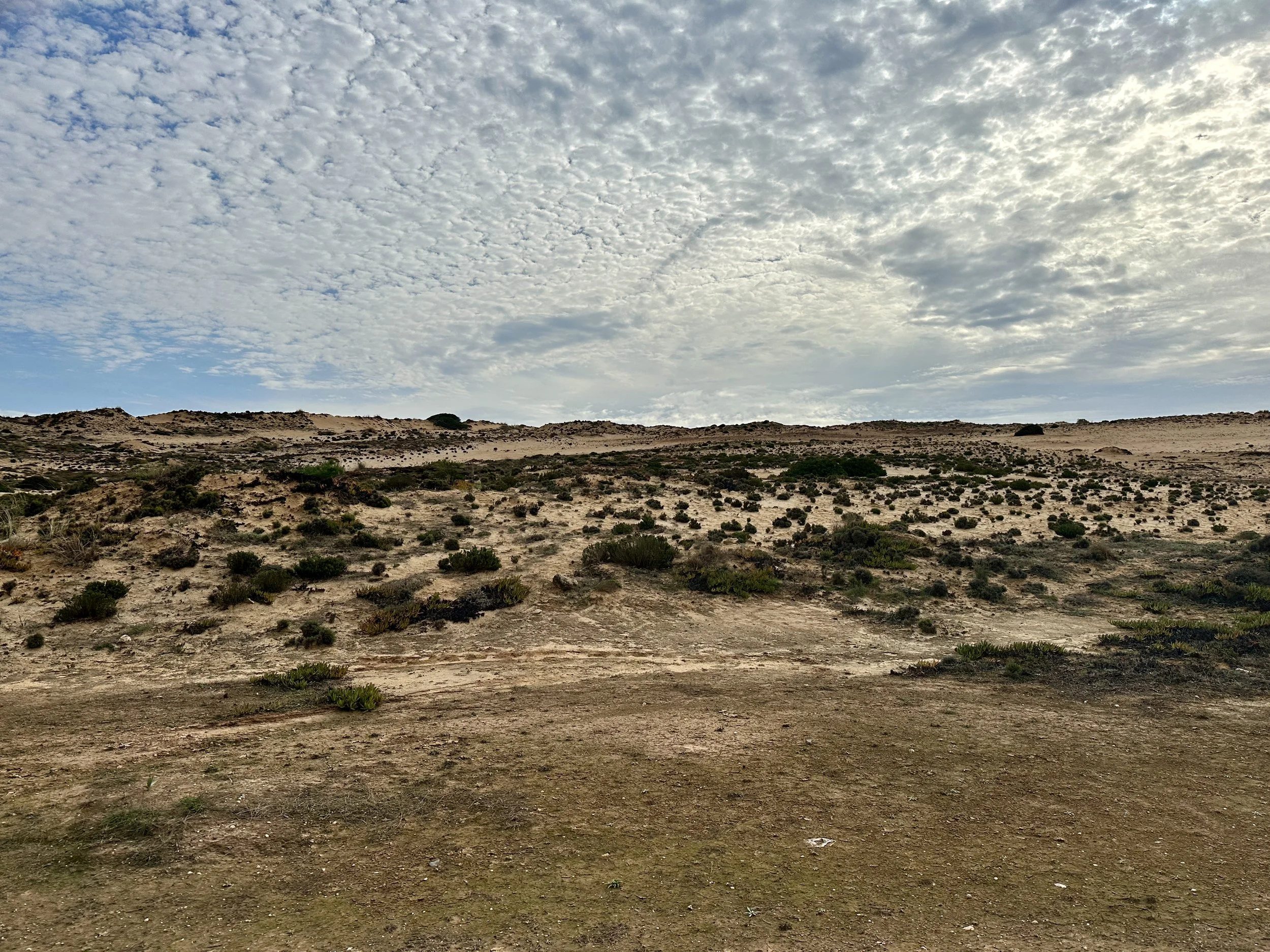
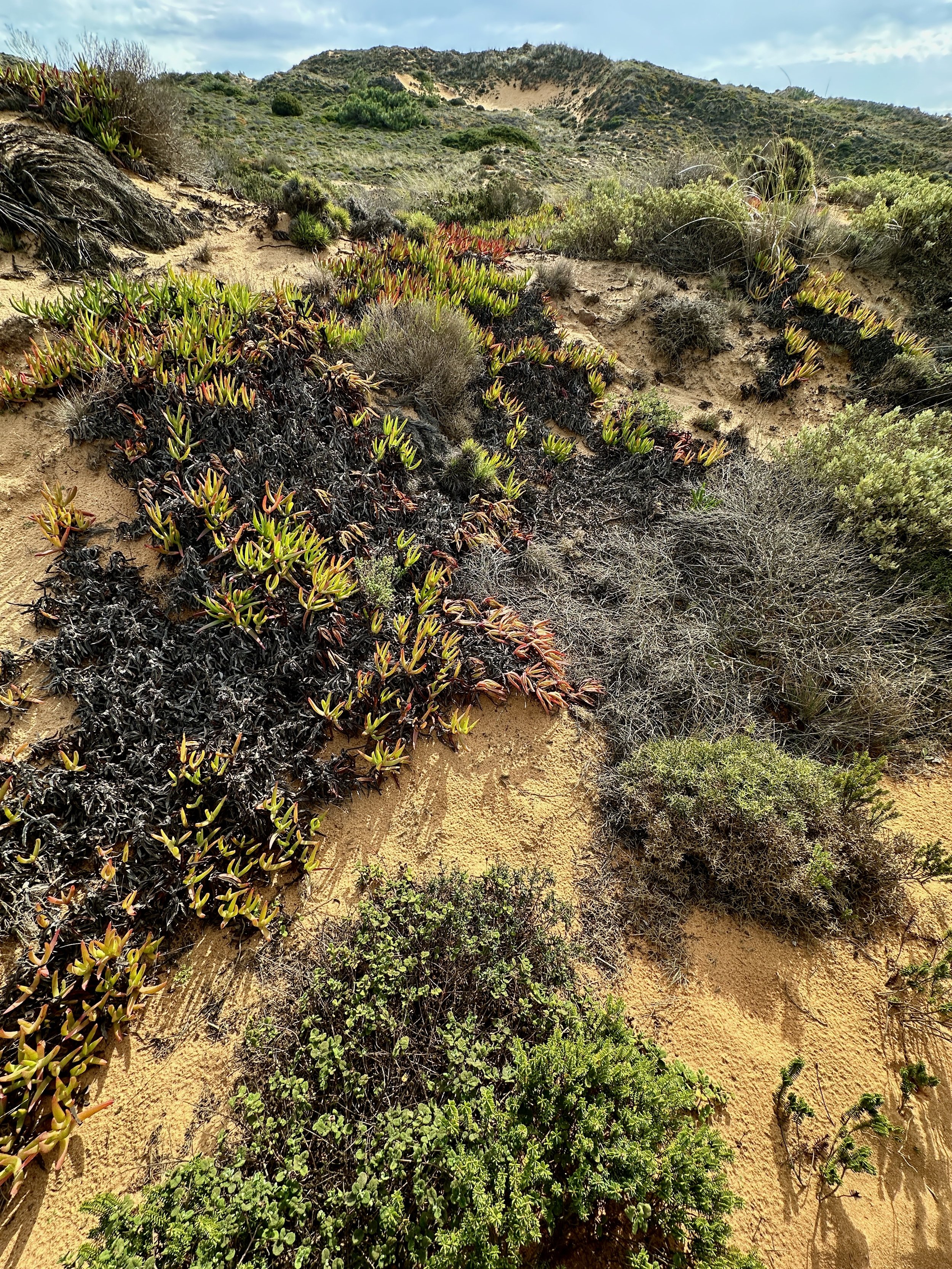
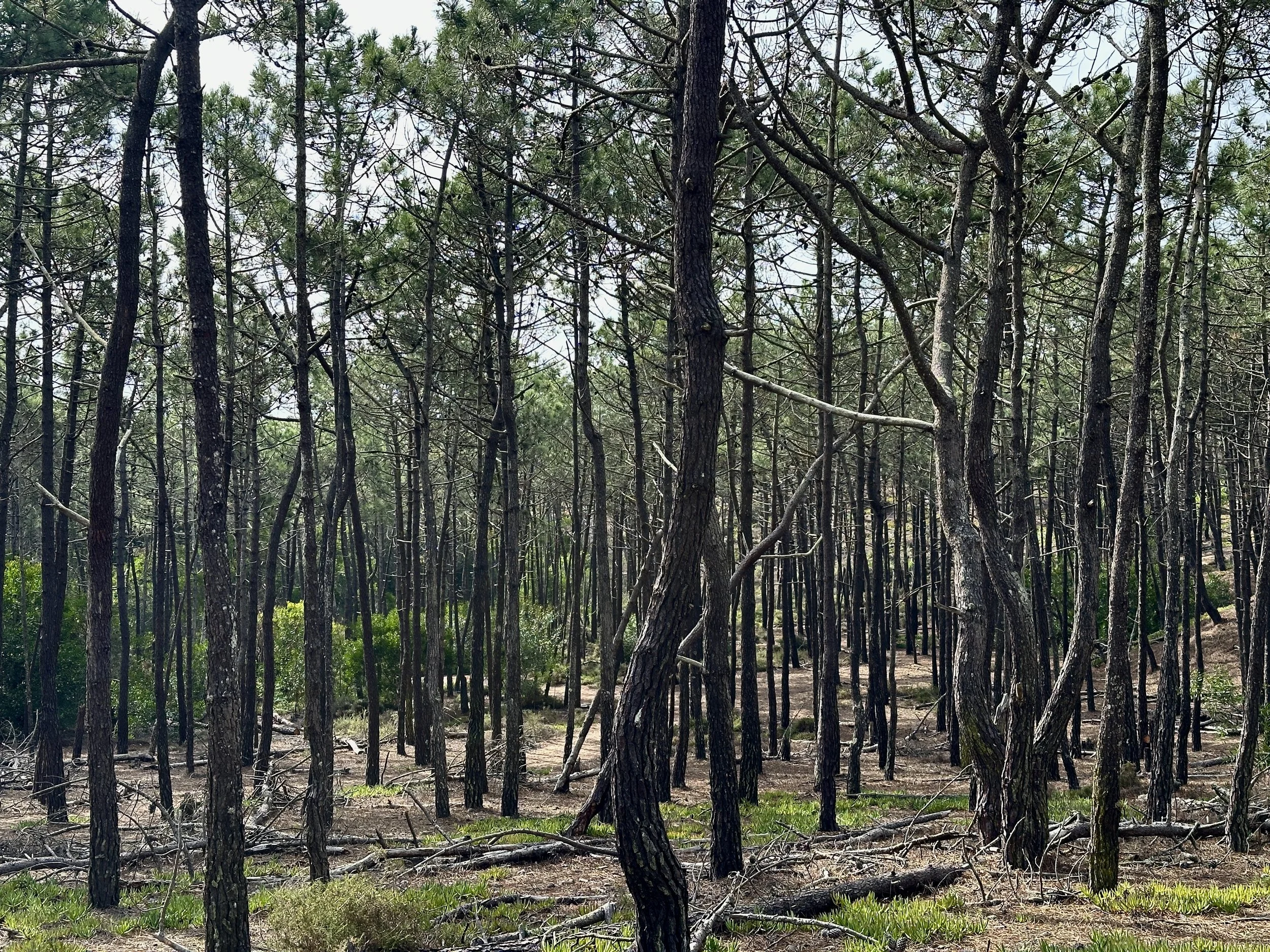
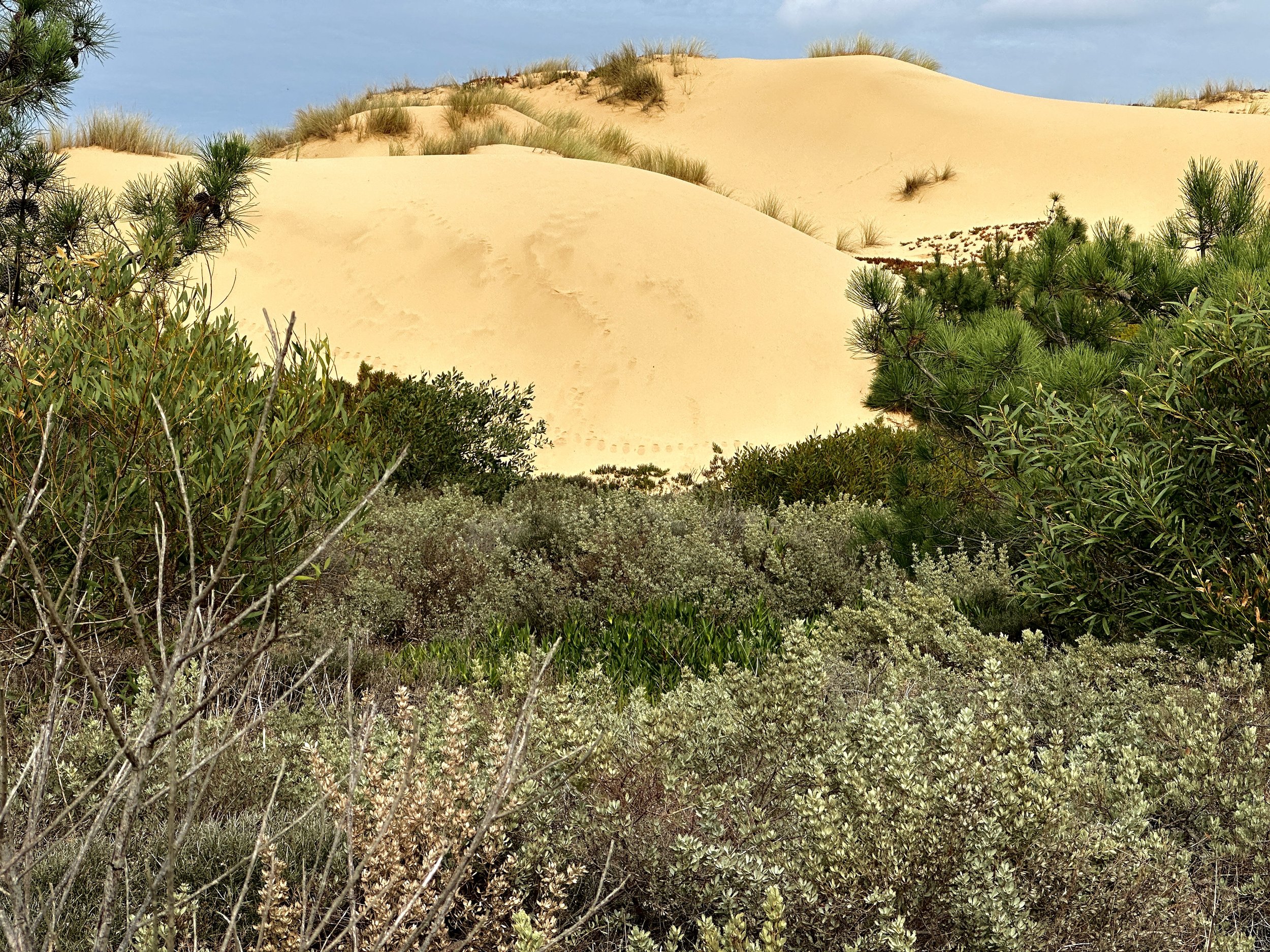
After a clifftop section we’re led inland through sparse woods and dunes…
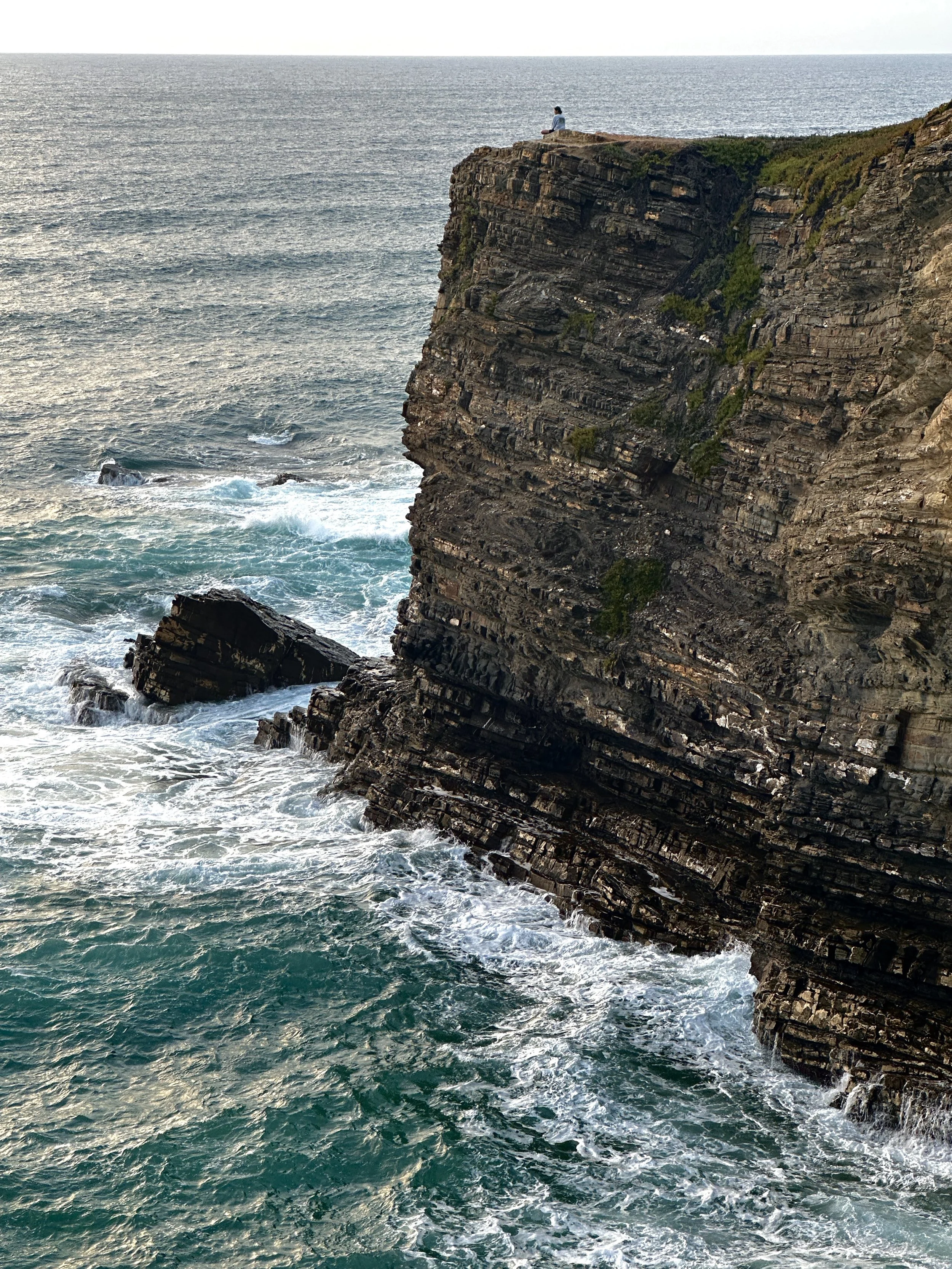
…then back out to the coast for more dramatic red, orange and white formations…
…before we’re given a convenient midway stopping point. The trail cuts straight through the heart of the little town of Cavaleiro and a corner cafe that must make a killing off of it.
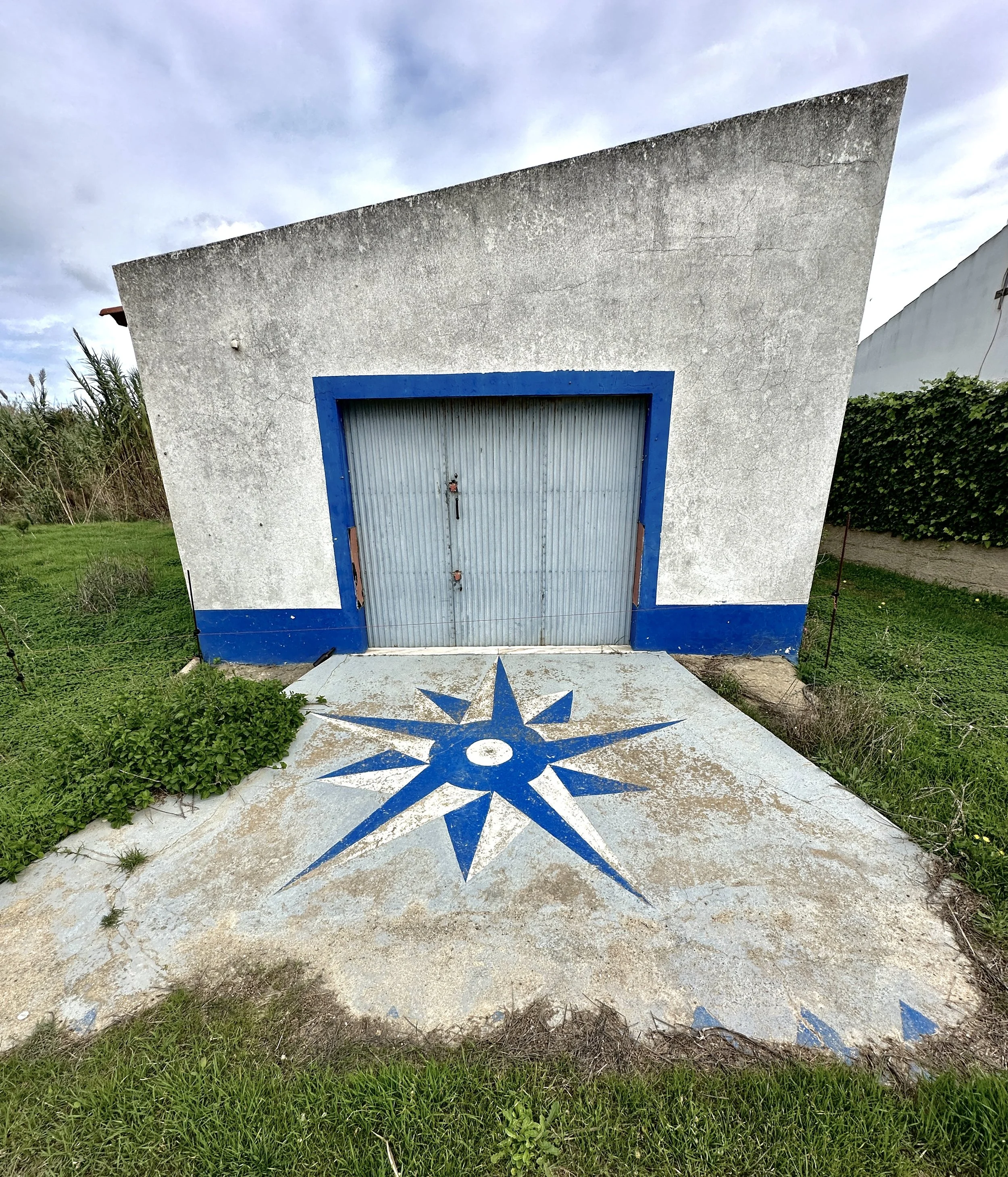
There’s a clear seating divide at play: every outdoor table has hiking packs leaning on it while the dark, moody interior of the cafe is entirely filled with locals. We don’t upset the status quo.
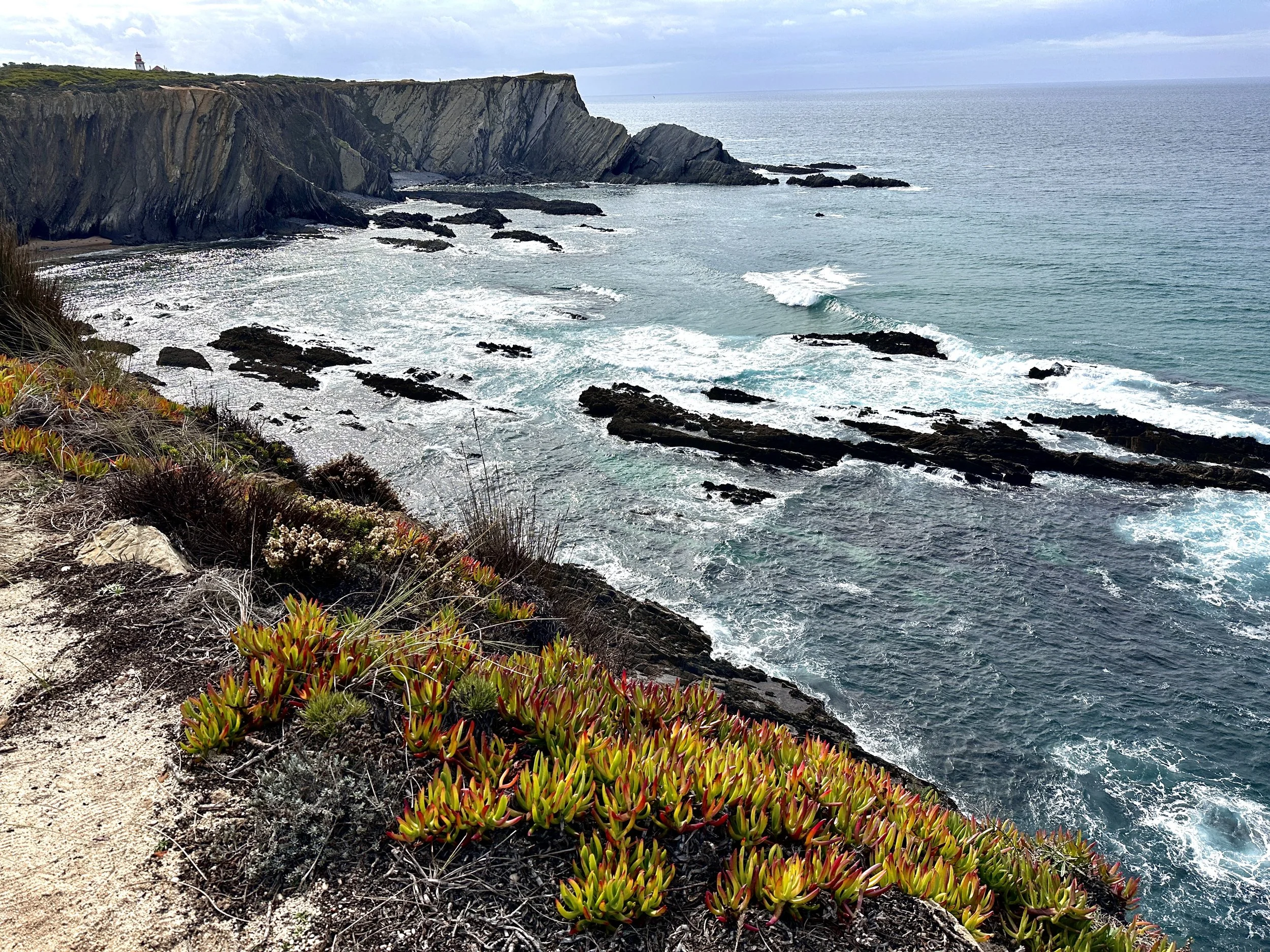
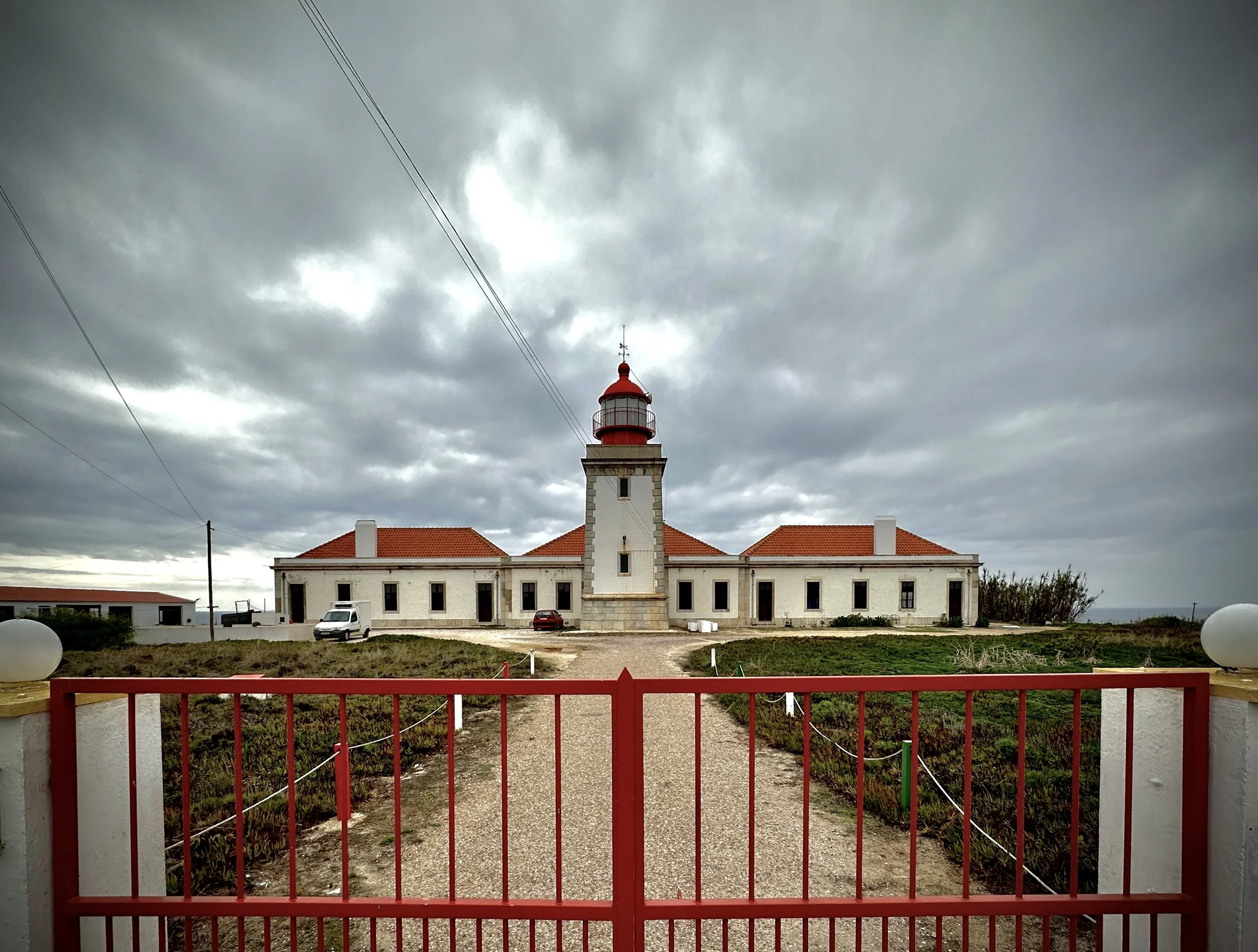
Cans of coke for both of us, a pastel de nata for me and we’re back at it. Heading out of Cavaleiro takes us past the Wes-Anderson-y Cabo Sardão Lighthouse.
CABO SARDÃO LIGHTHOUSE
The tower of this lighthouse is built inland of the annex buildings. This is unusual enough (all other similar lighthouses in the are have the tower on the seaward side) that people suspect the original builder may have accidentally rotated the plans 180 degrees.
Then we’re back out on the cliffs again. Here Antoaneta throws caution to the wind and tries a sour fig leaf.
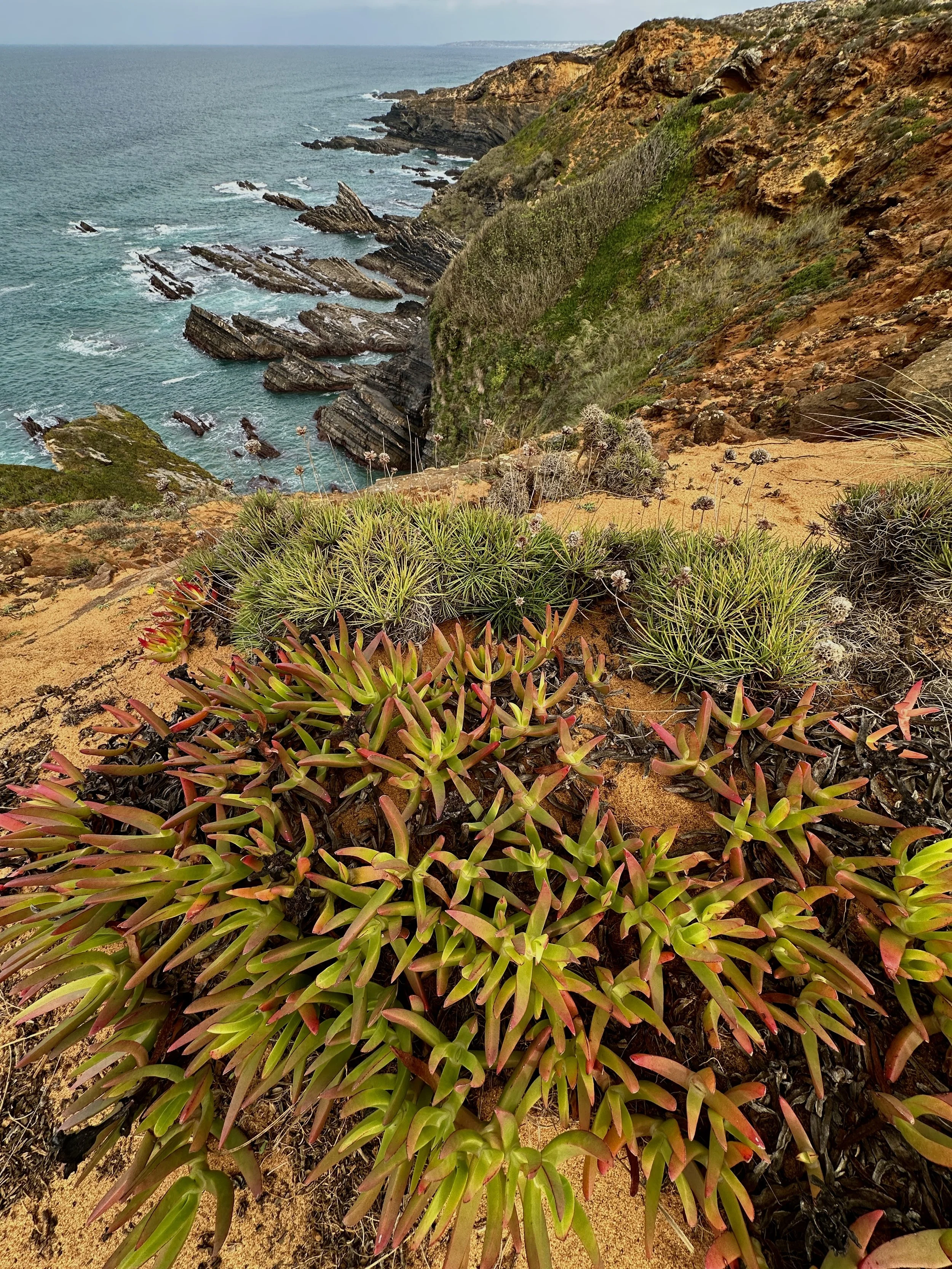
She reports it’s a little astringent but altogether unremarkable. That settled, it’s inevitably time to go for one of the fruits - the fig itself. They don’t look like they’re exactly in season, most shrivelled and dried, but we manage to find one that still has some pulp. This is determined to be not unpleasant, and to have a slight grape flavour.
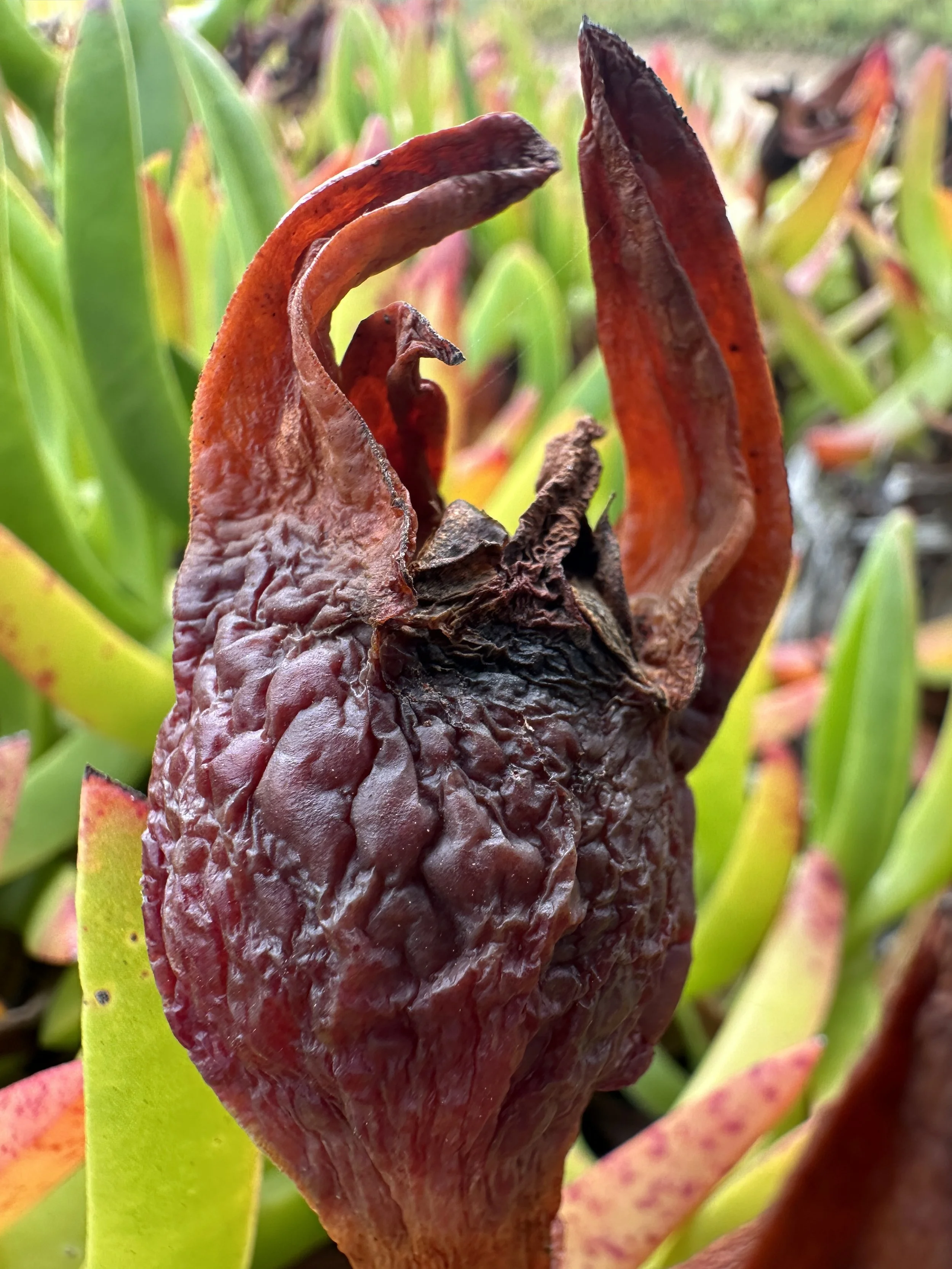
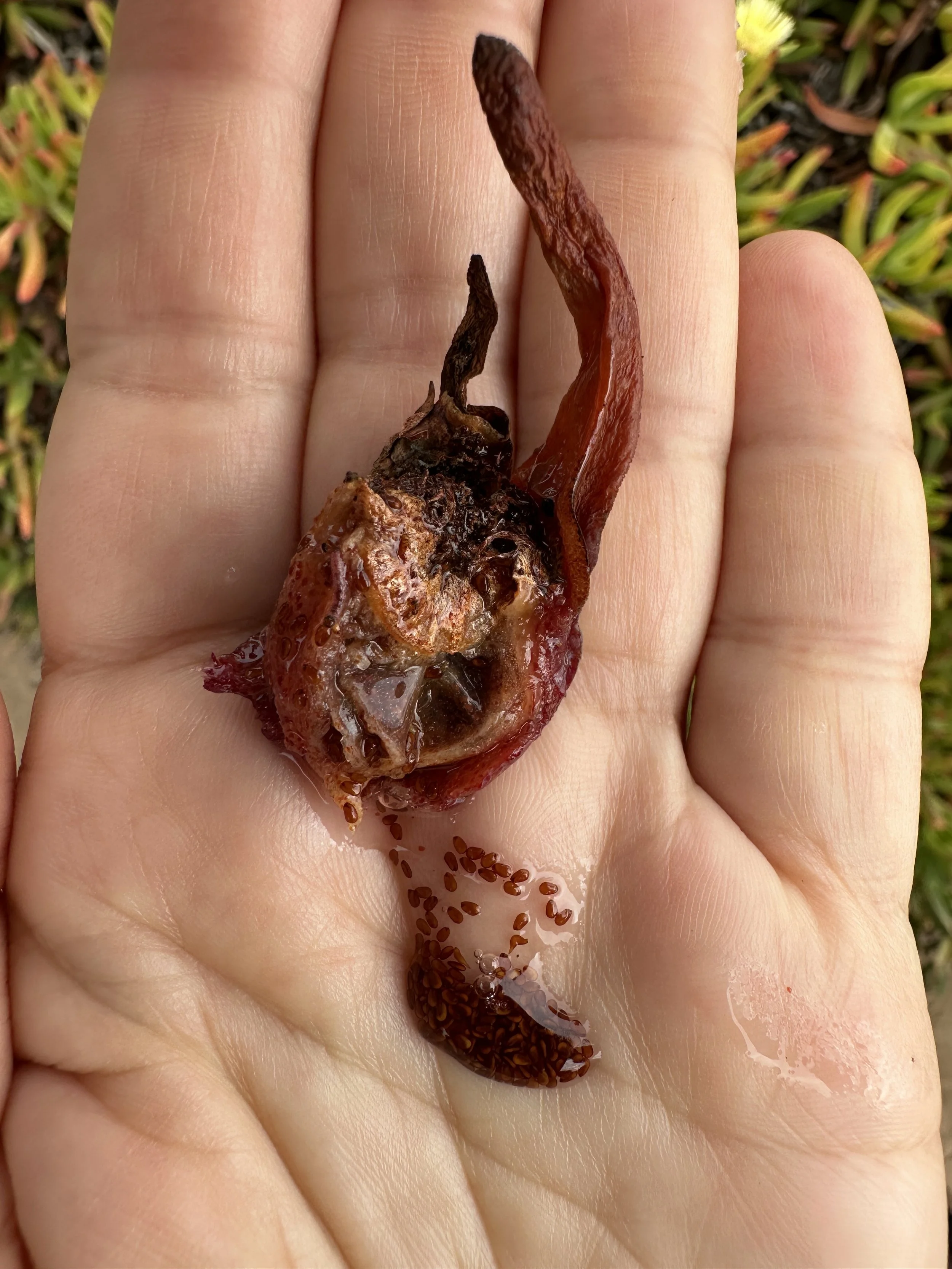
Post-fig we’re back inland on a long, straight dirt road lined with tall bushes. We take a break early on to indulge in the almond tart, which was worth the wait.
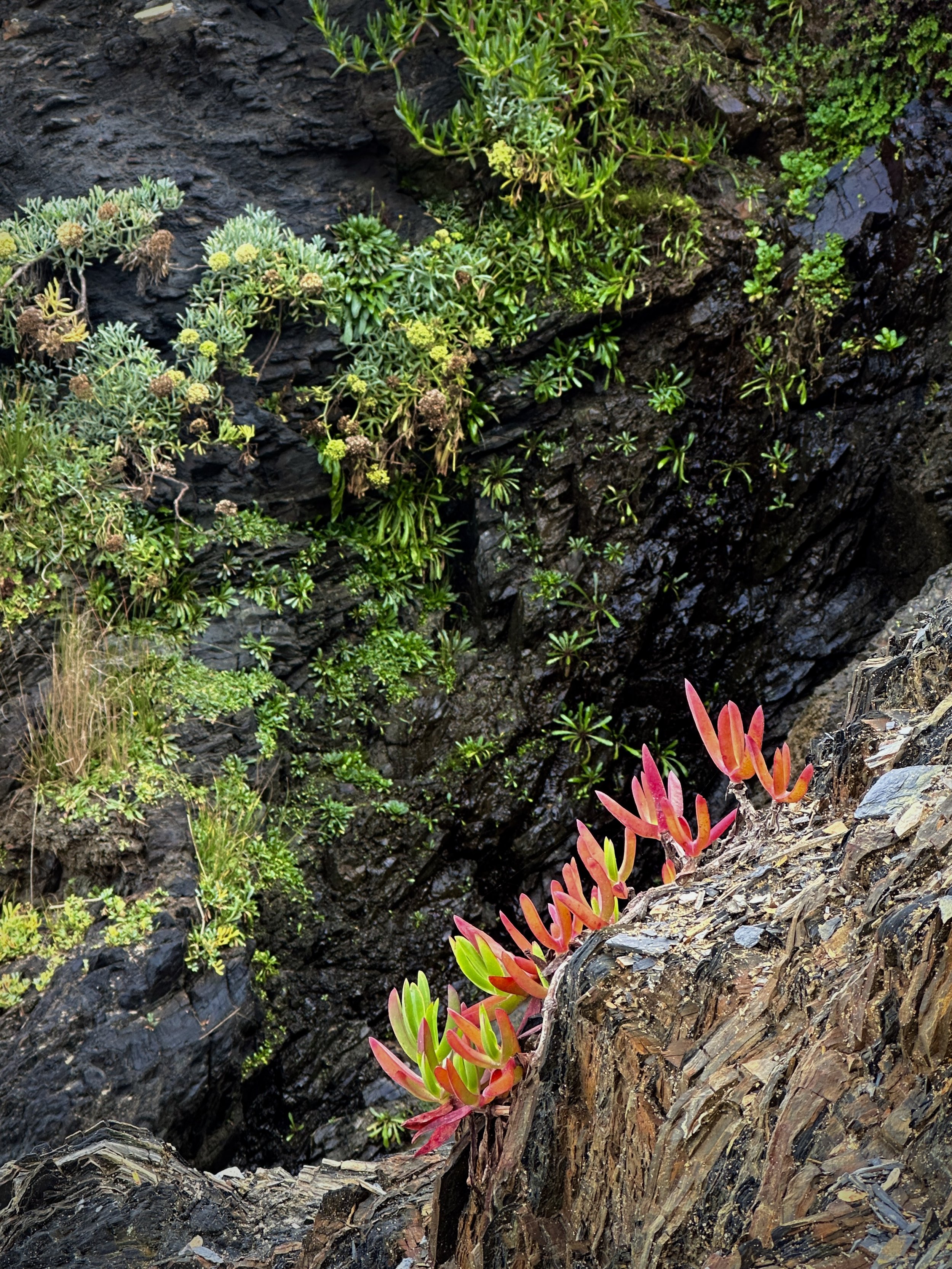
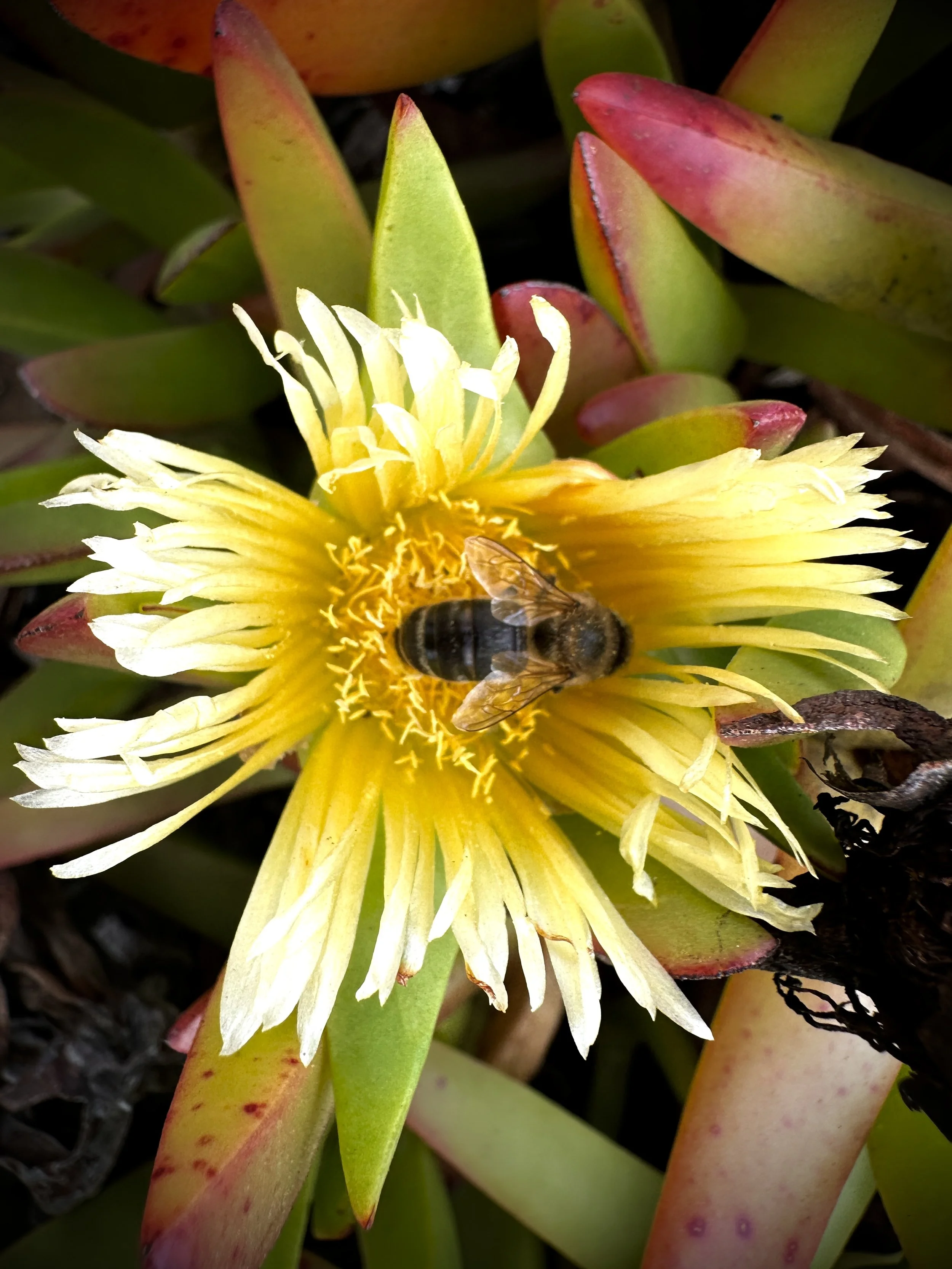
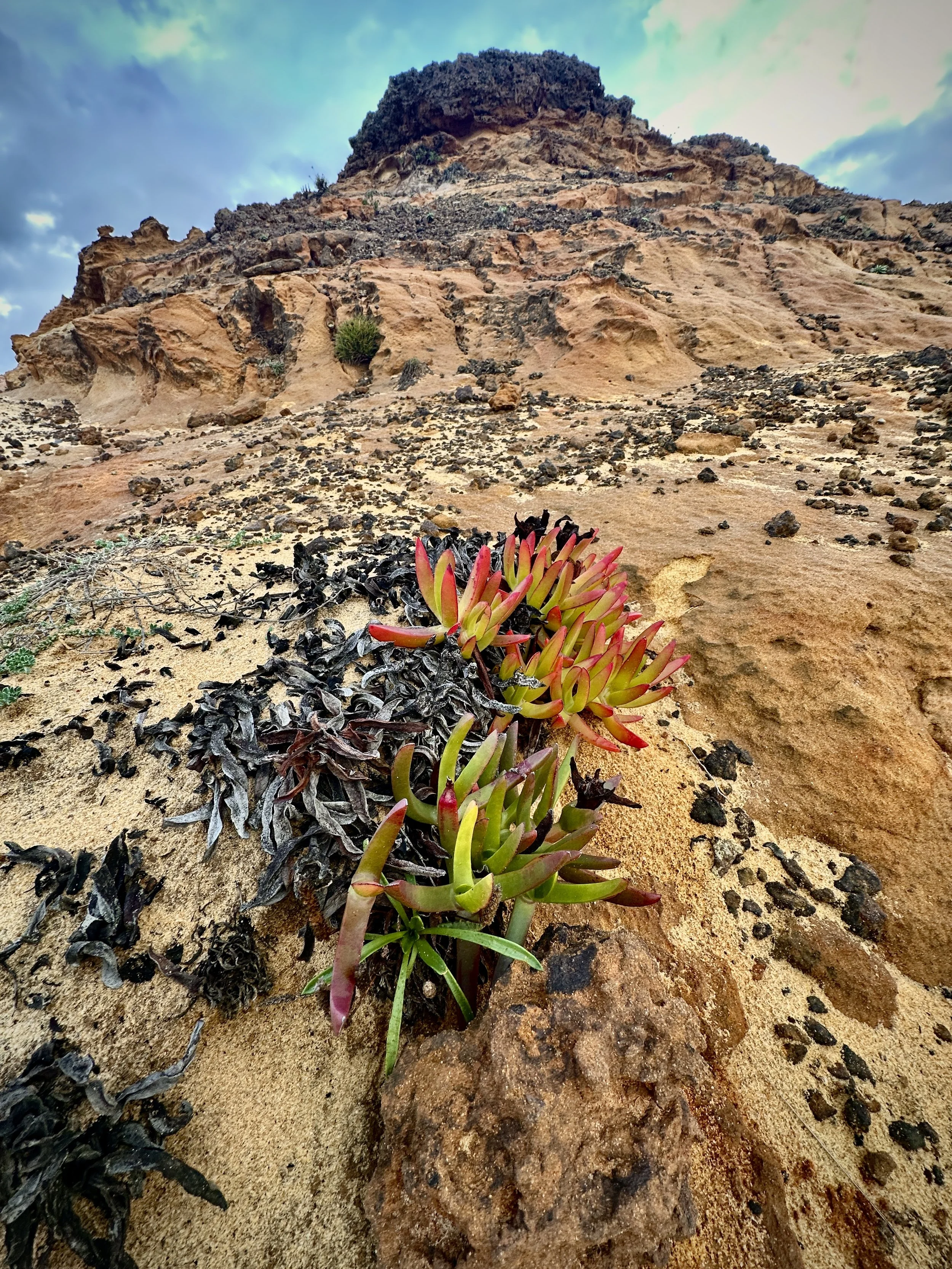
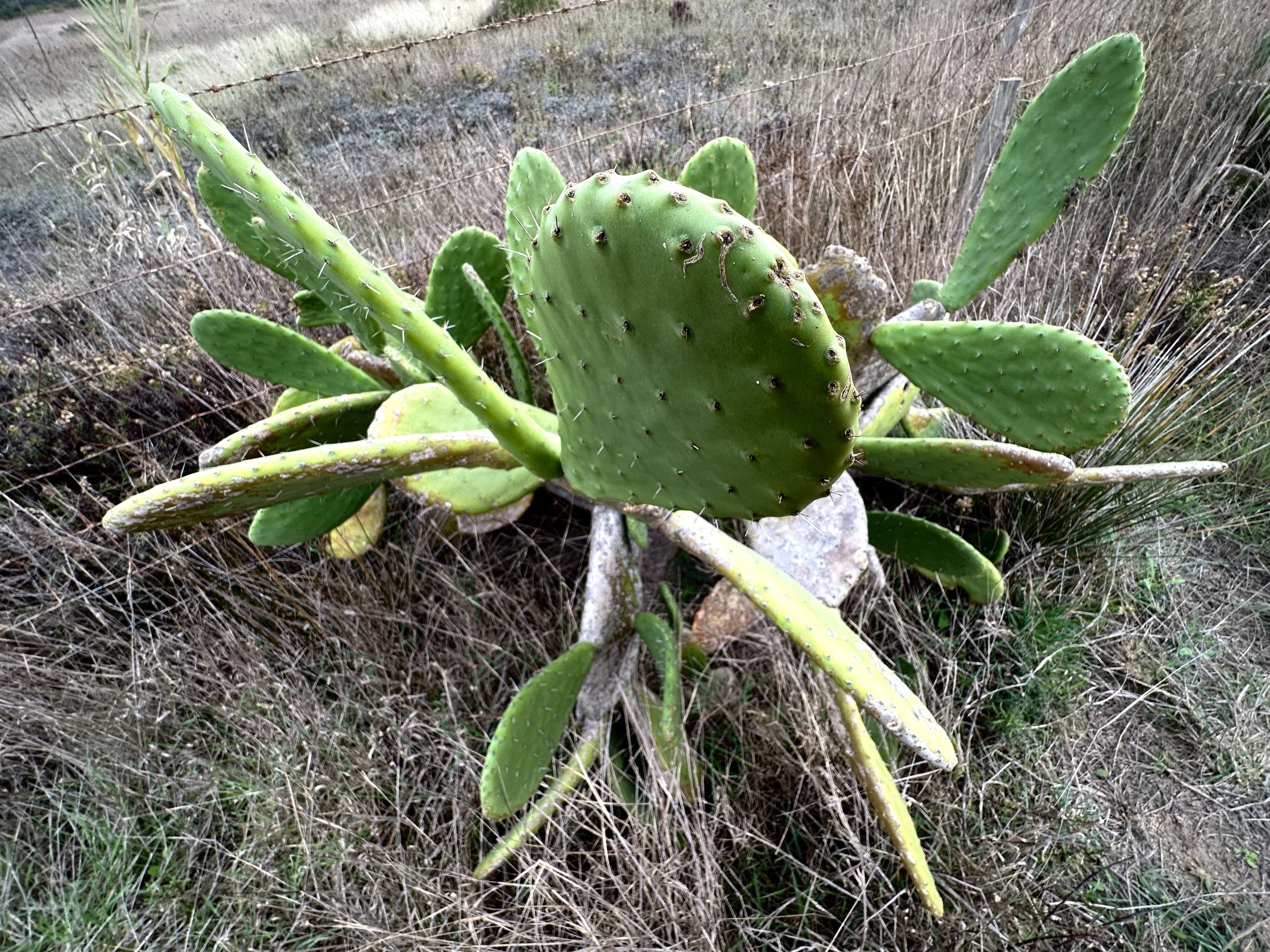
It’s also our first real encounter with cacti. Prickly pears pop up at the sides of the road and get larger the further we go.
PRICKLY PEARS
Sadly, like our constant companion the sour fig, the prickly pear is invasive to Portugal. In addition to seeding, stem fragments can reroot pretty easily, making them spread fast once they establish themselves. At least, like sour figs, prickly pears grow edible fruit which can be made into sweets, jams and liqueurs.
Their fruit, as it turns out, is also called barbary fig or Indian fig. Go fig-ure!
The dirt road curves slightly into a low canopy of short trees as we start to feel sprinkles of precipitation. All evidence showed that we were going to have amazing luck with the weather on this trip. Today was the one day with a significant chance of rain. So we saw it as a necessary price for all the dry days to come. More than that, it was almost welcome as justification for the rain gear we’d been hauling with us.
For a while we don’t even bother with it, as it stays more of a refreshing mist than actual rain. But at a certain point it crosses that threshold and we pause to gear up.
Antoaneta’s bag came with a built-in rain cover. My bag, being the same company’s ‘bad and dumb’ model, did not. But I figure out that if I don’t zip up my oversized raincoat, it can cover my backpack and I can still get my arms through the sleeves. As for the front of me: that’s what quick-dry clothes are for.
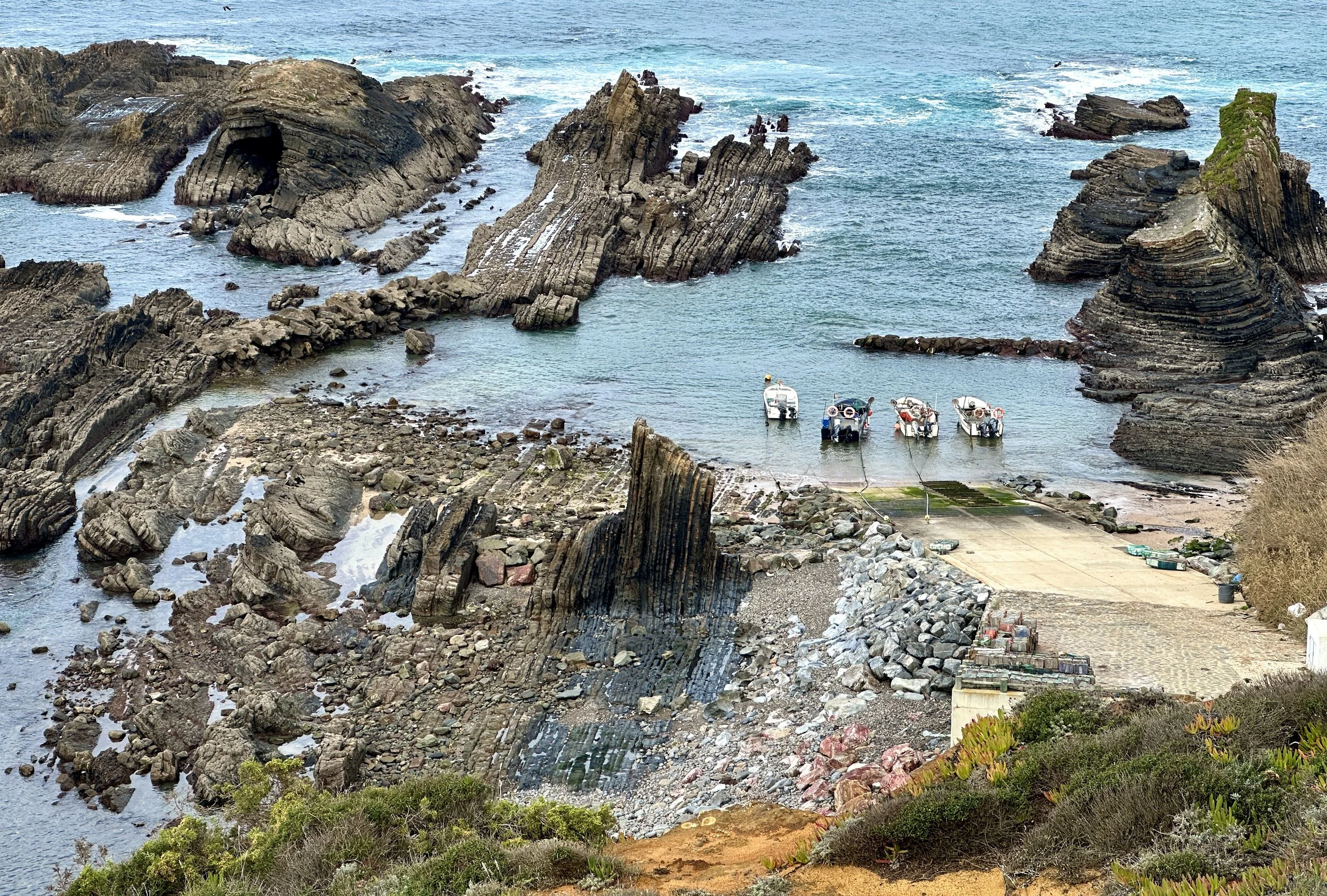
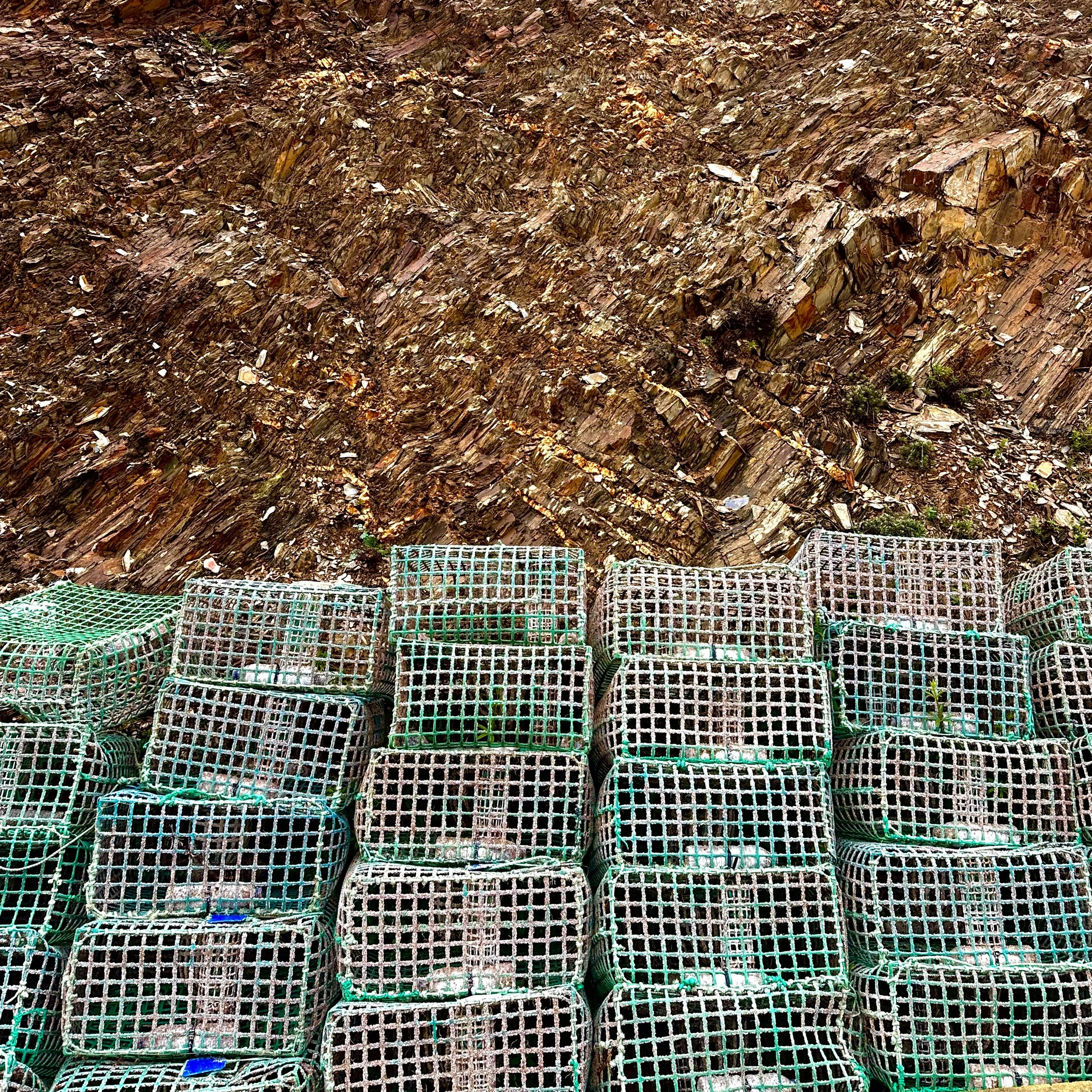
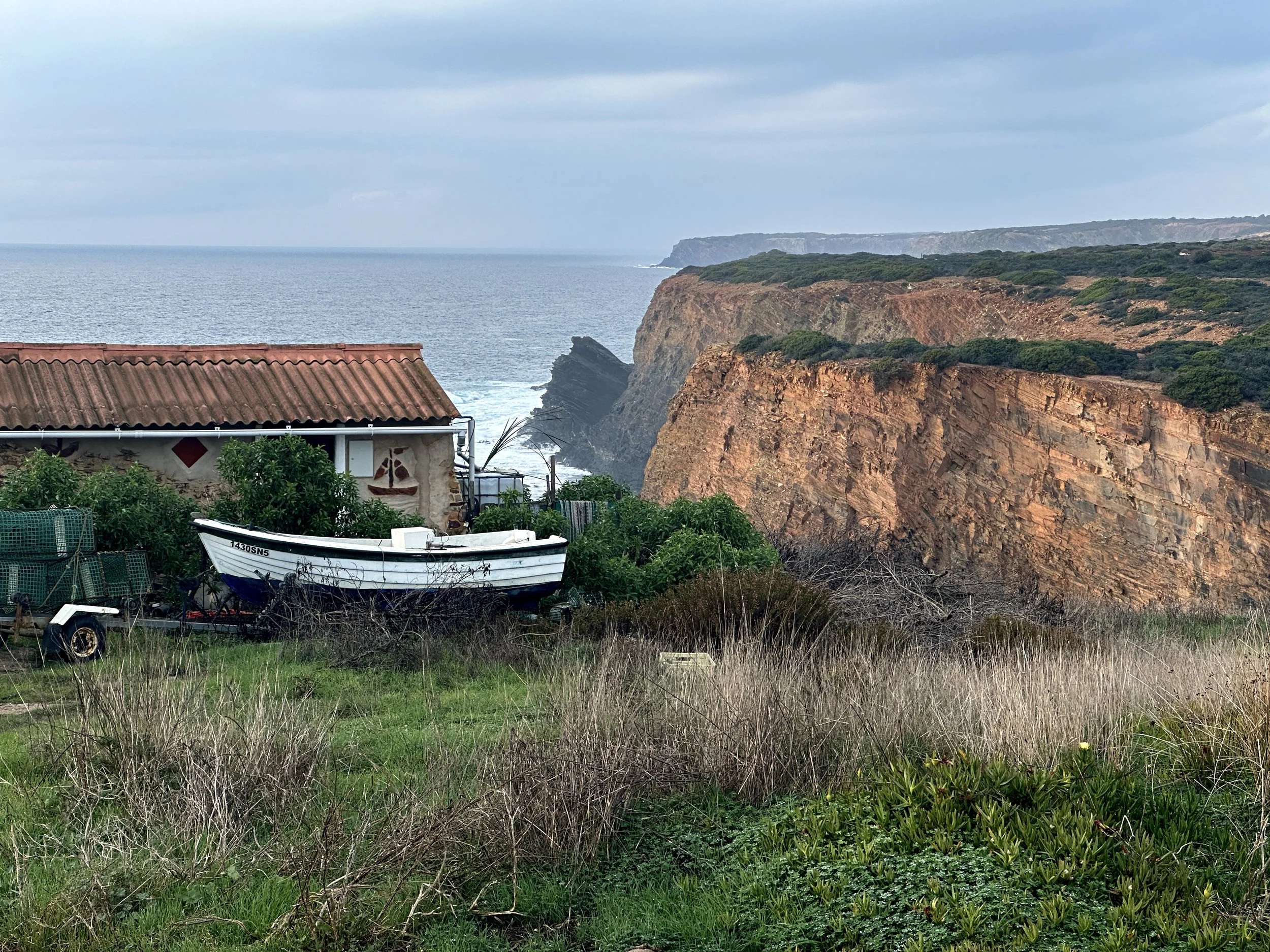
The dirt road finally angles back to the coast and becomes a steep, winding rocky path down into a little fishing harbour in a sharp cove.
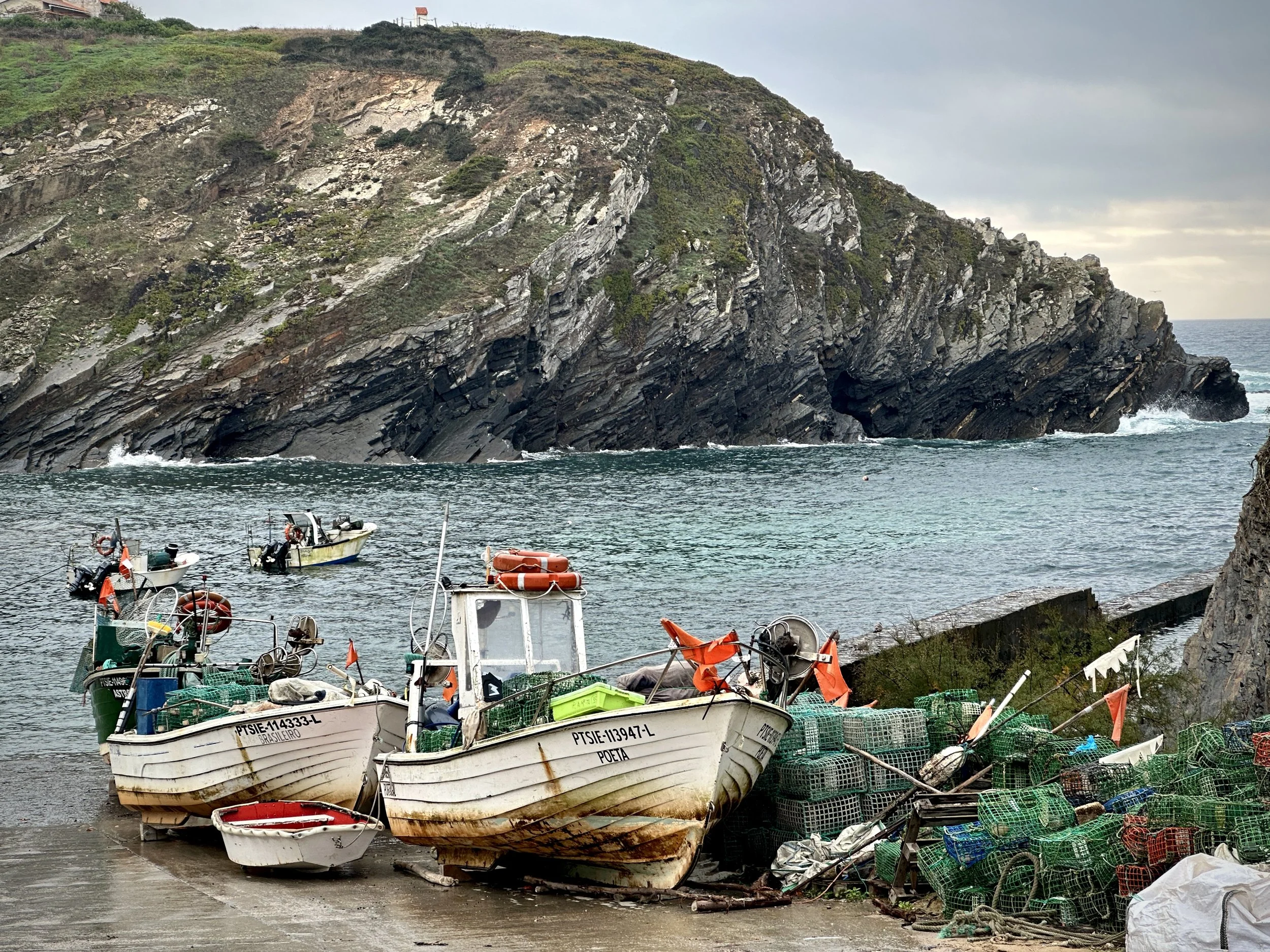
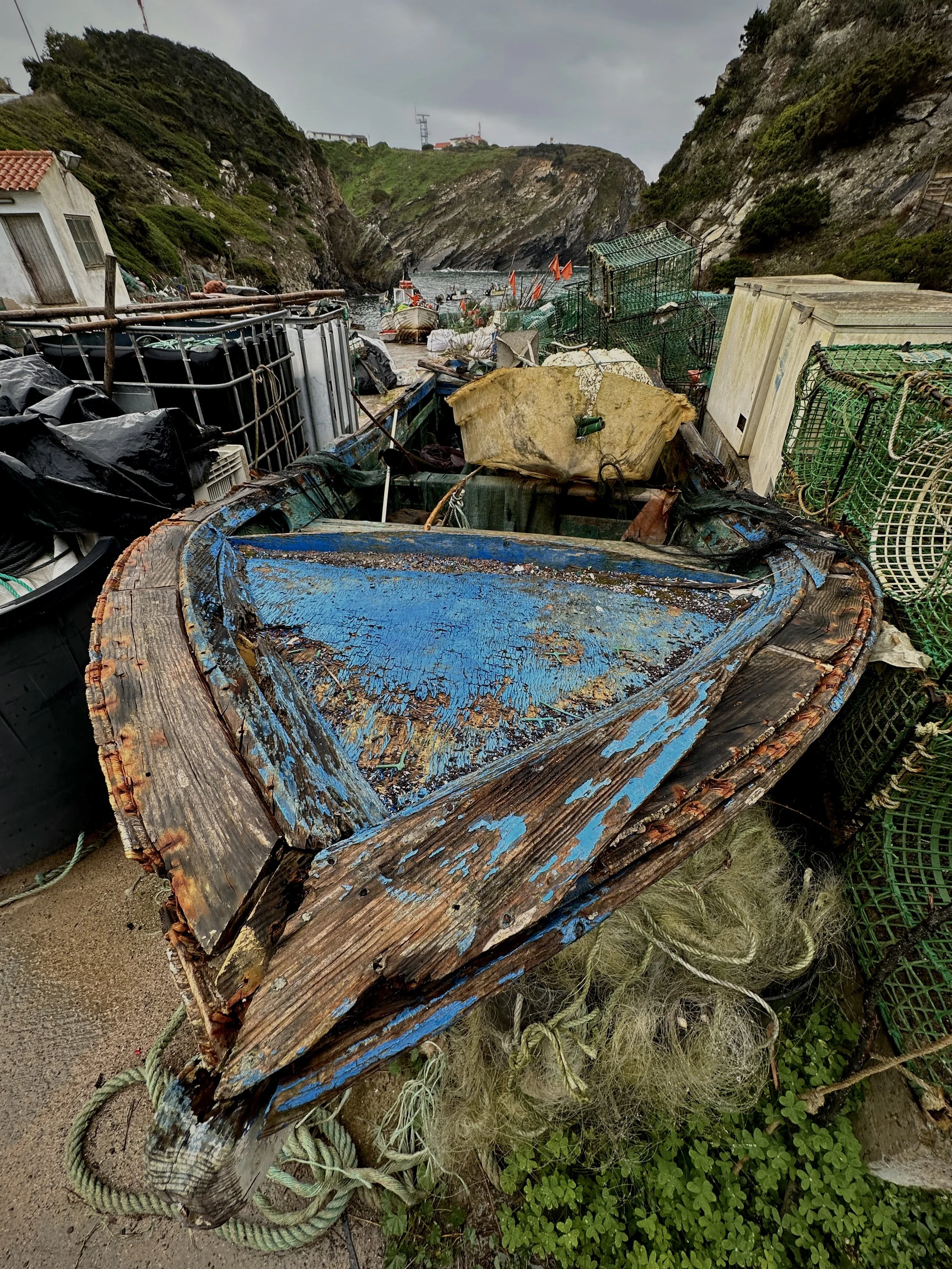
Up the other side is a perfectly placed cafe where we can wait for the rain to calm down. Conveniently, it takes the length of one beer to do so.
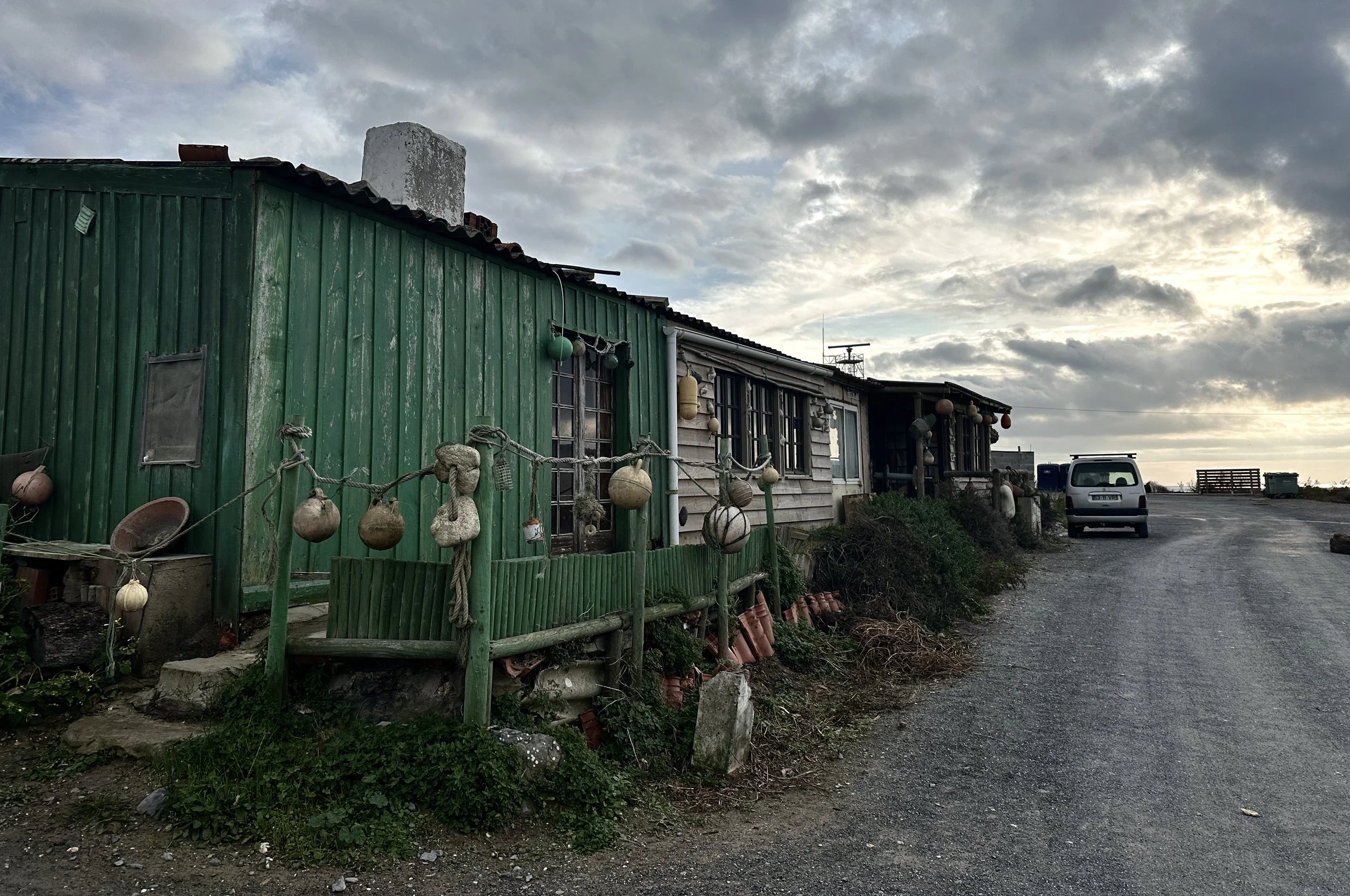
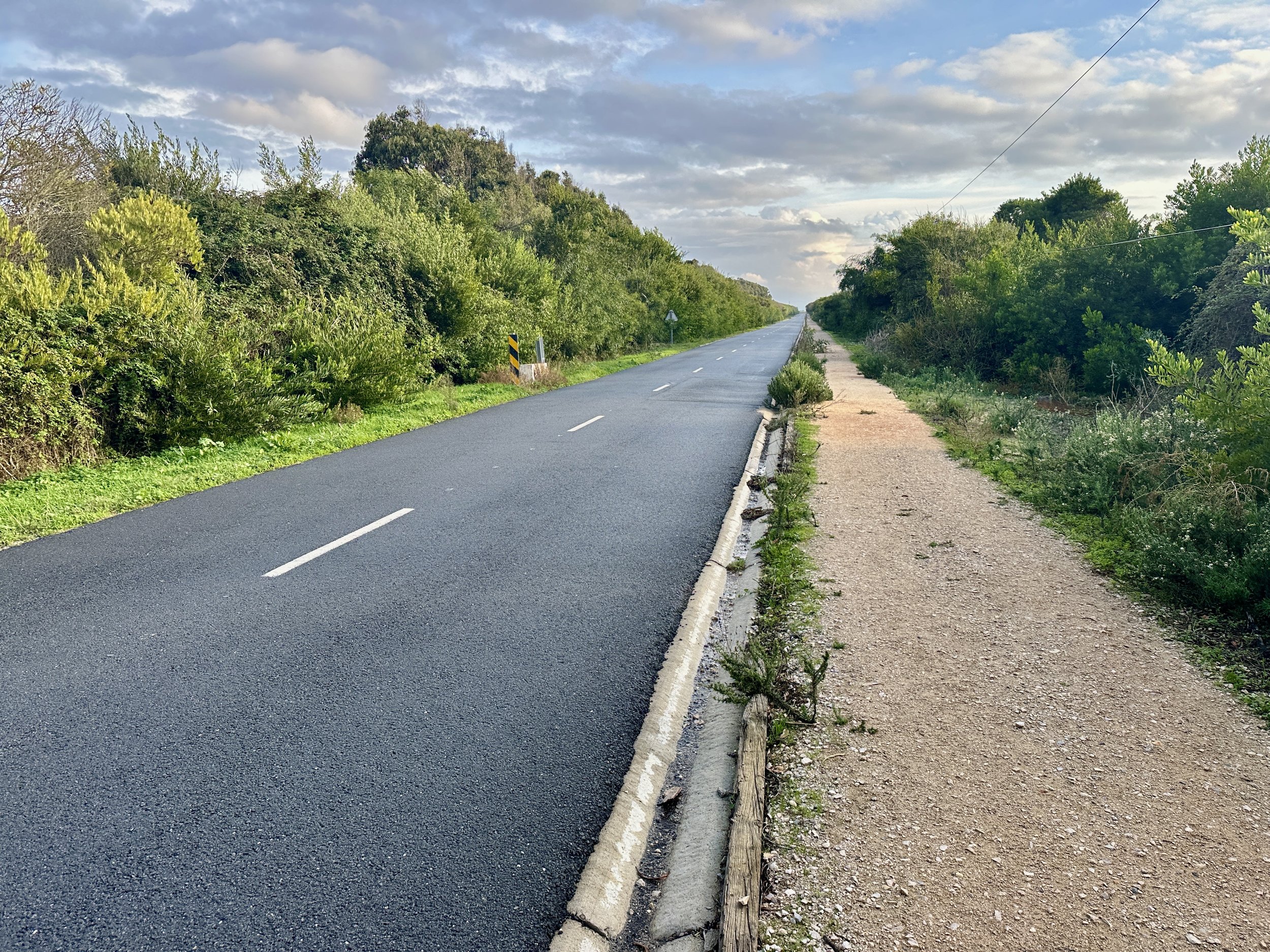
After the cafe and a few more fishing huts we’re on the side of a long, straight, two-lane blacktop road for the last stretch into Zambujeira Do Mar.
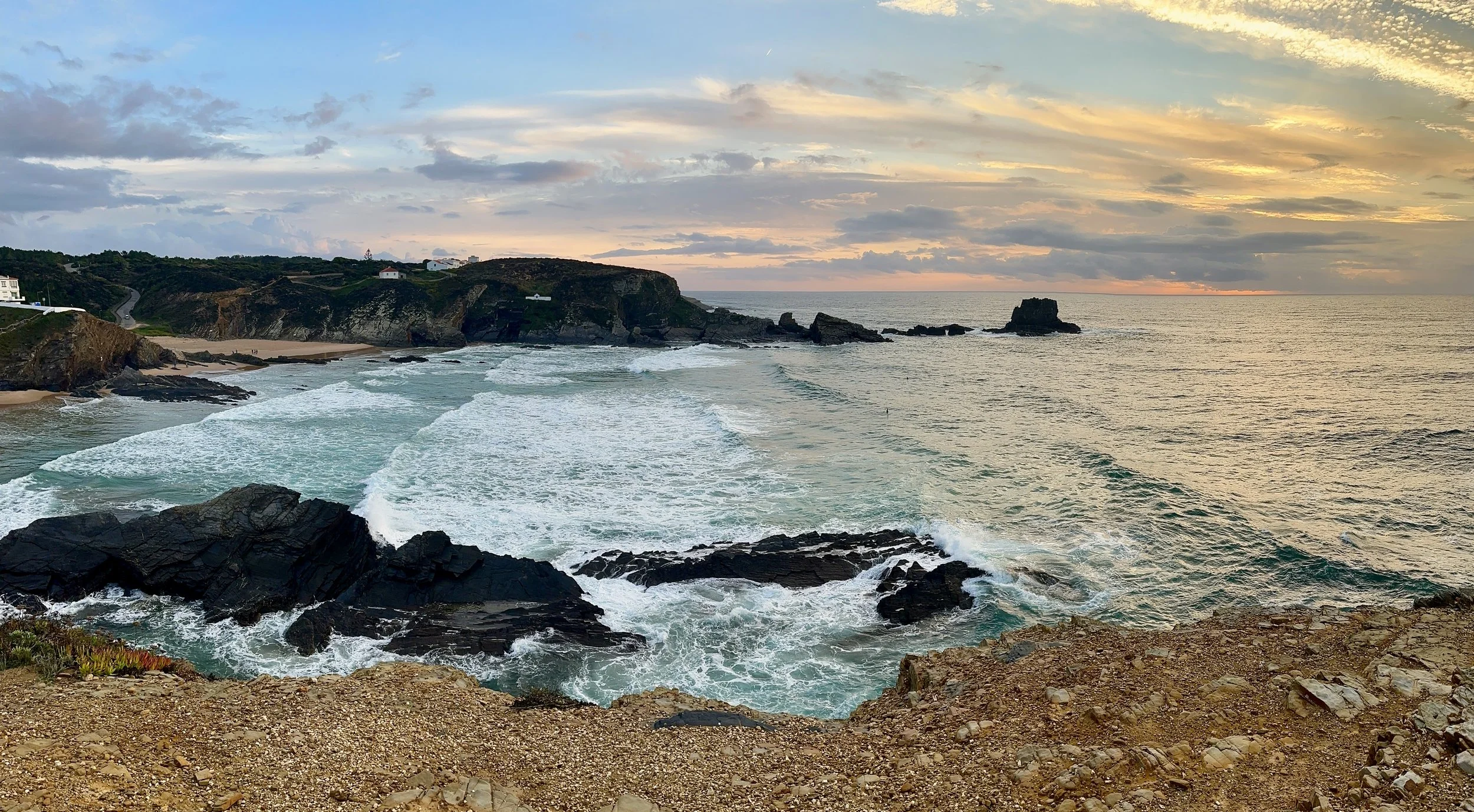
Here the path opens back up to a web of thin trails and boardwalks around on the coastal side of town, well-timed with the sun starting to go down.
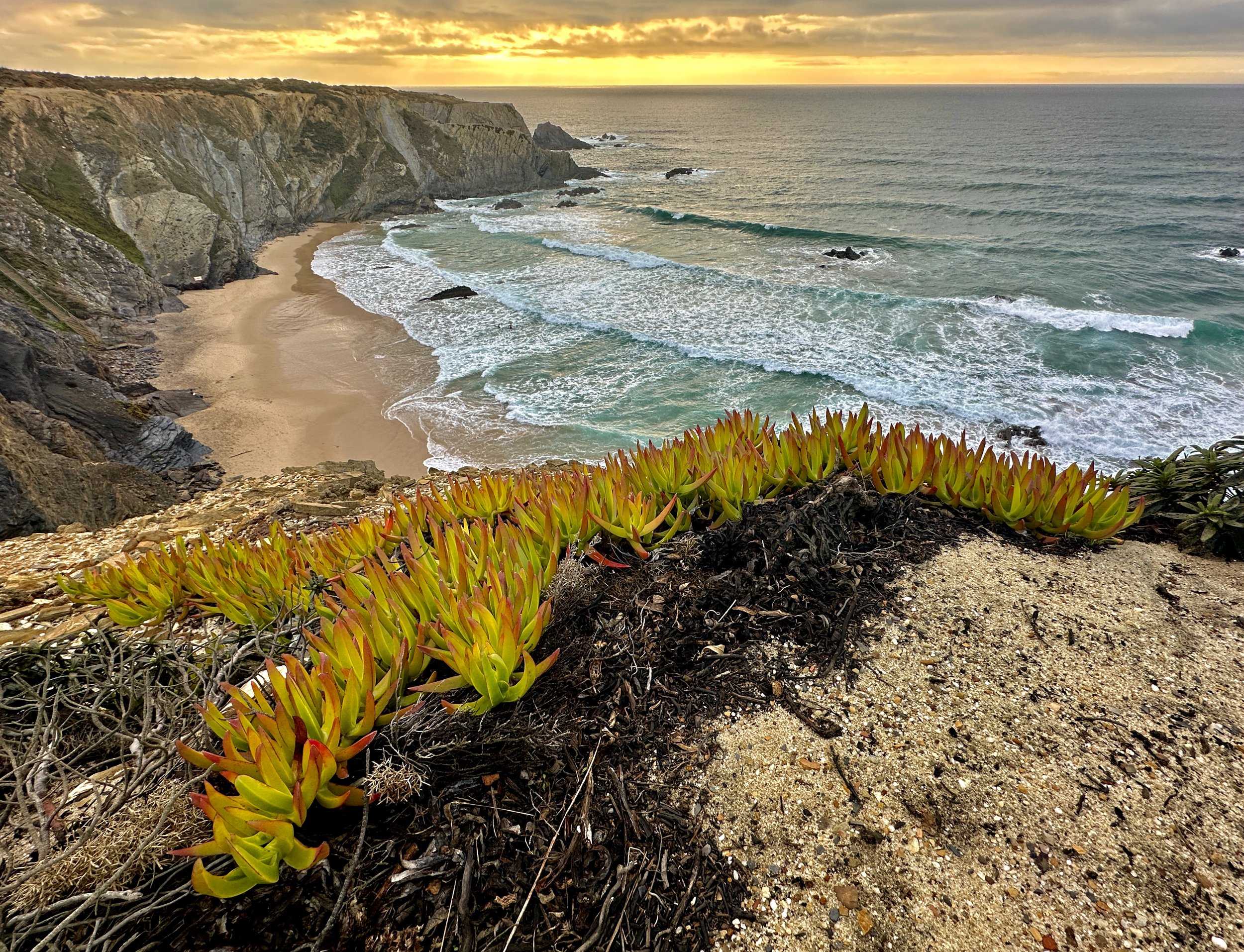
After appreciating the late afternoon light we head up into town to find our hotel, and the miserable woman working the reception counter. We get on her bad side when Antoaneta commits the cardinal sin of trying to use her driver’s license as ID instead of a passport. As of that moment we are personae non grata. The rest of the interaction proceeds in sharp, single word spits from the hotel woman. She grudgingly shows us to our room and storms off as soon as she can.
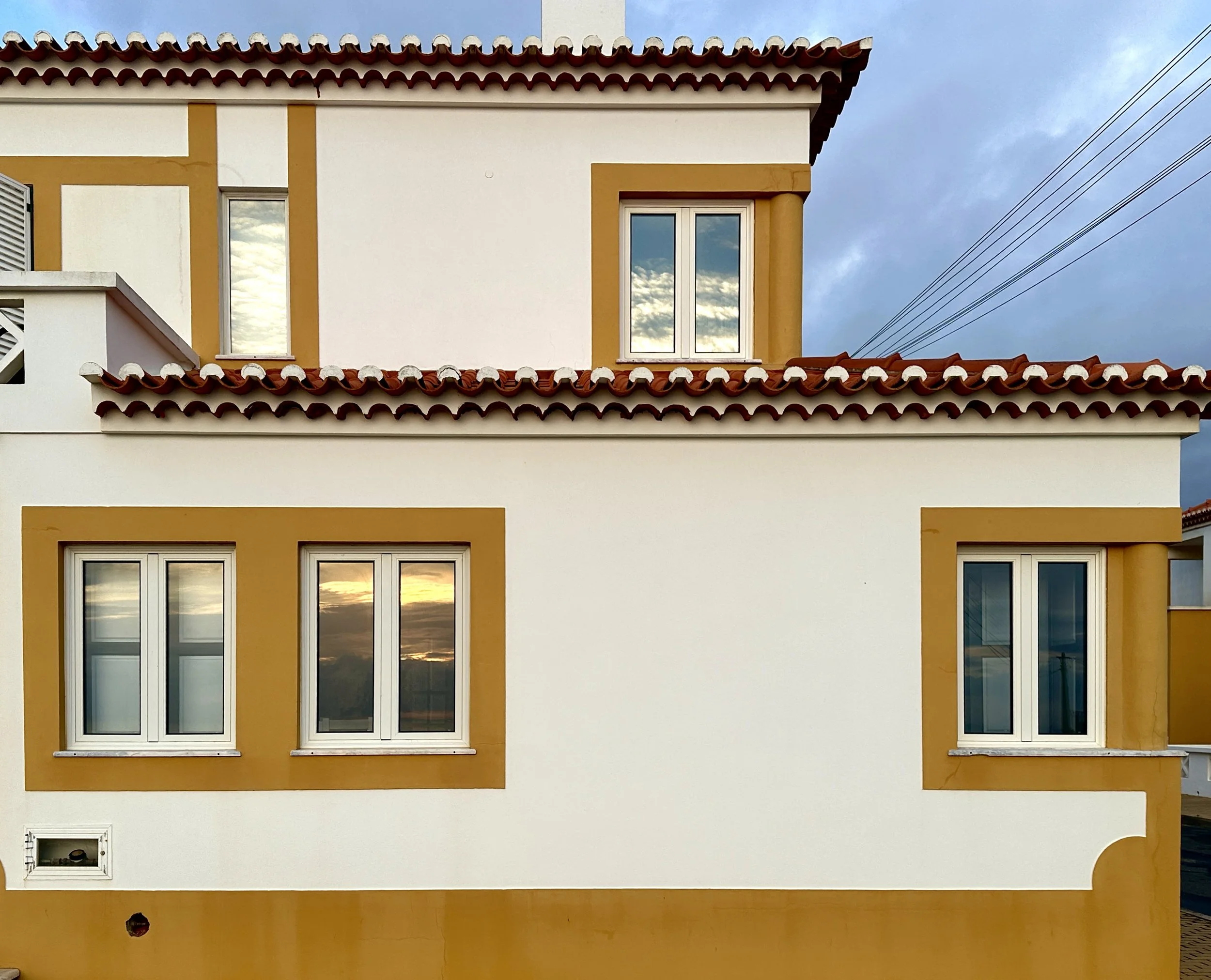
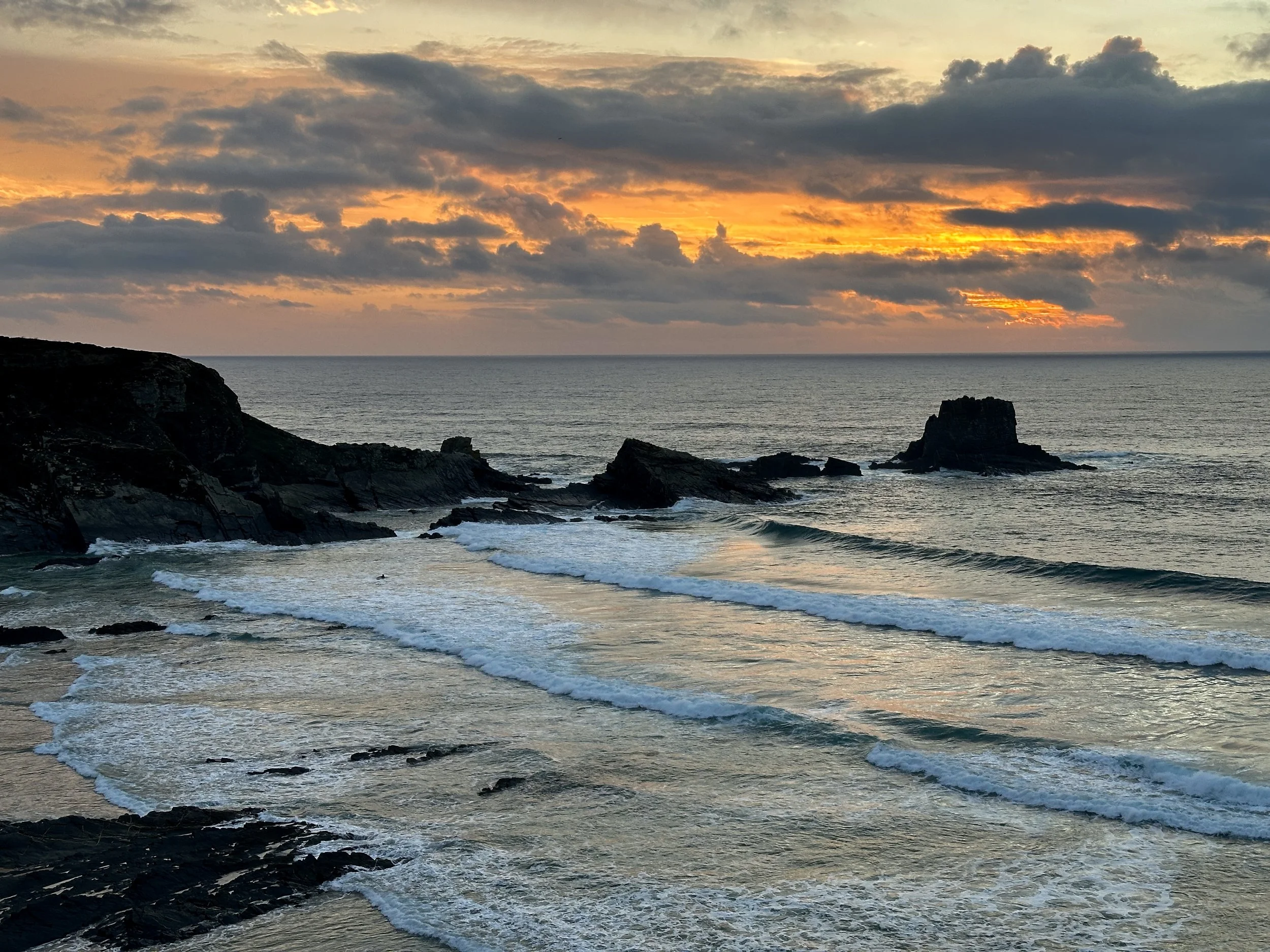
We drop our bags and head right back out to catch the last of the light across the boardwalks, then land at a restaurant with an outdoor view over the water to where the sun is setting.
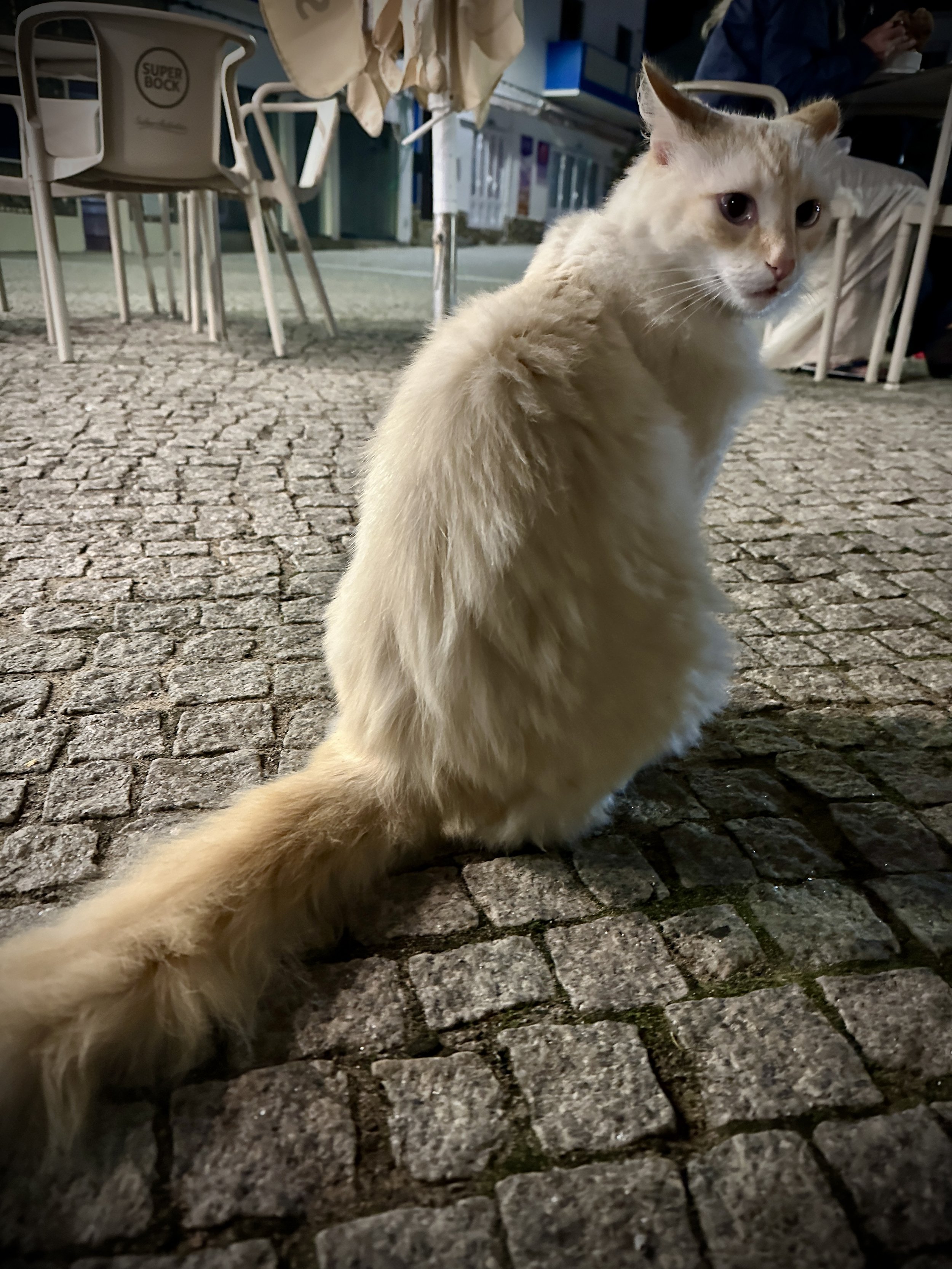
Here we make friends with another cream-coloured cat who looks enough like the one from yesterday’s cafe that I start a conspiracy theory about this cat’s extended family ingratiating themselves into restaurants across Portugal. To what end? Probably sardines.
Speaking of yesterday - the fritter and mushroom stew was so good that I order mushroom stew again. It’s a very different experience. No fritter, to start with. But beyond that: it comes in a giant pot with way too much stew for one person. In the aftermath I theorize that they make this full pot at the start of dinner service and then just hand it off to a succession of diners who slowly empty it over the course of the night. In which case I messed up their whole system. I ate all the mushroom stew. And regretted it.
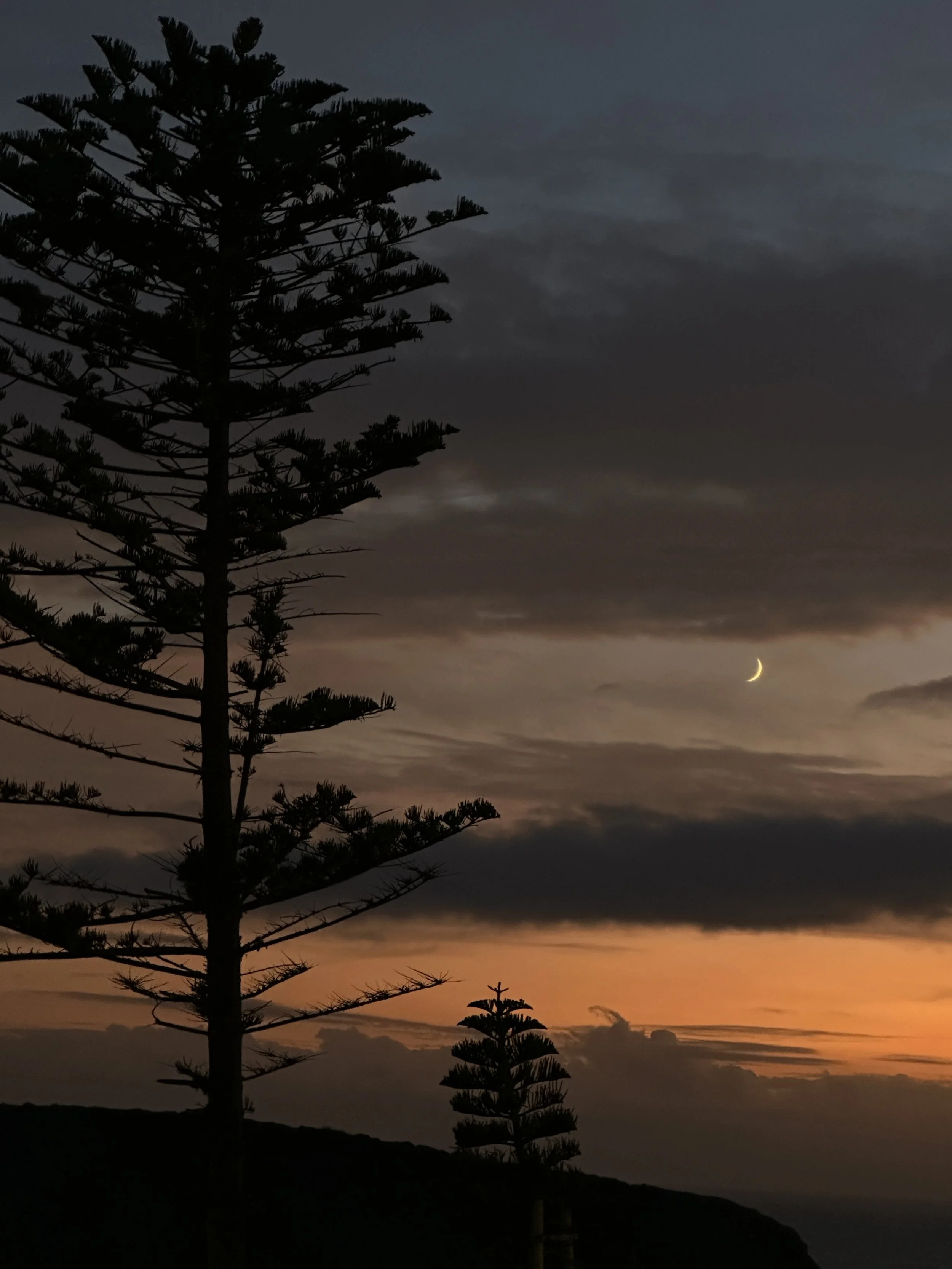
We take a circuitous route back to our hotel, trying a few grocery stores in sequence for sundries and conveniently taking in a little more of the town as we do. Today we use the right door into our hotel, and our key works. Thank God. I don’t want to think about what that hotel woman would have done to us if we’d broken protocol.