DAY 2 - BUS TO CERCAL, HIKE TO PORTO COVO - 24.5km
5:45am. My body has given up on its internal clock. I’m awake before my alarm, having gotten virtually no sleep.
We’re not in a rush but we have a schedule. Our bus leaves from Lisbon for Cercal do Alentejo at 7:30. Missing it would not be a great start - though our hotel is a brief ten minute walk to the station. As we hoist our packs, we’re making good time.
So good, that we first drop in at a pasterlaria. Antoaneta gets herself a real coffee (I made do with hotel pods) and a pastel de nata we share, still warm from the oven. For my money, one of the best of the trip. We don’t know how good we’ve got it in the big city. Portugal (the part we experience, in the off-season) tends to open late.
The bus station, part of Portugal’s ubiquitous Rede-Express network, is well-signed and we have no trouble being where we need to be. There’s even a booth outside to get Farturas though sadly not open yet.
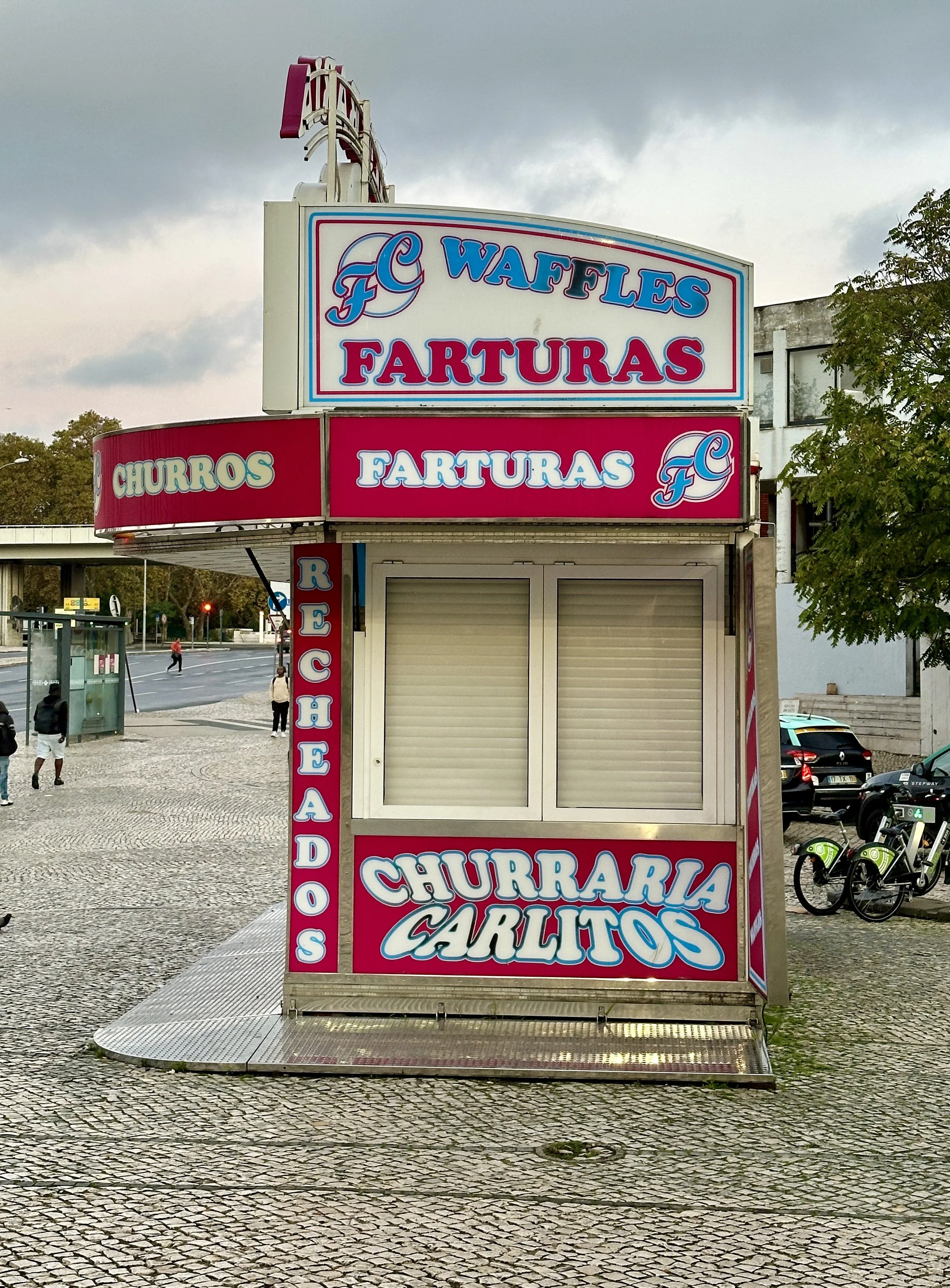
WHAT IS A FARTURA
If you care to ruin the speculation for yourself, a fartura is an oil-fried doughnut. Its name comes from the Latin ‘farto,’ meaning full or satiated. Now, I know what you’re thinking. The Latin ‘full or satiated’ could believably also evolve into the modern usage of ‘fart’, right? But actually, no! Fart comes instead from Feotran, an Old English word meaning literally ‘to break wind’, related to the Old High German ‘ferzan’, from the Proto-Germanic ‘fertaną’, from Proto-Indo-European ‘perd-’.
The bus ride is uneventful. They stash our packs underneath because they insist they could not possibly fit in the overhead racks (they could). Our assigned seats are the last row, the worst for Antoaneta’s motion sickness. The highways are smooth but the stops in towns necessitate a lot of tight corners and roundabouts. I start getting queasy too.
But I also see an encouraging sign: electrical towers thick with stork nests. The prevalence and docility of native storks was a big draw for me. If they’re already overwhelming the sides of highways, imagine the coast!
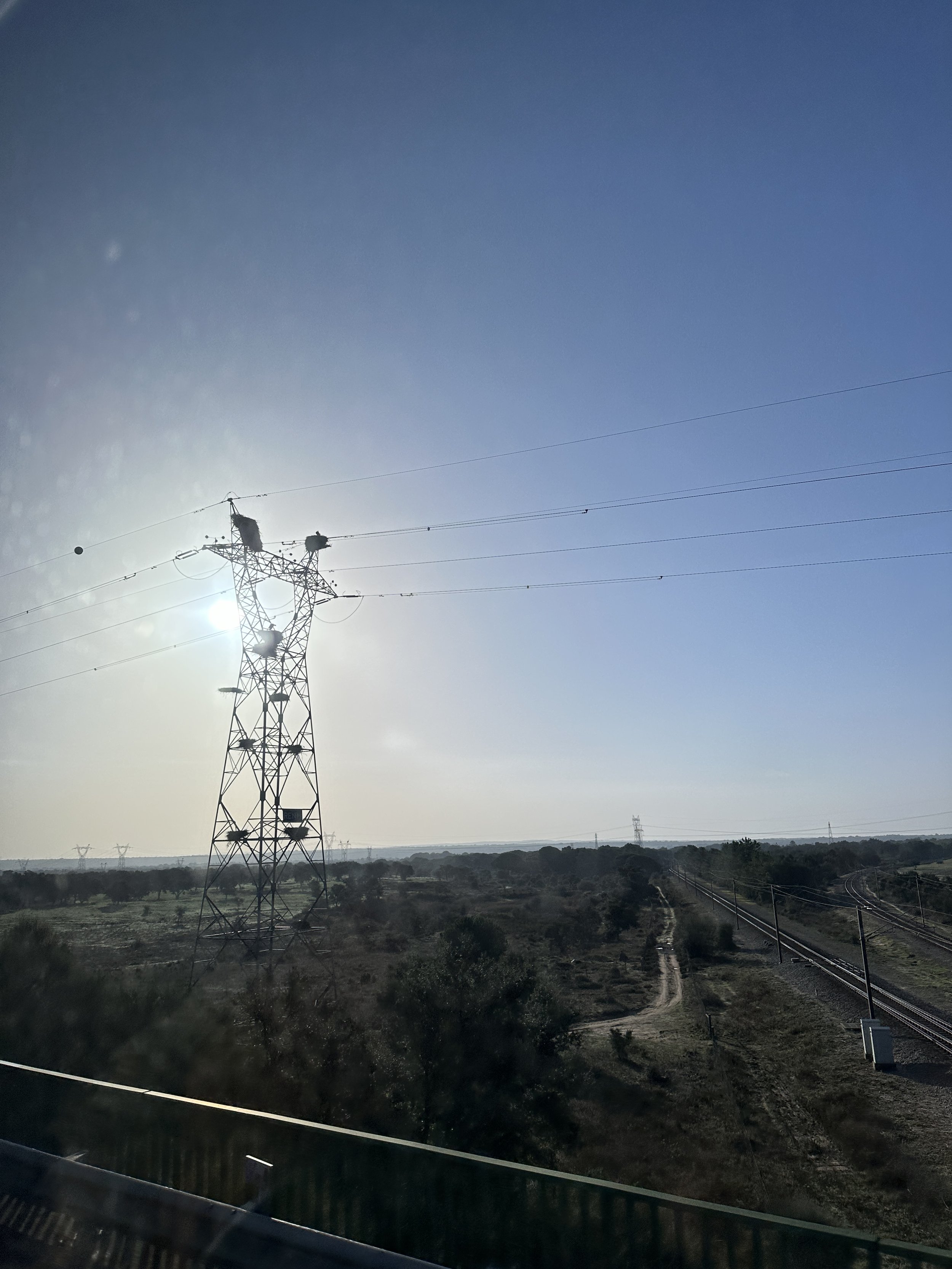
WHITE STORKS
Impressive soaring birds with a 215cm wingspan, are ubiquitous around the Algarve coastal region of Portugal, where they build equally impressive nests on top of any supporting structures they can find, from chimneys to electrical towers.
Those nests can actually become little communities unto themselves, housing multiple sparrow species in the tangle of branches below the storks.
Storks generally prefer inland real estate for their nests, but the cliffs and sea stacks of the Algarve have proven too good for them to pass up. At the right times of year they’re all over coast - it is in fact, the only place in the world where they nest on sea cliffs.
The storks historically migrate south to Africa in the winter, but climate change has shifted their habits so some are now year-round residents in Portugal.
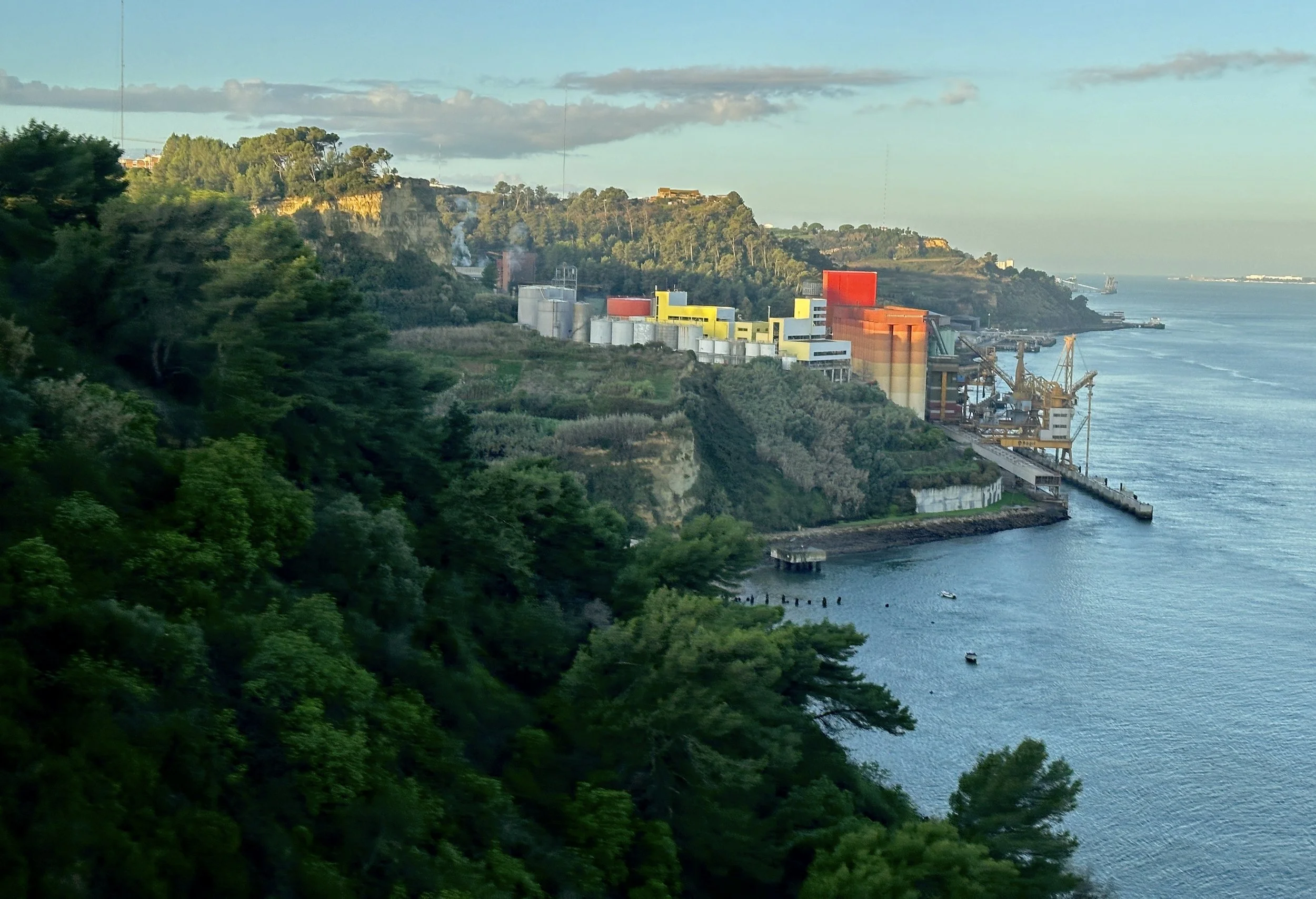
Halfway through the three-hour ride we pull in at what passes for a rest stop: a grungy garage with a half-empty vending machine (out of order). The washroom floor is covered in an inch of what I tell myself is water. Antoaneta decides it’s not worth it.
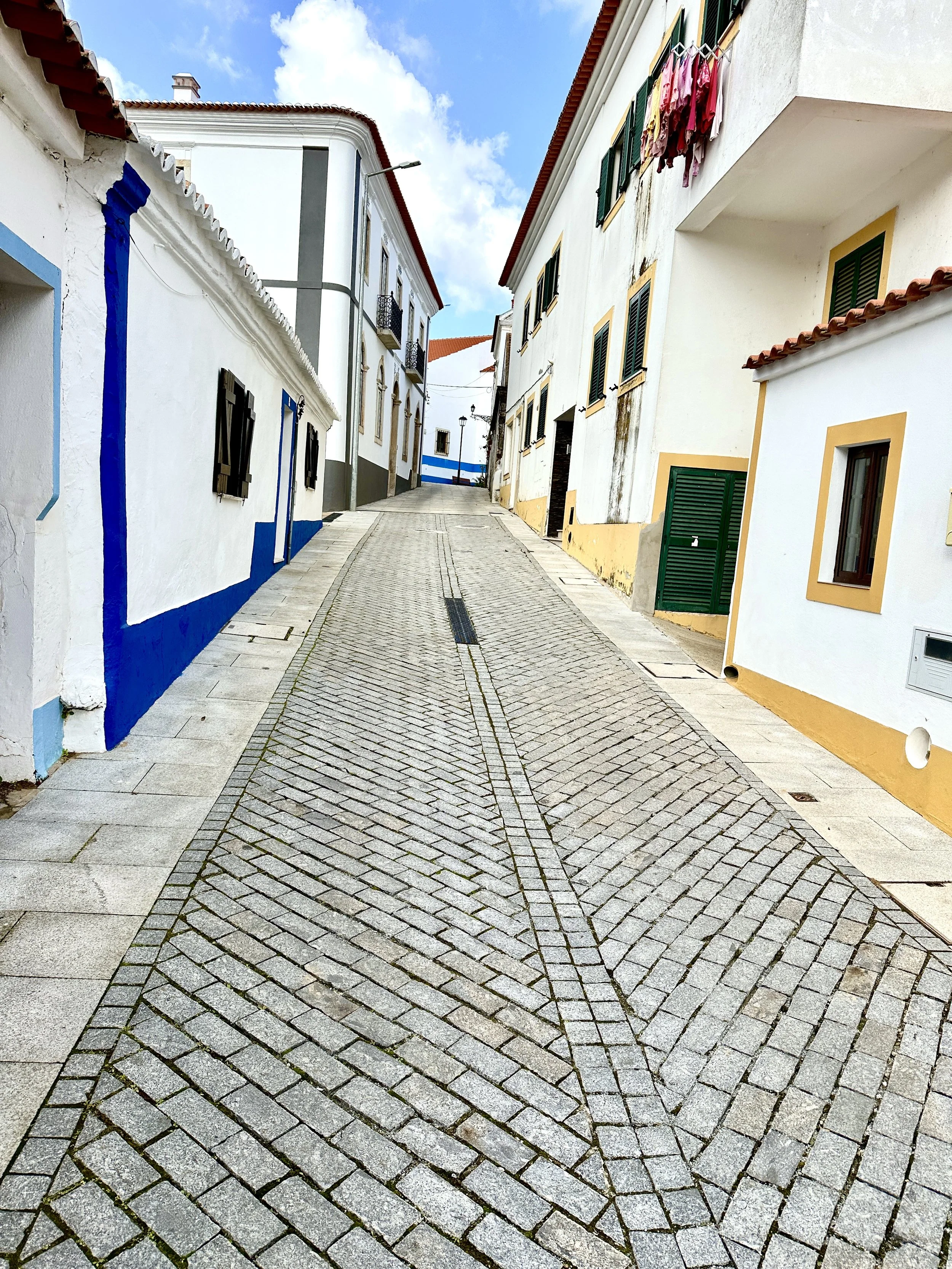
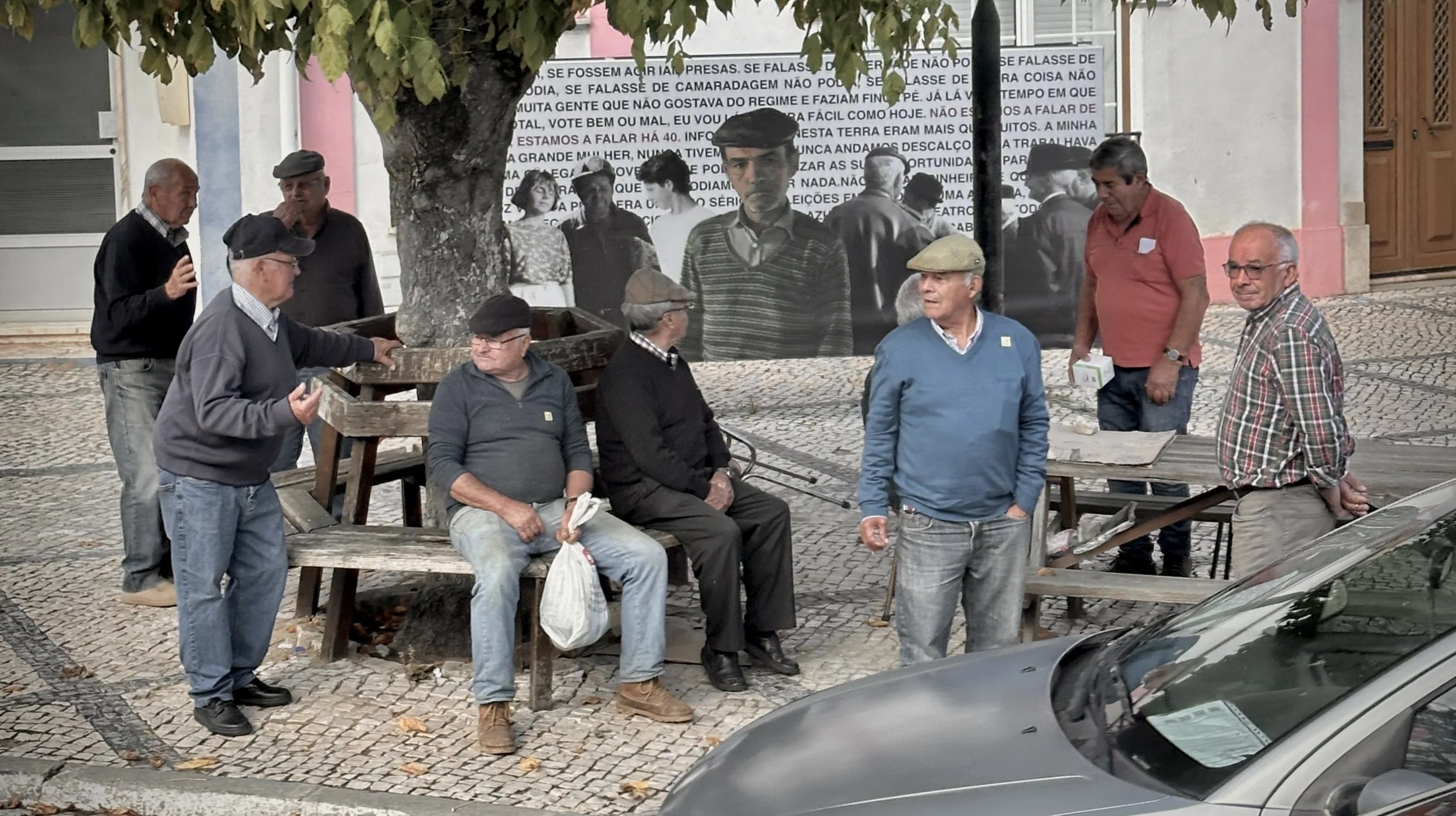
In stark contrast is Cercal do Alentejo, a gorgeous little town with an inviting central square (the first of many). Postcard-perfect, our first sight is a gaggle of timeless locals.
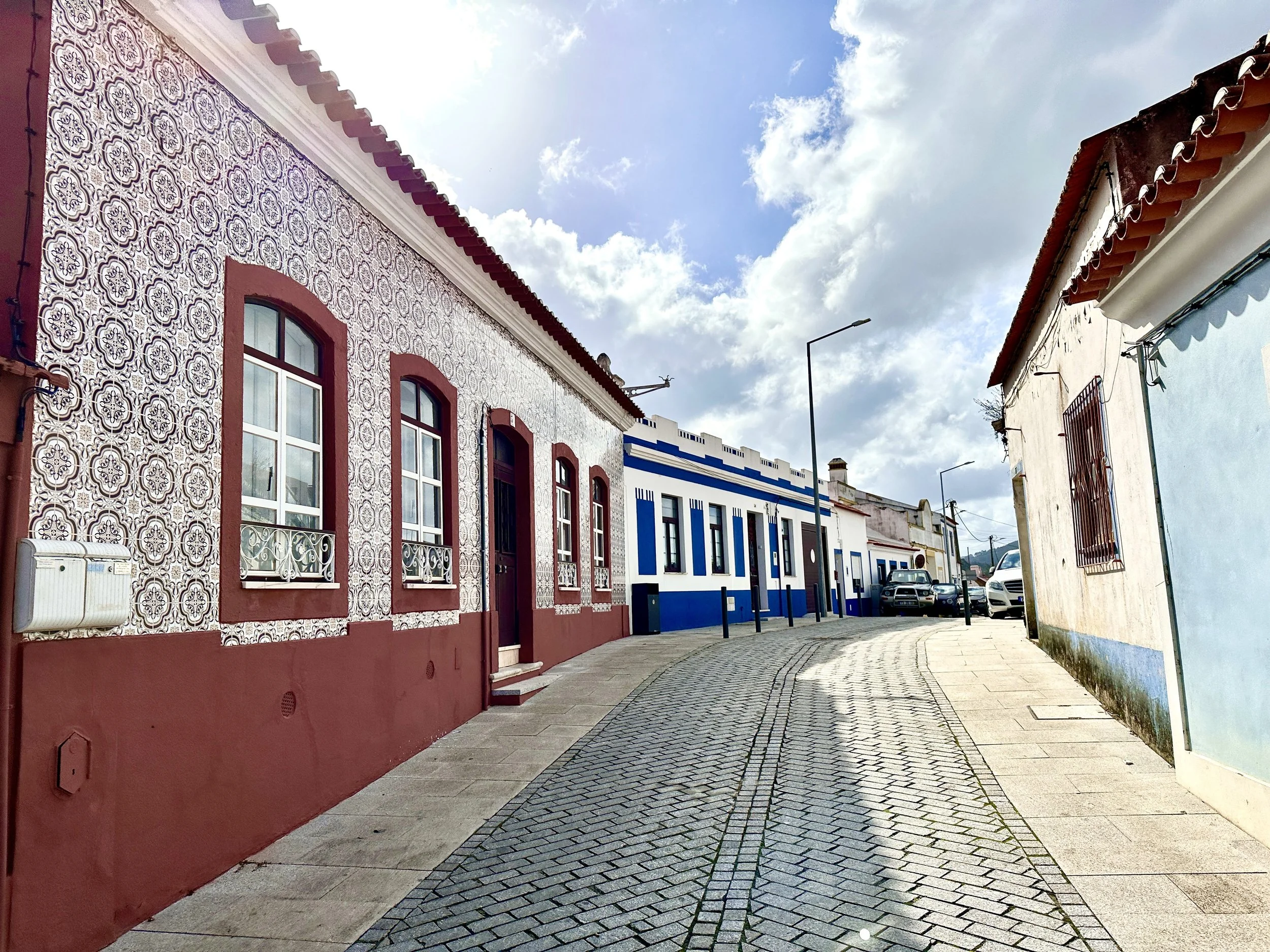
At 11am we take what we could call the first real steps on our trip.
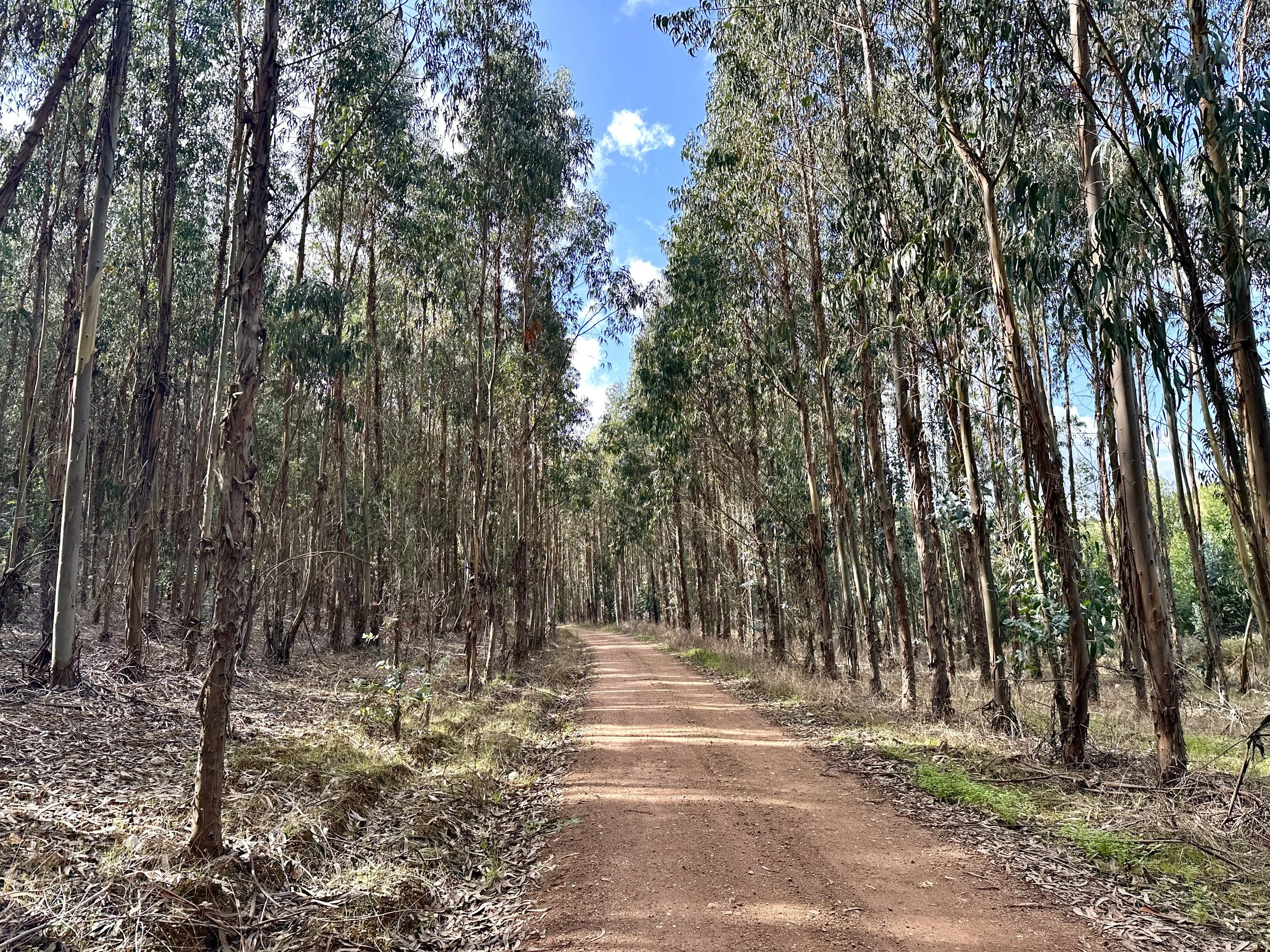
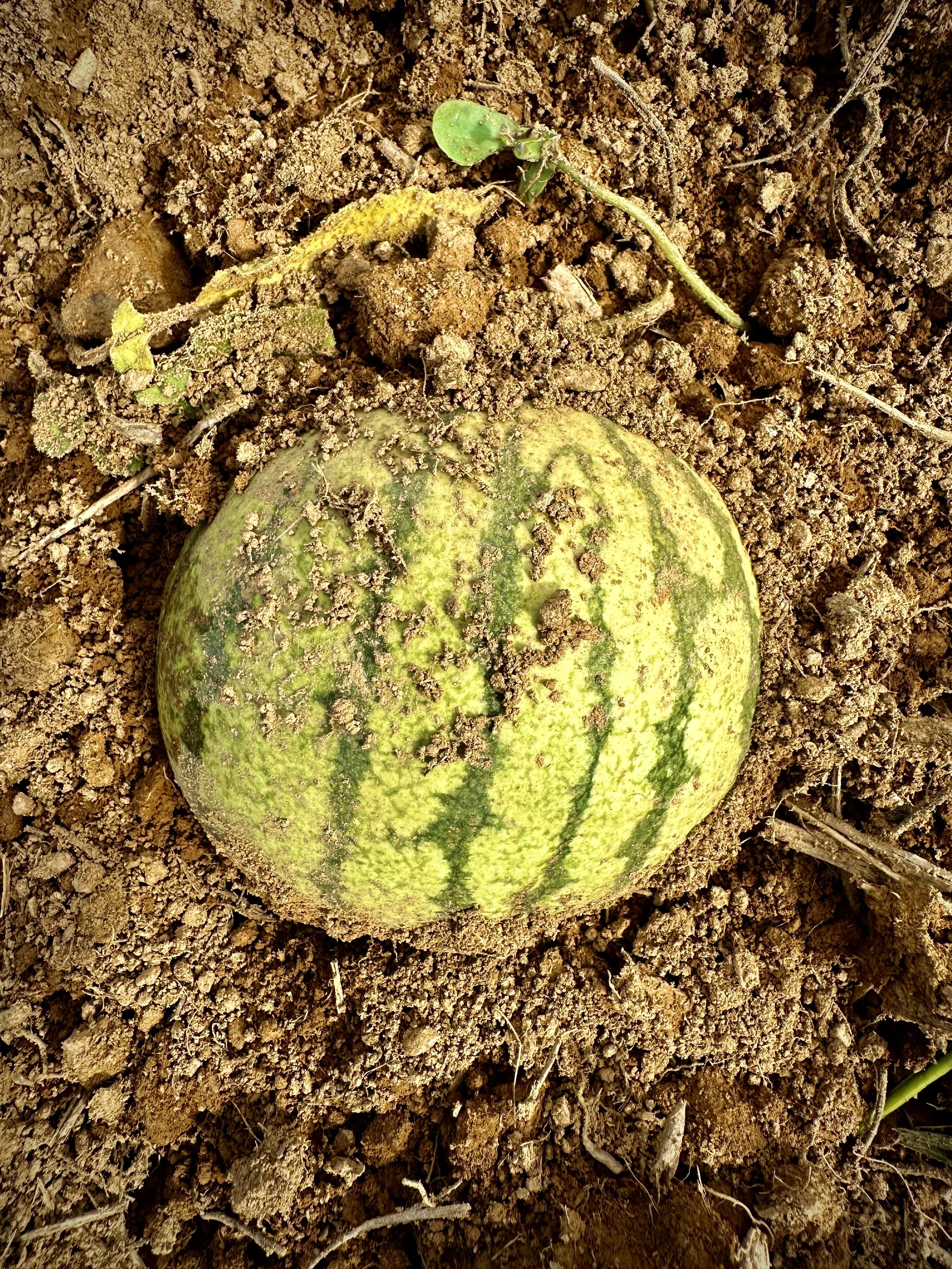
Once out of town we’re ensconced in bucolic bliss. A wide dirt path bordered by stone walls, pastures, orange groves, an occasional watermelon…
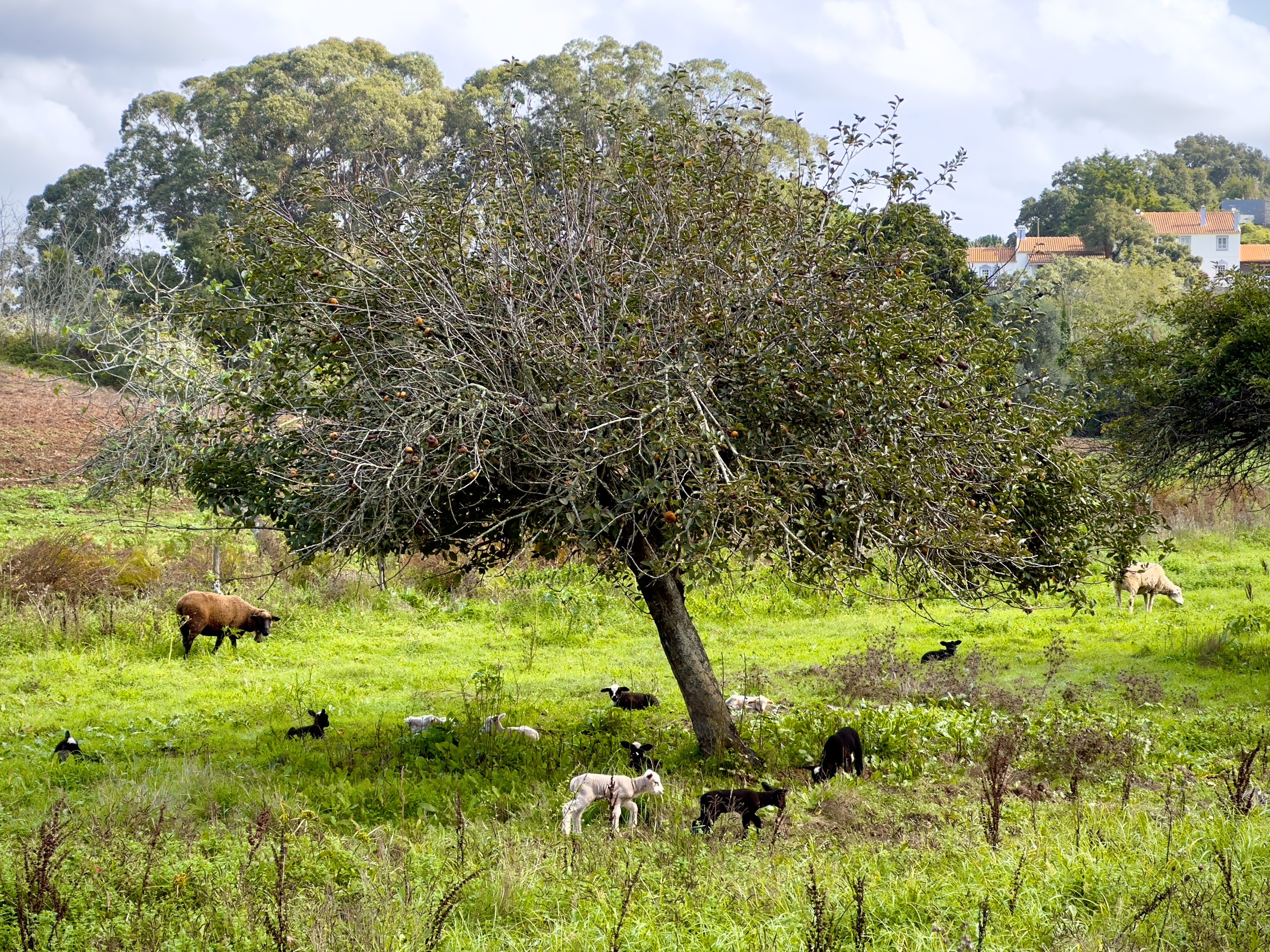
…and sheep under spreading canopies.
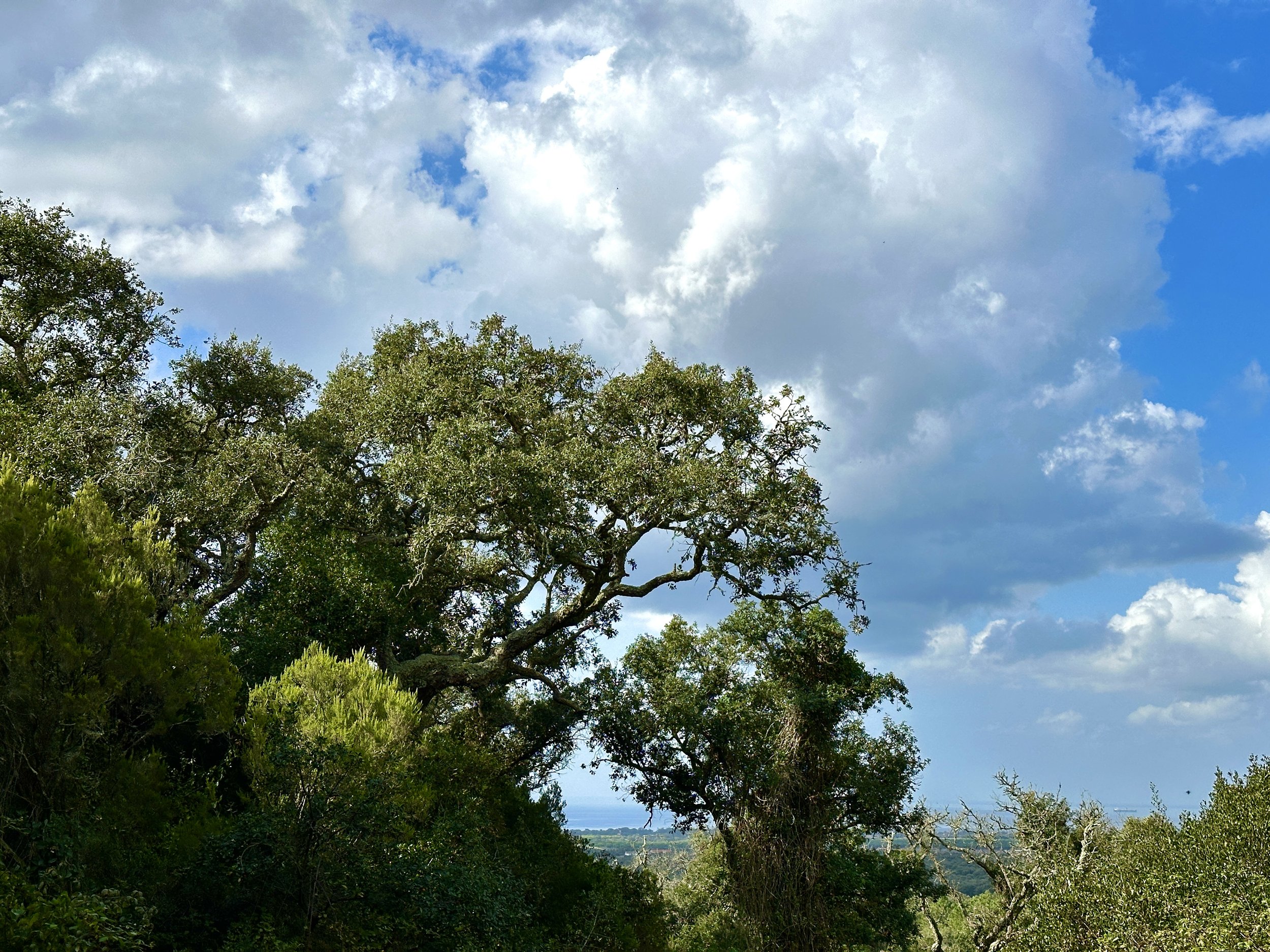
The path is also lined with cork trees, many of them showing signs of harvest - bare trunks and harvest years painted on. No surprise there: Portugal supplies literally half of the world’s cork.
PORTUGAL’S CORK
Portugal has 1/3rd of the world’s cork oak trees. Harvesting that cork is a lengthy process. Cork trees need to grow 25 years before they have enough bark to be carefully cut back, maximizing the yield while avoiding cutting into the inner layers that could harm the tree or lead to infection and death.
Even then, this first round of harvesting will yield relatively poor cork. The tree will then take 9 years to regrow the bark to the point where it can be harvested again - the first ‘good’ harvest. The nine-year cycle between harvests then repeats for the life of the tree, around 160 years.
Cut cork additionally needs to be ‘seasoned’ for an additional six months before it’s ready to work with.
Cork is a versatile material, but the majority of it still goes toward making wine stoppers.
A couple of hours in, we come upon what looks like an aspirational resort. Signs for spas, restaurants, suites and cottages, but all we can see are uneven dirt roads leading into untamed forest.
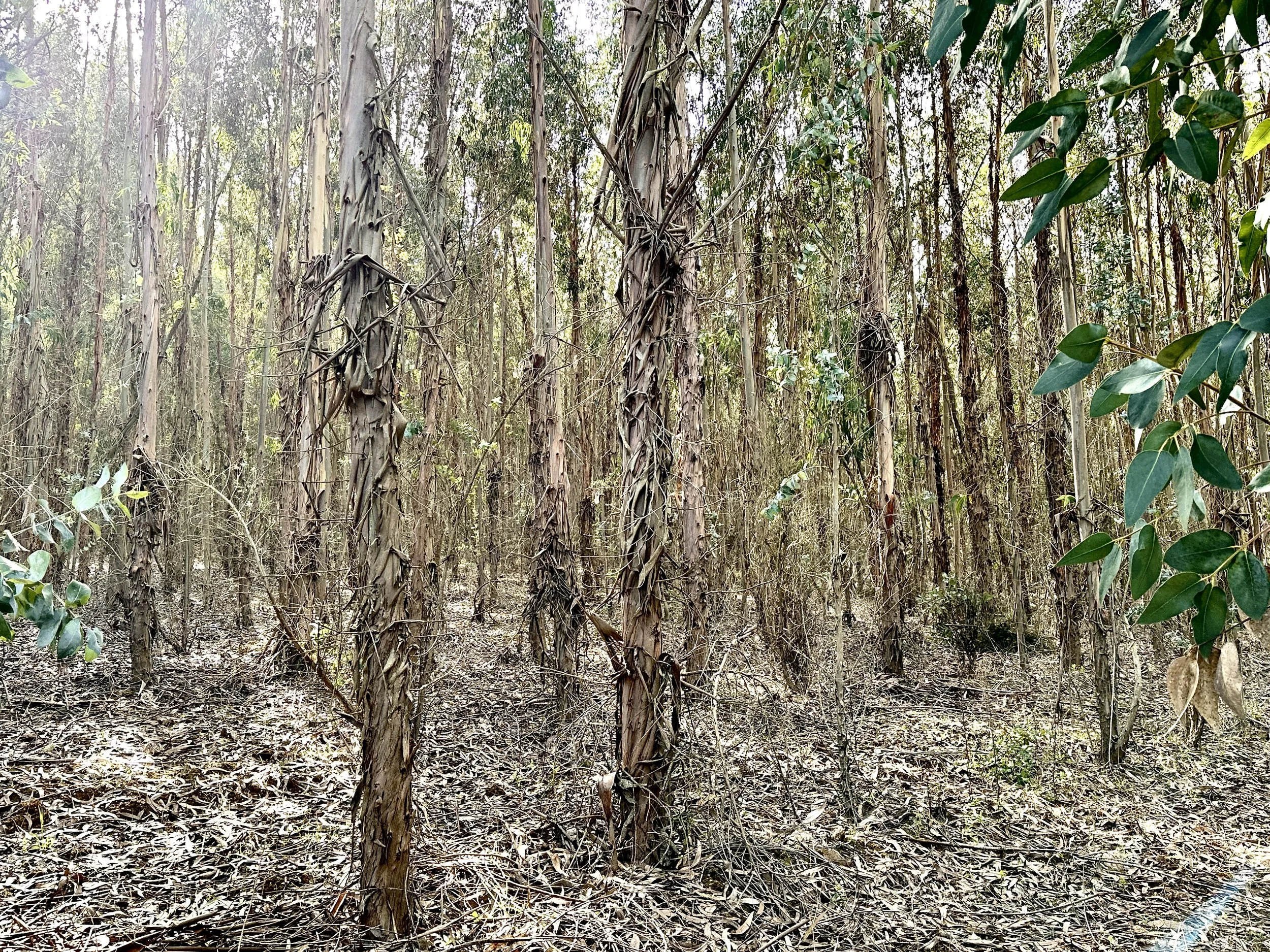
There is, however, a small gazebo with a picnic table - don’t mind if we do. It feels quite civilized to sit and snack here. It’s also the only time this day we see another hiker pass, in what will be stark contrast to later stages.
I haul out my overpriced granola, saved for this special occasion, and try a bite.
Chew. Chew. Calmly check the bag to confirm this is meant for human consumption.
The texture delicately balances cardboard and styrofoam. The ‘ginger-orange’ manifests as a bitter, sour sensation with no reward of flavour.
At the time I don’t have words so I casually hold up a little wafer, offering it to Antoaneta, and say “this is very bad”. This is bait. I assume my palate is unrefined. I’m unable to appreciate the subtlety and nuance of the granola. Antoaneta’s palate, however, is refined. I need to know.
“How do you mean?” she asks, eyeing the offering suspiciously.
“It’s just…” I stretch my gastronomic vocabulary. “It’s really… very very bad.”
The wafer hangs between us. Curiosity wins the day. I fully expect her to school me on the finer points of granola appreciation.
She takes one bite - one nibble - and violently spits, repeatedly. Spends two gulps of precious water washing out her mouth completely.
So maybe my palate isn’t so unrefined after all!
We move on - the gazebo is now cursed by the ghost of that granola. As it turns out, it may have represented some sort of arcane bargain. The food for the rest of the trip is so fantastic I can believe I ate a rite of passage that afternoon. Or: after eating it, anything will be delicious for the next week or so.
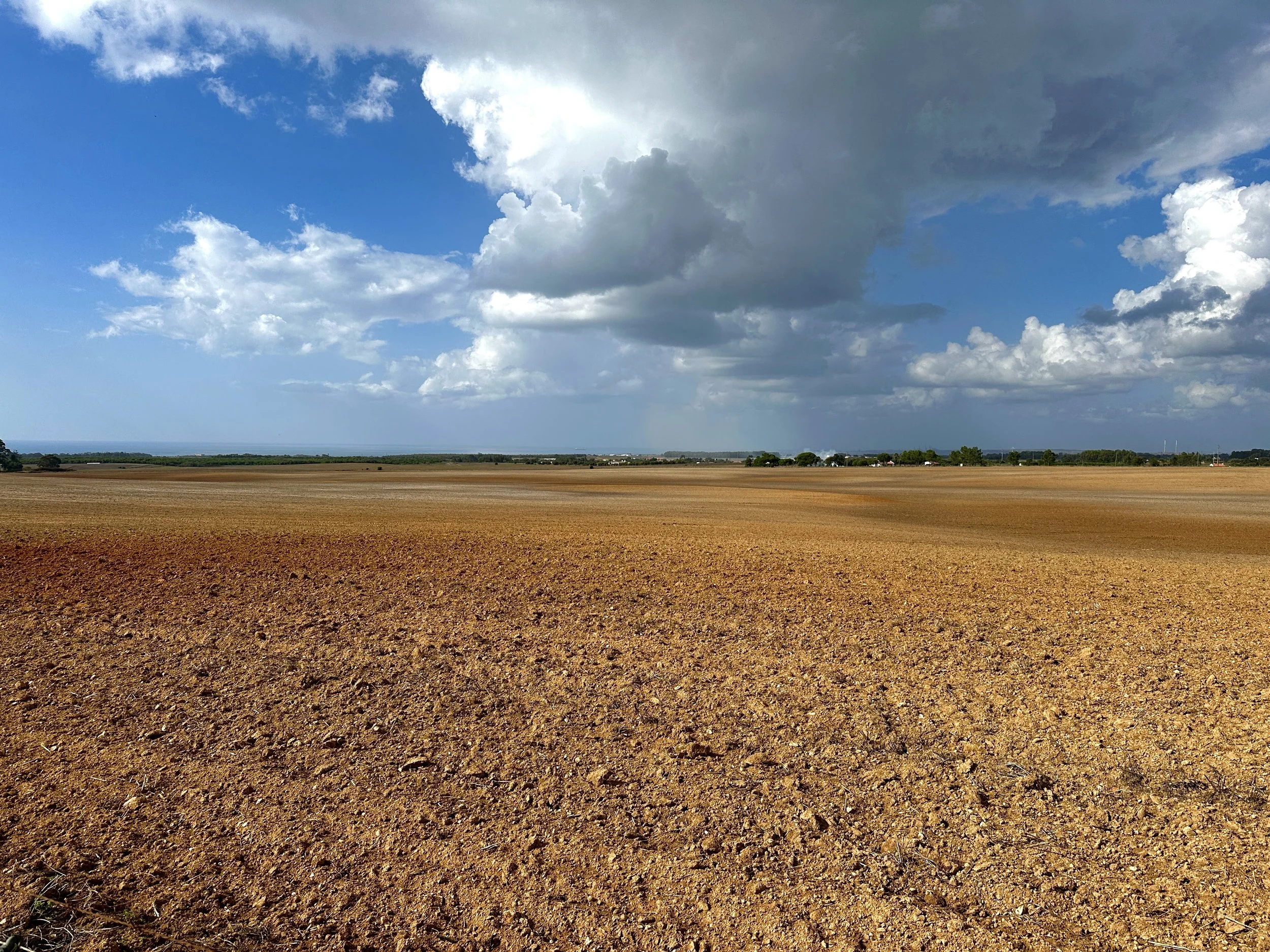
We take a wrong turn and wind up on a long, straight dirt path - planted groves on one side, tilled fields and haystacks on the other.
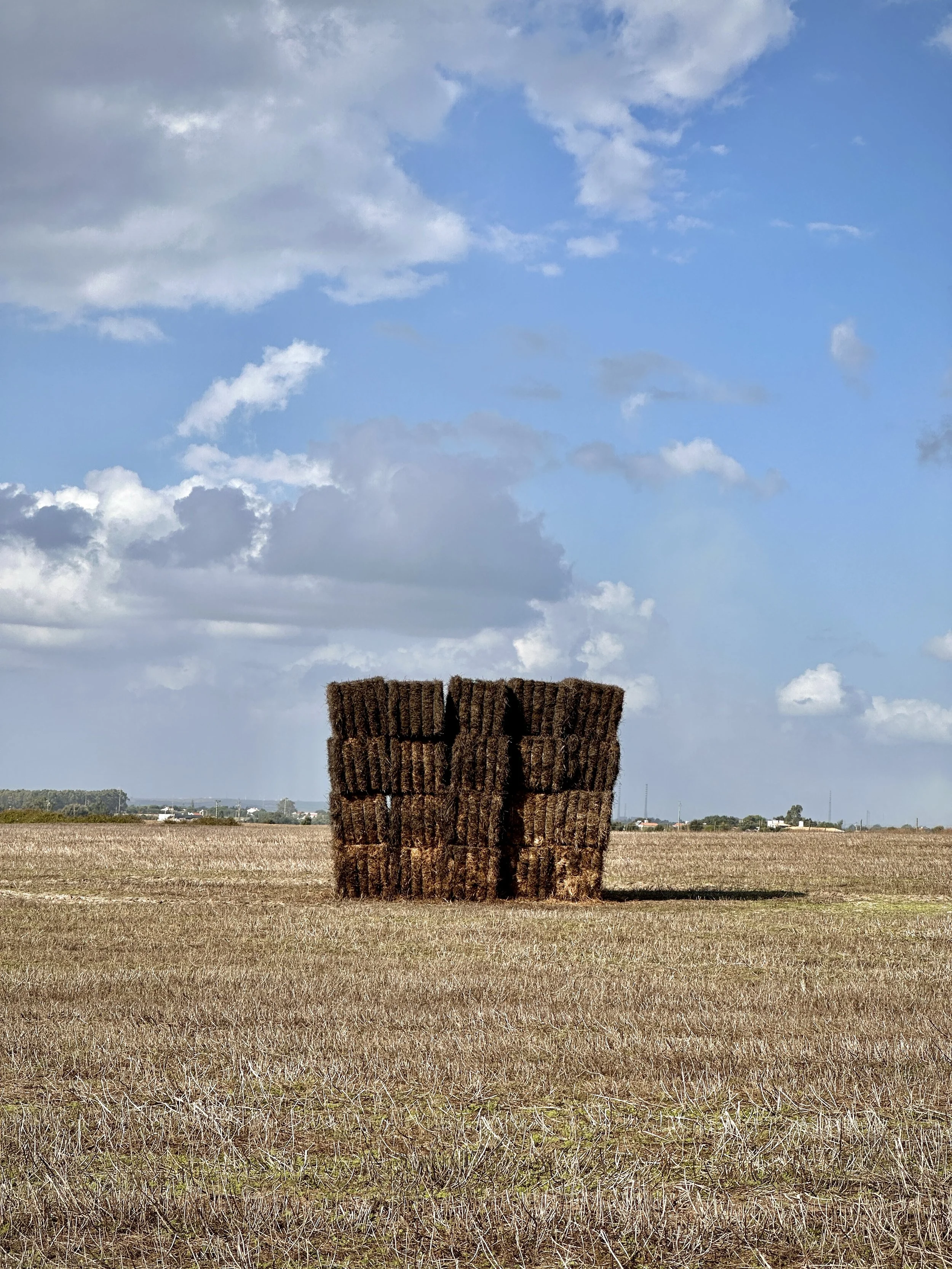
We catch the error but continue on - everything interconnects and we can link back up with the official path in an L shape.
The weather starts to get oppressive on the open roads - clear sky, hot sun, still air. The appearance of the ocean on the horizon is a welcome sight.
A breeze kicks up as we approach the coastal
FORTE DE NOSSA SENHORA DA QUEIMANDA
Construction of the fort was initiated in 1588 but took until the end of the 1600s to complete. It was built as part of a project to connect the nearby island of Pessegueiro to the coast to form an artificial port with a breakwater.
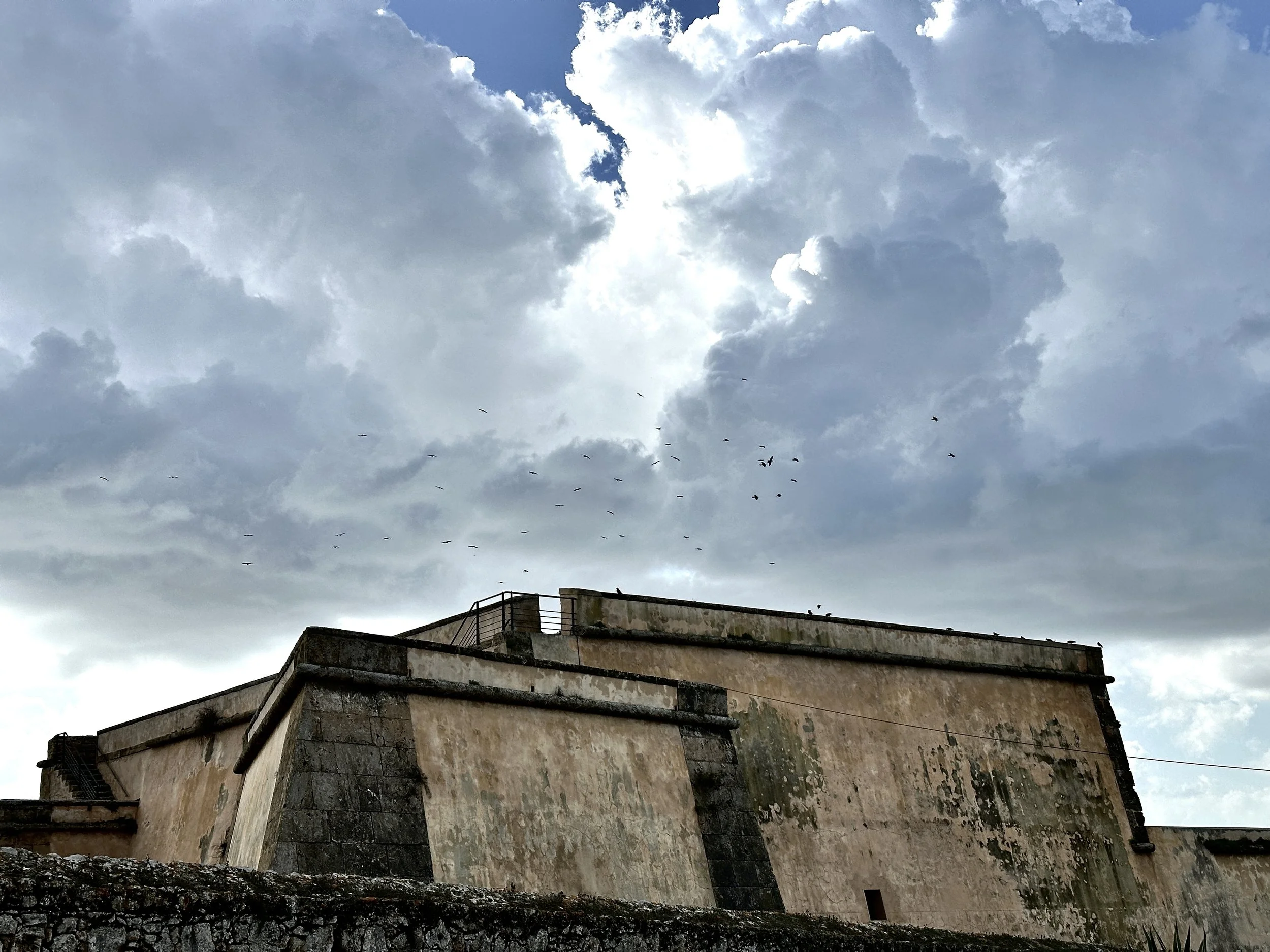
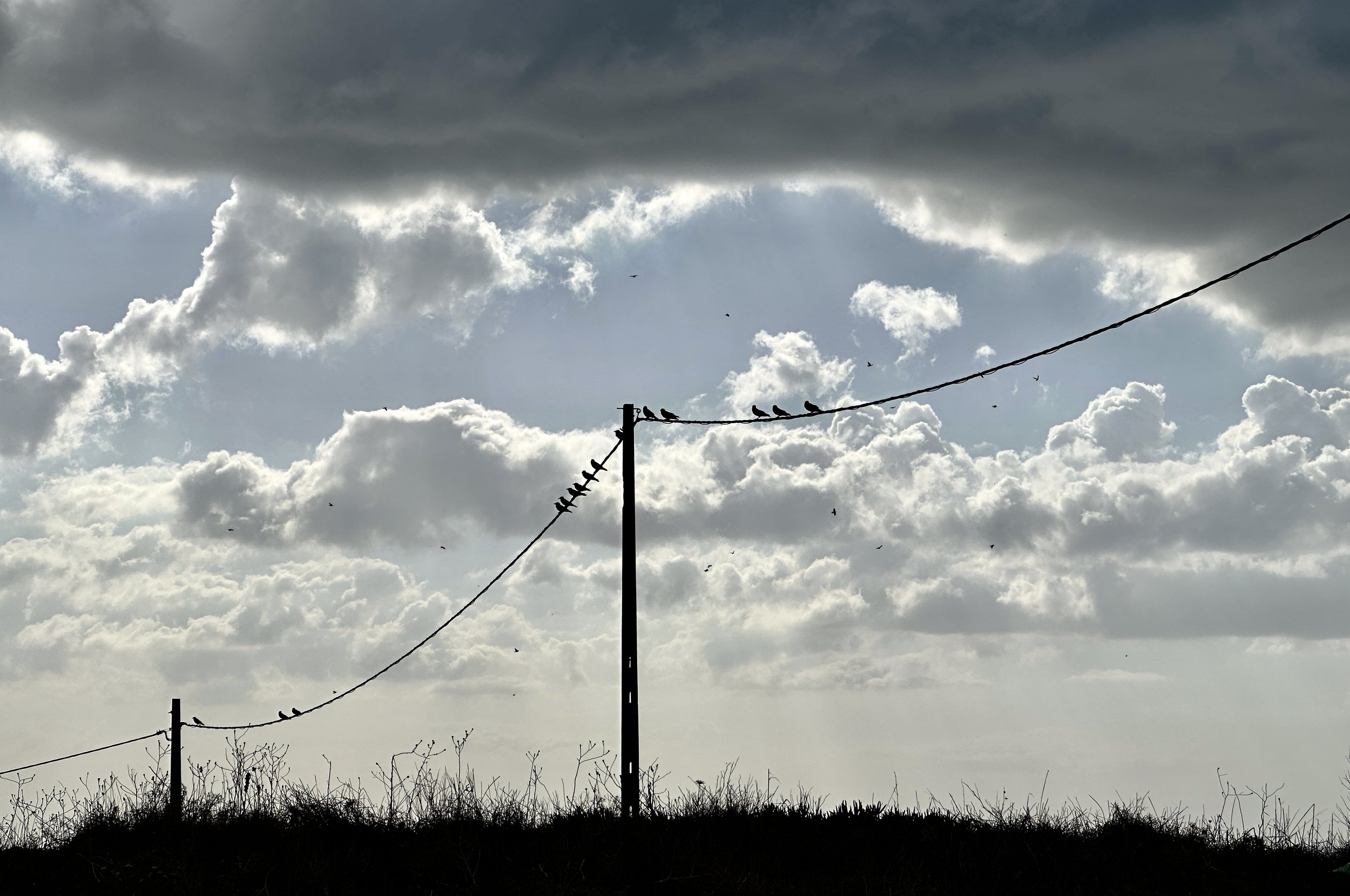
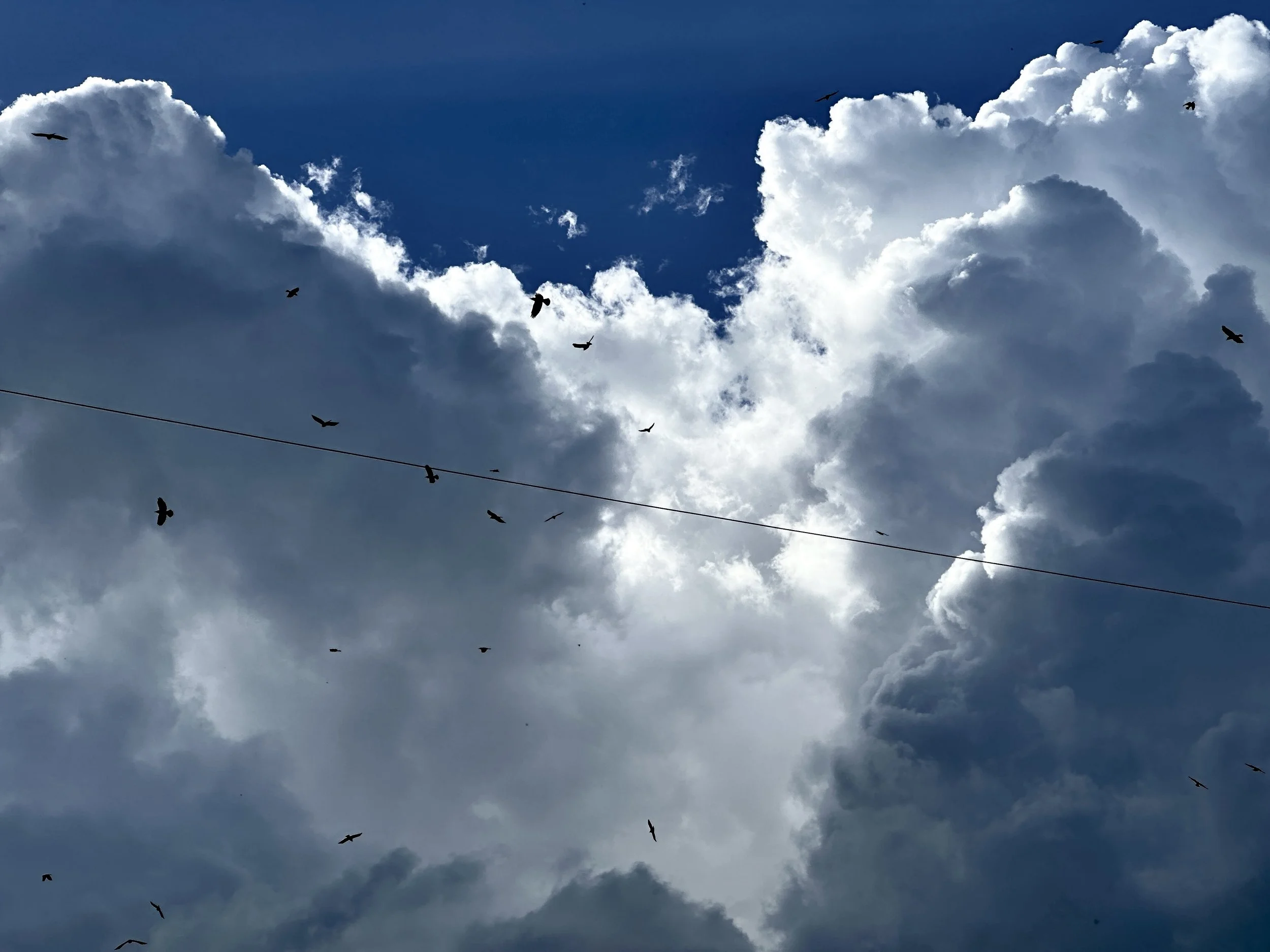
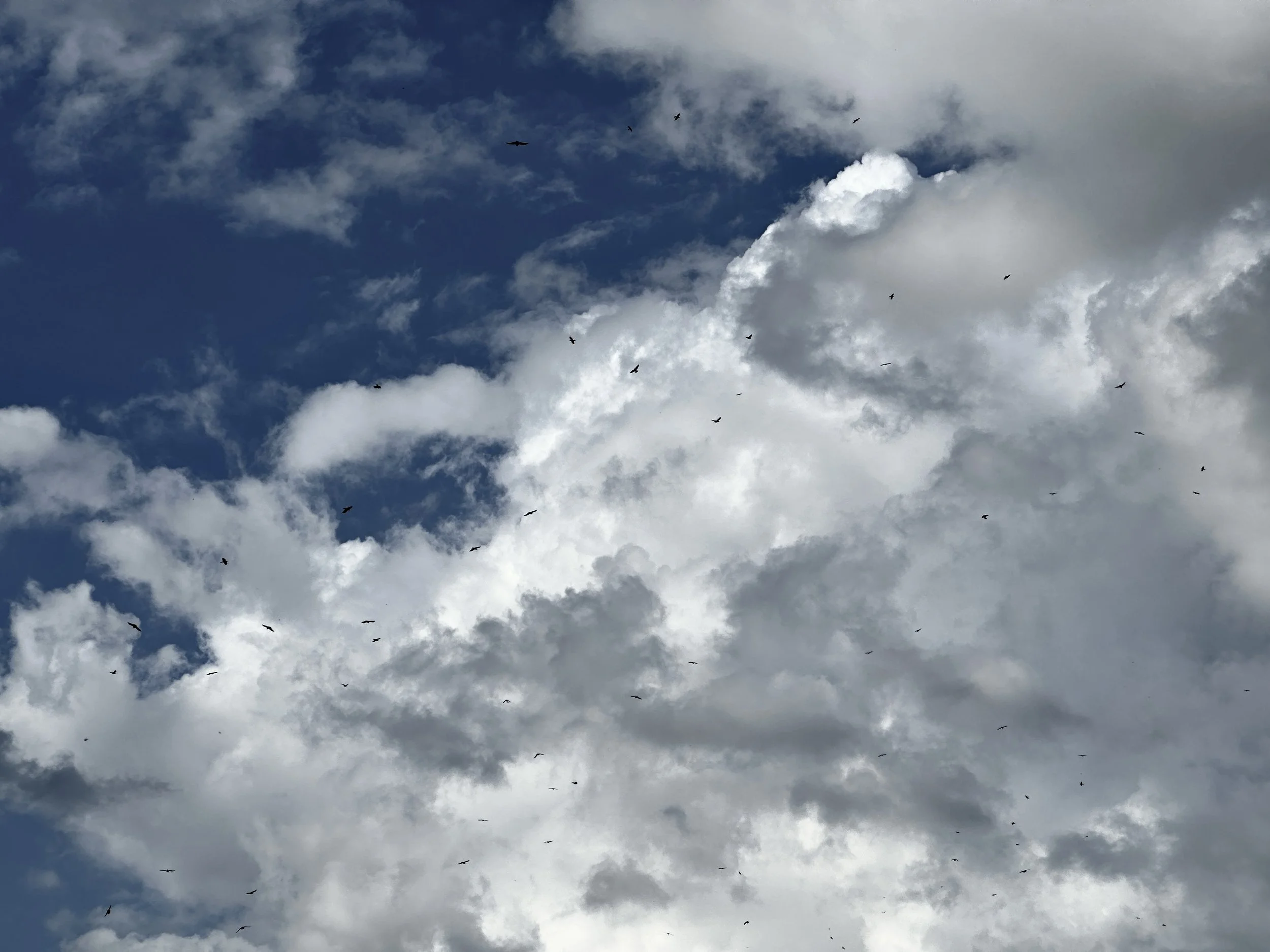
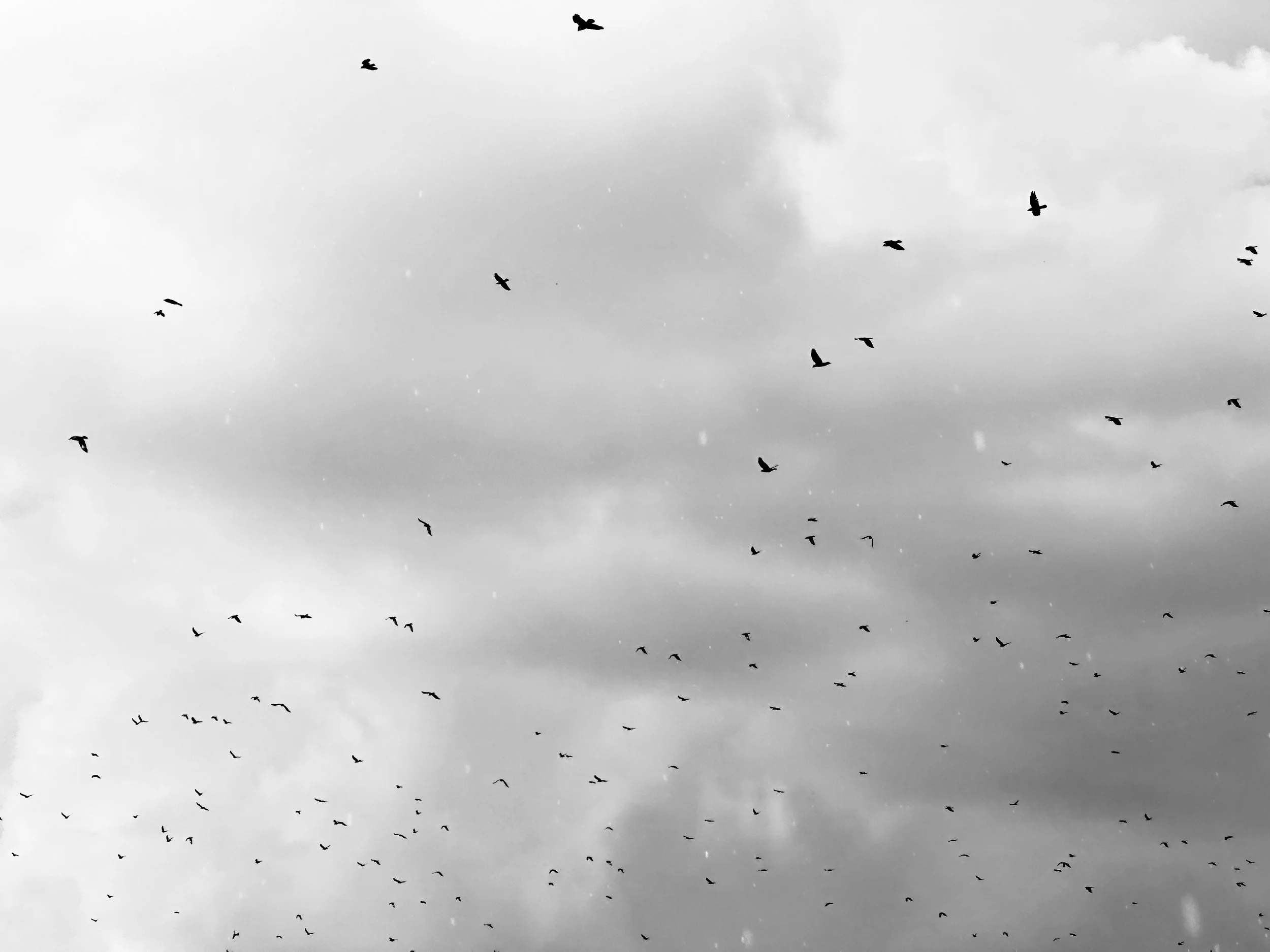
Giant flocks of black birds wheel overhead under a dramatic sky.
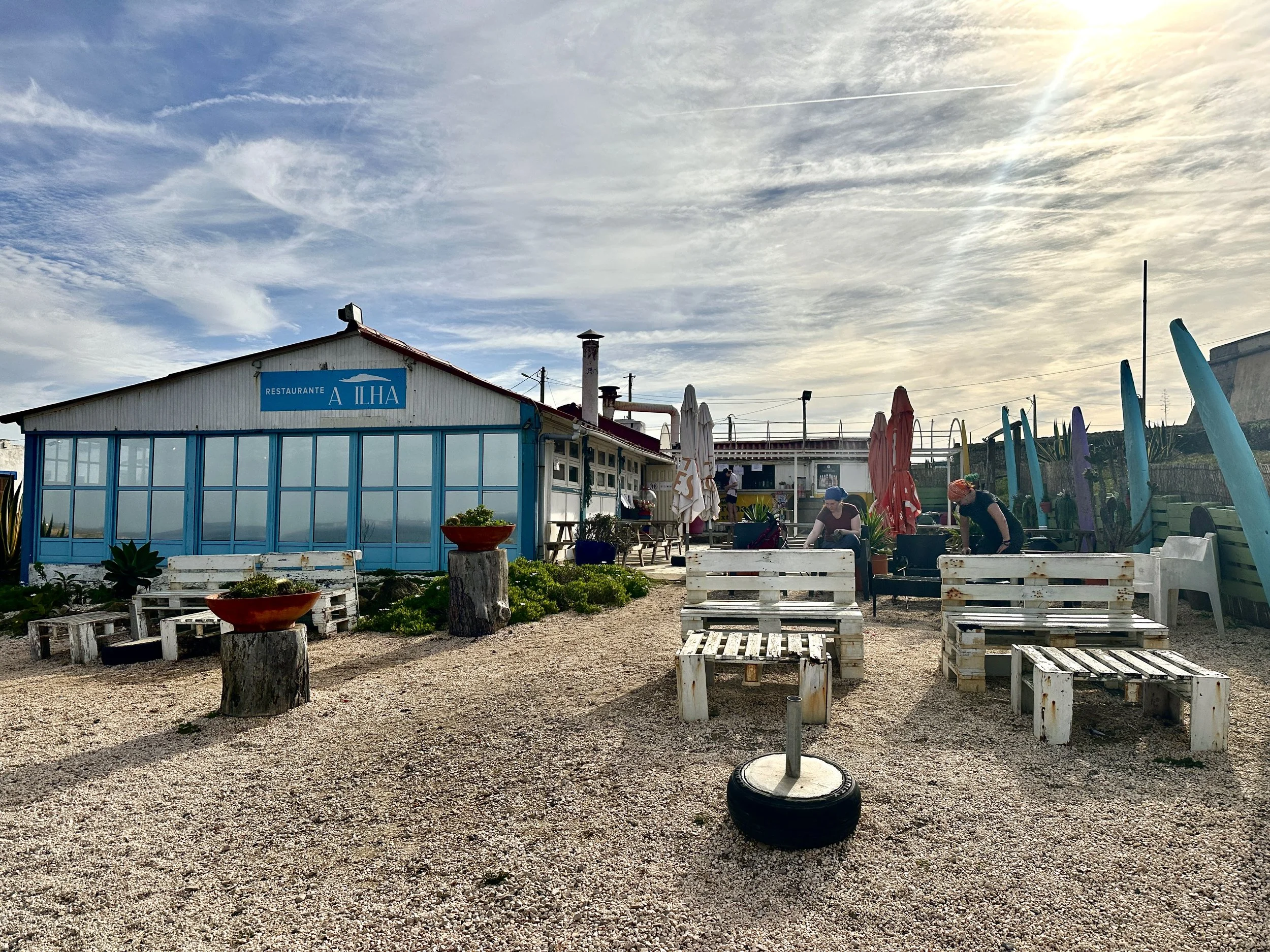
Adjacent to the fort is a delightful beachside restaurant, perfect for a cold drink while we soak in the view of the sea.
I liked the idea of starting from this inland-to-ocean stage of the hike to ‘earn the coast’ and this is the payoff.
We admire the surf and the local dogs and not even an oncoming drizzle is enough to dampen our spirits (though after sitting strong we do eventually retreat under an awning). Once it passes we head down to the beach where we’ll track the coast north to our destination at Porto Covo.
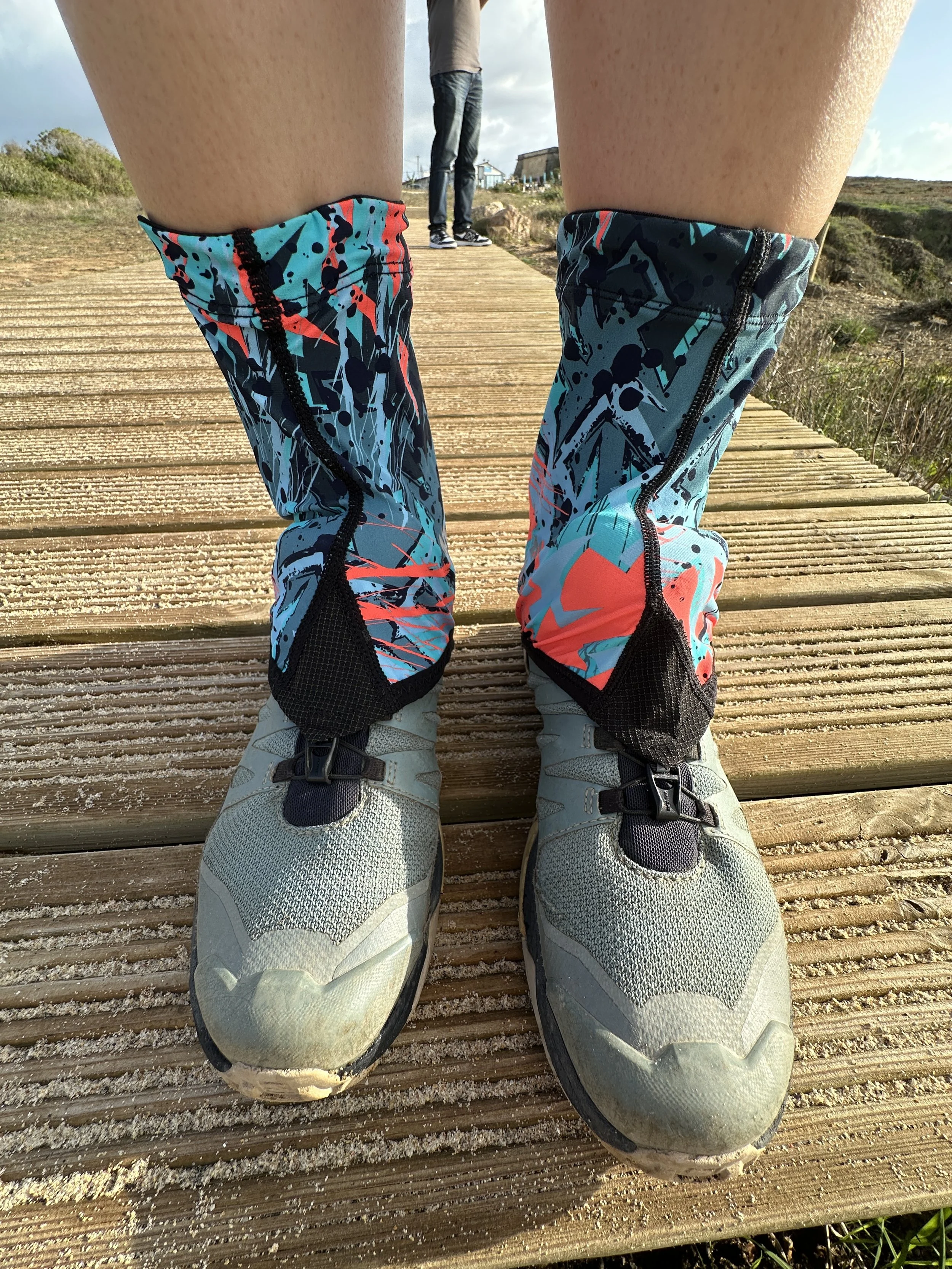
For the first time Antoaneta puts on her stylish gaiters. Another rite of passage.
Praia da Ilha do Pessegueiro is a lovely, sandy beach interjected with tangles of eroded limestone. Out to sea is Ilha do Pessegueiro with the ruins of the
FORTE DE SANTO ALBERTO DO PESSEGUEIRO
The Forte de Santo Alberto do Pessegueiro is the island extension of its mainland brother, part of the larger project to create an artifical port in the late 1500s. But its history (or legend) pre-fort is actually more exciting. It was known as a pirate refuge. In an enduring myth, North African pirates arrived to commandeer the place, to find a lone hermit occupying the chapel there. Despite his best efforts they killed him, took anything of value from the chapel and tossed an icon of the Virgin Mary into a burning bush. So the story goes, when locals visited the aftermath of the pillage, that icon was found totally unburnt and moved to another chapel as evidence of a miracle.
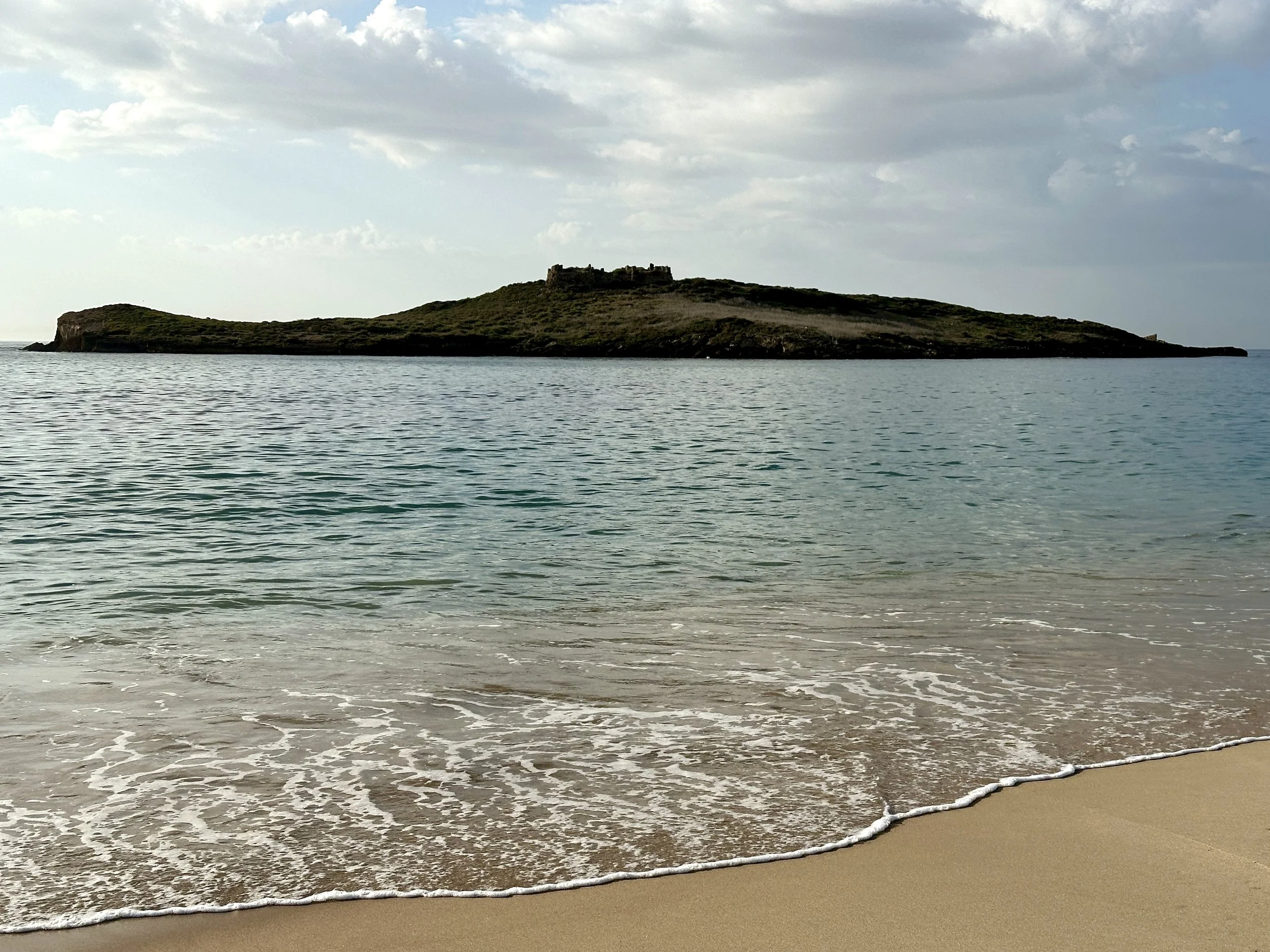
The beach also gives us our first experience of walking with hiking packs in deep, fine-grained sand. We’d been warned by every travel blog and guide book: get used to it. But sticking close to the water line helps, the wet sand a little more solid.
It also helps me hunt for seashells for my mom. It’s a ritual from every trip: a shell and a rock. This is one of the better beaches for shells - not large but plentiful. I’m especially taken with the tiny, bright-red scallops.
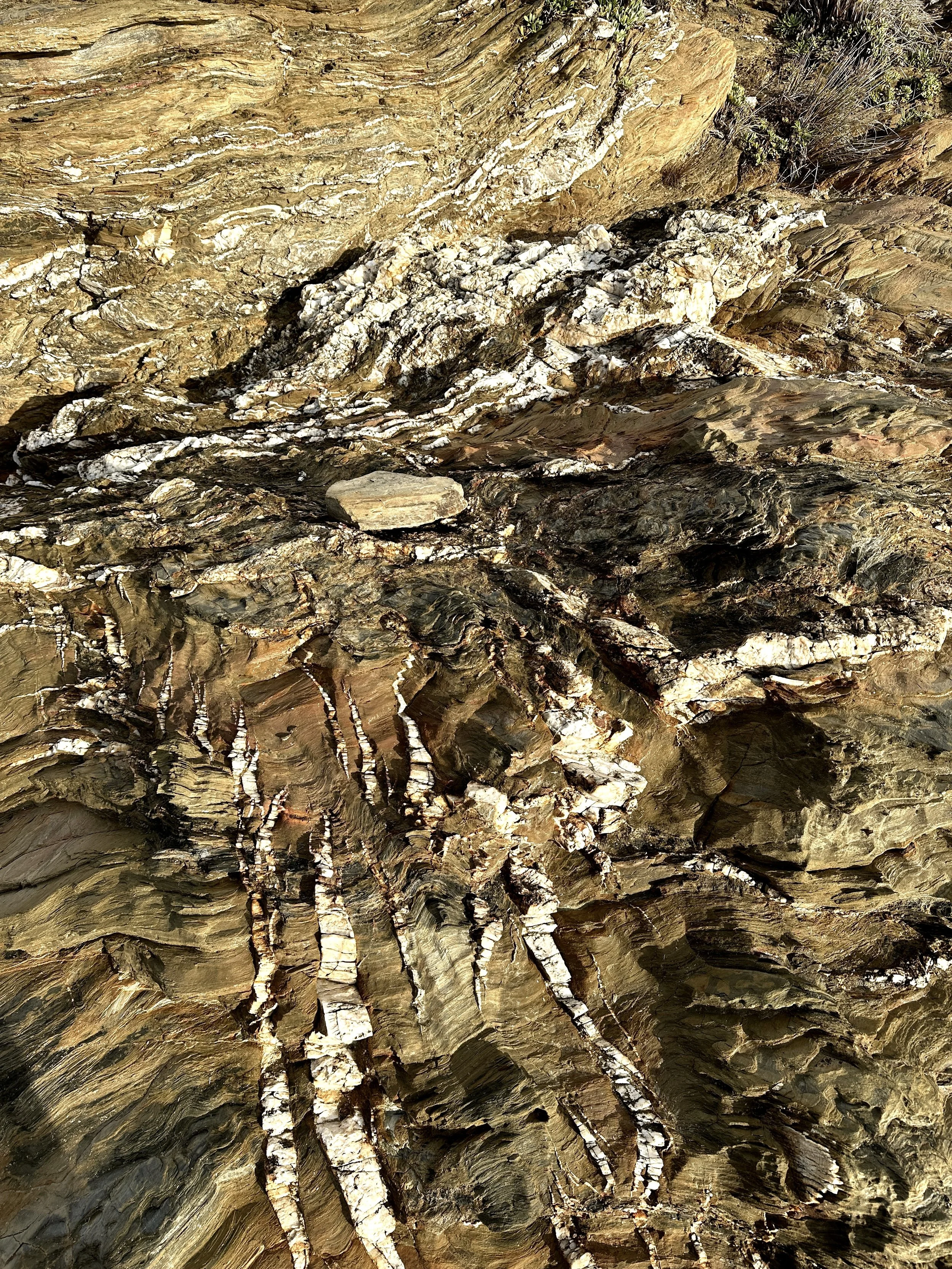
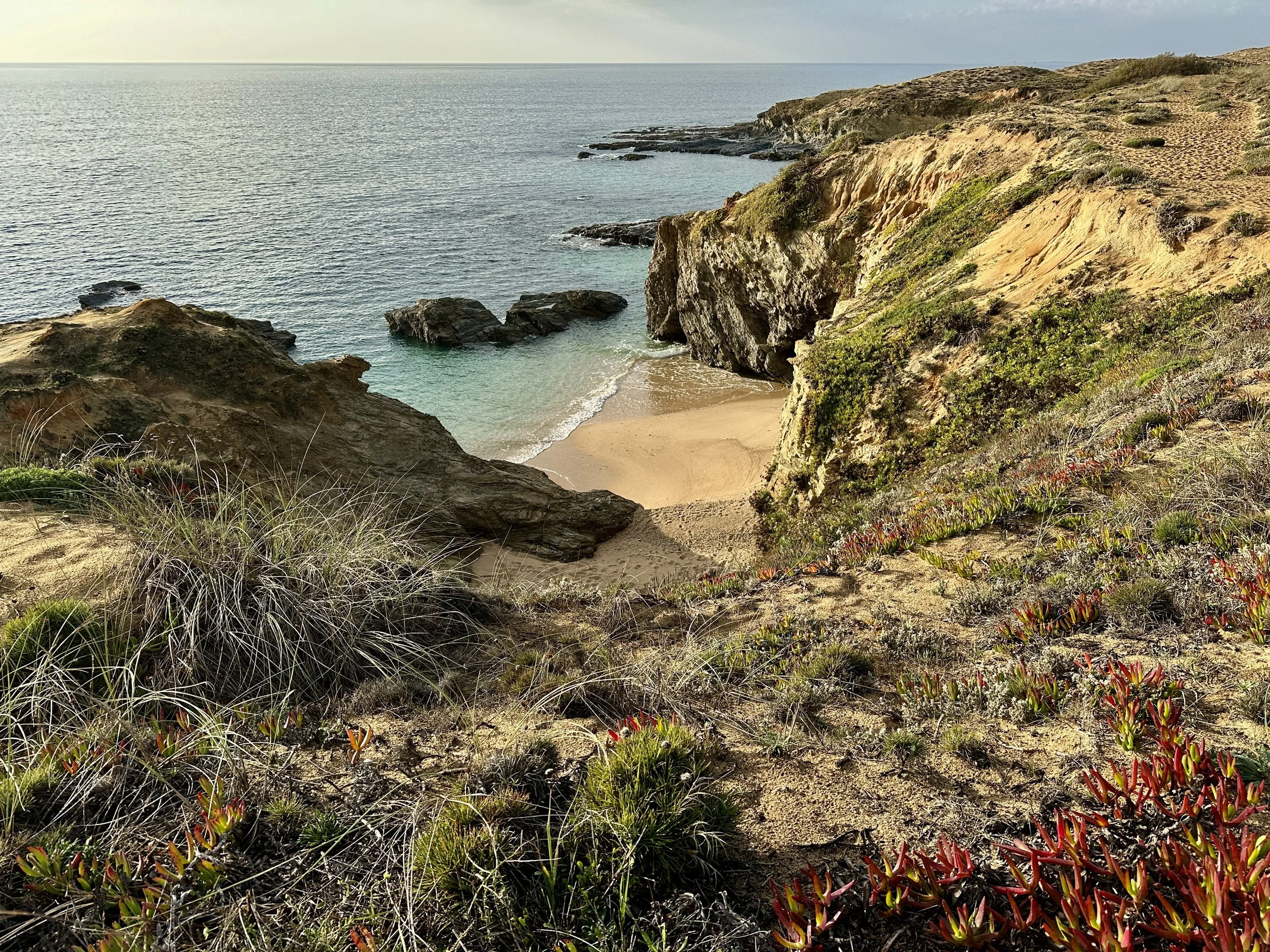
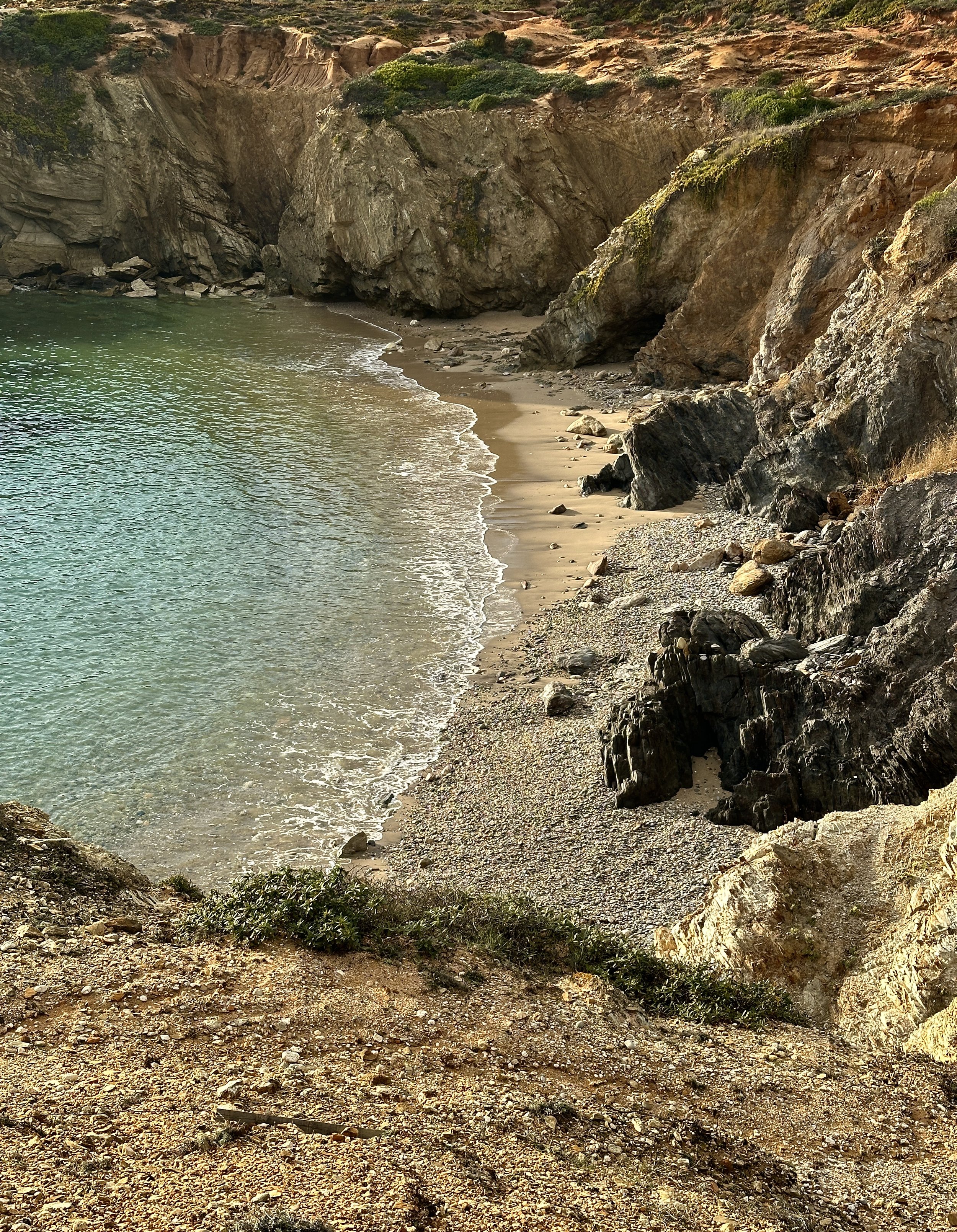
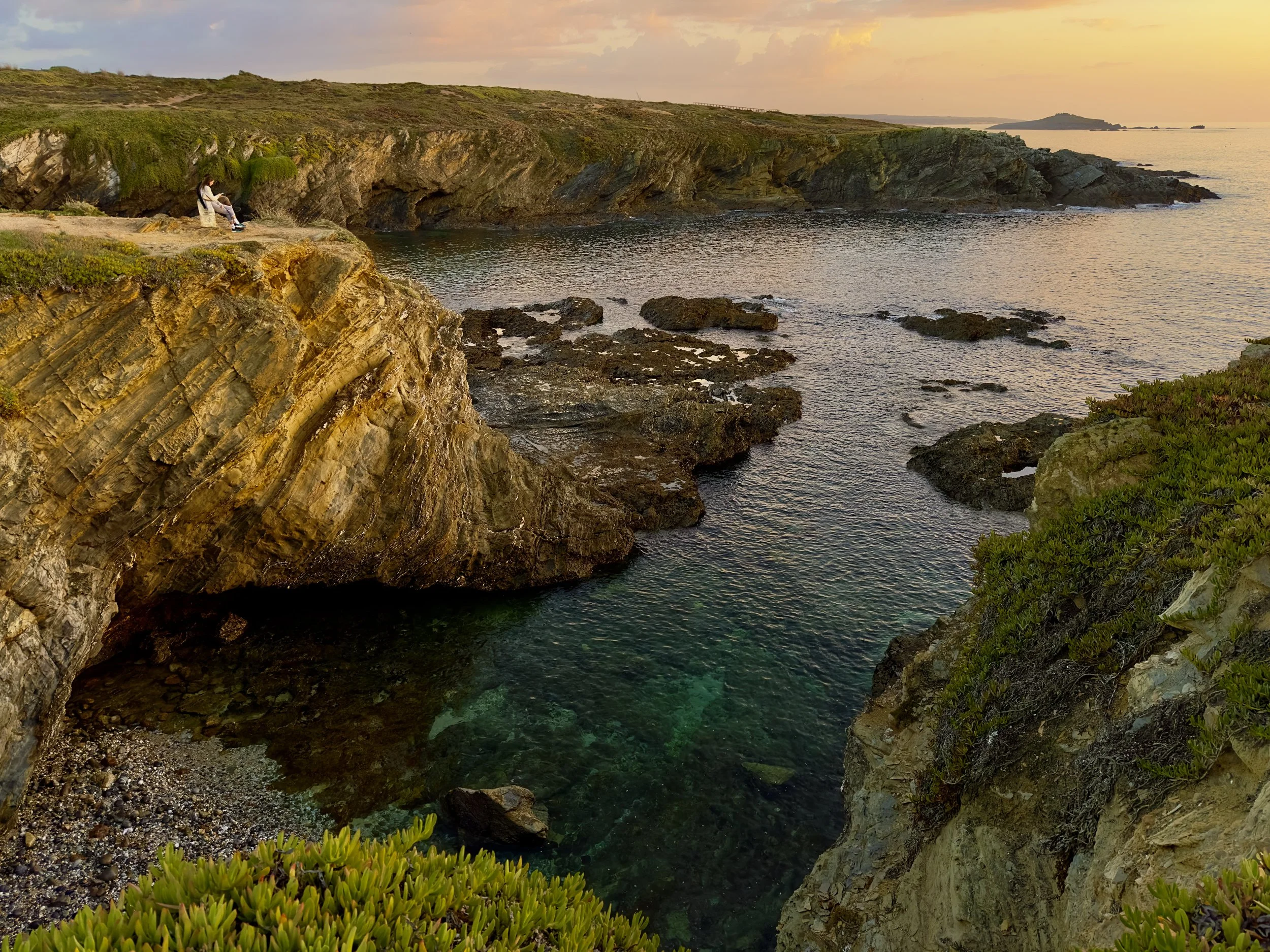
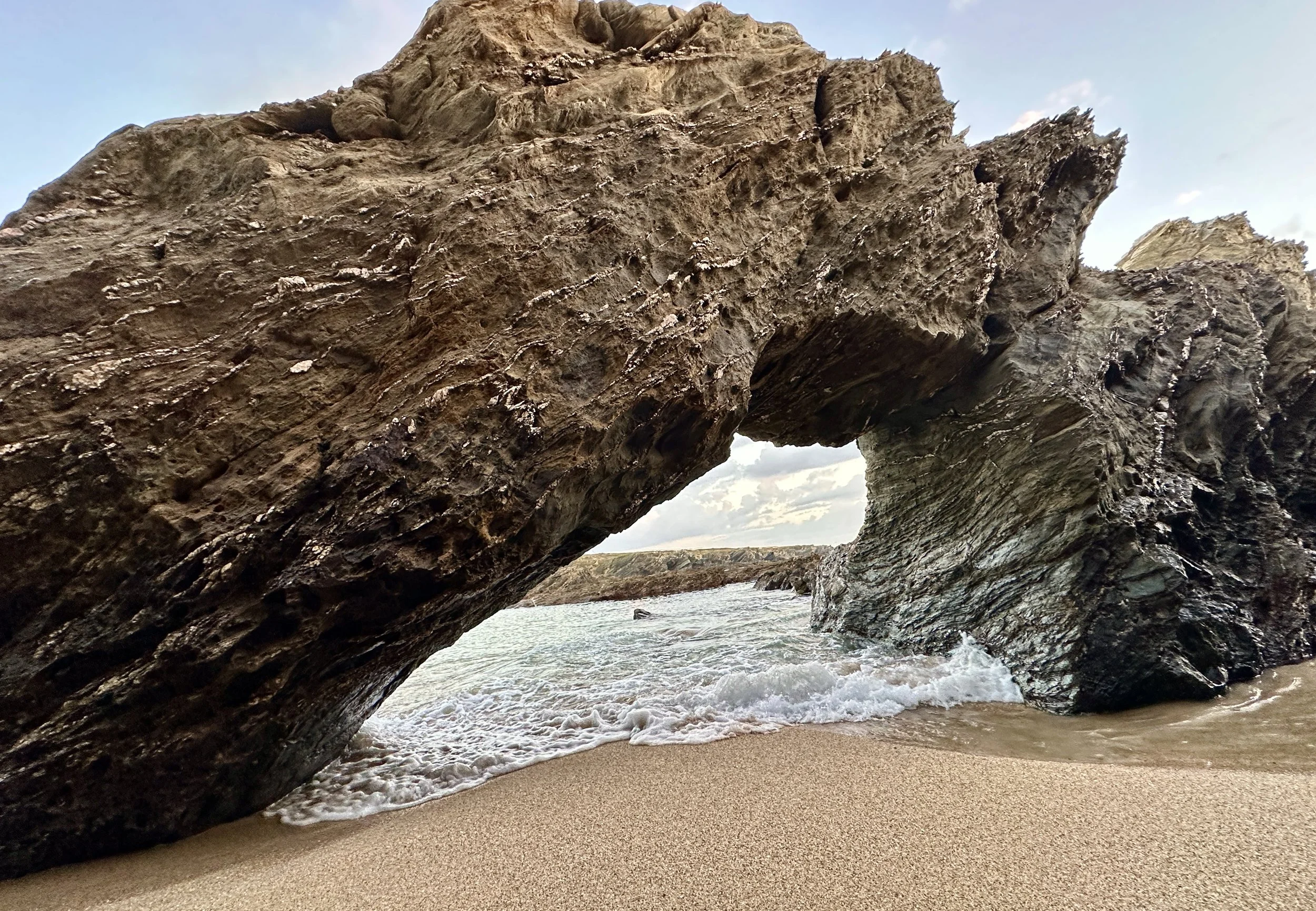
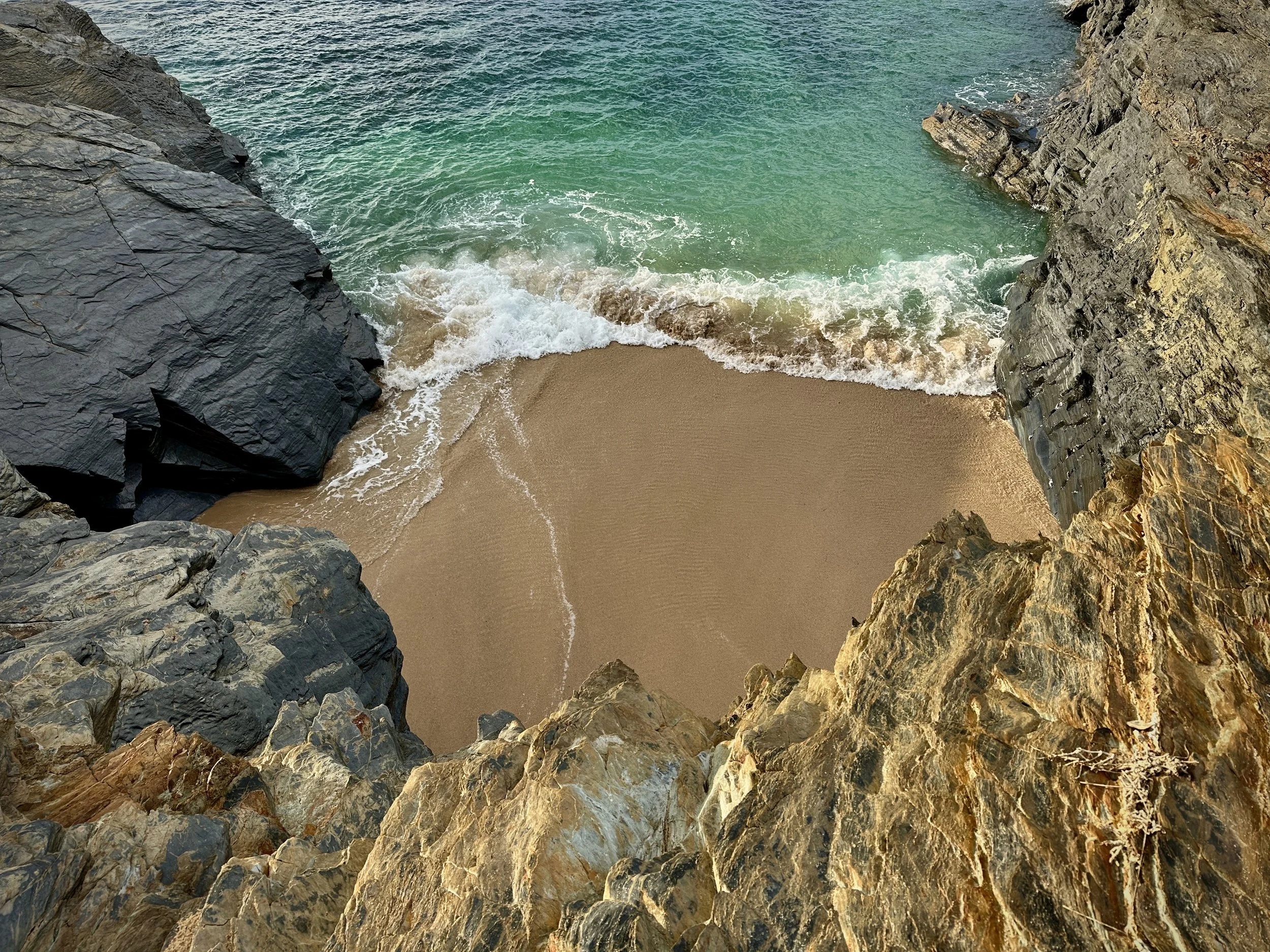
After the beach, the path takes us up and down through rocky coves. We’re wowed by the crags, sharp contrast of sand, and scale of the geology - not knowing they’re the baby-version of monumental coastal features to come.
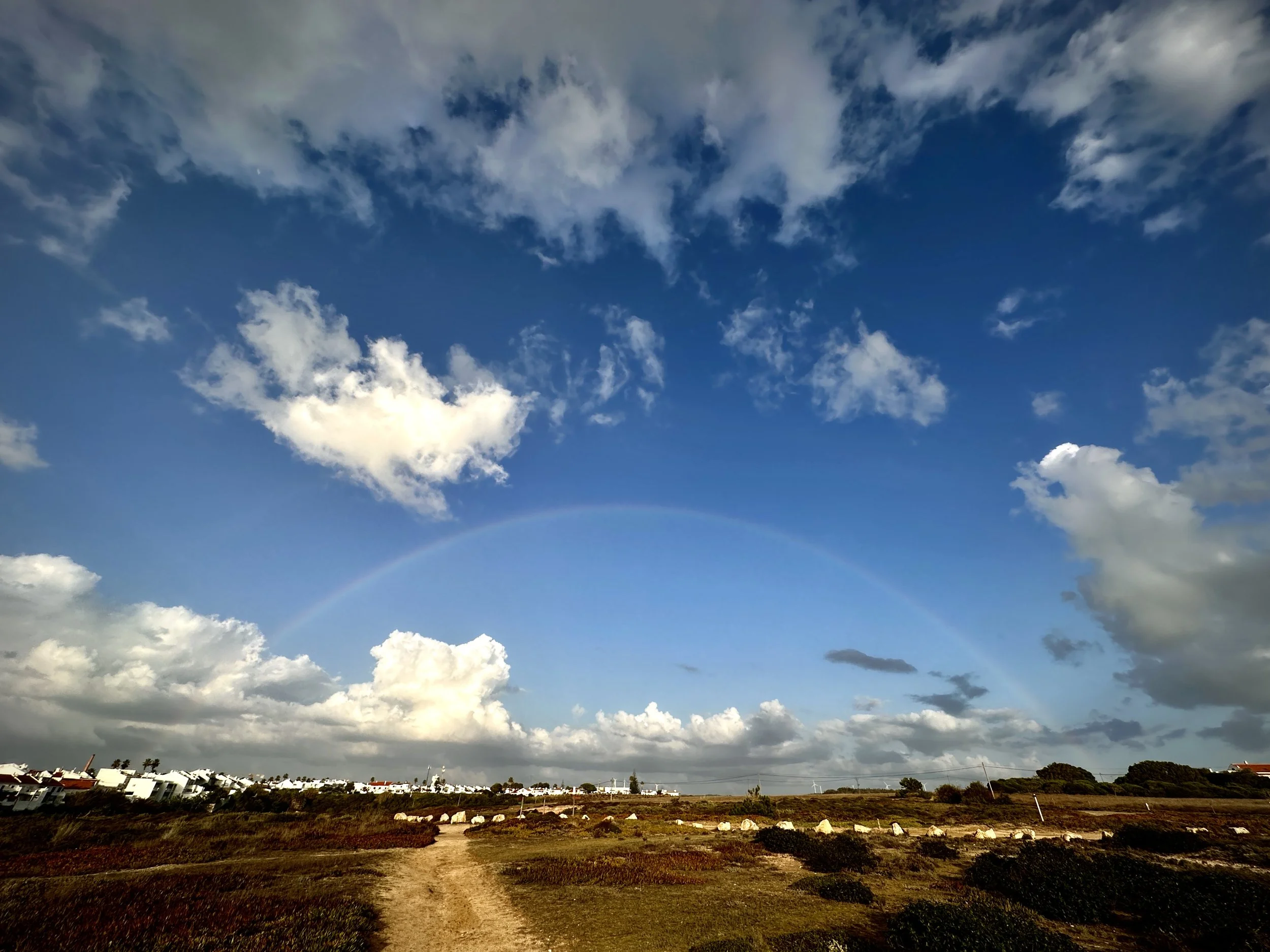
On the final plateau before Porto Covo we get a good omen: a full-arc rainbow welcoming us to the end of day one.
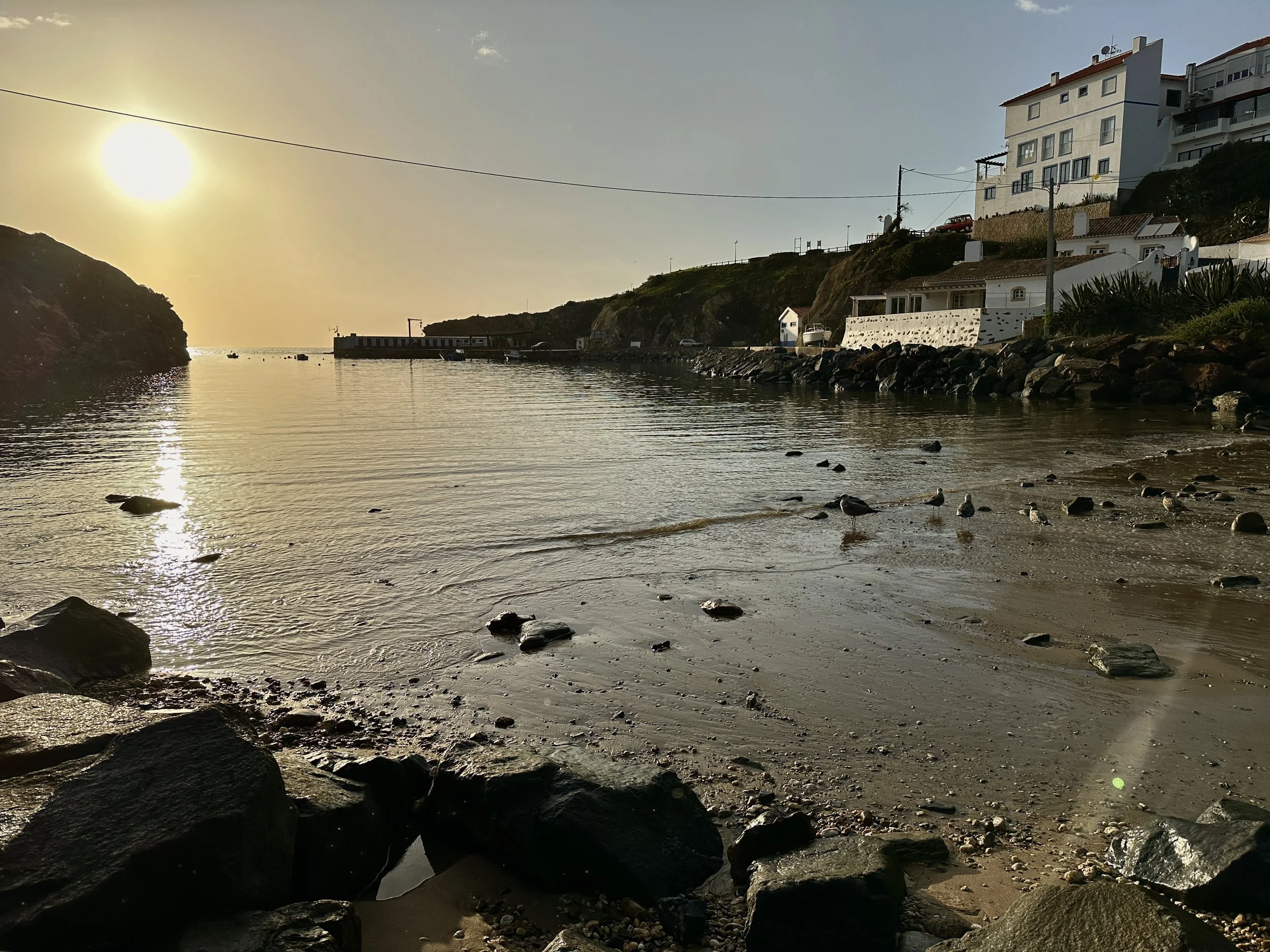
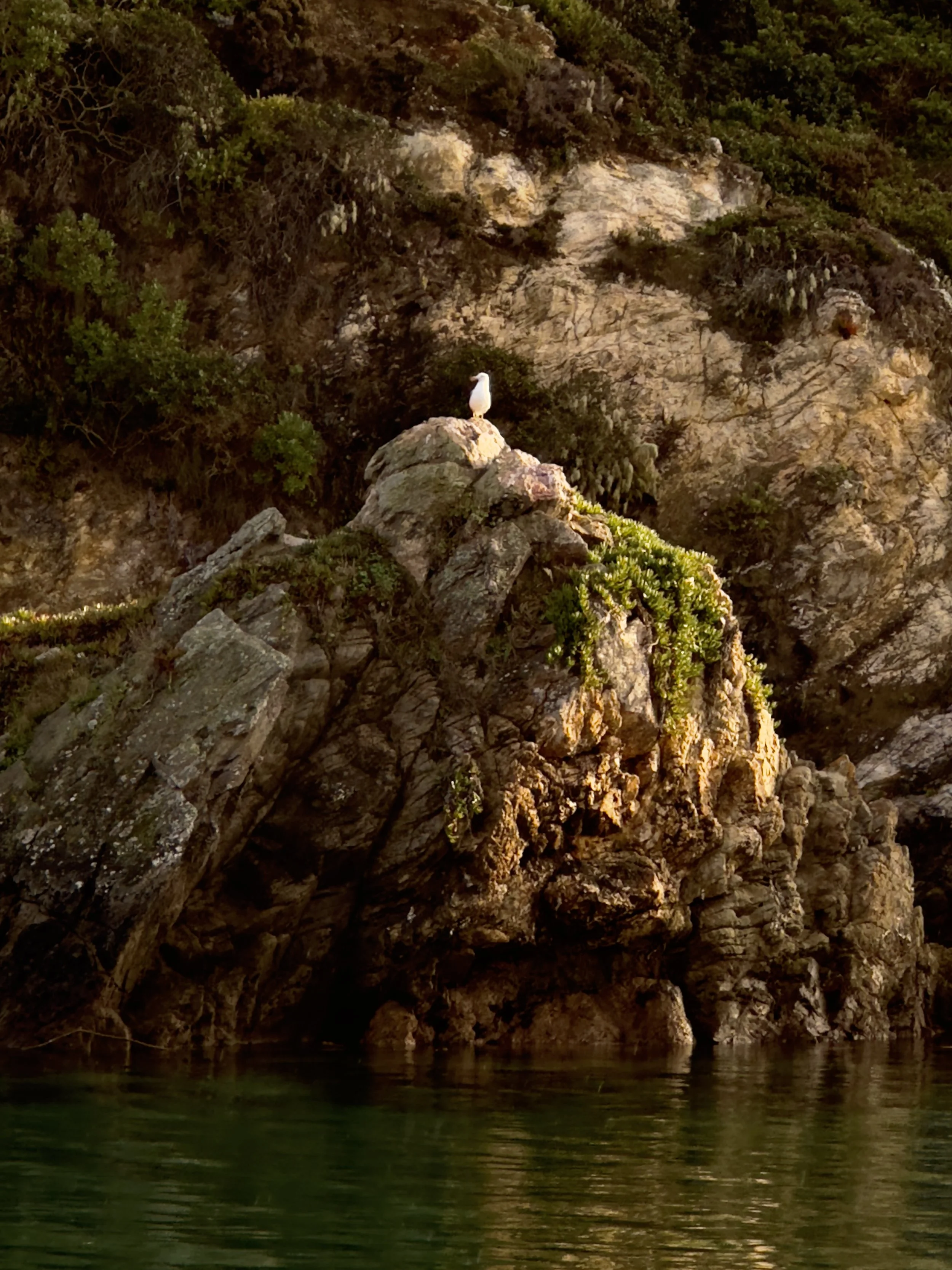
After that it’s just a last dip into a small harbour before we arrive in Porto Covo proper.
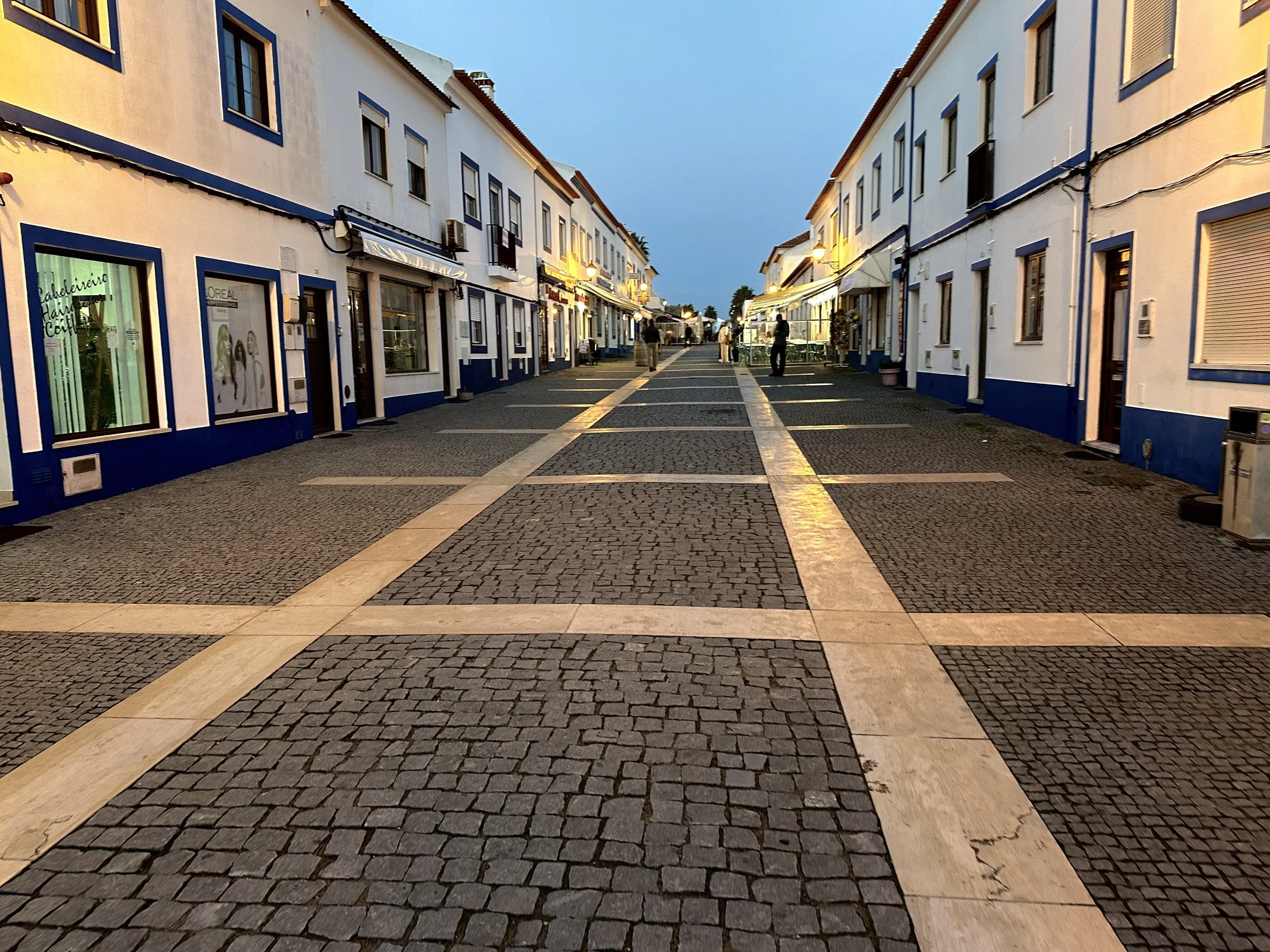
It’s a sweet, single-storey and overwhelmingly white town (literally, I mean…). On the way to our guest house we clock a grocery that looks from the sign as though it’s called ‘Tropi-caca’. We assume they make a mean Fartura.
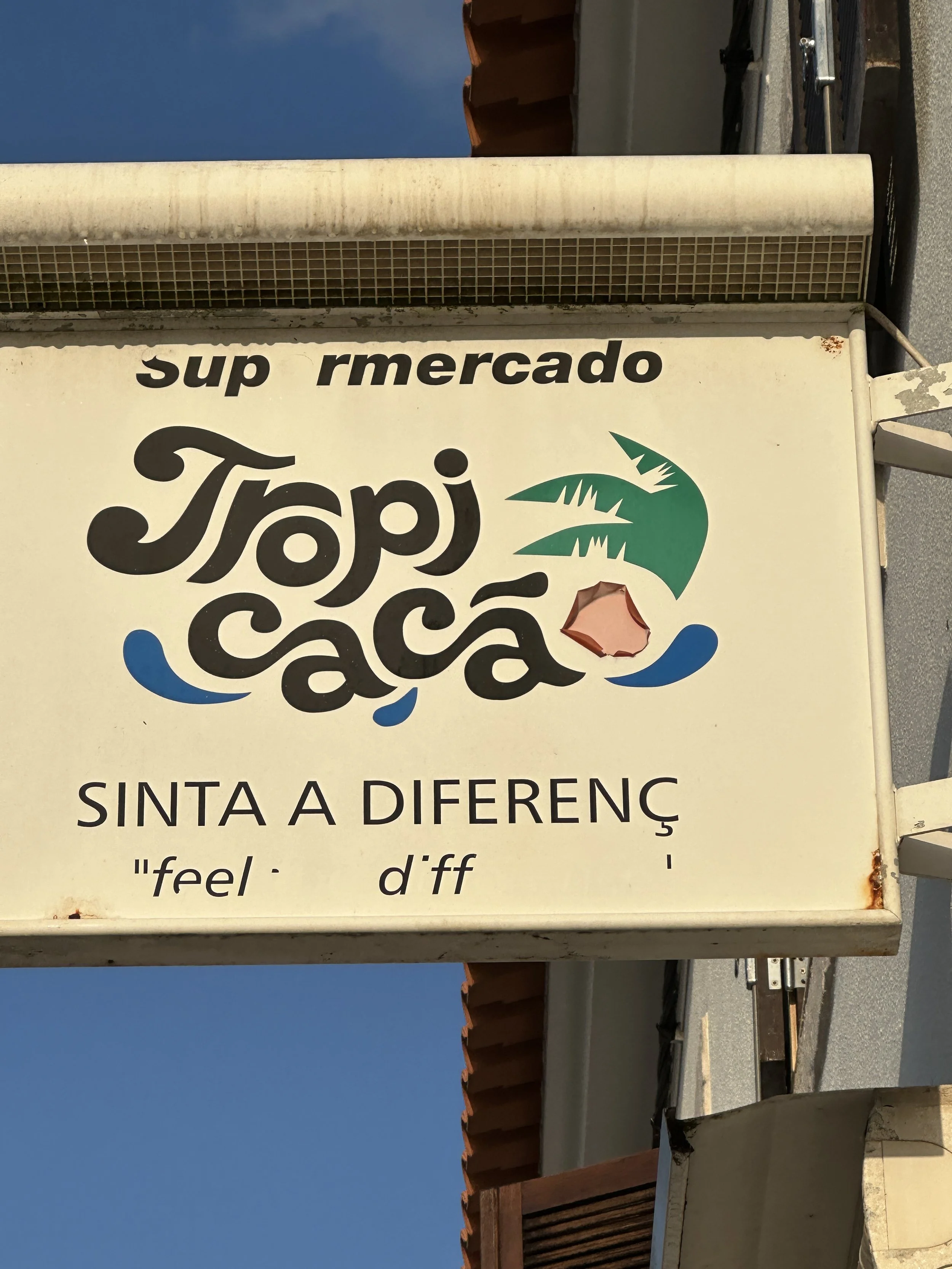
At the guest house we’re shown around by a very kind but maybe overindulgent host who points out every agonizing detail while we’re eager to drop our bags and go back out to admire the sunset.
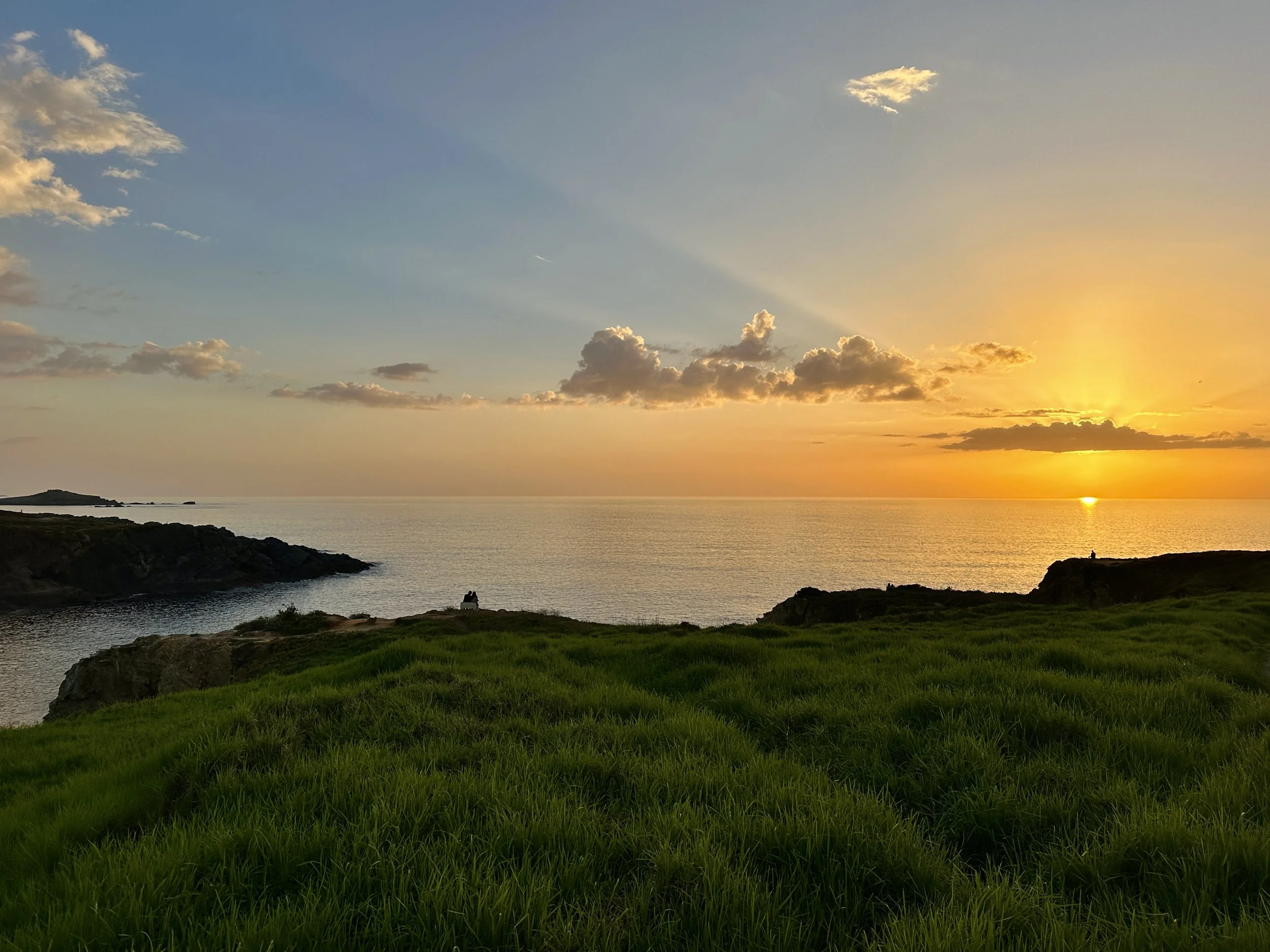
But first - a stop at Tropi-caca for deodorant, sunscreen, and to admire their incredible array of sardine tins.
PORTUGUESE SARDINES
There’s evidence of salt-curing fish on the Iberian peninsula back as far as the Iron Age, and it carried through the Phoenicians, Greeks, Carthaginians, and Romans - exported to Italy, Gaul and North Africa.
The oldest commercial cannery in Europe is Portuguese, Ramirez, opened in 1853. It kicked off a century of dramatic growth and expansion, with sardines as the stars of the show, plentiful and easy to catch along the coast. Canneries were built close to the water so the sardines could be caught and canned in the same day.
But inevitably, overfishing and climate change saw sharp declines starting in the late 1980s. From a usual seasonal catch of 100,000 tons, by the early 90s Portuguese fishermen were bringing in less than half that.
The industry took a nosedive but lately has seen a bit of a revitalization. Canned fish are seen as a cheap, healthy option (with studies showing that canned sardines, for example, can actually be better for you than eating the fish fresh) and Portugal is embracing their significance as a cultural touchstone. The result is a proliferation of options and place of pride in a lot of mercatos - including TropiCaCa.
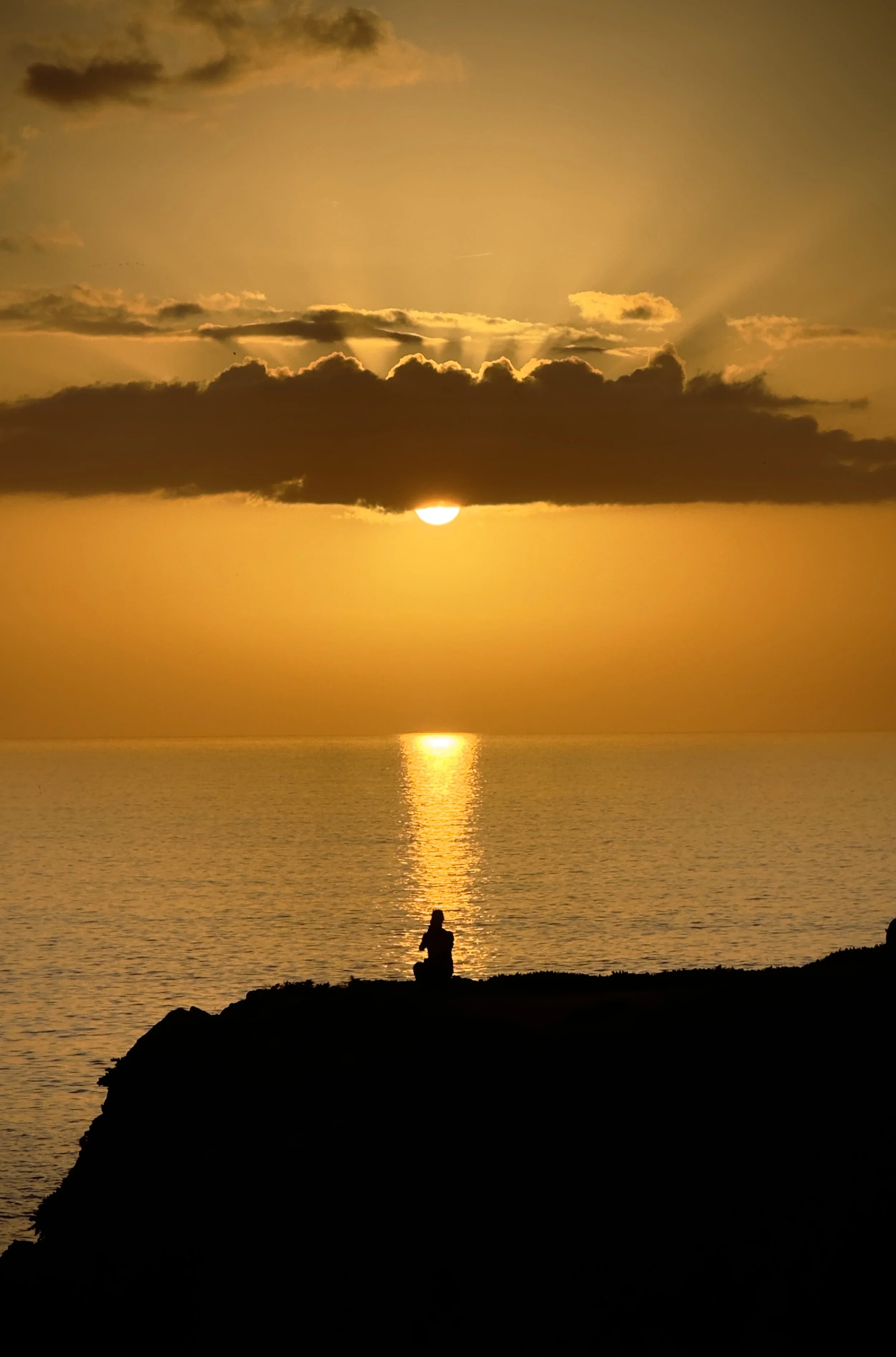
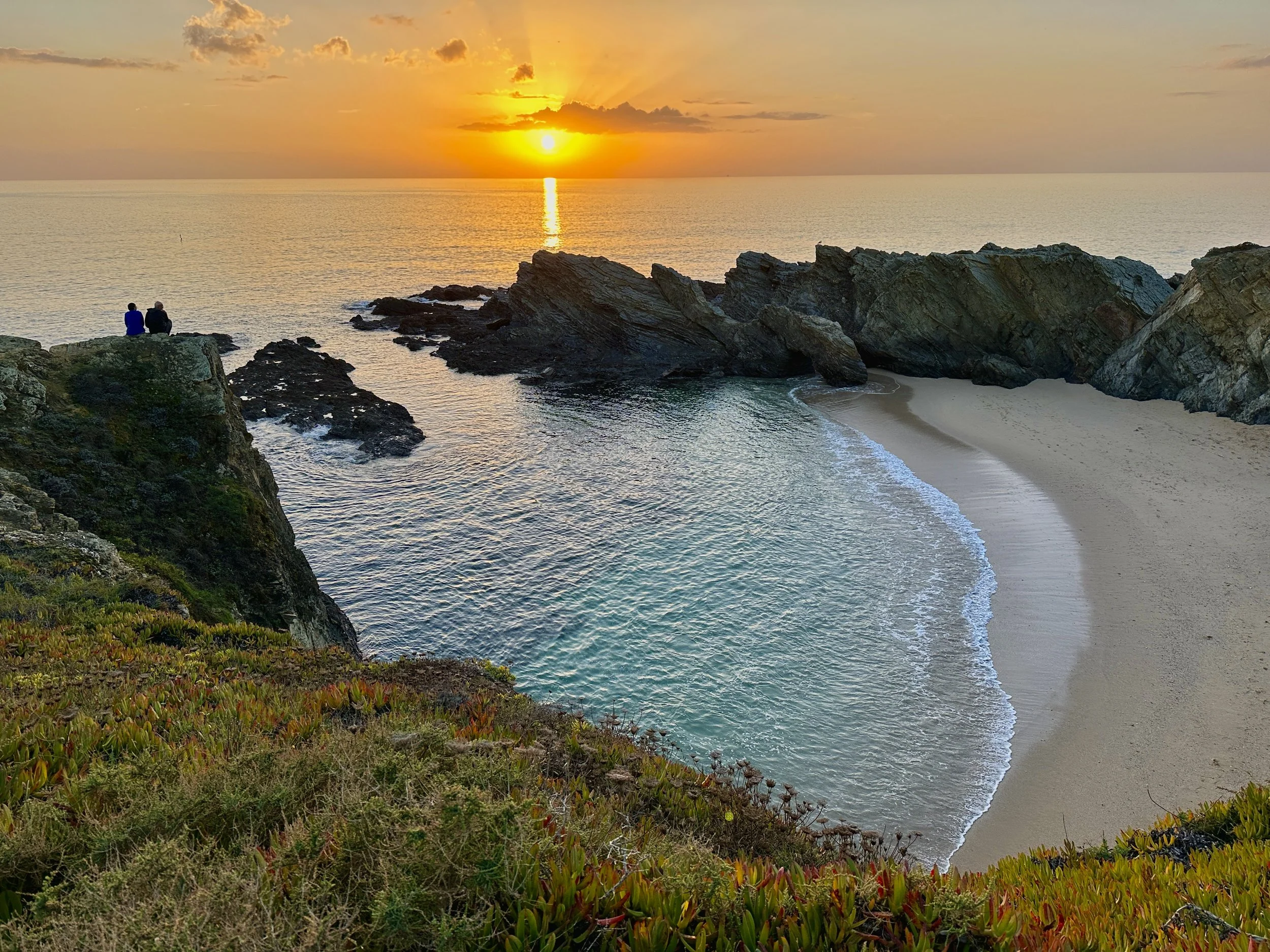
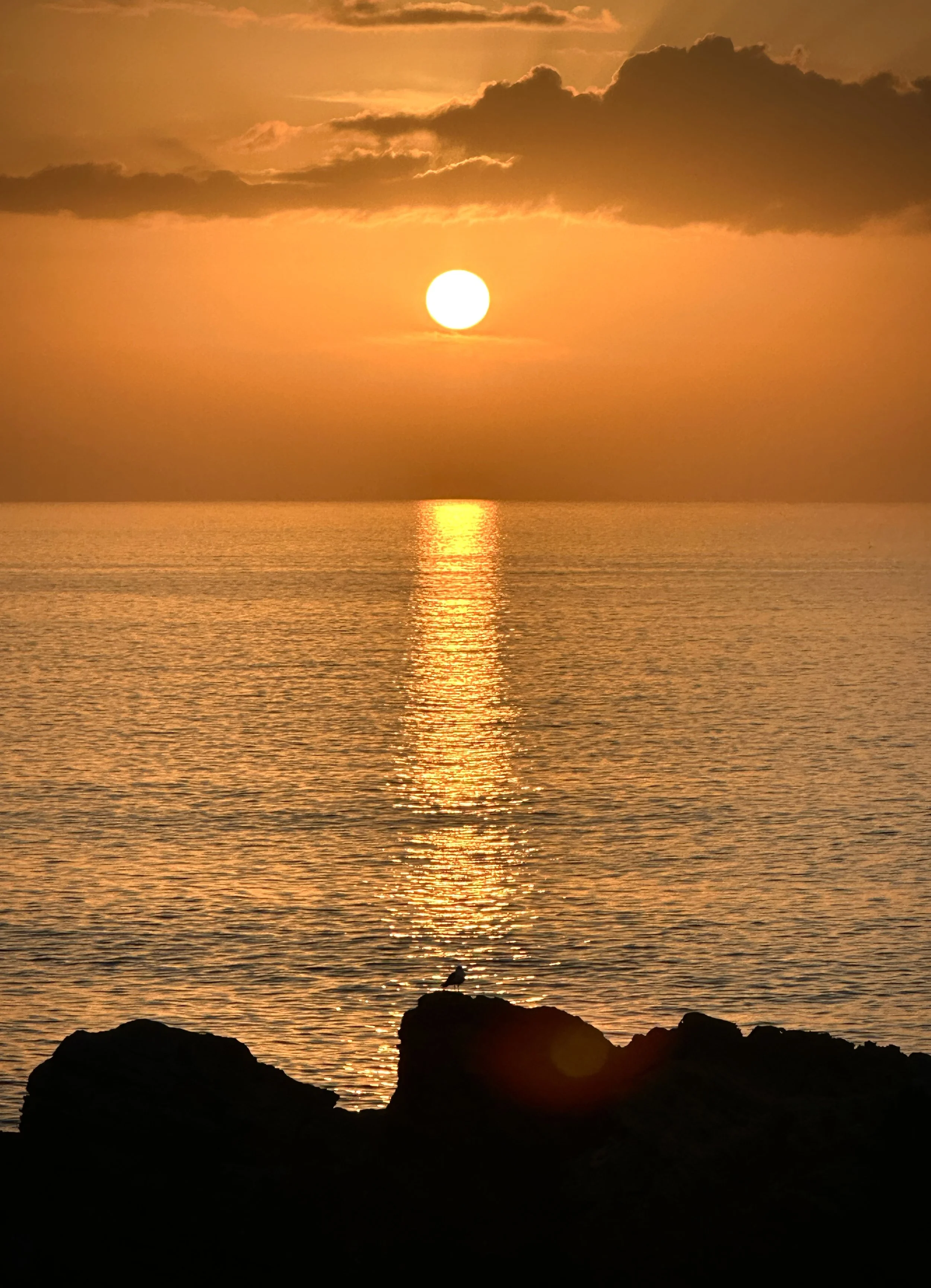
Then down to a secluded beach for the last of the daylight.
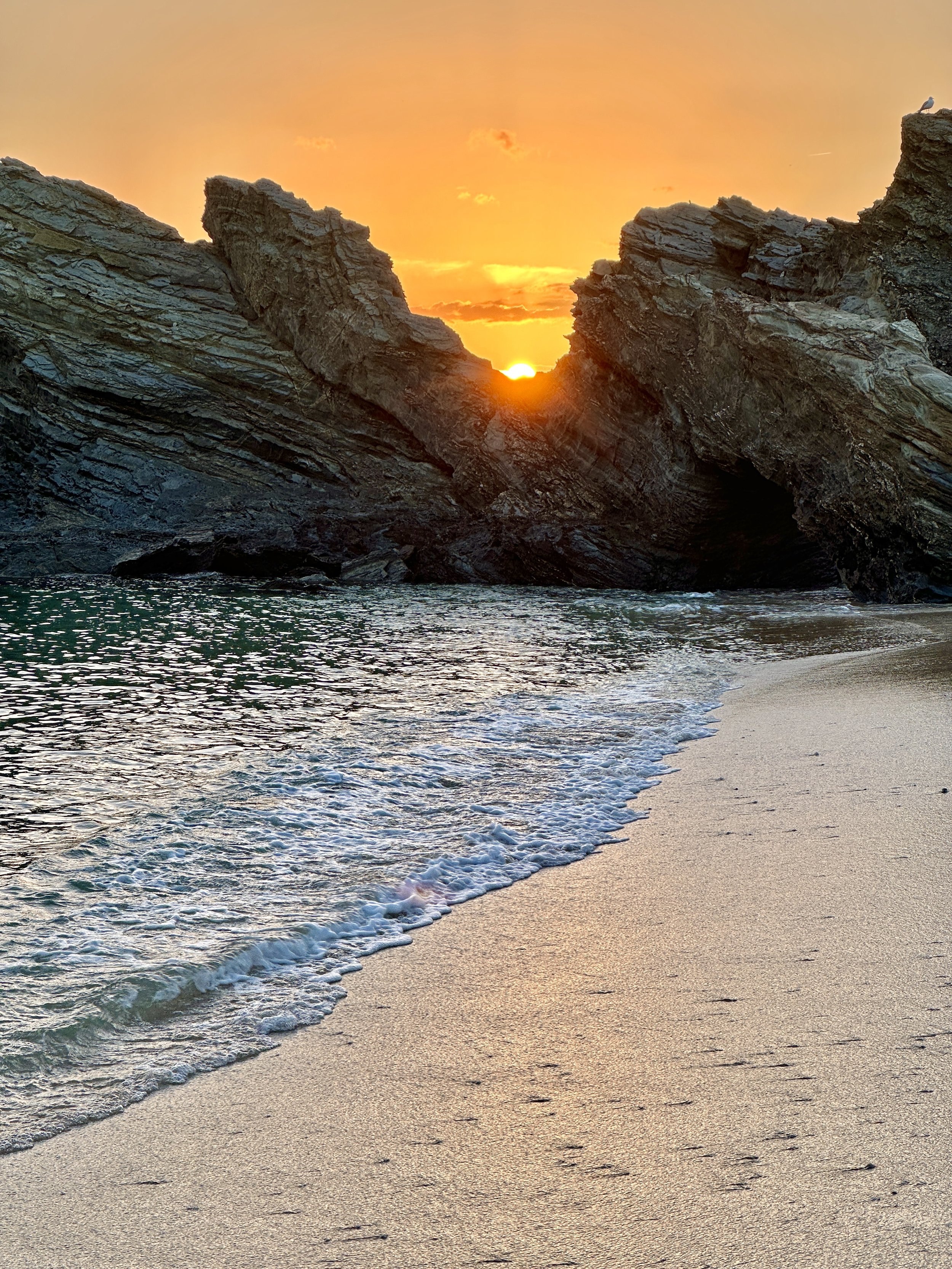
Every restaurant in town opens at 7 so we have time to kill. We stroll up to Porto Covo’s impossibly charming central square. Kids cavort with a rugby ball as locals pair boisterous conversation with generous glasses of wine.
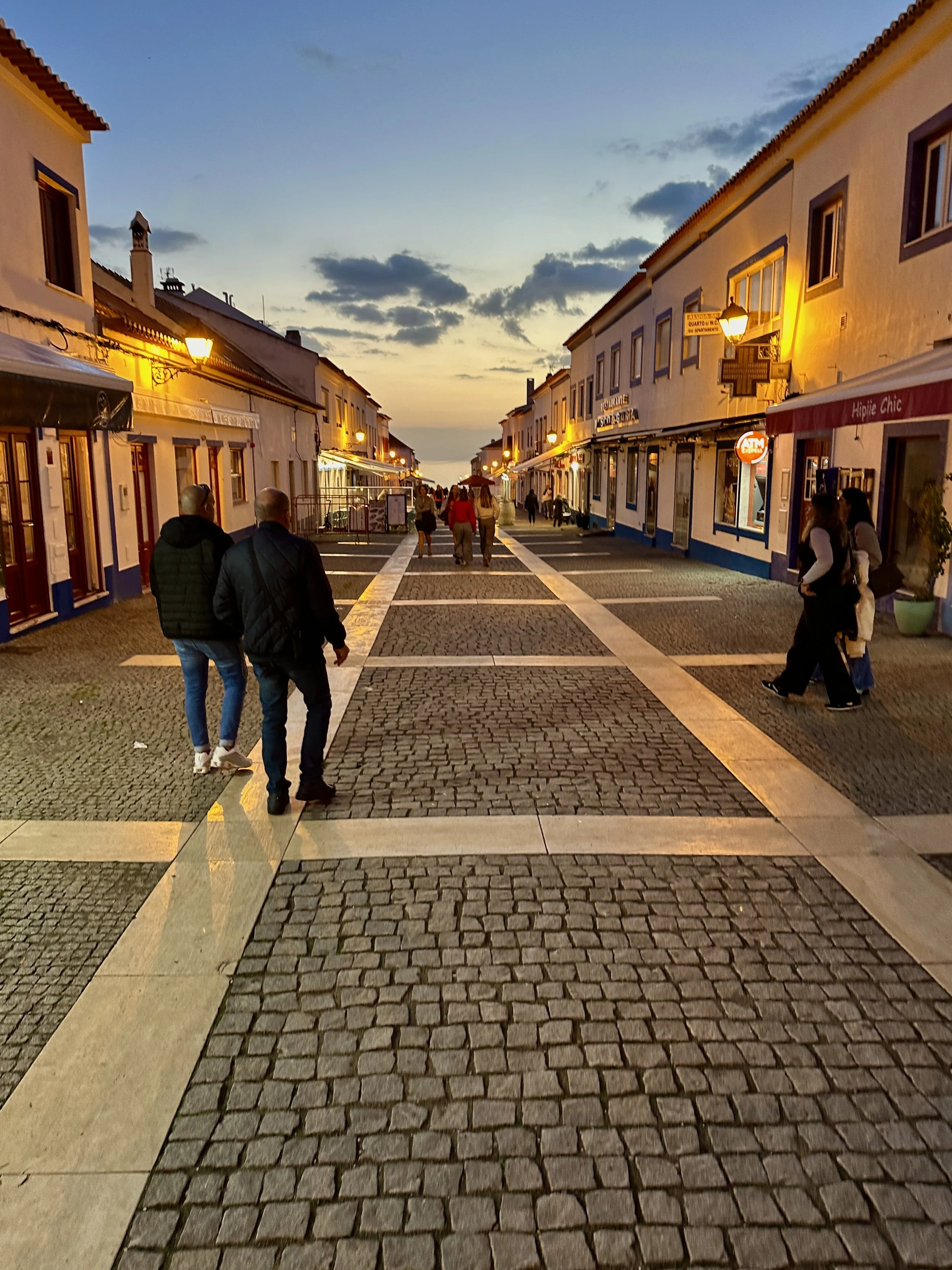
Antoaneta is so taken, she sits with a drink and bask in it before dinner. I’m fried and prefer to be horizontal for an hour. When we meet back up at Restaurant Opening O’clock, we’ve targeted a place in particular that is… still closed.
So we end up at an Italian place. I tend to be an early eater so I aim at something light: vegetarian pasta. Turns out not to be light, but incredible. Antoaneta goes for pizza.
I can’t risk another night of no sleep with a long hike the next day. Step one: an off-label antihistamine from Antoaneta. Step two: the book ‘Secrets of Angels & Demons’ from the guest house library (longer than the book it’s about). An unstoppable combo: I’m out like a light.
Stork count: zero.