DAY 1 - LISBON & AQUARIUM
Body says it’s 1am. Lisbon says são 6am. Body says those fitful naps on the flight were not enough.
A winding line at passport control finally drops me in front of a fourteen-year-old baby, there as part of some Portuguese bring-your-cherub-to-work day. But he stamps my passport and waves me through with believable world-weariness. He’ll go far in this field.
I decide to walk to our hotel. I need fresh air, to move my legs around, to not deal with the great unknown of a foreign transit system - only half my neurons are firing.
So I swap for the great unknown of leaving the airport grounds. At first, this is a bad idea. I get stuck in a rental car lot, then balanced on four inches of curb around a blind corner. But it’s not long before I’m on the ubiquitous
TILED SIDEWALKS OF LISBON:
Calçada Portuguesa, or Portuguese pavement, is ubiquitous across Portugal. Lisbon is no exception, with constantly shifting mosaic patterns of alternating black and white basalt and limestone underfoot. Beautiful, striking… very slippery in the rain.
Mosaic decor came to Portugal with the expansion of the Roman empire, and Muslim occupation introduced new techniques. But the Calçada Portuguesa we see in Lisbon today actually has a 19th century origin.
In 1840, General Eusebio Pinheiro Furtado began conducting repairs to São Jorge Castle. An engineer by training and familiar with Roman techniques, he used prison labour to tile the parade ground of the castle in a black and white zig-zag pattern.
6 years after the completion of the parade grounds, Lisbon’s central Rossio square got the same treatment. From here, Portuguese Pavement proliferated across the whole city - and country.
From here it’s a straight shot down Av. Alm. Gago Coutinho, lined with high-walled estates-turned-schools, obscure businesses and the Sociedad Portuguesa para o Estudo das Aves. As a closeted birder, I take this as a good omen.
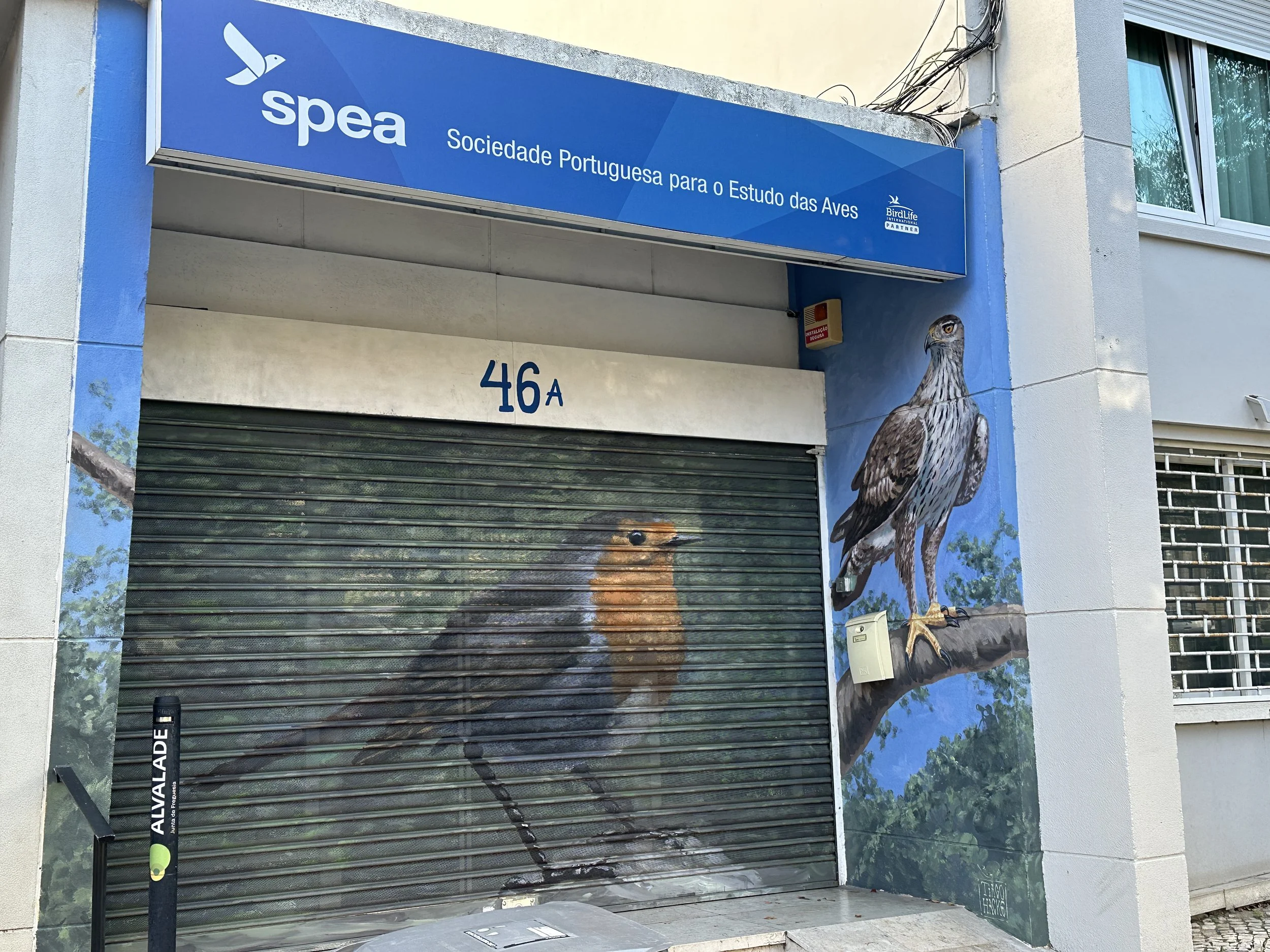
Then West across the city. The temperature rises with the sun, reminding me how overdressed I am. I’m deep-fried an hour later when I collapse into a chair in the lobby of Hotel Acores Lisboa. Just lucid enough to say “I don’t… think so?” when asked “are you part of the tour group?”
Clock says 8am. Body says 3am. The seven hours between now and check-in may as well be seven years.
I haul myself up to the hotel counter. The pause after “Let me see if we’re able to offer you early check-in” is also seven years. But there are no sweeter words in the English-as-a-second-language than “si, your room is ready”.
“It will come with a small extra charge” the attendant cautions. But I know these details are negotiable.
“Listen to me” I say, “I am prepared to pay you any amount of money - scratch that. We’re thinking too small. I am willing to do or give you literally anything to get a bed and a shower.”
He sticks with the small extra charge. Not only that: it comes with a buffet breakfast. And that’s how it’s done.
The shower’s a fountain of youth. Buffet’s not bad either. I try to eat my cares away, hypnotically loading multiple plates: eggs, bacon, cold cuts, fruit, beans, and christening the first of many
PASTELS DE NATA
The Jerónimos monastery in Lisbon is a gorgeous example of Manueline architecture, characterized by twisted columns, intricate stonework, and botanical elements. It was built to commemorate (and entomb) Vasco de Gama, a Portuguese explorer who first found a direct sea route to India in 1497. That route - and the monopoly it created - would fuel Portugal’s rapid expansion into a maritime superpower and global empire.
Construction began in 1501, just two years after Gama’s return, but would take a hundred years to complete. There’s lots to say about the monastery and its monks, but we’re focusing in on one little quirk: they would use egg whites to starch their clothes. This left them with a lot of egg yolks. And, waste not want not, they would concoct recipes to use all those leftover yolks in baking - like the pastel de nata, a flaky tart filled with rich egg yolk custard.
In 1820, Portugal underwent a Liberal Revolution. Among countless impacts on the country was an aggressive secularization. Religious orders were dissolved. In a desperate stopgap, the Jerónimos monks started selling their baked goods through a nearby sugar refinery, including the egg-yolky pastels de nata.
It was too late to turn the tide of history - the monastery ceased to function as a religious order in 1834. But its legacy in delicious egg custard tarts was just beginning. The monks sold the recipe to the sugar refinery and from there it spread like wildfire, now famous worldwide.
Back at the hotel buffet, I face the catch-22 of not being awake enough to work the fancy coffee machine. I put the mug where I’m sure it goes. I press what I’m sure is the right button. The steady stream of liquid completely misses my mug and splatters all over the place. I watch with the weariness of a fourteen-year-old customs agent. Someone eventually takes pity on me and helps. I overcorrect with espressos.
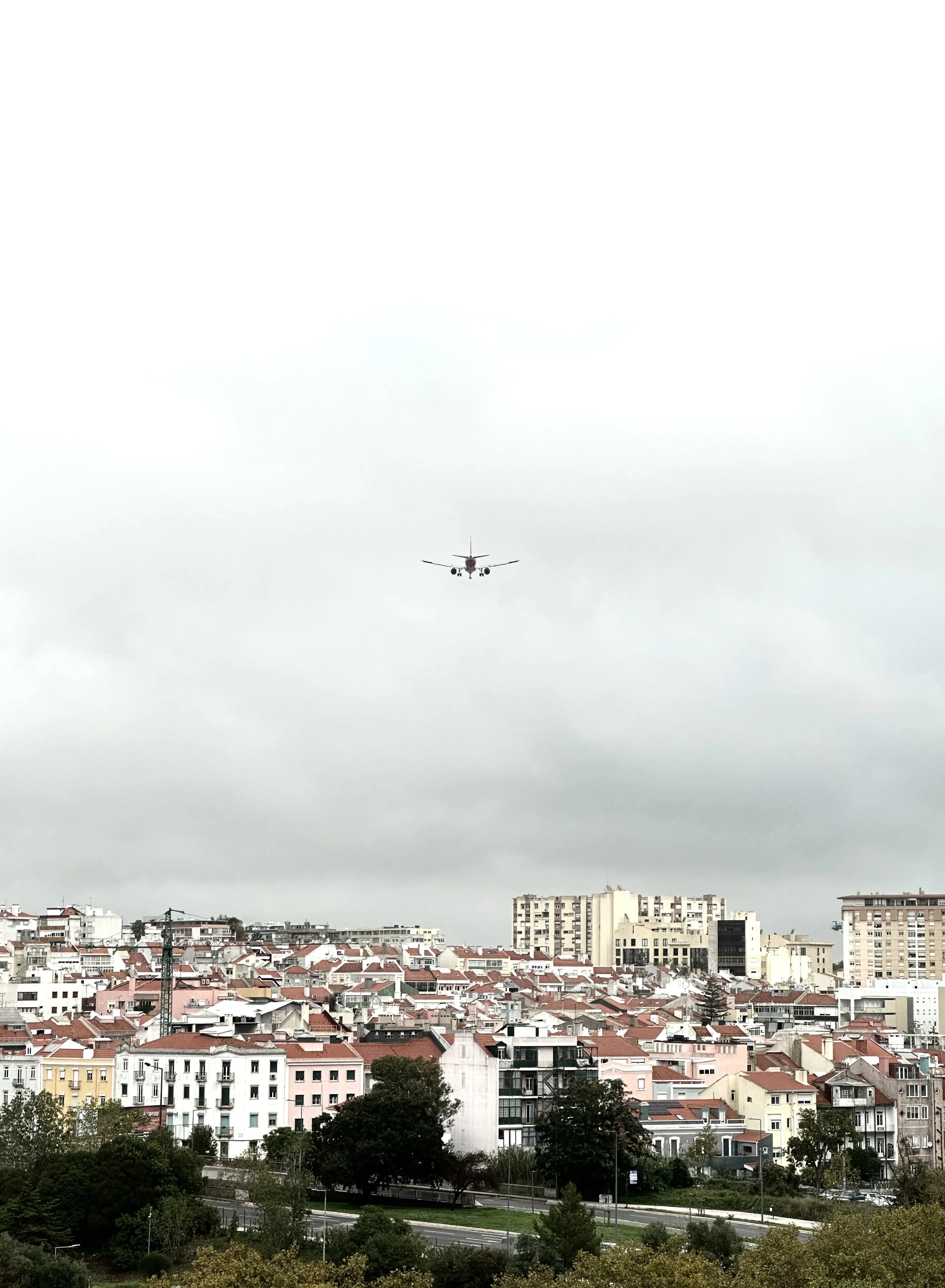
Our room is directly on the flight path to the airport. Every few minutes a plane swoops low overhead and its shadow ripples across trees, roads and buildings. You’d think this would suck, but no! They’re fun to watch and the hotel’s soundproofing reduces them to an almost reassuring rumble.
I’d entertained exploring Lisbon all day. This was foolish, even artificially propped up with espresso. Instead I lie in bed trying to balance precariously between rest and sleep. This also seems foolish but I pull it off. By the time I head out again I actually feel a second wind.
Lisbon has the best aquarium in the world, if airport advertising is to be believed.
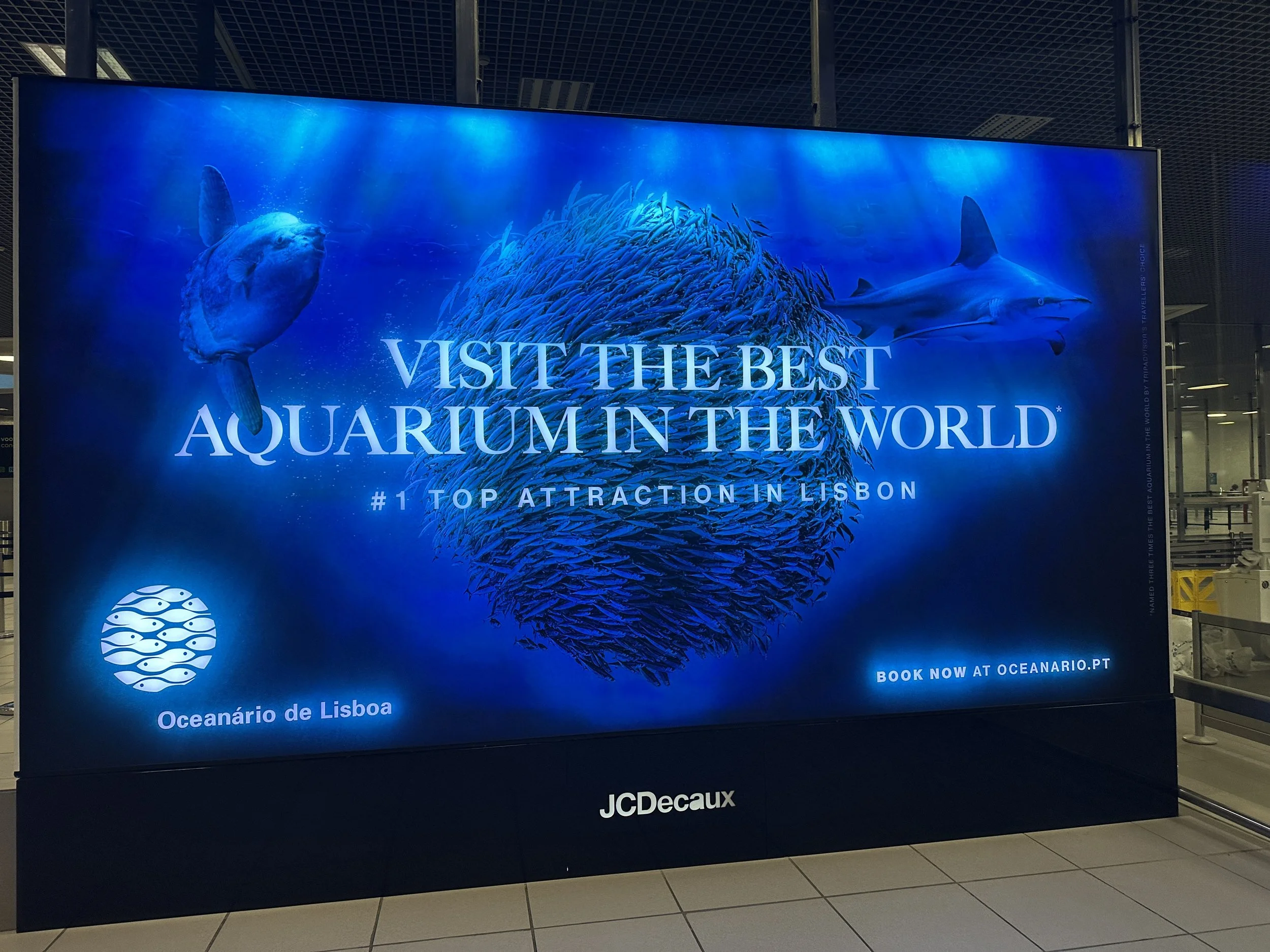
Today’s the only day we could realistically get there. Conveniently for us it’s just 3 subway stops from the airport. So: Antoaneta would go straight from her flight and I would meet her there.
Again, I opt to walk. It’d be one of two days on the trip I’d have a chance to see Lisbon and I want to spend it above ground.
The straight shot to the aquarium seems to be a diagonal cut through the heart of the city - I picture colourful historic neighbourhoods and vibrant downtown districts.
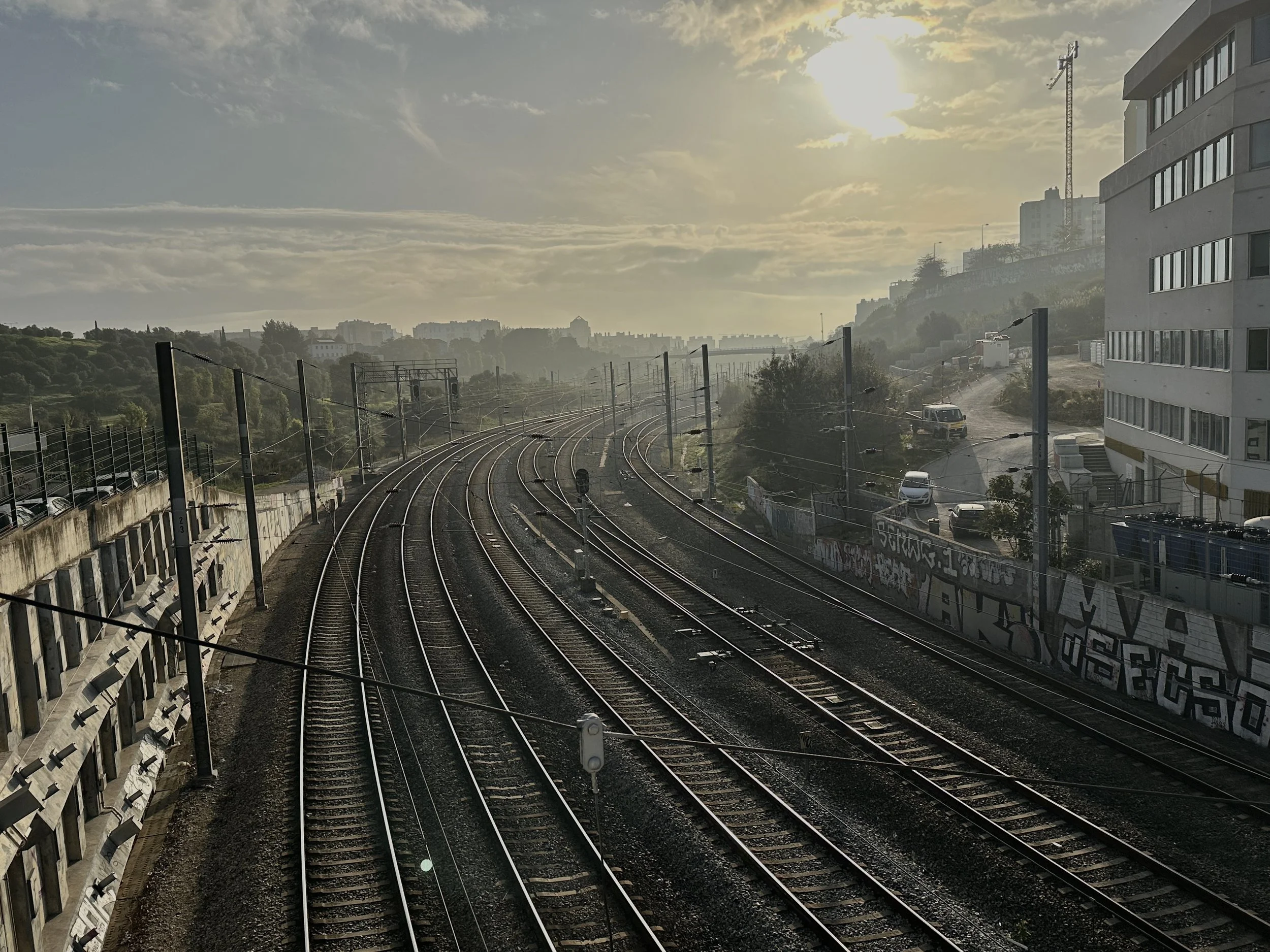
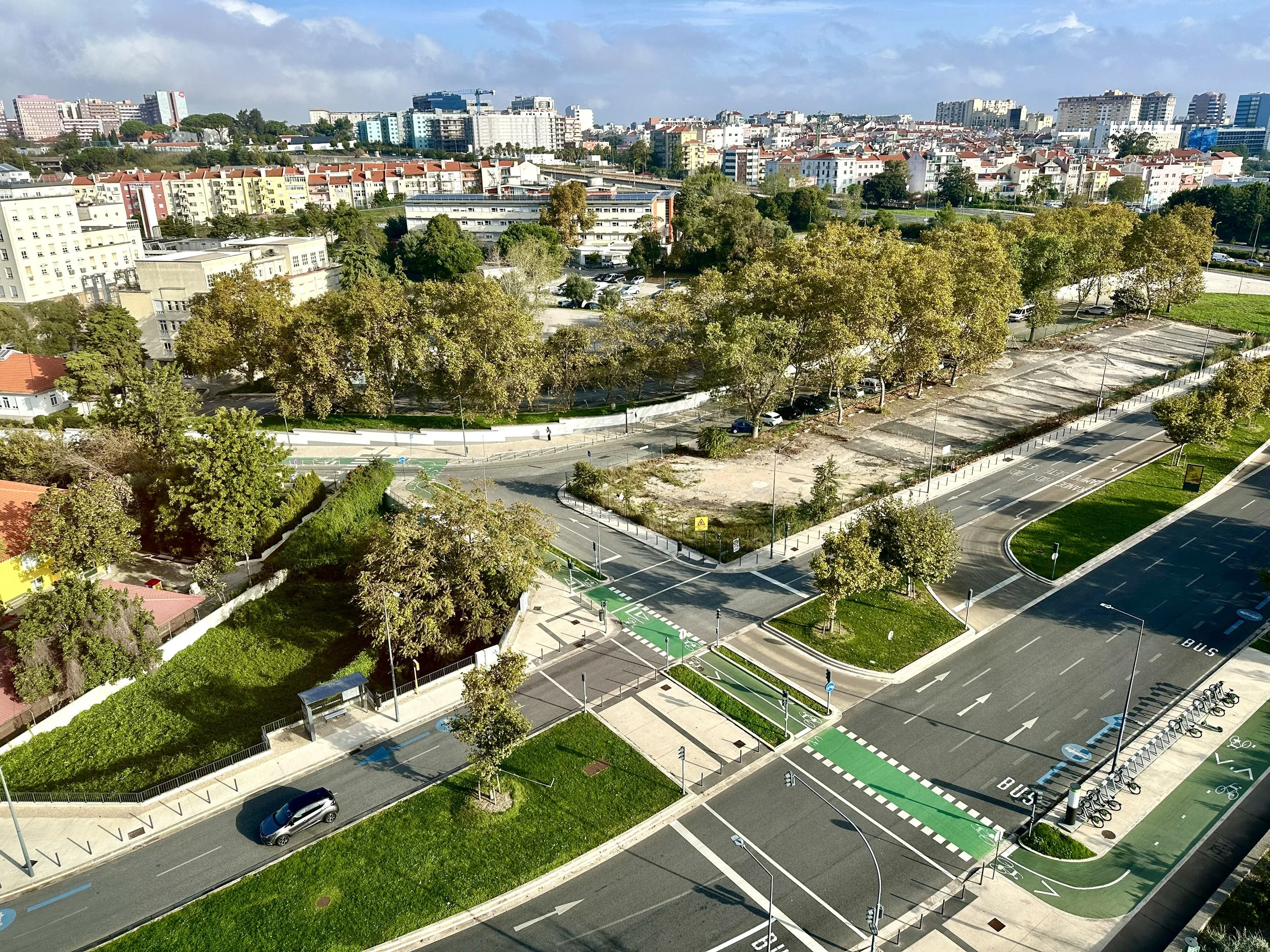
Google Maps has more sadistic plans. Its route lulls me into a false sense of security on familiar roads before splitting off on a barely-there dirt path through scruffy, vaguely post-apocalyptic parkland and a bridge over a set of train tracks.
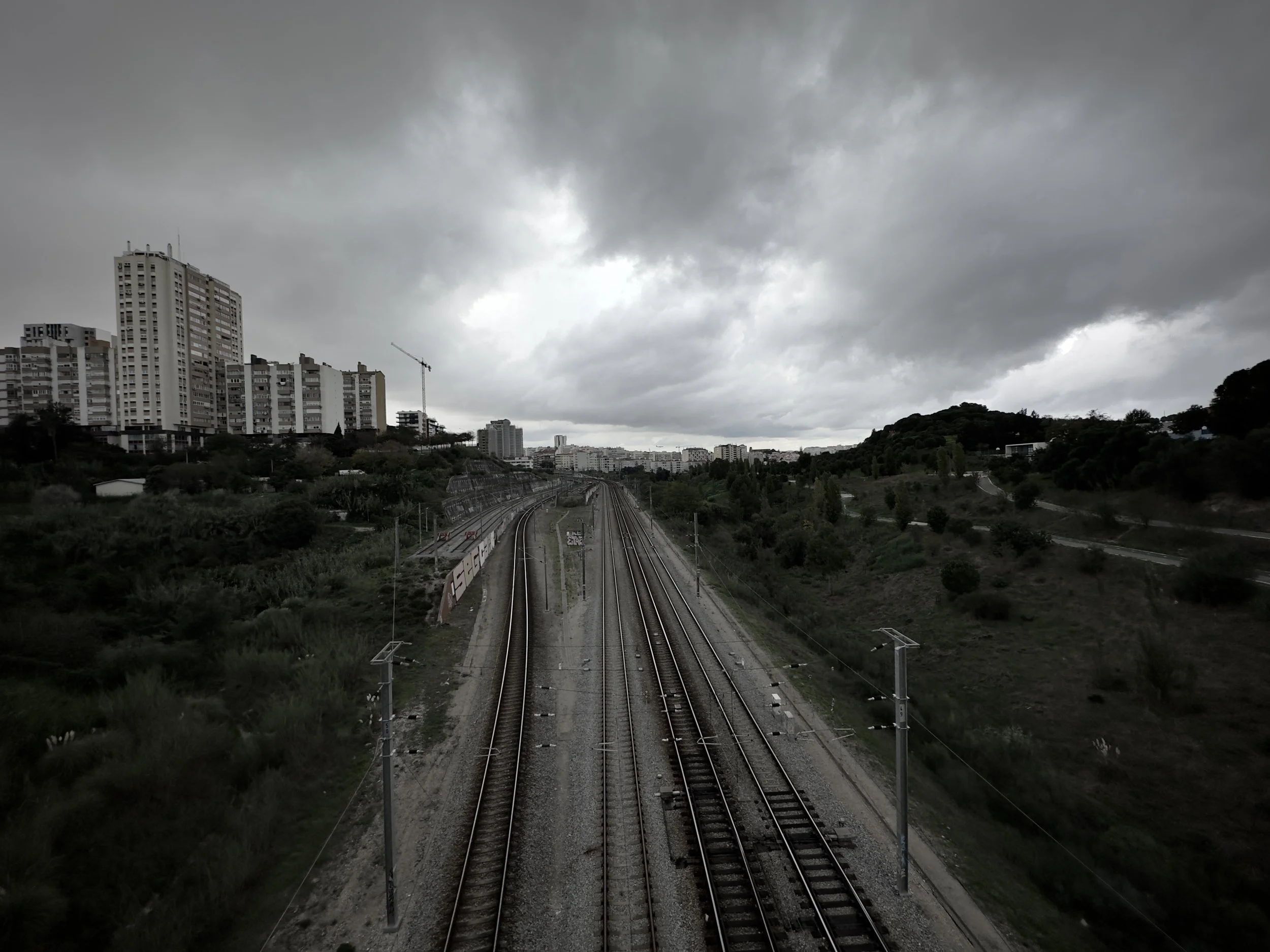
On the other side is the relief of manicured gardens… but also the first drops of rain.
My weather app, like Google Maps, is out to get me. It promised overcast, nothing more. In fairness the sky is utterly uncertain: churning between bands of soaking dark clouds ready to burst and high, innocent fluff letting in cracks of blue - all swirling cyclonically and unpredictably overhead.
This first hint of precipitation is more refreshing than ominous, a little misting on a hot afternoon. The second one is too. But the third means business. I’m at the border of the park, about to abandon any possibility of cover for more open roads and sidewalks. The mist becomes drizzle becomes rain.
I run for the closest tree with the heaviest canopy and crouch underneath, wondering if this will last five minutes or an hour. The rain is joined by growling thunder. I’m nowhere near a subway or any other escape. The tree mostly works, but collects the droplets into big fat blobs that smack the back of my neck.
I listen to the cacophony of rain and thunder and squint at the roiling surface of puddles, trying to time my escape with an ebb in both. It seems hopeless but my timing actually works - I think I’ll regret making a break for it but the downpour has become a drizzle again and doesn’t return. Within a few minutes the dark clouds have rolled on.
From here Google takes me through some grungy tenement blocks and along the sides of highway exchanges, finally skirting along the side of an abandoned building rimmed with barbed wire.
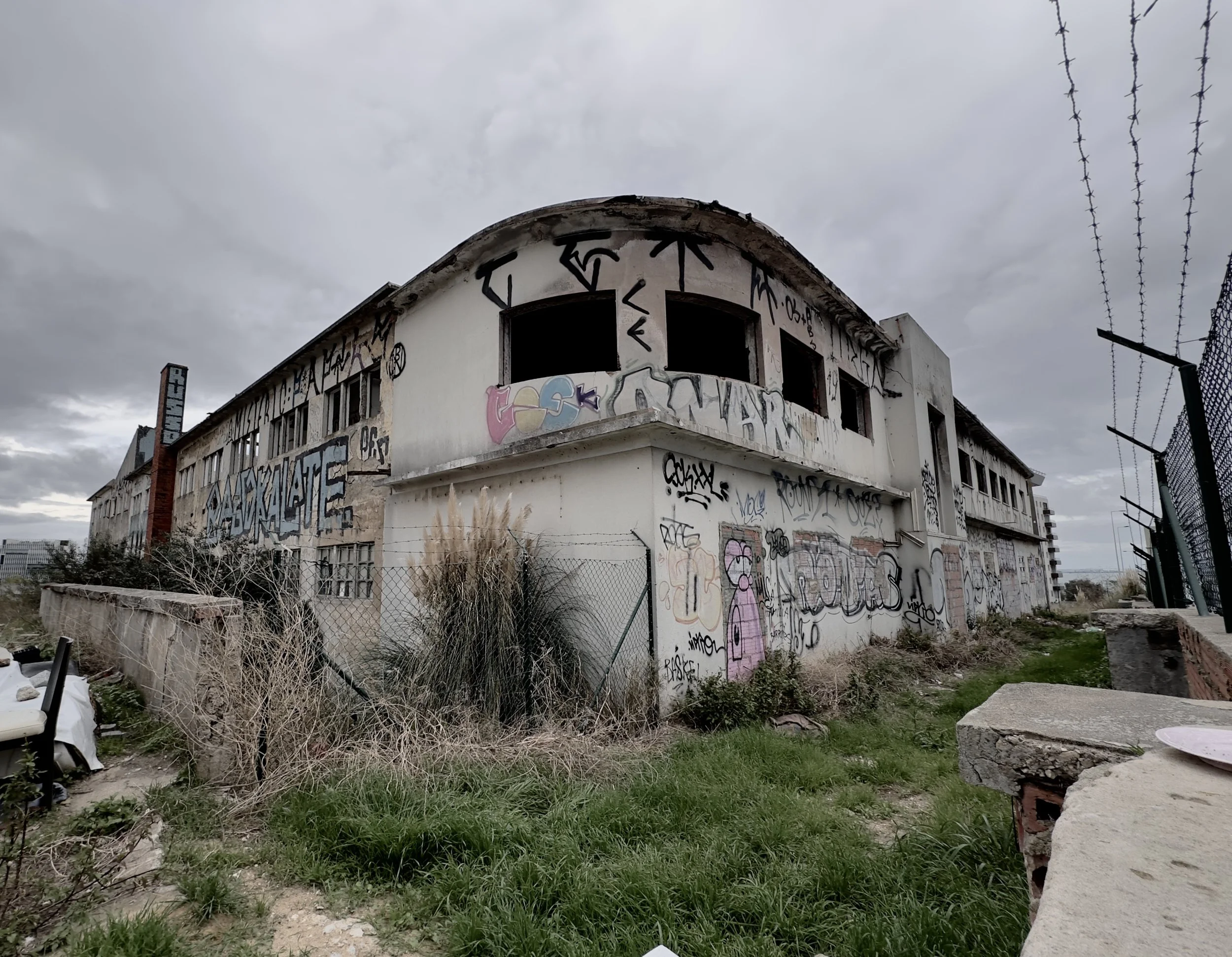
It’s a relief to rejoin the artifice of the waterfront with its well-tended public squares and inviting little cafes.
Outside the aquarium are colourful stone benches under towering umbrellas. I sit and watch what looks like a gargantuan line-up grow and shrink and wonder if I should grab our tickets now. I listen to distant thunder tear across the sky and worry about its effect on planes trying to land.
A text pops up from Antoaneta: she has landed without being hit by lightning and can buy our tickets at a discount online on her way down. Problem(s) solved.
It’s a hard time of year to dress for in Lisbon. Days are in the balmy mid-20s, but dip quick in the evening to a chilly 12 or so. This is happening as I sit, with a light breeze and damp clothes, so I take refuge in the gift shop and earmark a few things to pick up on the other side of the trip.
Soon enough Antoaneta arrives and we celebrate all of this actually happening. We’re really here! Together! In Lisbon! About to hike the coast! Let’s look at fish!!
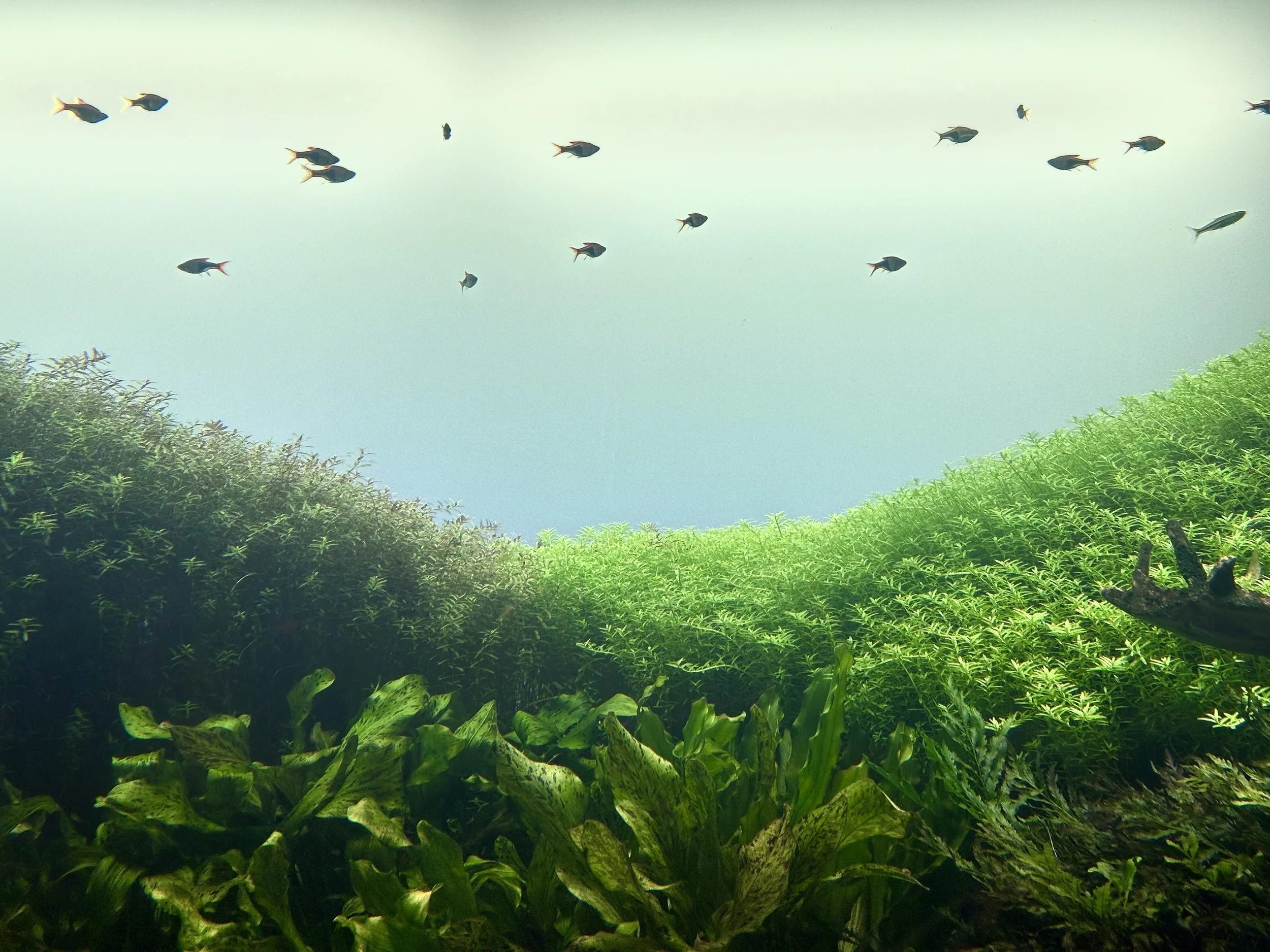
First stop in the aquarium is a special exhibit: Japanese artist Takashi Amano in collaboration with composer Rodrigo Leão present ‘Forests Underwater’. It promises ‘a unique environment where tropical forests and art are masterfully combined to create a world of sensations and emotions where visitors will forget their everyday routines and be immersed in a precious environment that evokes the origin of life.’
Expectations high, we brace for a world of sensations and emotions. Inside, the music of Rodrigo Leão is a dead ringer for Spotify’s ‘Yoga Mix #9’. A continuous tank tracks along three walls of a darkened exhibit space. In that tank: plants. Fish.
It’s a real aquarium-half-full moment. Is this overwrought experience in fact just… a fish tank? Or! Do many dentist waiting rooms actually contain ‘a precious environment that evokes the origin of life’?
We don’t spend long in ‘Forests Underwater’.
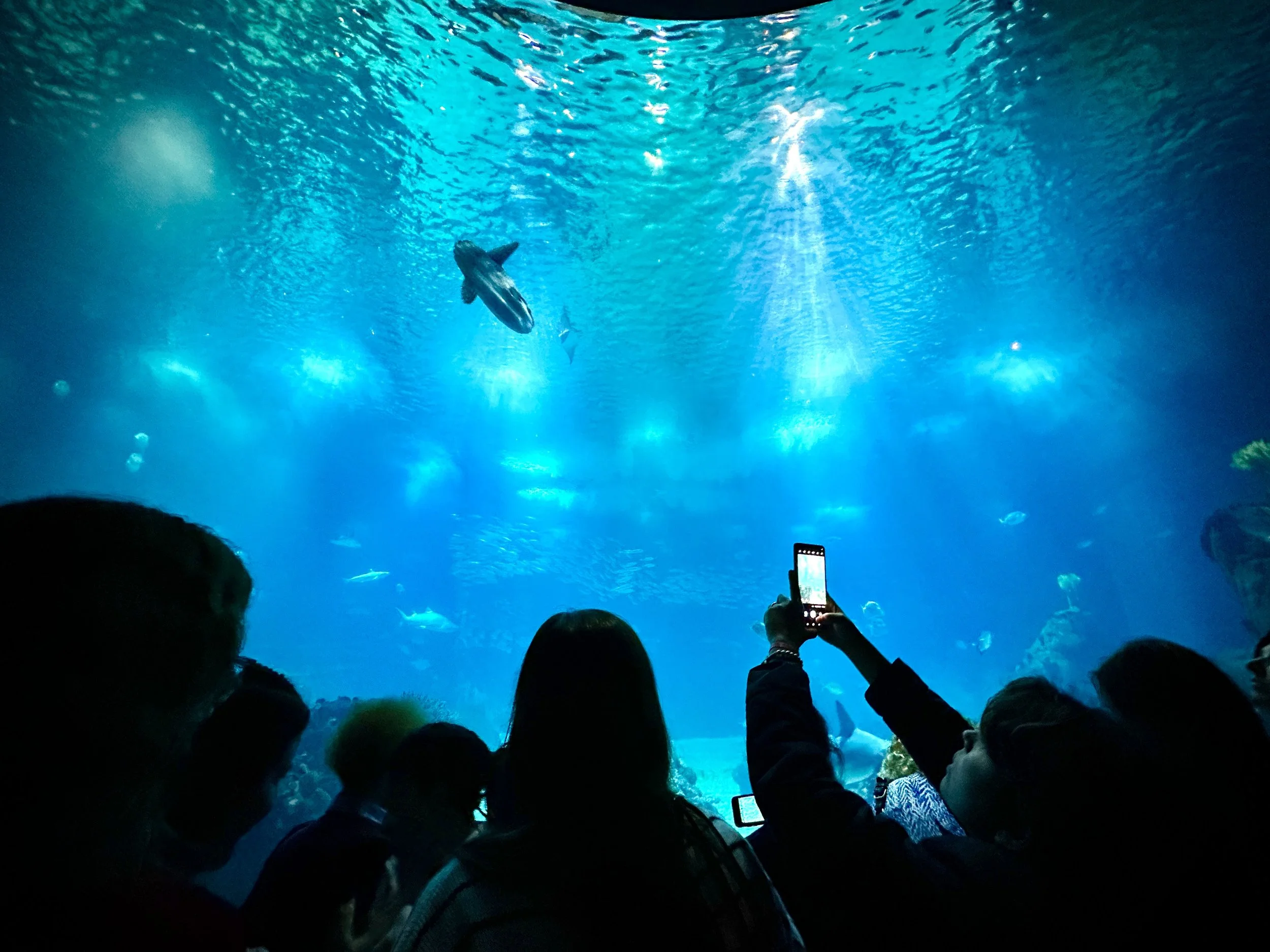
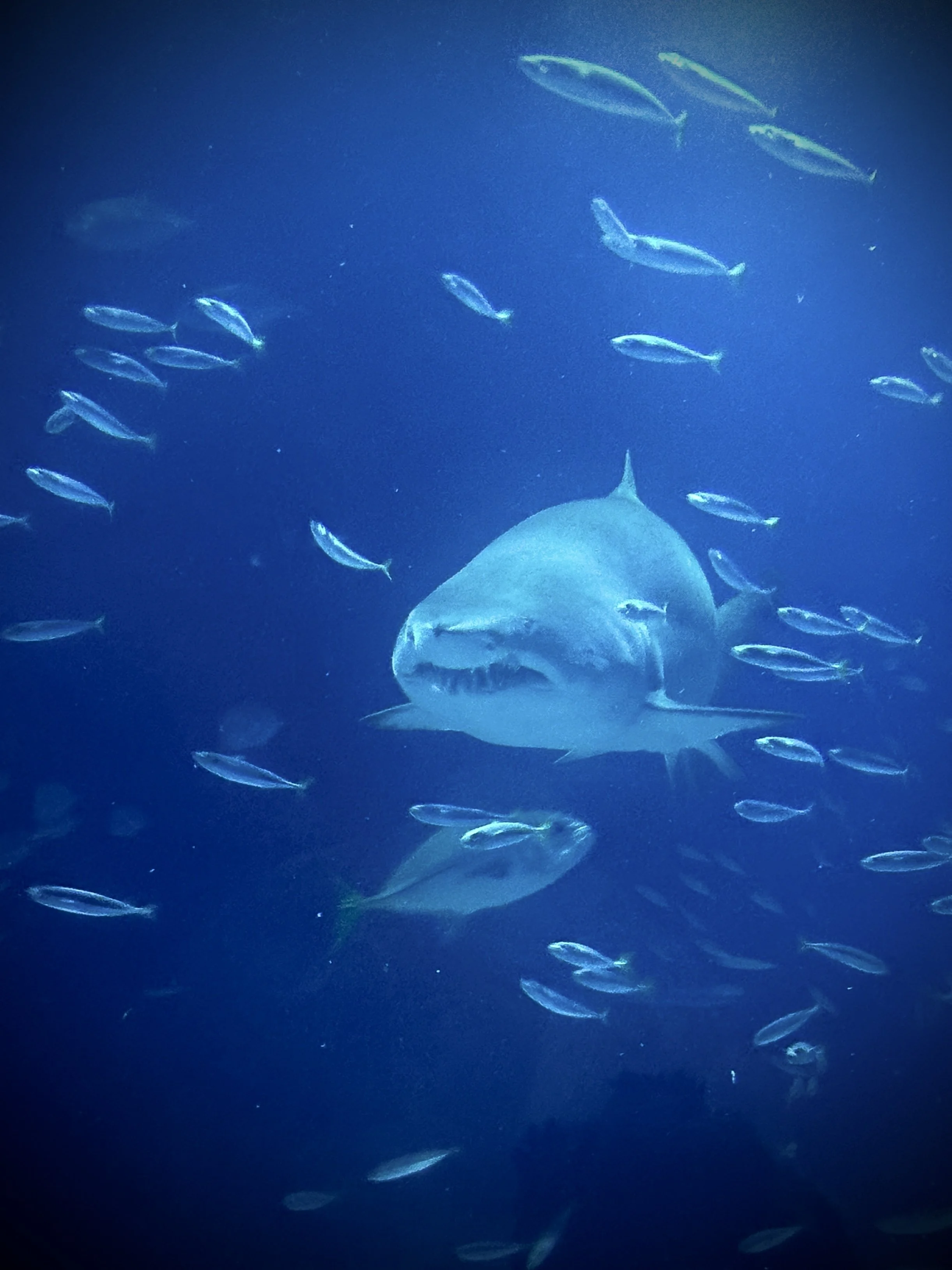
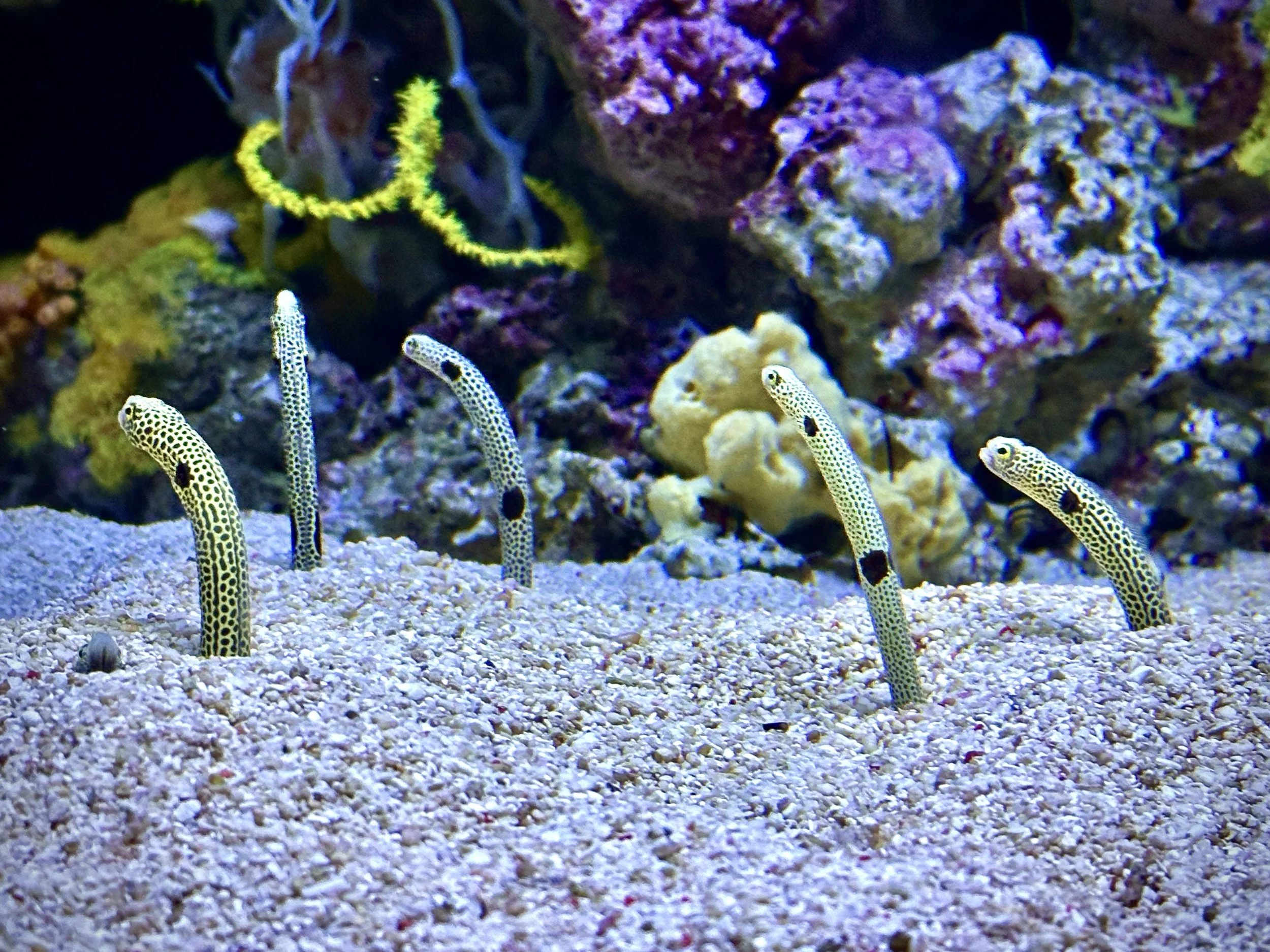
It’s arguable whether the aquarium itself lives up to its hyperbolic airport advertising, but it makes an honest effort. It’s a square building organized around a gargantuan cylindrical tank with frequent, huge windows giving you different perspectives as you circumnavigate. 7 million litres and 8000 sea creatures - that’s 875 litres per sea creature!
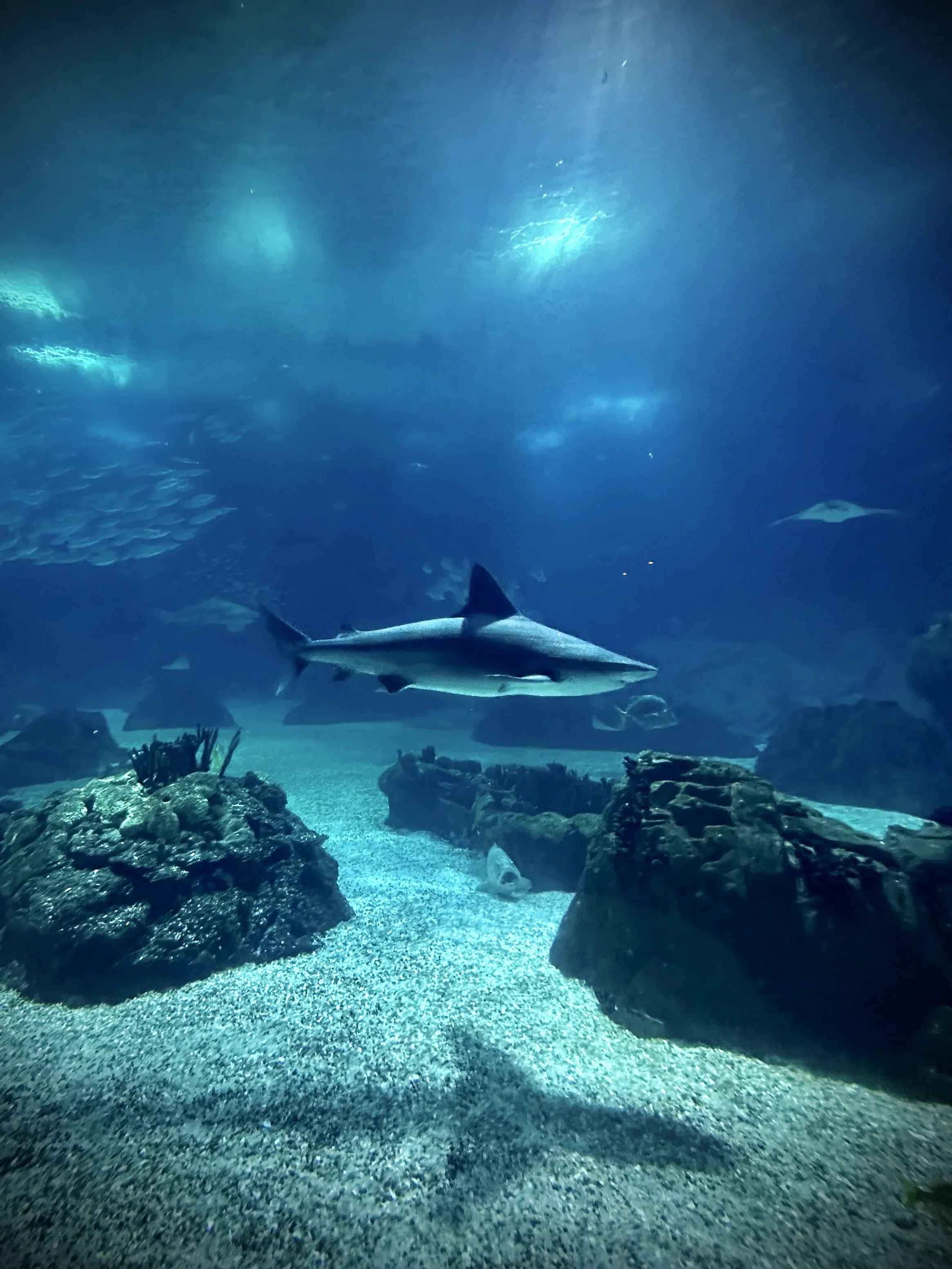
Filling in the four corners of the upper floor are separate exhibits highlighting different ecosystems - Antarctic, North Atlantic, Tropical Indian, Temperate Pacific. On the way are penguins, otters…
sunfish (who should only ever be called mola mola)…
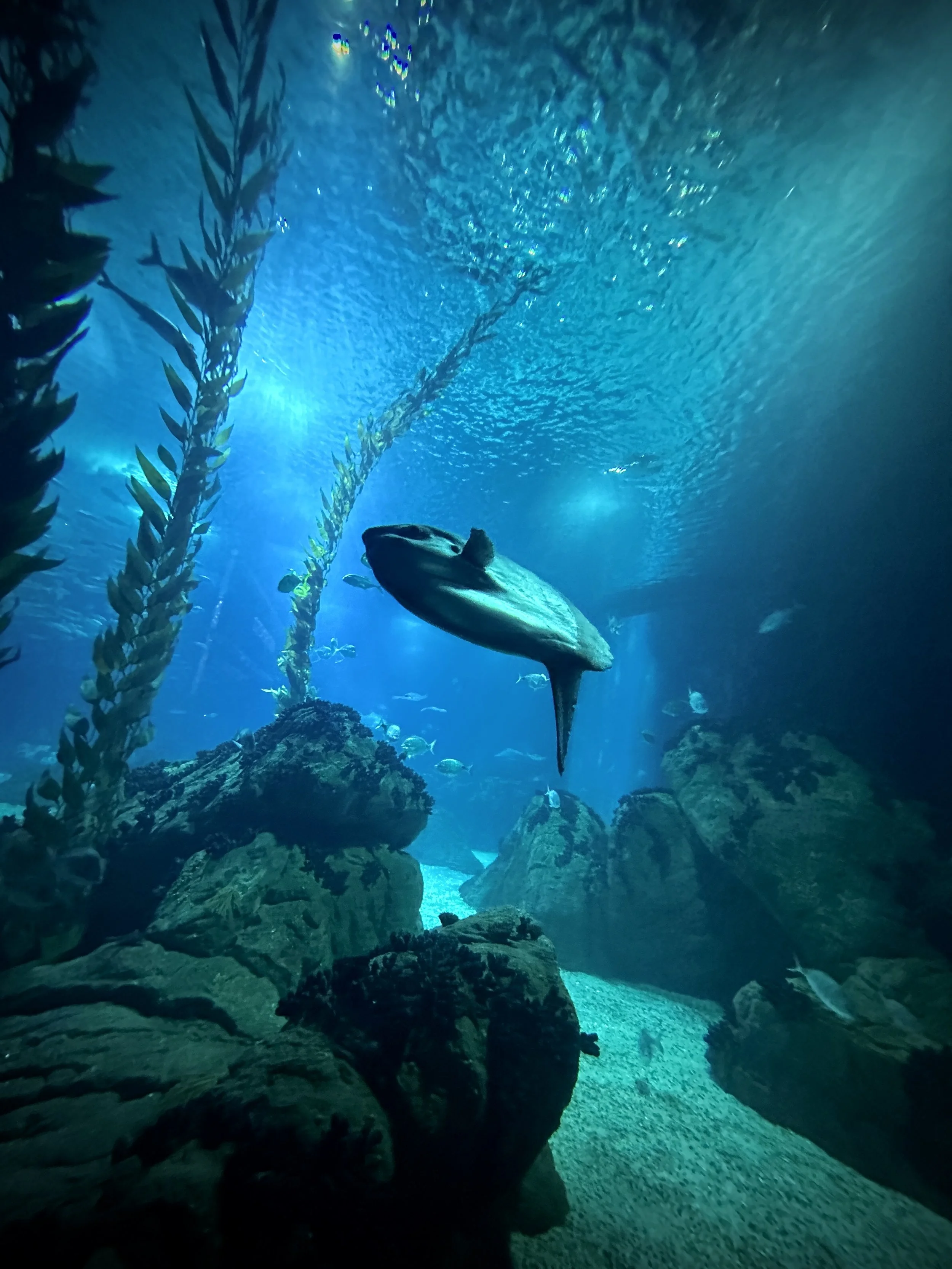
and speaking of fun fish names: guitarfish (who I didn’t get a great photo of). The most memorable wildlife might be the feral children. It’s crowded. There’s a crunch at every window. I’ve never experienced kids more willing to muscle their way in. More than once I’ll actually feel little fists pummelling the back of my legs. Not squeezing or shoving - a rain of tiny blows.
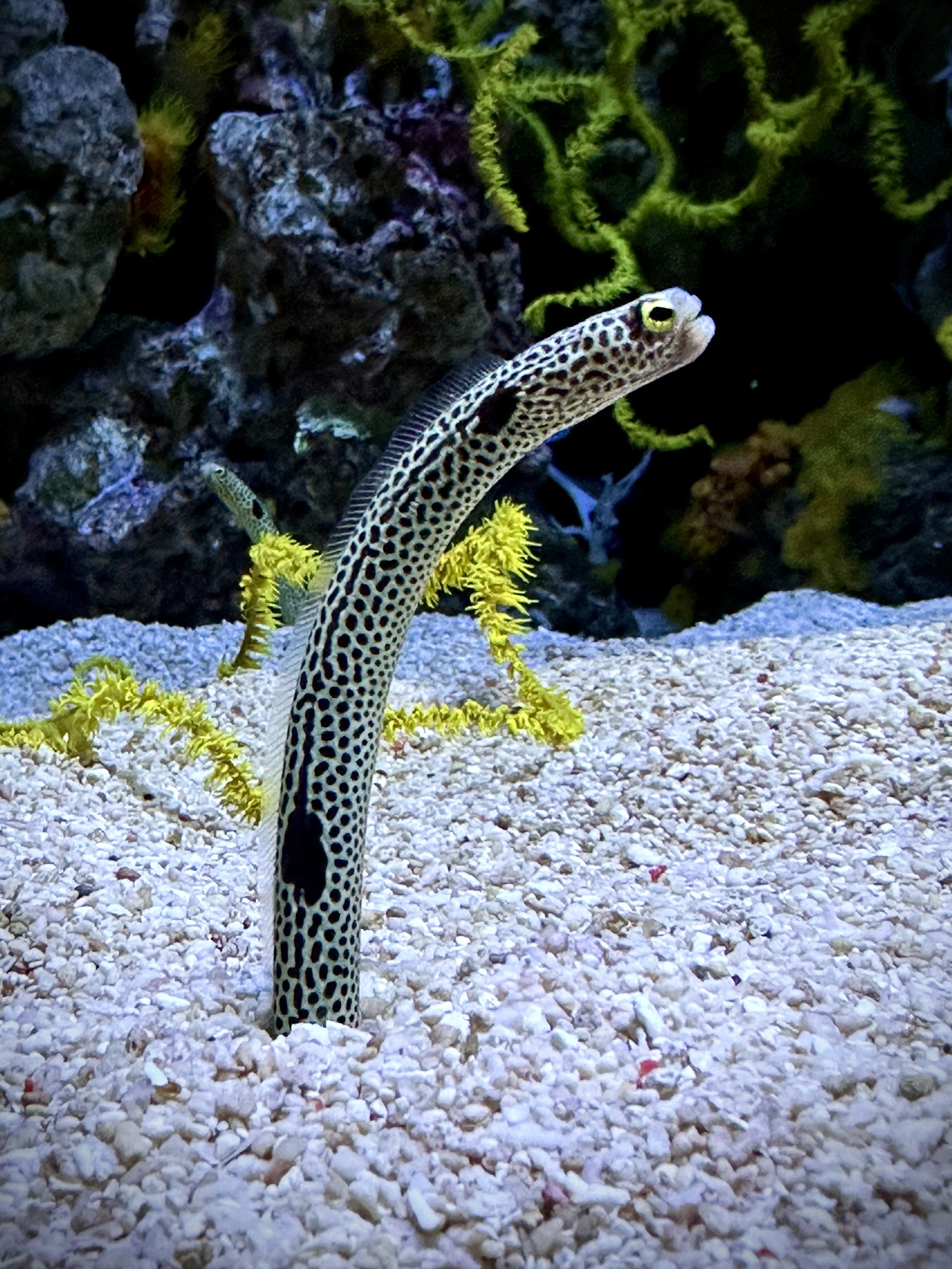
Crowds aside, there’s lots to love about the Lisbon aquarium. We wind through the big ecosystems upstairs, then down to more individual tanks below. It’s at an amphibian exhibit that the crowd gets too oppressive. We’re locked in the weaving throng, moving slower than the Lethargic Plod-Frog in terrarium #5 (I made up that amphibian) with no end in sight. So we take a cue from the kids and force our way out. At this point I’m suffering exhibit-fatigue, the day is catching up or the espresso is wearing off or both. We glaze over the last few tanks, give the gift shop a last cursory browse, and head for the hotel.
There are still obligations on our evening. We need to stock up on snacks before entering the resource-starved no man’s land of rural Portugal. And it feels unacceptable to go to sleep without a drink and an official ‘cheers’ to the start of the trip.
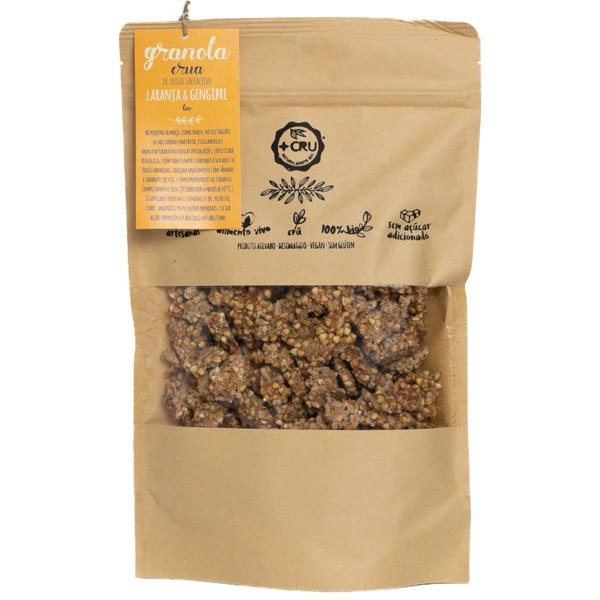
First thing’s first. Antoaneta targets a Lidl near the hotel but when the subway spits us out in an underground mall with a vast grocery store I jump on the opportunity. Antoaneta suggests that Lidl will have better deals but I’m fading fast. I just want mixed fruits & nuts, granola, and sleep. Immediately. I pick up a very fancy, very bespoke, very expensive bag of orange ginger granola which sits in my bag as a covert, ticking time bomb. More on that later.
We exit through an enticing food court and then, with navigation of the Portuguese coast in our immediate future, can’t find our way out of the mall. It takes two escalators and a detour through a department store.
Lidl was the right call. They have basically all the same stuff for much less money, plus cheesy-bready-twisty… things in their bakery which turn out to be delicious. I also get a little chocolate mousse cup to have at the hotel because Europe does dairy better than North America.
We agree the hotel bar is serviceable for a kickoff drink and bowls of soup as a late, light dinner. I ask one of the servers if I can get a dessert spoon to take up to the room for my mousse. He gives me a whispered, extremely qualified ‘yes’, caveats being: 1, he needs to sneak it to me, 2, I need to hide it when I take it, and 3, I can’t tell anyone that this has transpired. I don’t question any of this, because of I want mousse.
Overpriced wine clinked, soup slurped, dessert spoon hidden deep in a pocket, we retire to the room. After all that, the mousse is: not great. Dolled up, airy chocolate pudding. Sorry, server. I almost got you killed for nothing.
The full weight of the day(s), the amount of walking I’d done, the stress of any international travel, a disappointing mousse, all add up to such bone-deep exhaustion that I’m sure I’ll be fast asleep before my head hits the pillow.
Nope. Somehow: can’t sleep.