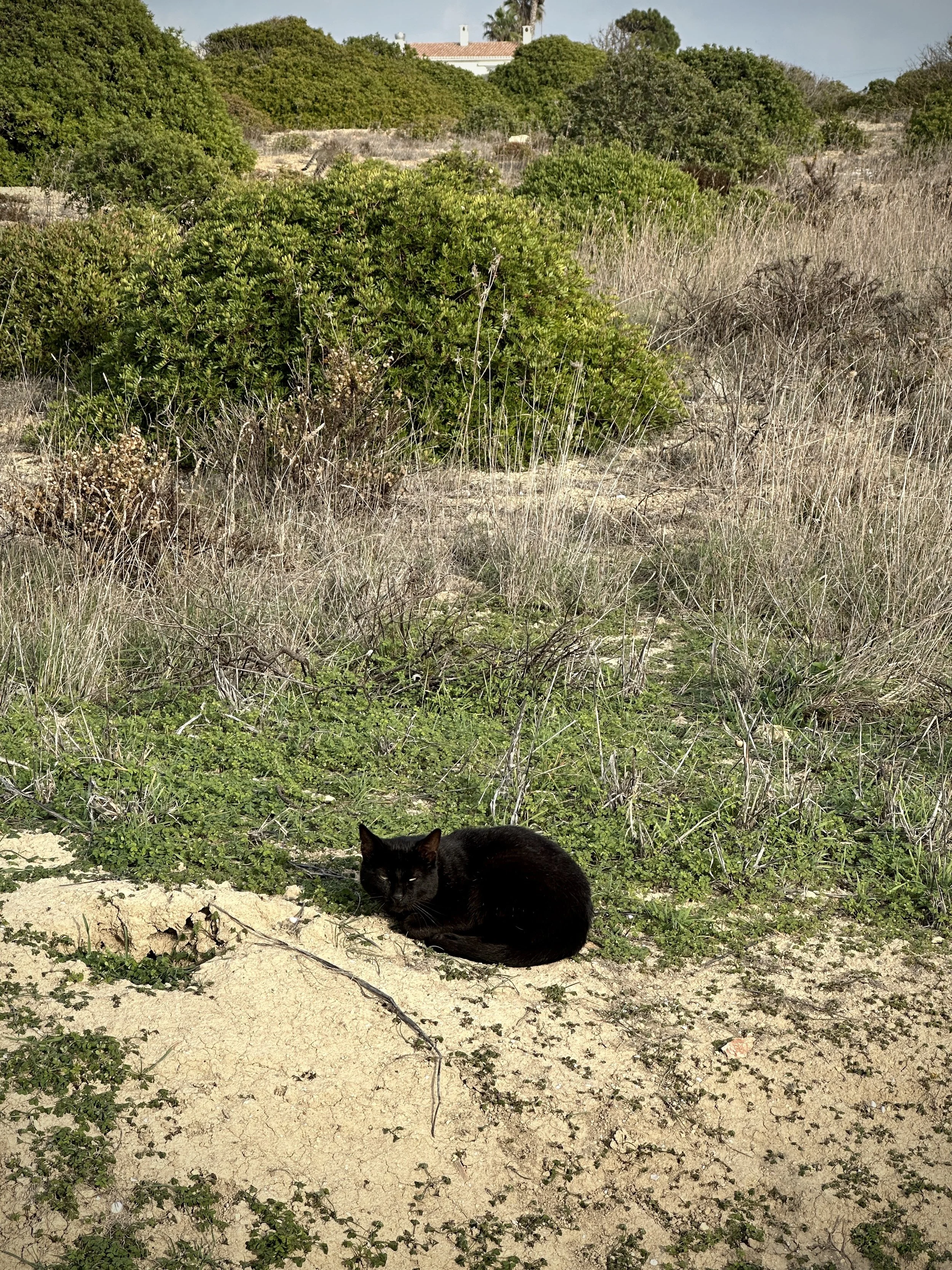
DAY 8 - VILA DE BISPO TO SAGRES - 26.9km
We’re back at the little bar we sat at when we arrived, for galãos and a sit before we head out. A (German? Scandinavian??) man sitting one table over notices Antoaneta’s beautiful 35mm camera and compliments it as one would coo over a lustrous dog.
It leads to trading hiking stories. He’s doing the Rota Vicentina as well, more aggressively than us, taking two stages at a time some days. When we tell him which ones we opted to skip he kindly affirms we made the right choices.
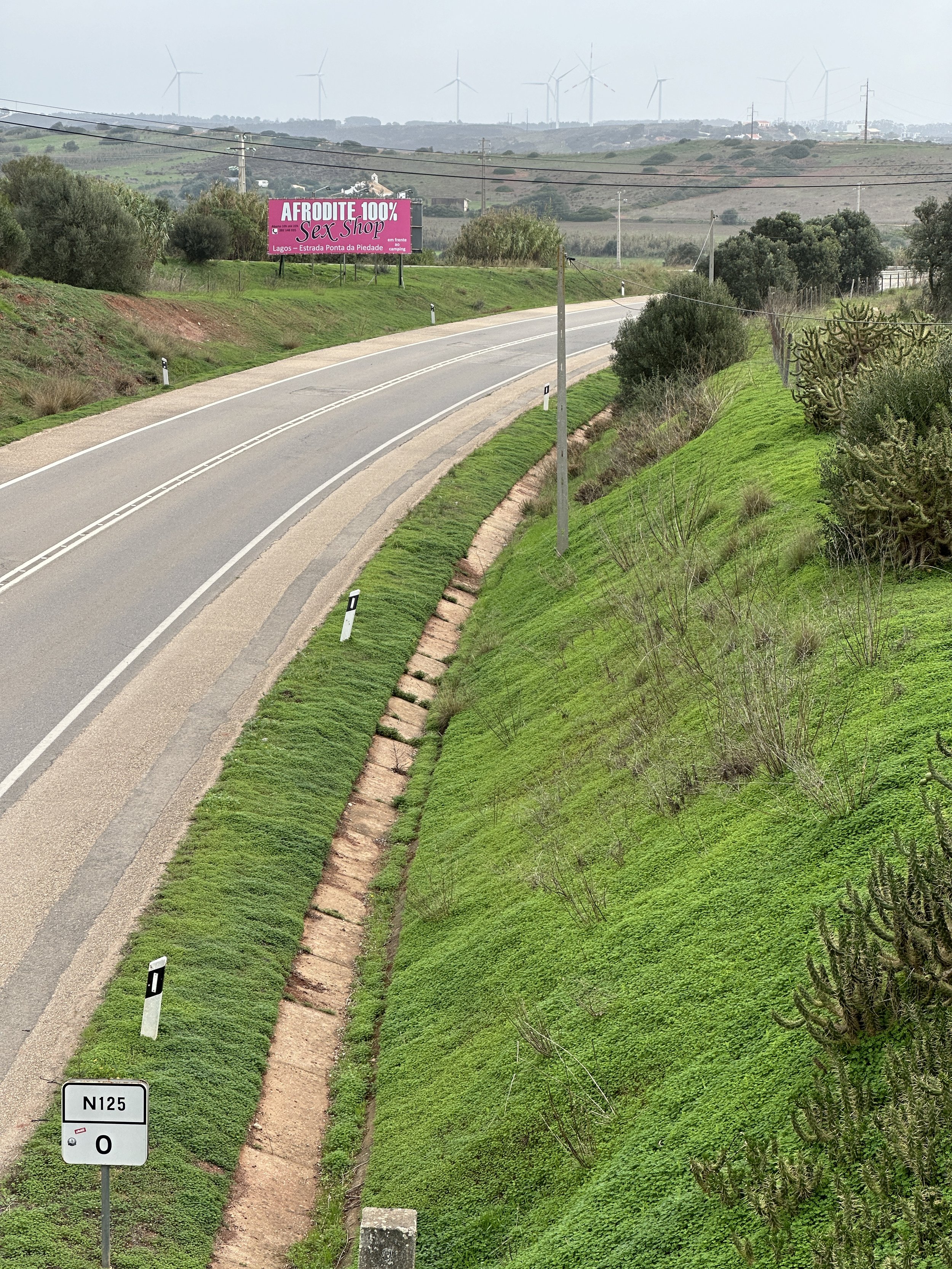
We begin what turns out to be a long day by going in the wrong direction (unless we were in fact headed to ‘Afrodite 100% Sex Shop’). We get out of town and halfway across a bridge South before we confirm we should have been going West. Once on the right path, it starts with a long and unremarkable dirt road out to the coast.
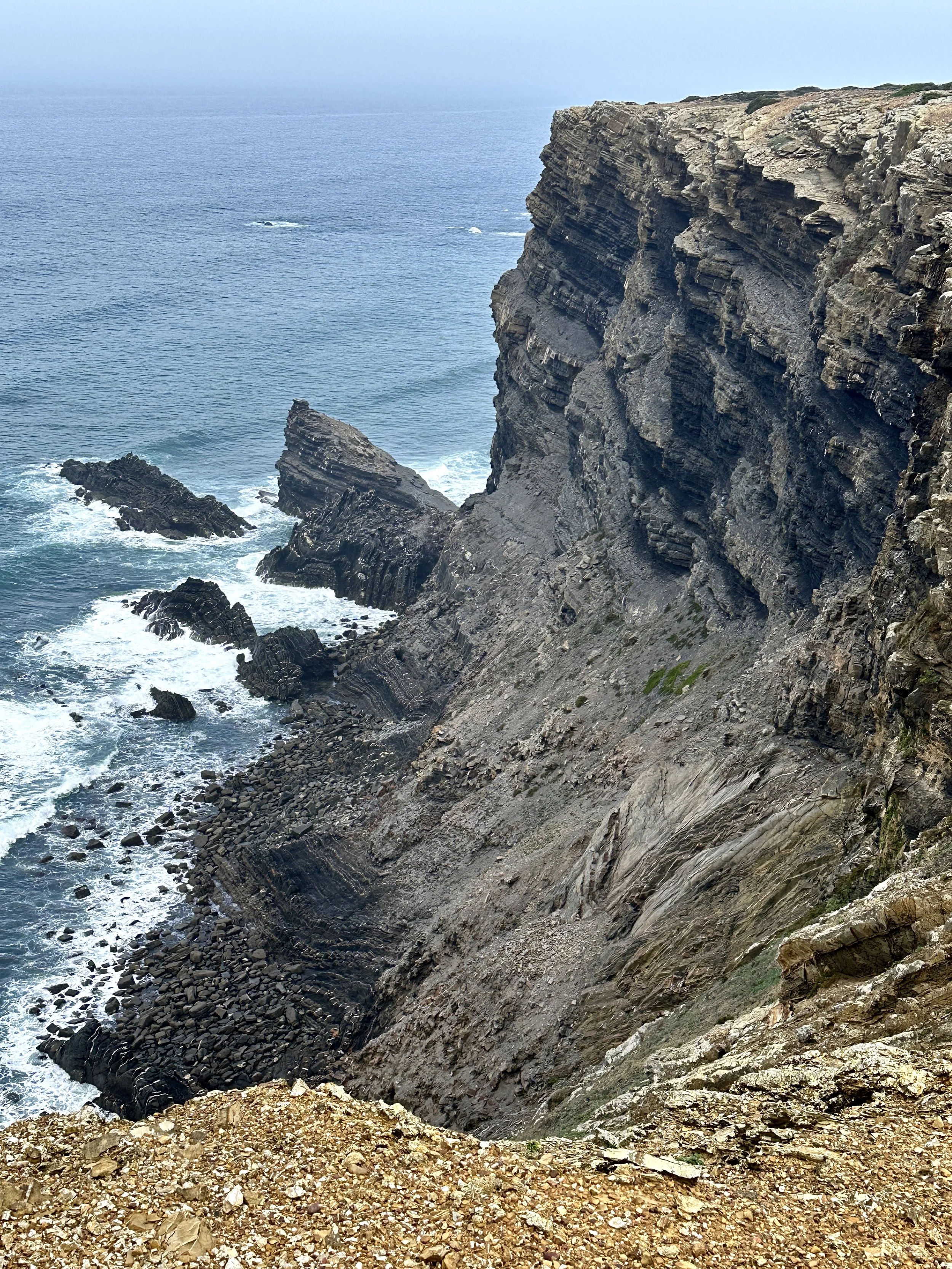
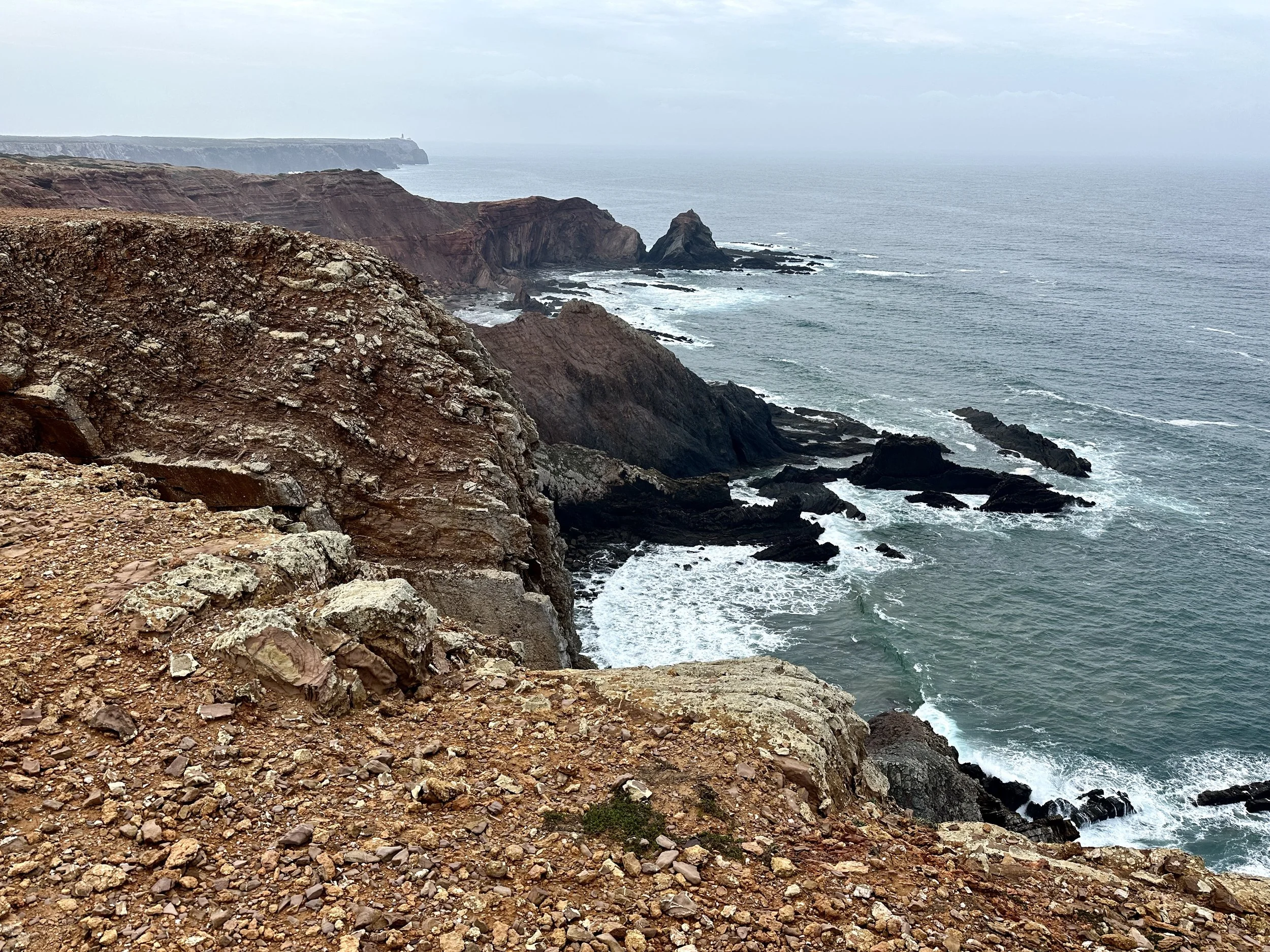
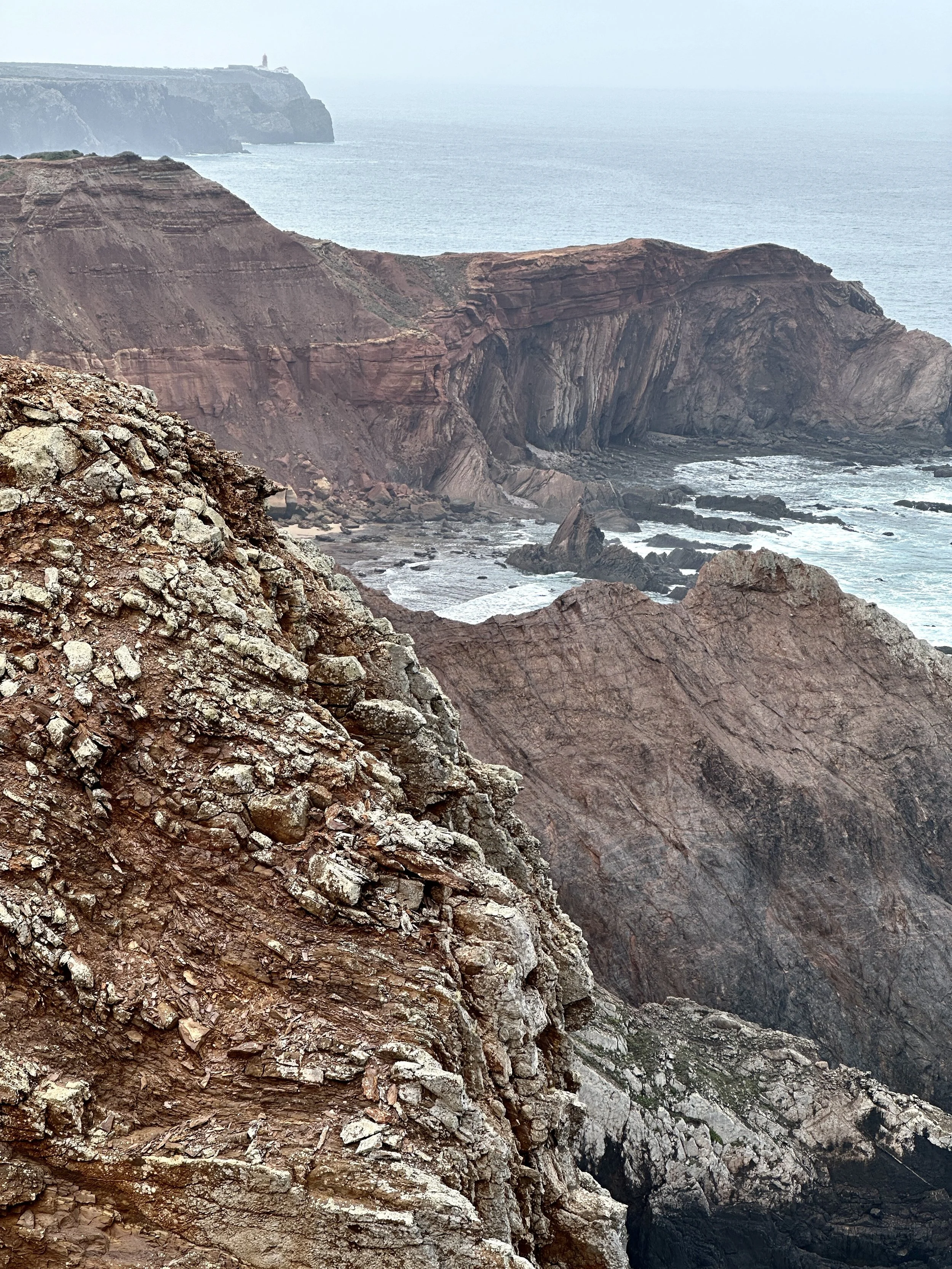
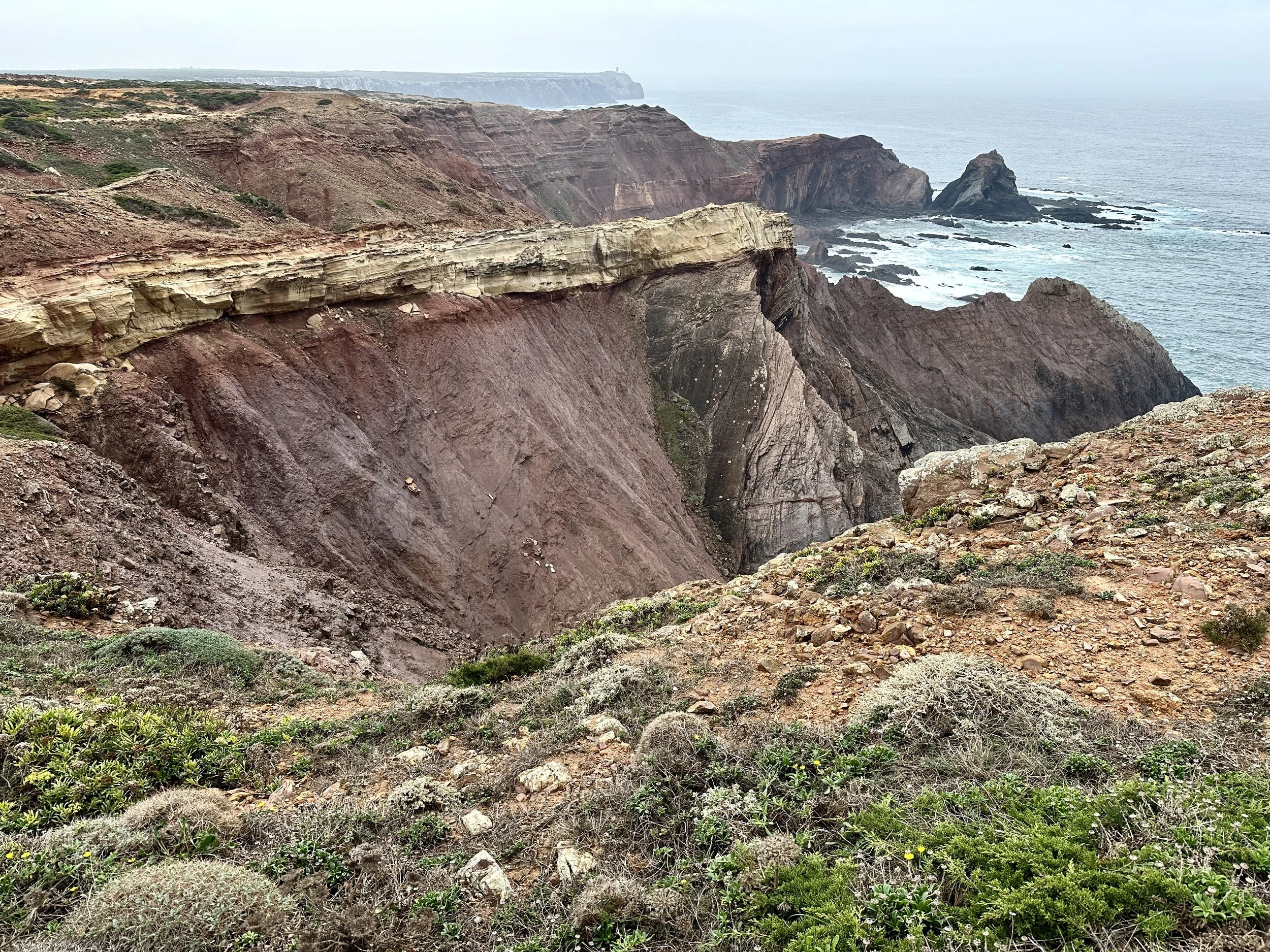
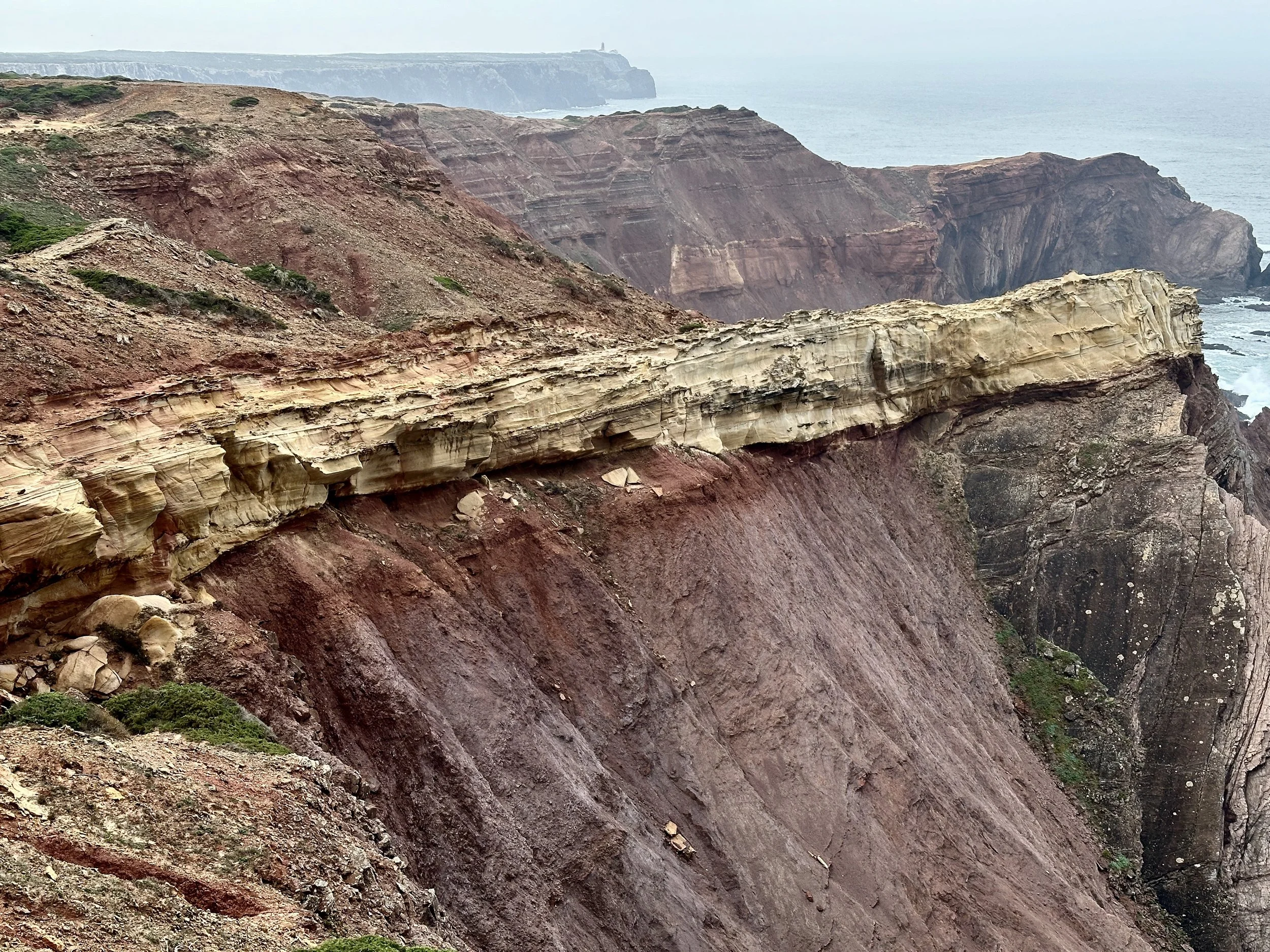
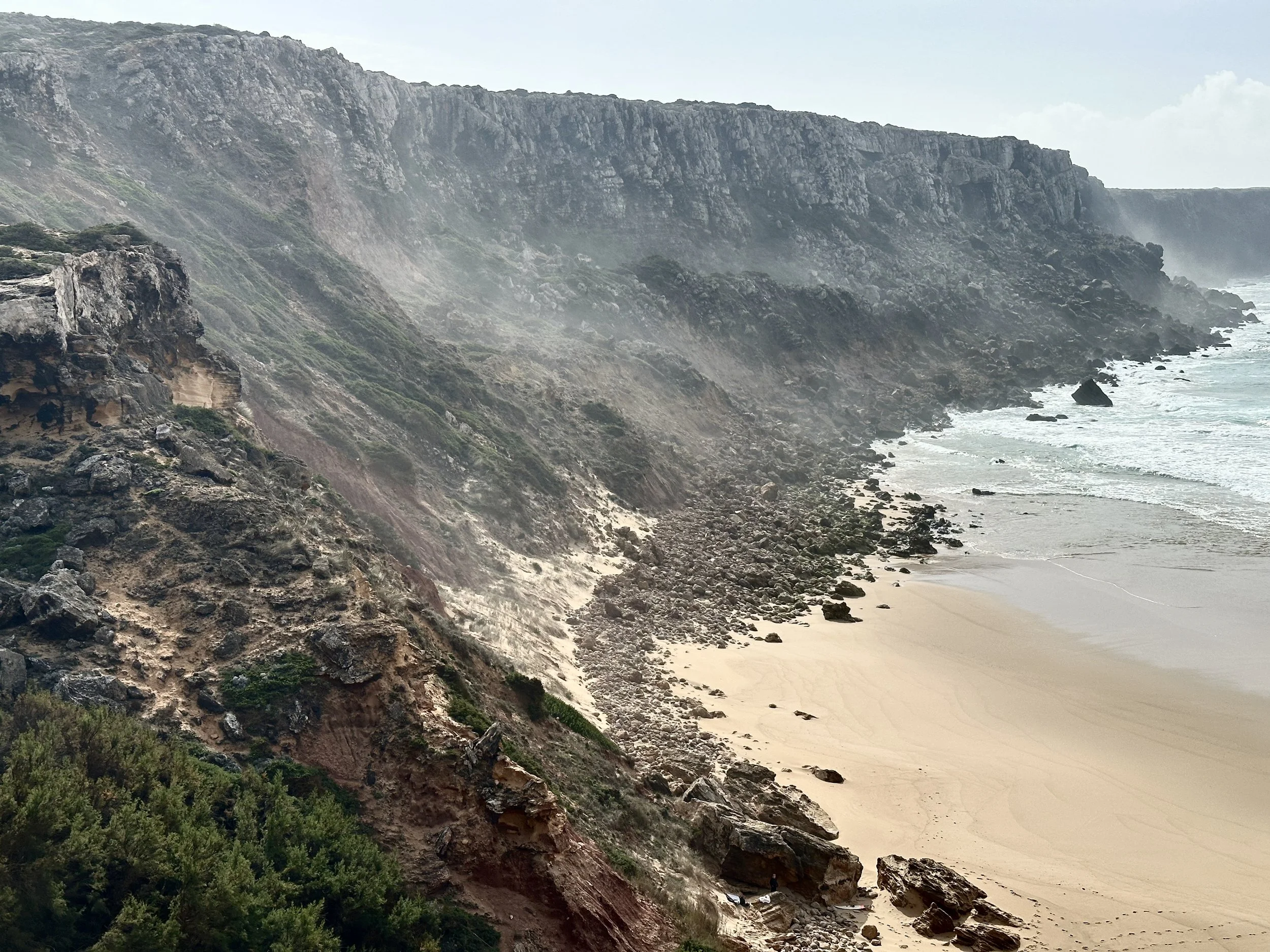
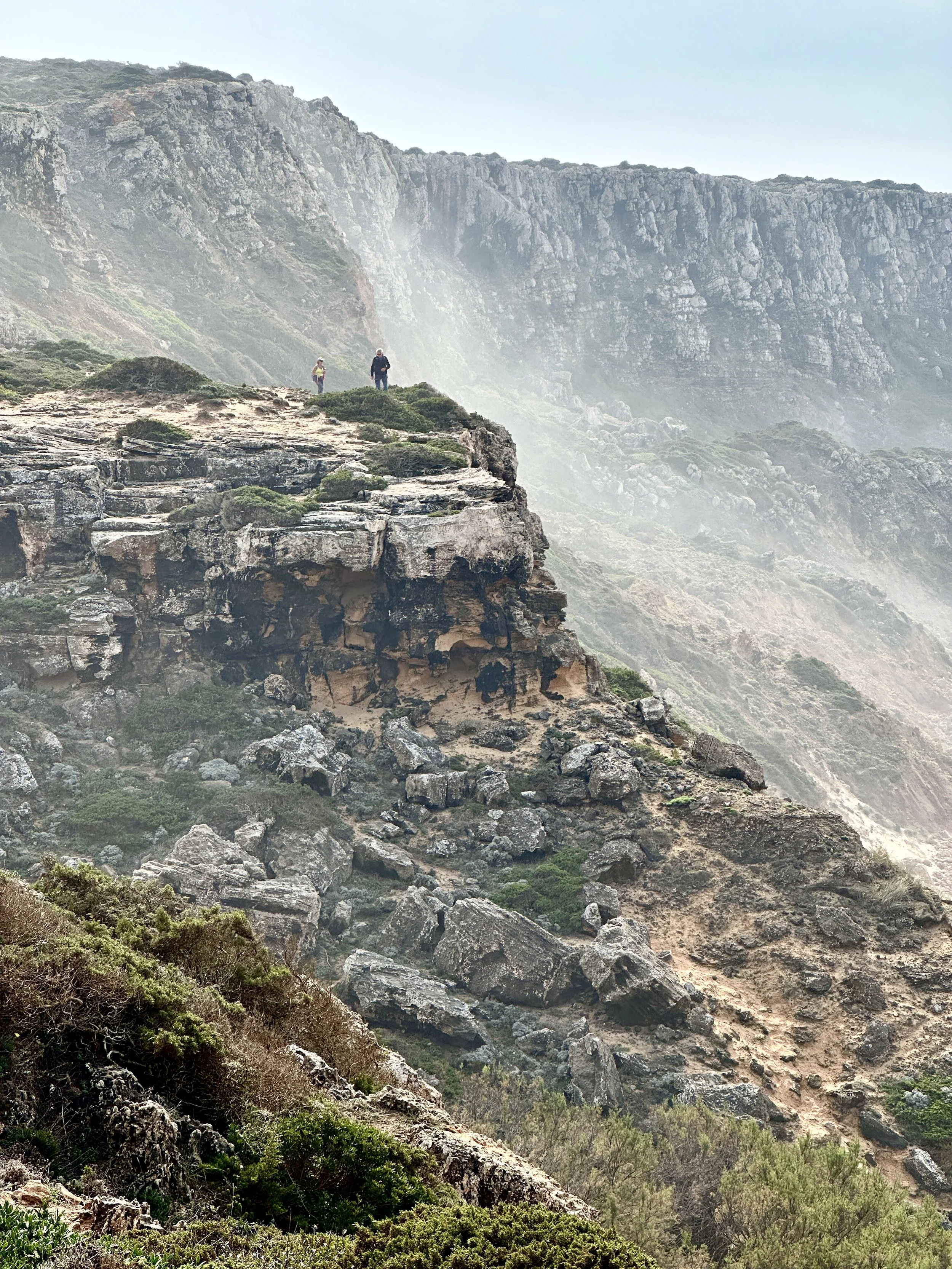
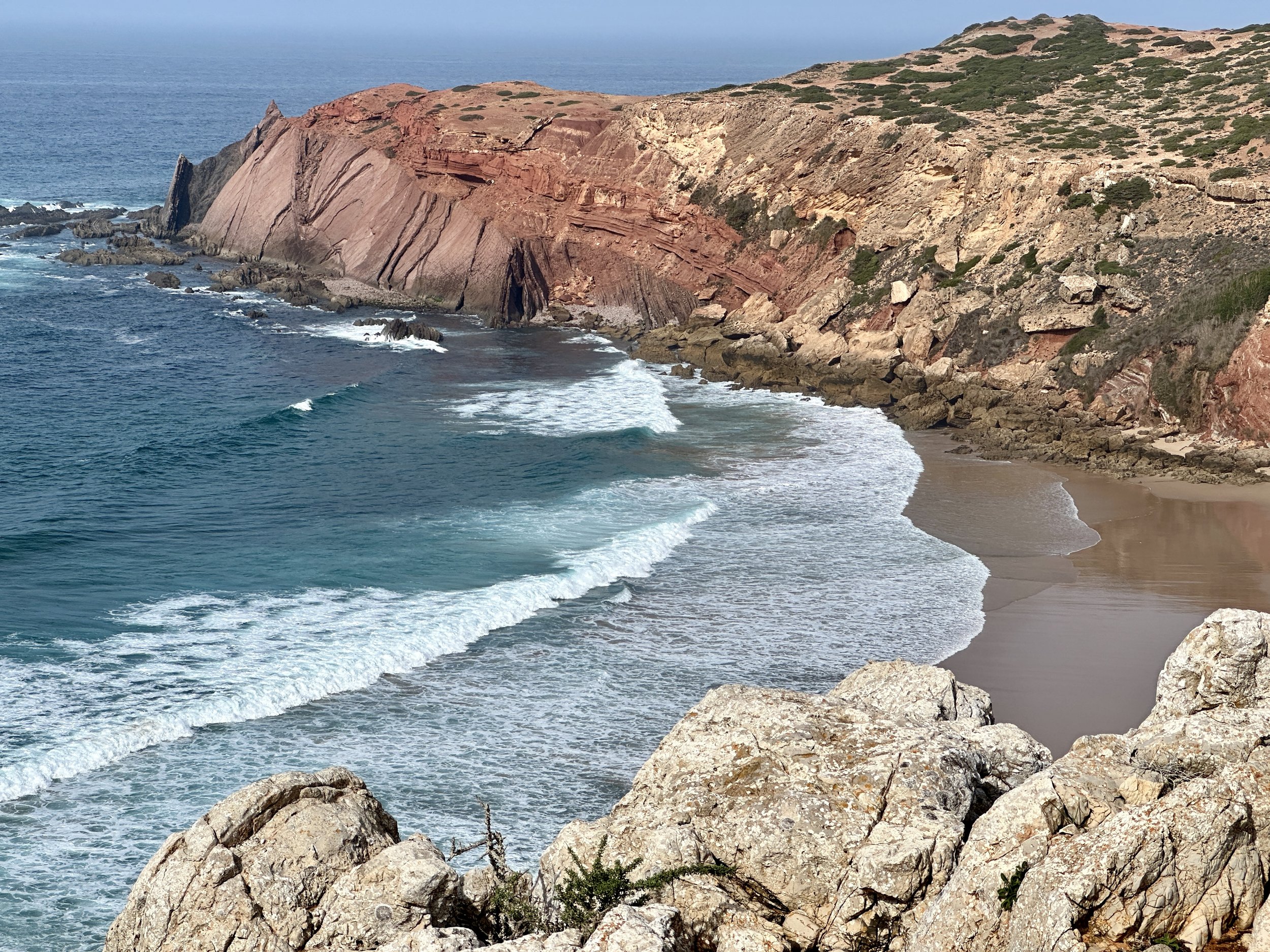
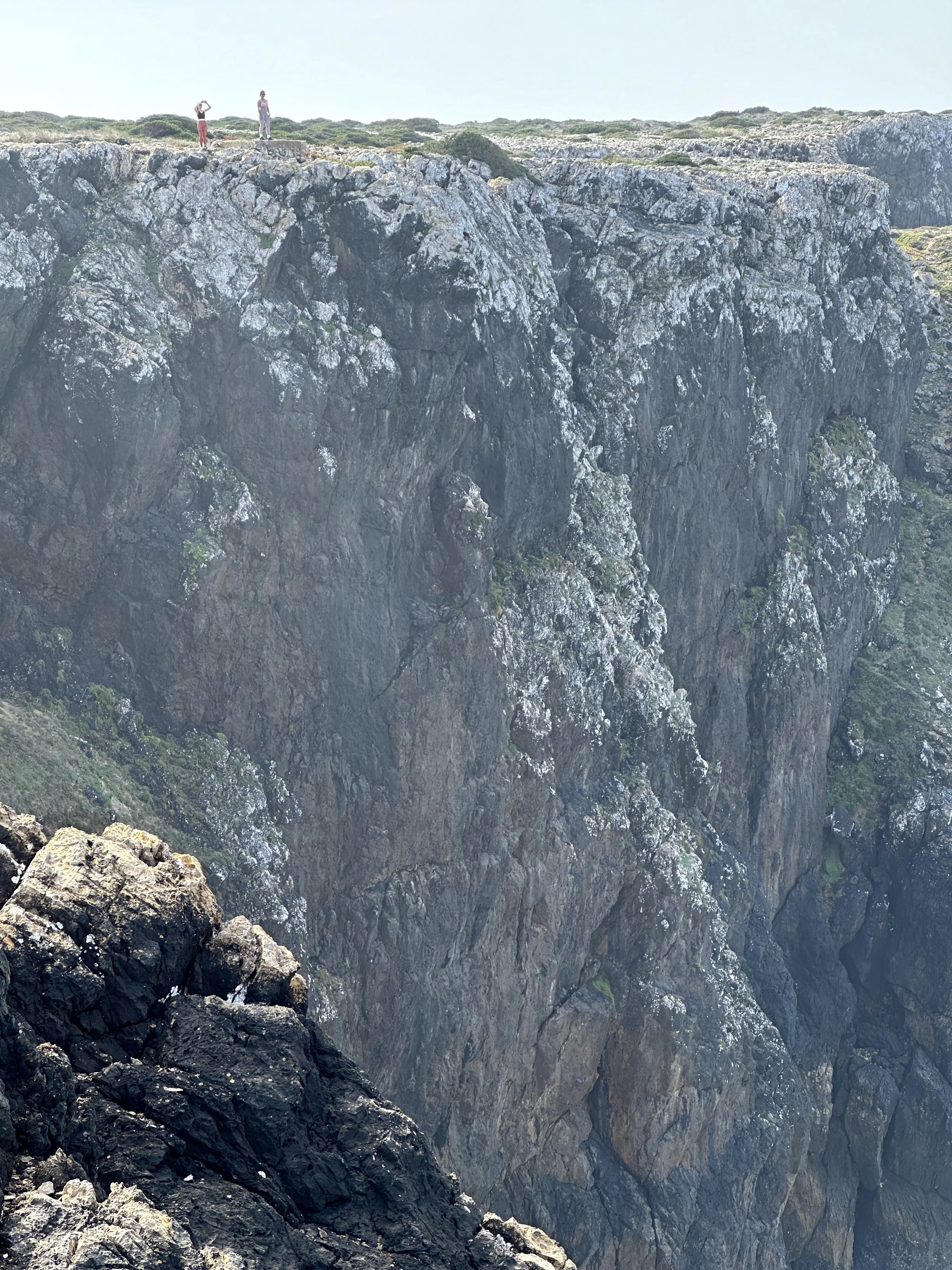
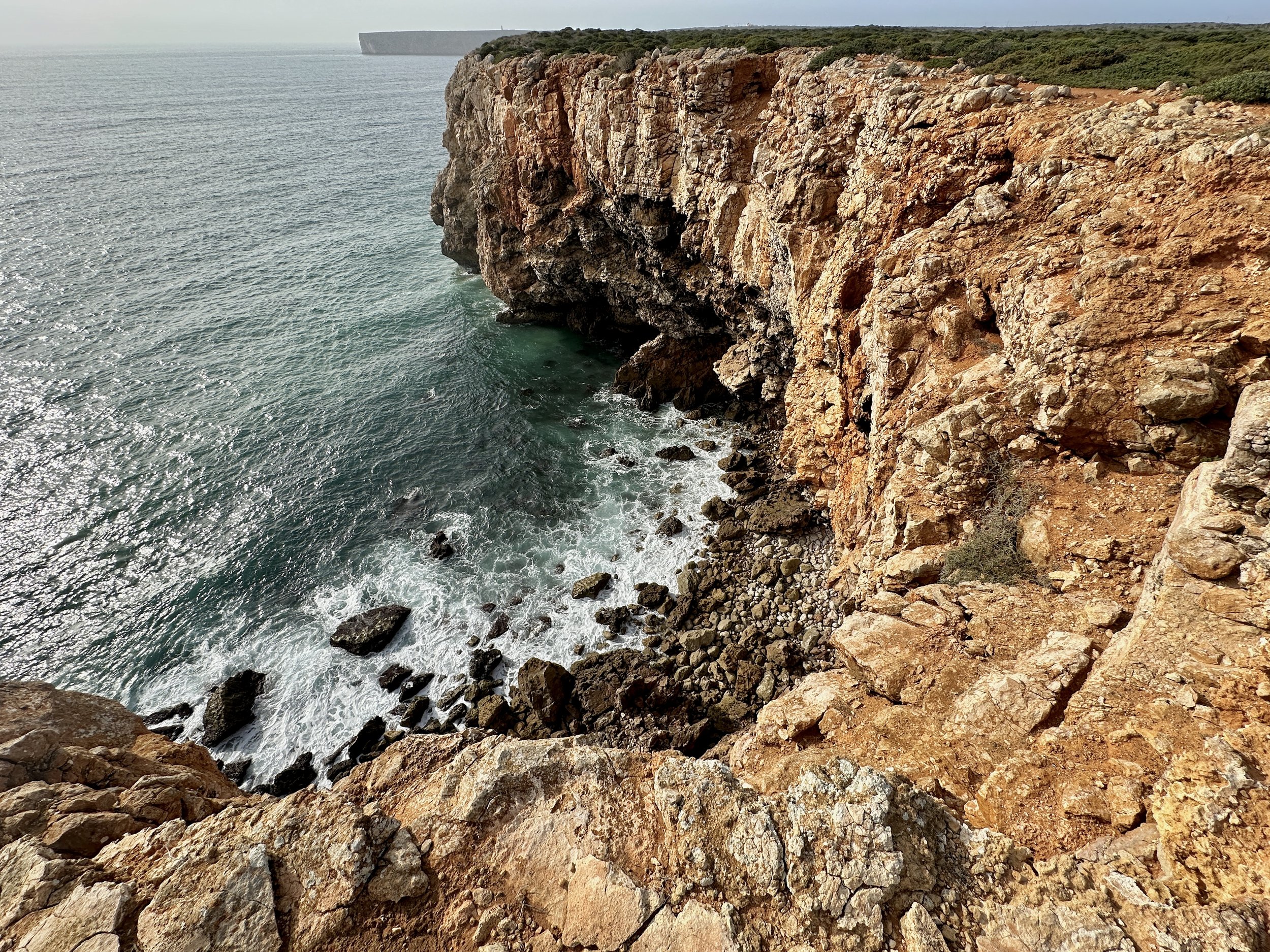
We celebrate hitting the cliffs at last by breaking out our sandwich fixins - seed rolls, gouda and chorizo. The chorizo is not great, but everything else makes up for it.
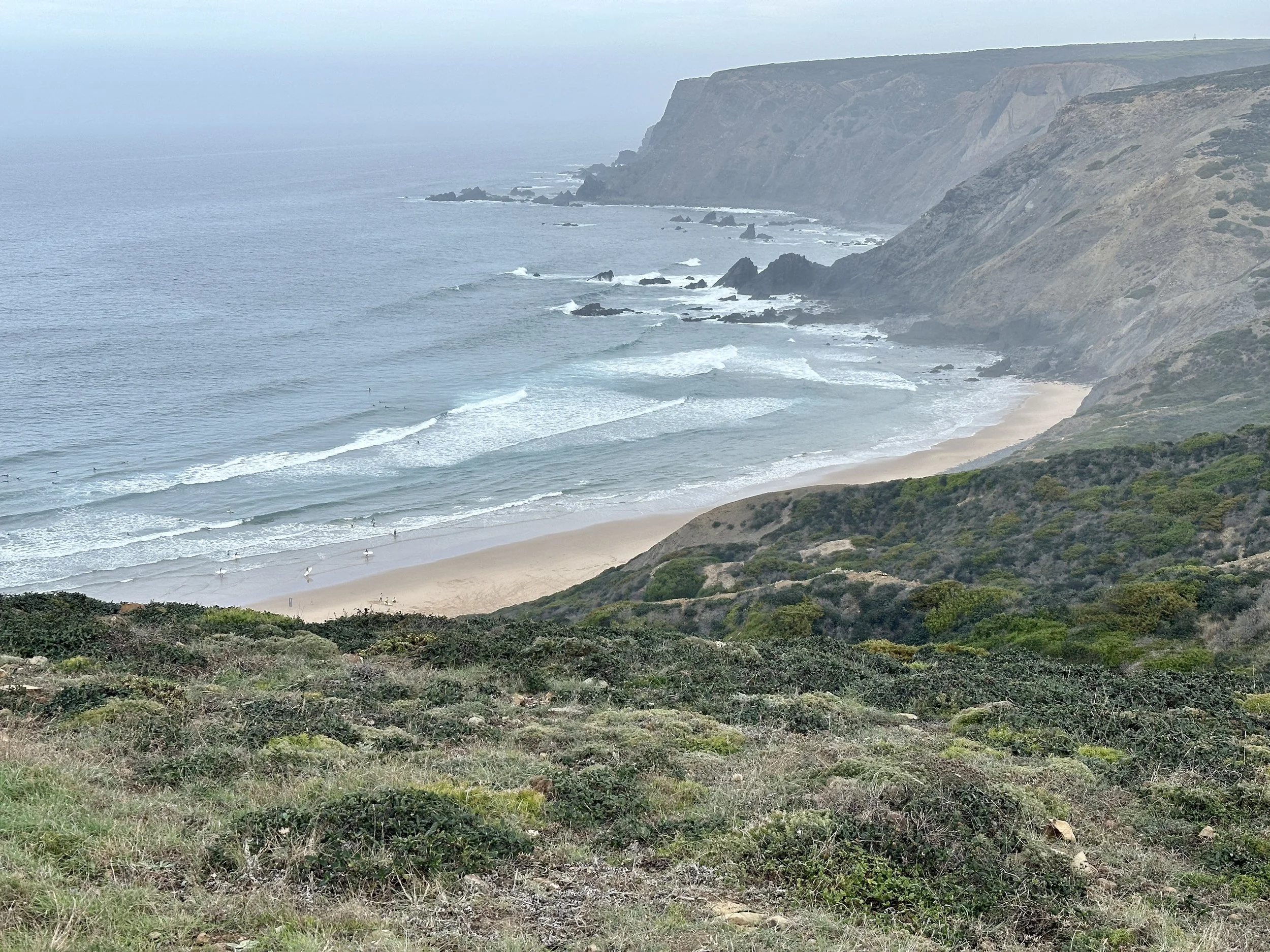
I’m still on the lookout for particular rocks to bring home for my mom. I see an unusual orange-red pebble with what looks like large quartz formations and grab it. It’s a discarded piece of chorizo.
As we’re finishing up another small group of hikers approaches. The one in the lead says ‘excuse me, sorry, we had this place booked?’ The joke lands 20% funny and 80%... weird? We’re a good way off path and there’s nothing special about where we stopped. They would have had to specifically detour to our generic patch of gravel… for the sake of that joke? Which in turn kind of makes it not a joke? I’m probably overthinking this.
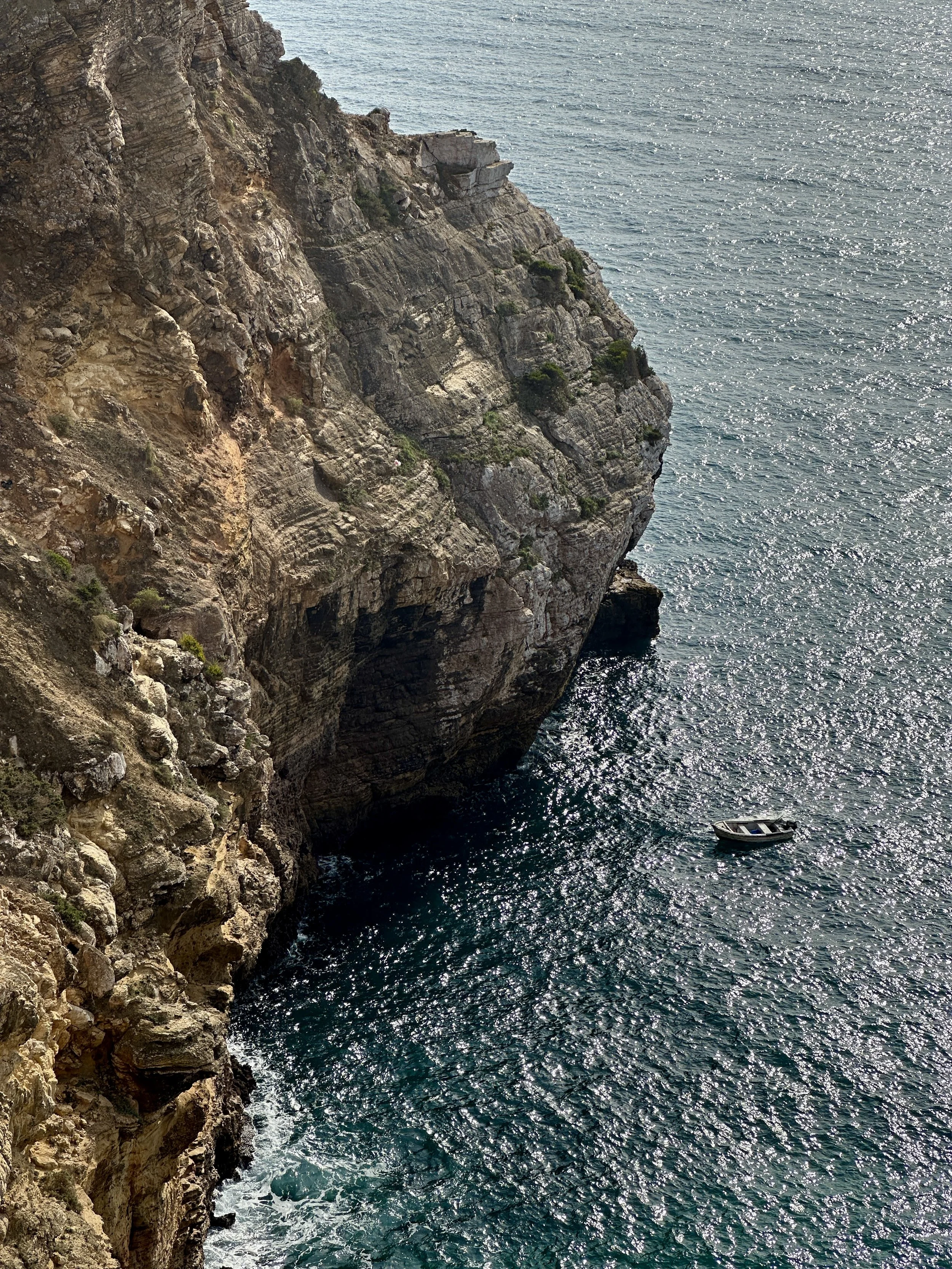
We’re now heading for a significant milestone: Cabo de Sao Vicente, the southwestern-most point on the Portuguese coast. As such we’re expected to take a breather there and admire our accomplishment. There’s even a lighthouse!
But we’ve been debating it. We still have a long route on the other side of that lighthouse to our destination in Sagres. And it would mean a significant detour out to the point when we could just cut across it. Are the sea cliffs there justifiably more awe-inspiring than the ones we’ve been seeing for days? Is the view of the open Atlantic open-er?
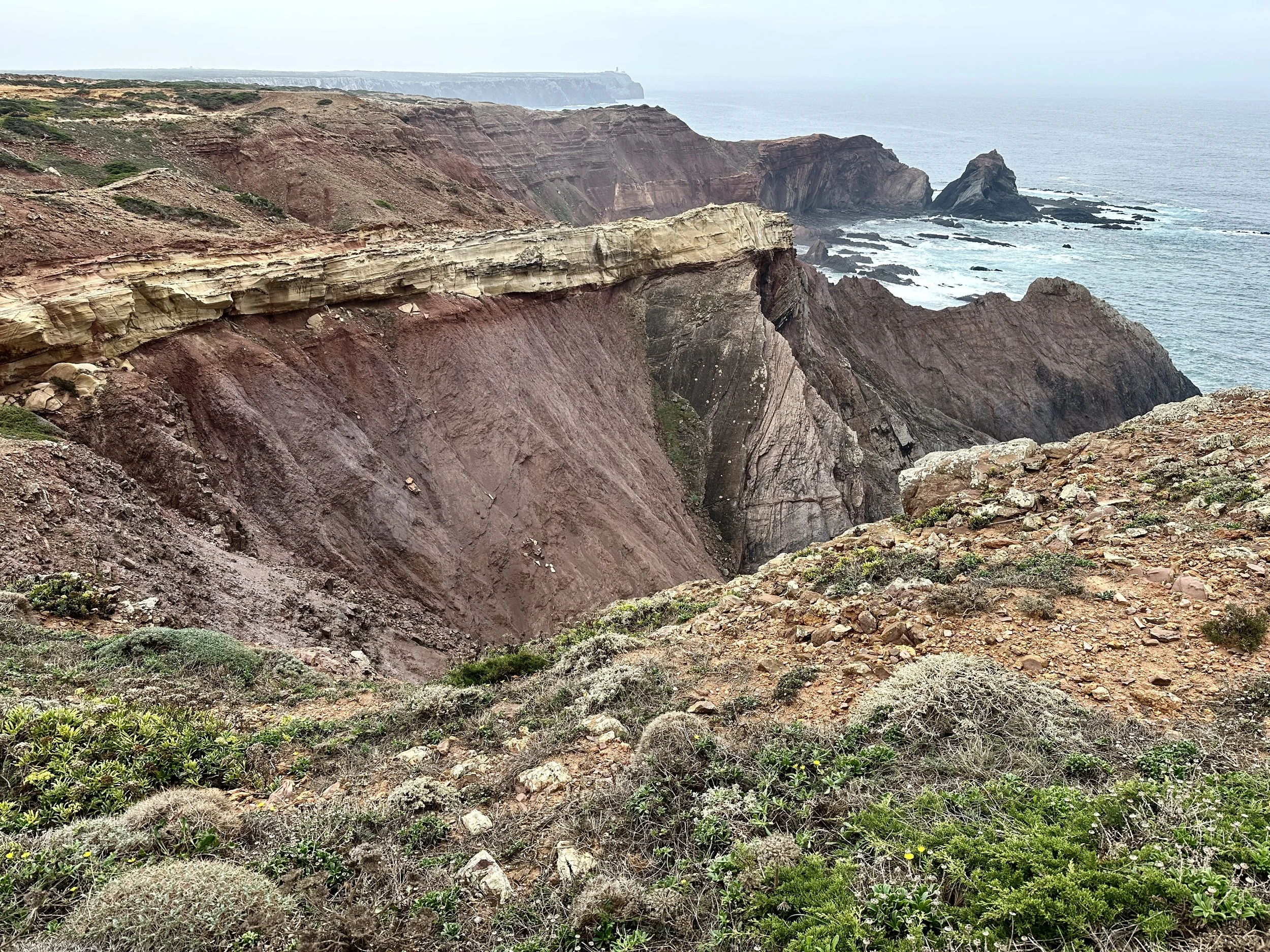
We’ll never know. We skip. Seeing the road stretch away down to the lighthouse seals the deal. Especially when, in the other direction, is what looks like (and proves to be) a perfect little cafe in the shade.
We take a lazy drink and browse a vast collection of tchotchkes at the attached souvenir shop. I actually see a few of those tchotchkes that I would like to bring home for friends and family, but I gamble that they are the same tchotchkes that will be available in any souvenir shop in Lisbon on my way back, and that way I won’t have to carry them.
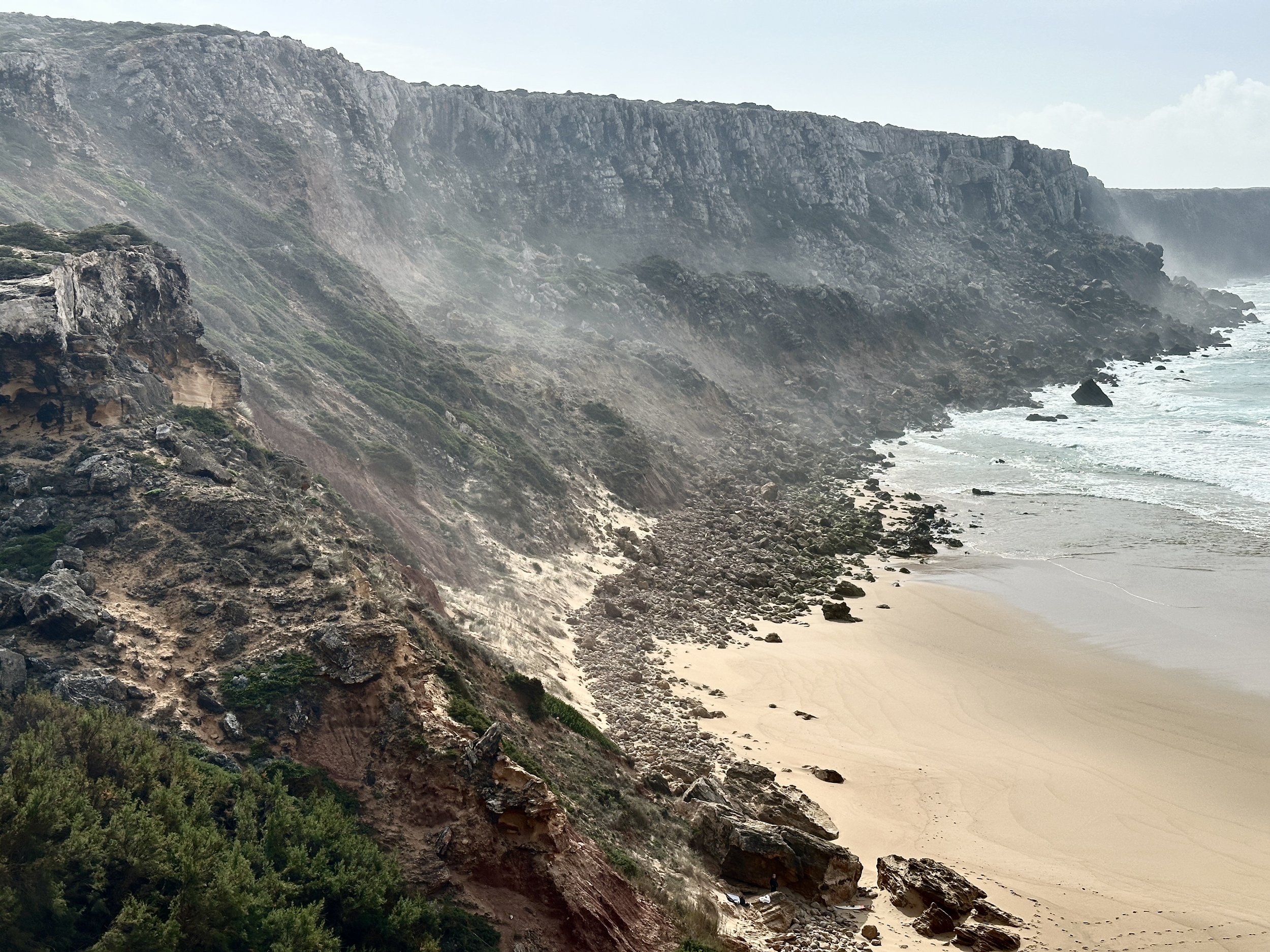
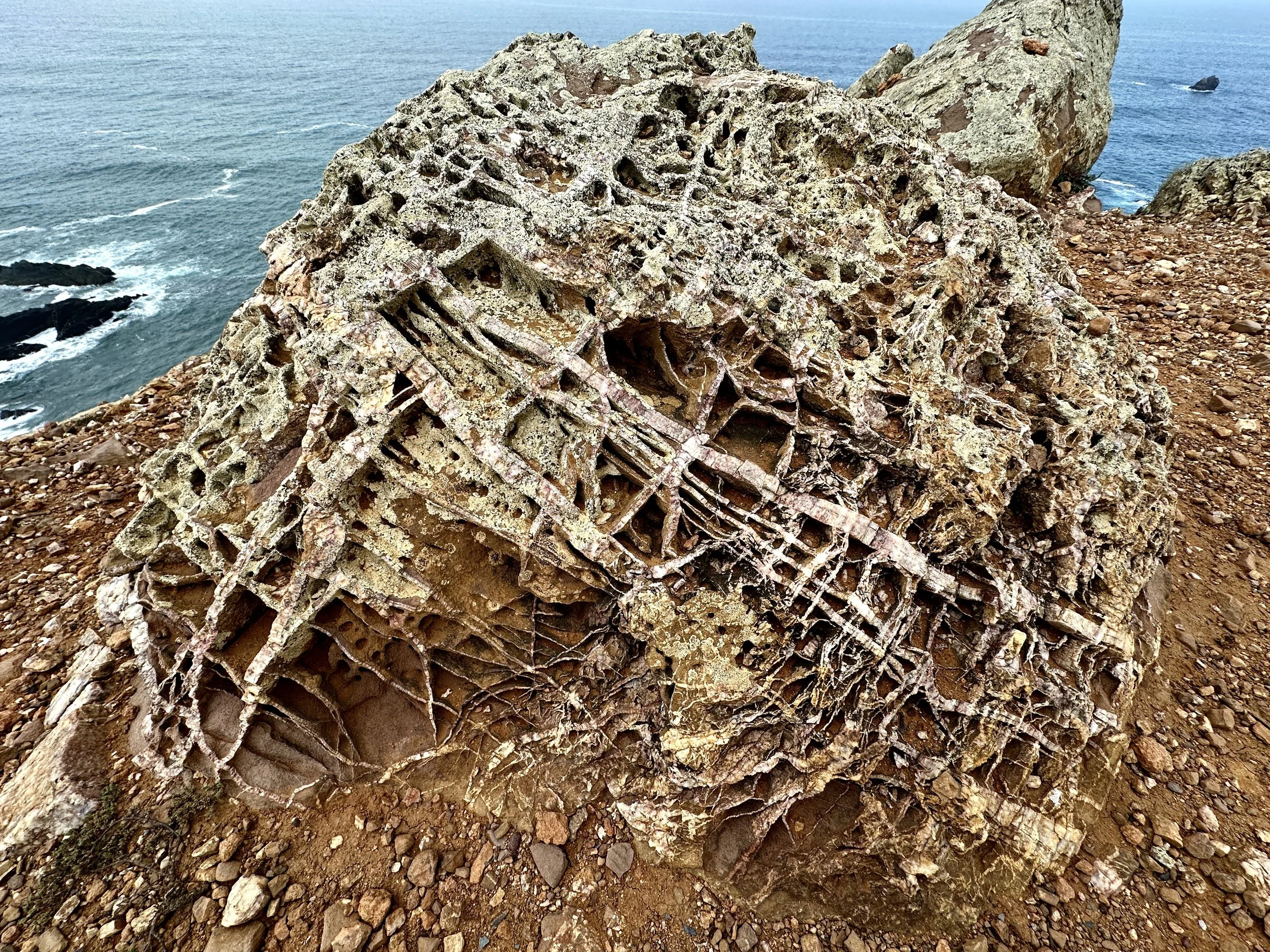
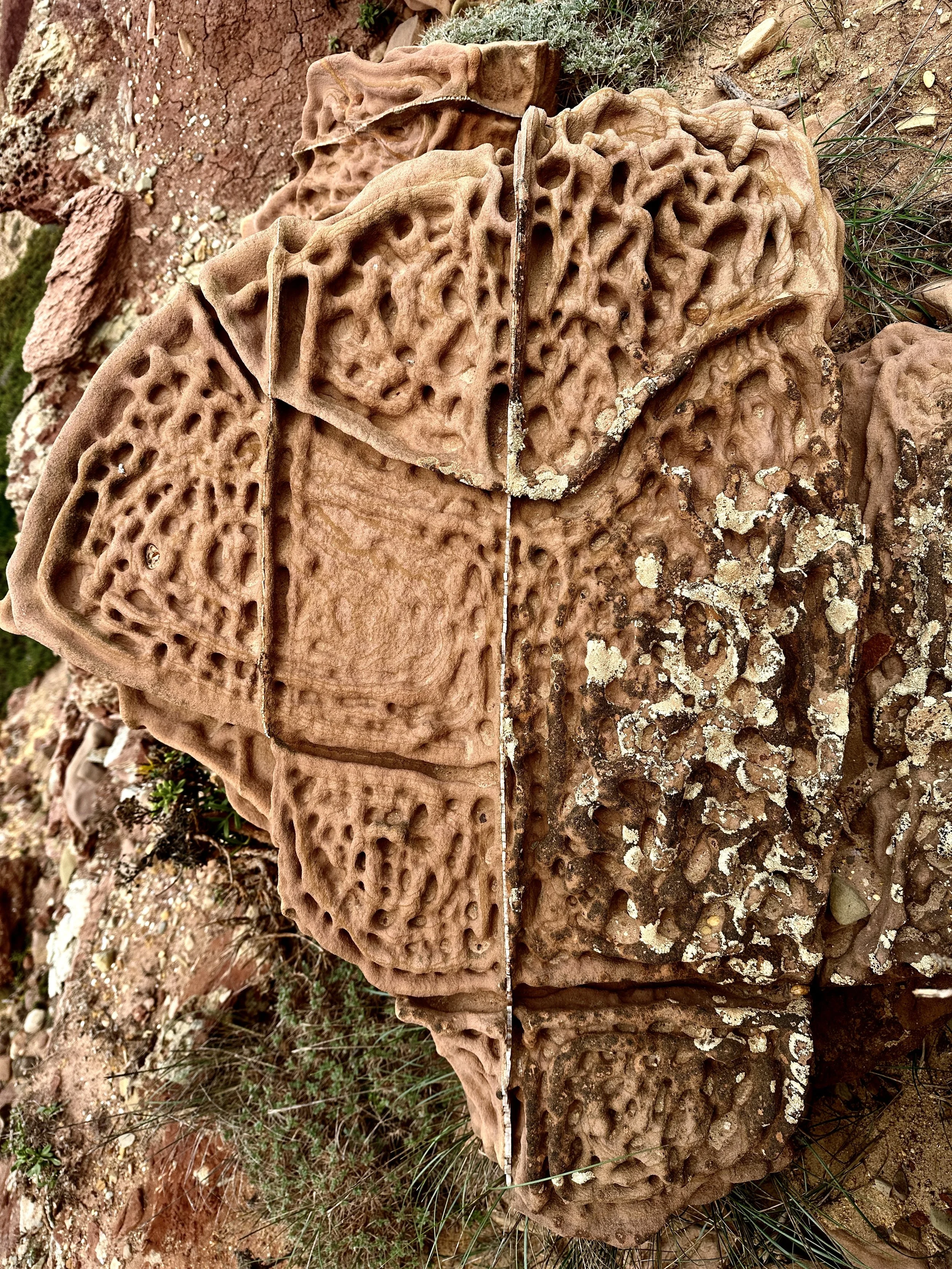
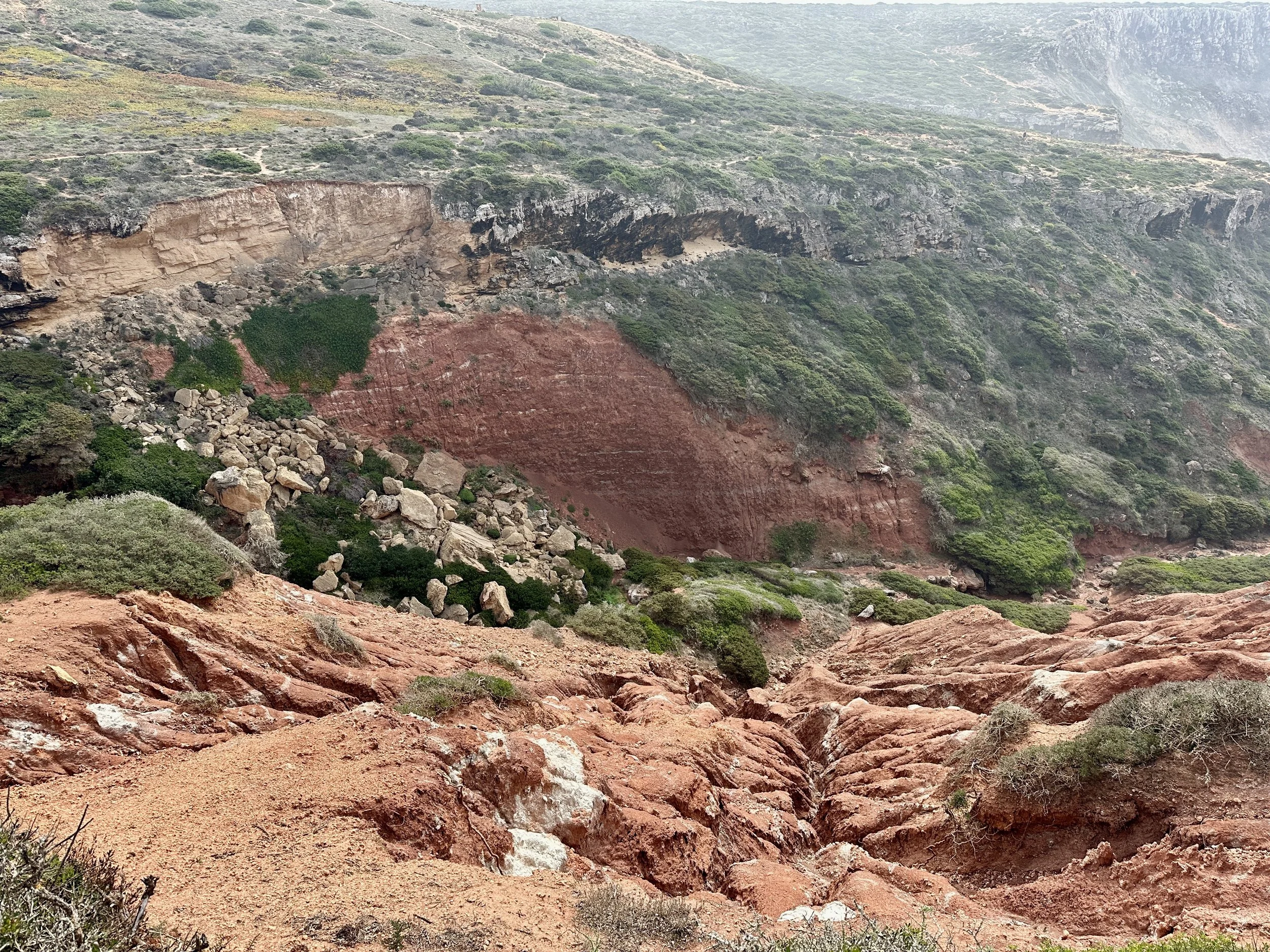
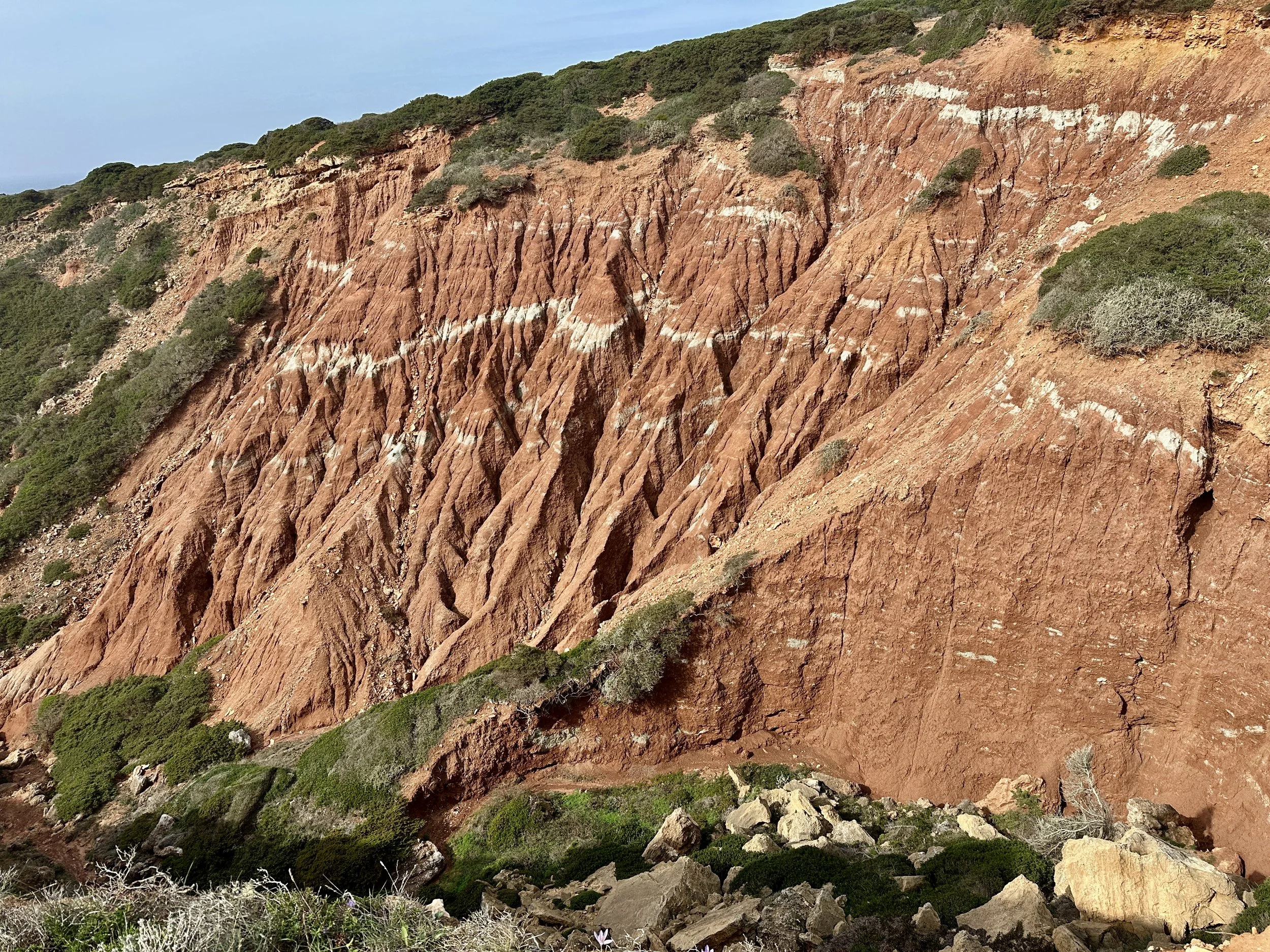
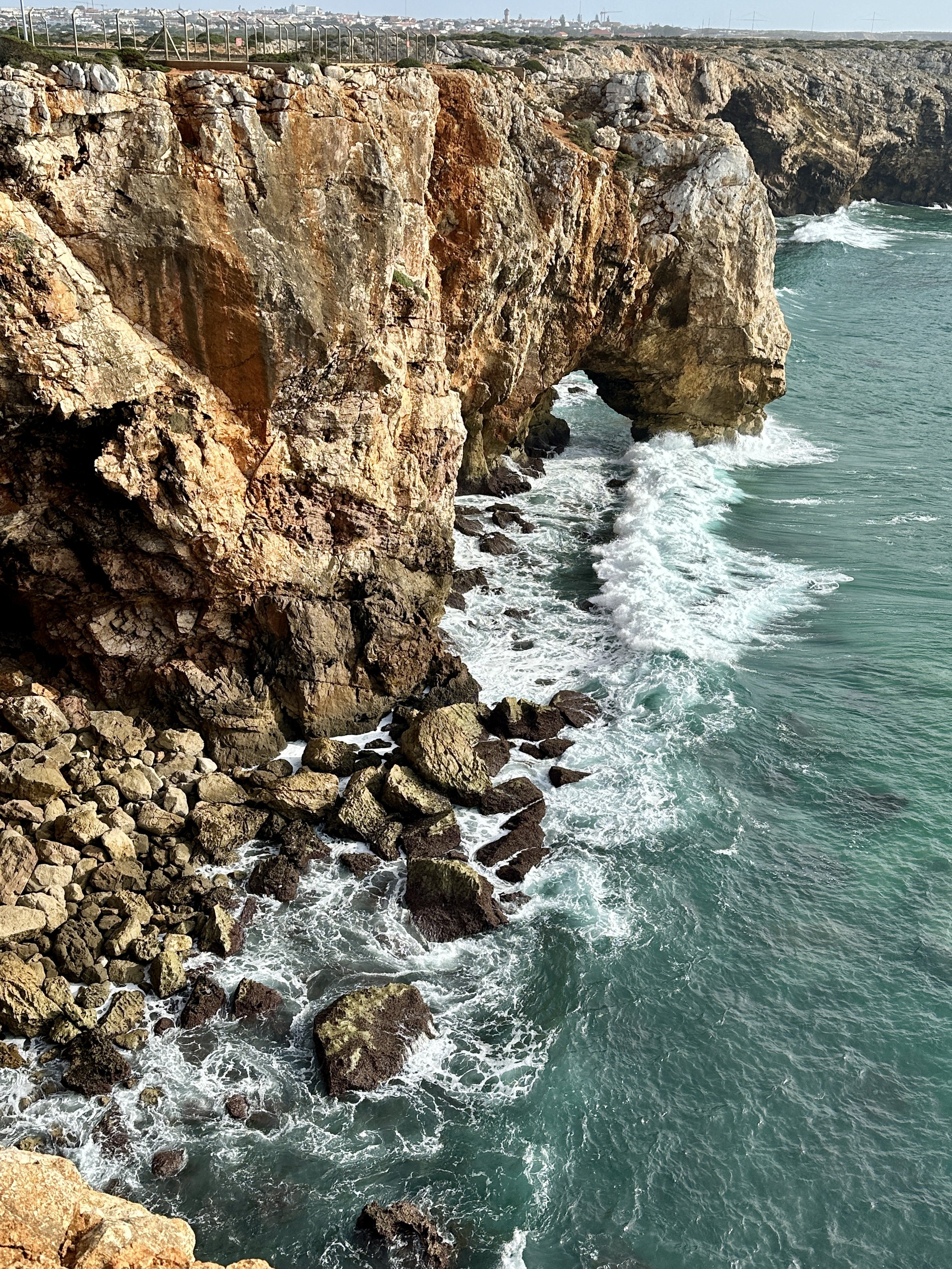
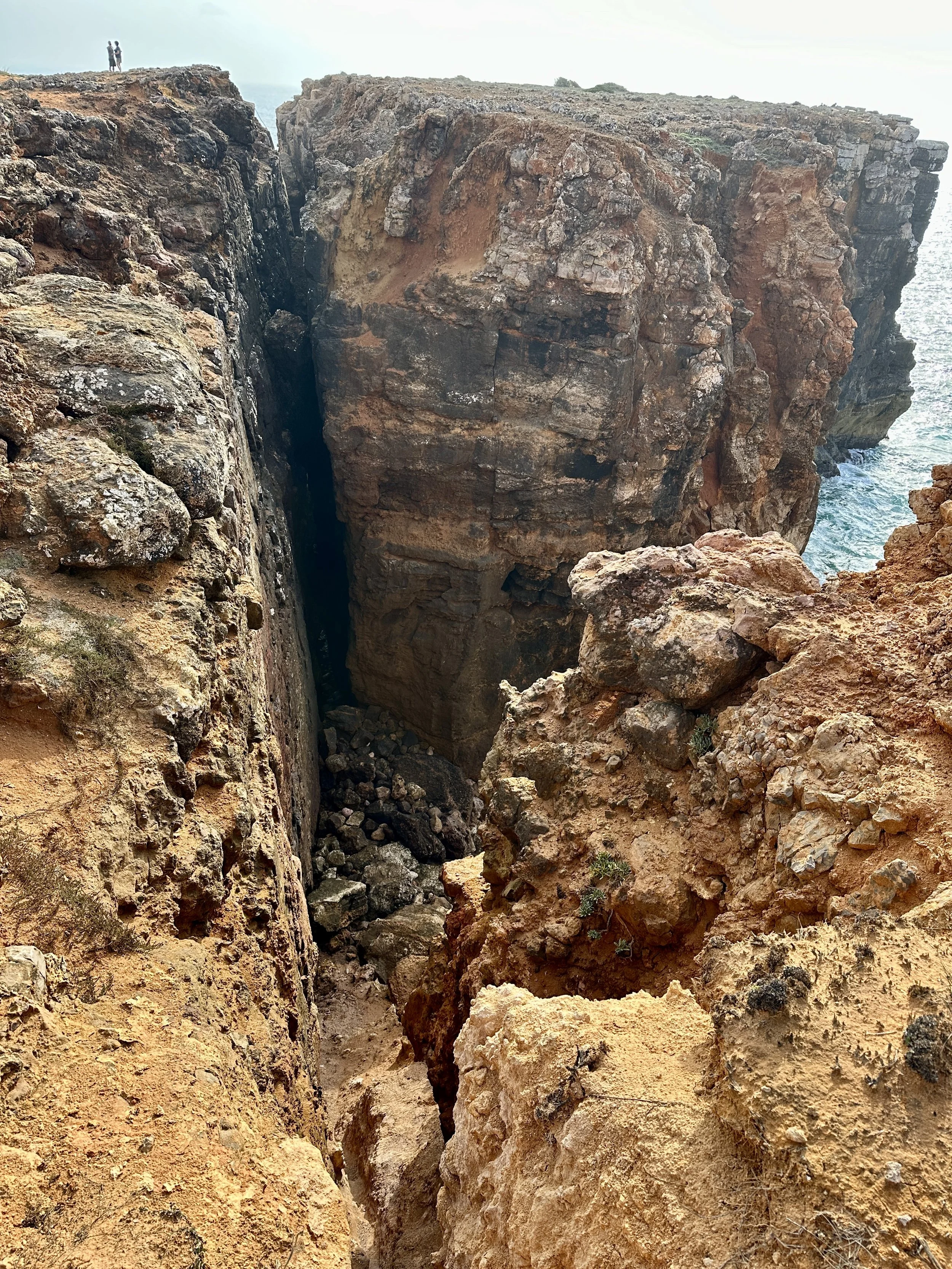
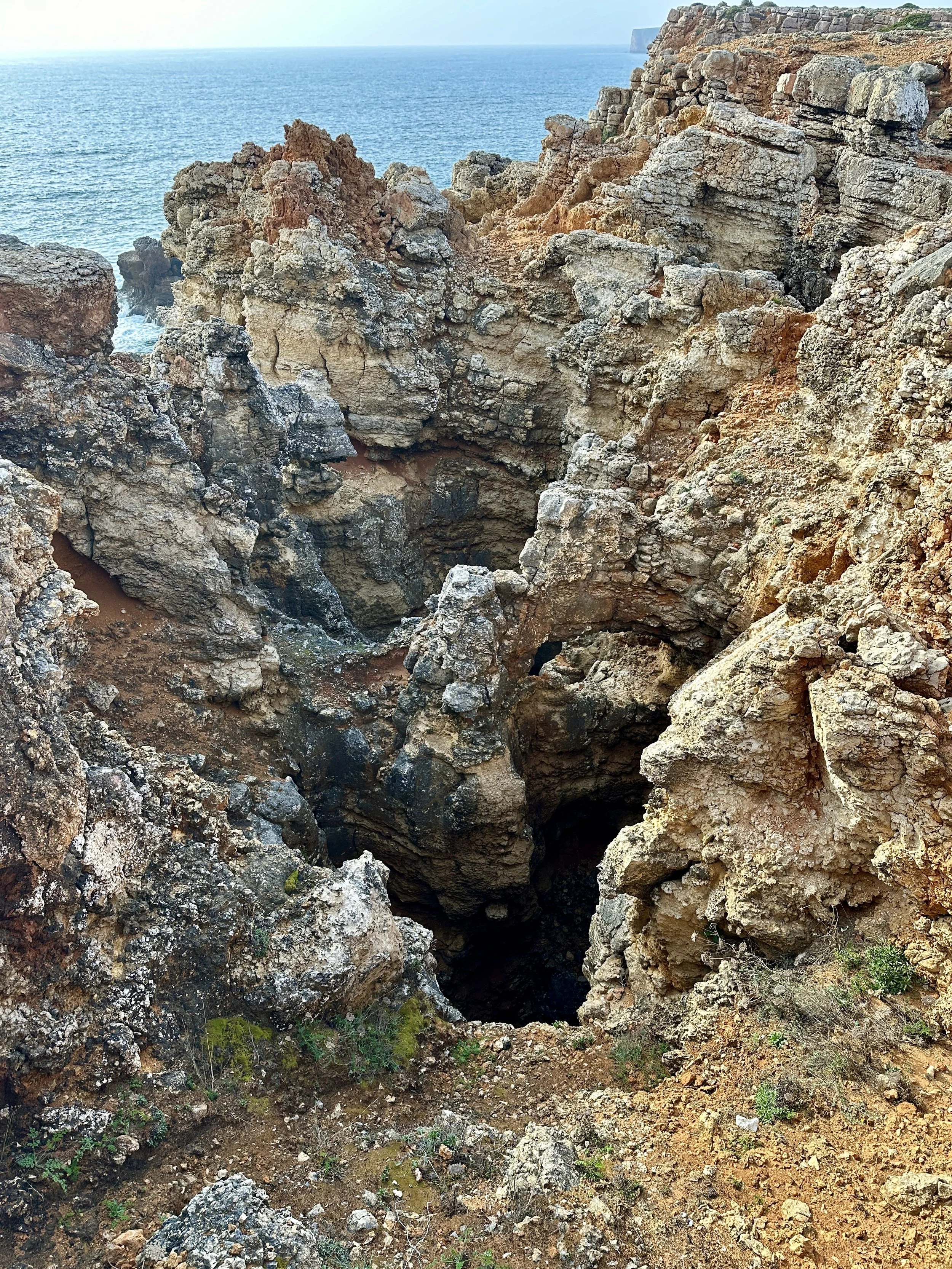
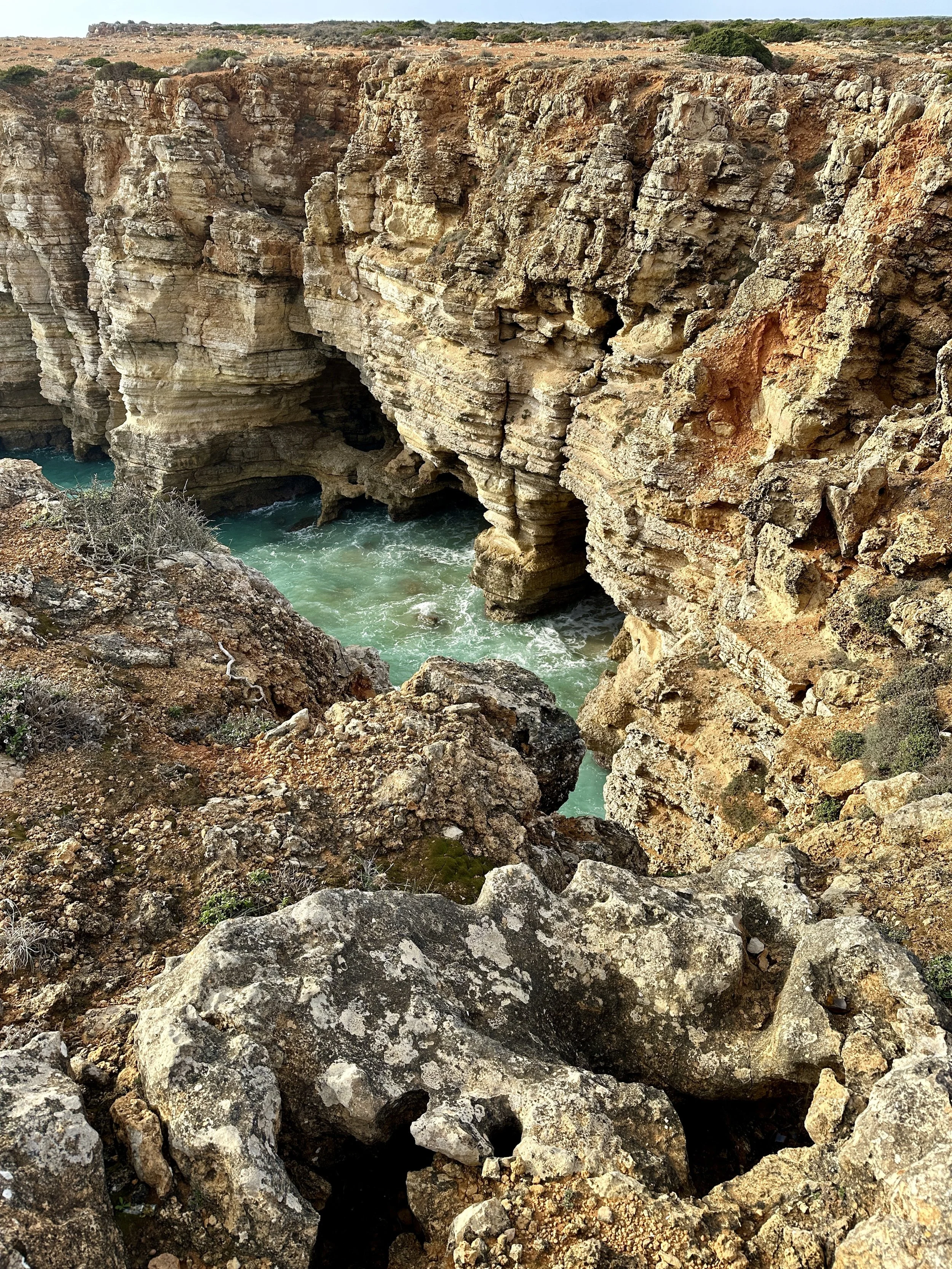
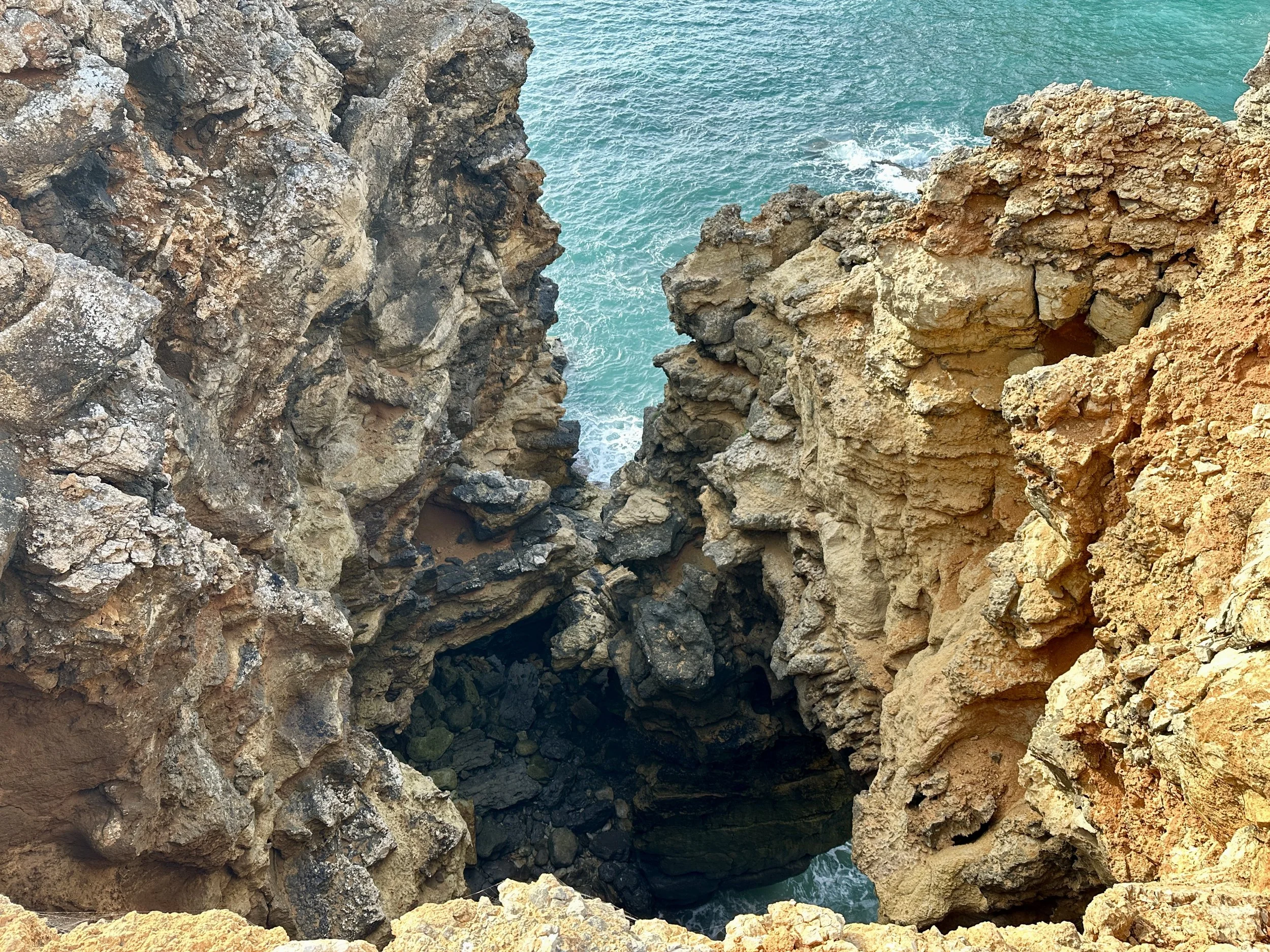
Back out to the coast after our break, and now heading southeast toward Sagres, the geology pulls another fast one on us. It’s now very granular sand and crumbly orange rock, turning the cliffs into eroded mazes of holes, caves and crevasses instead of the monoliths we’re used to.
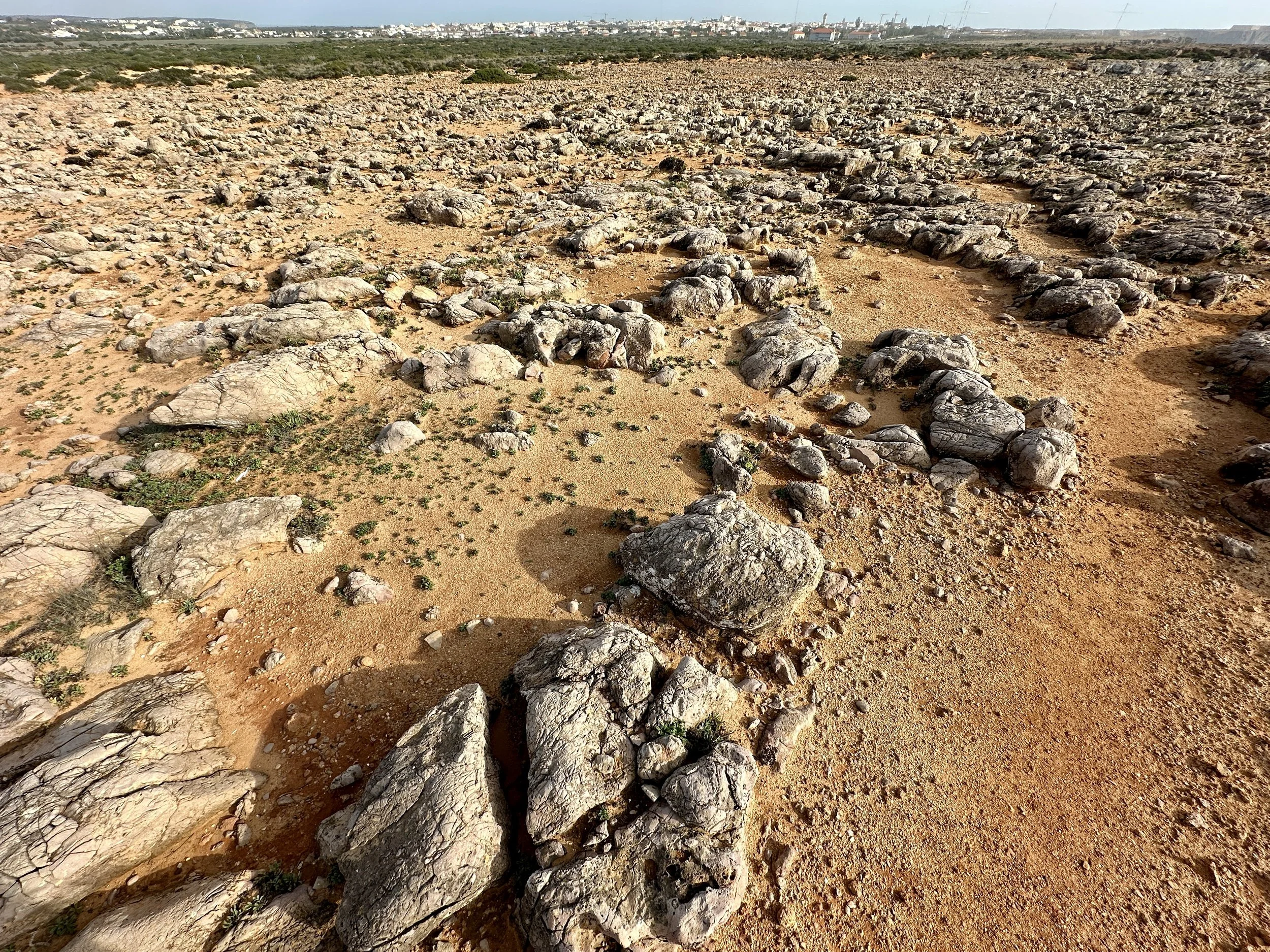
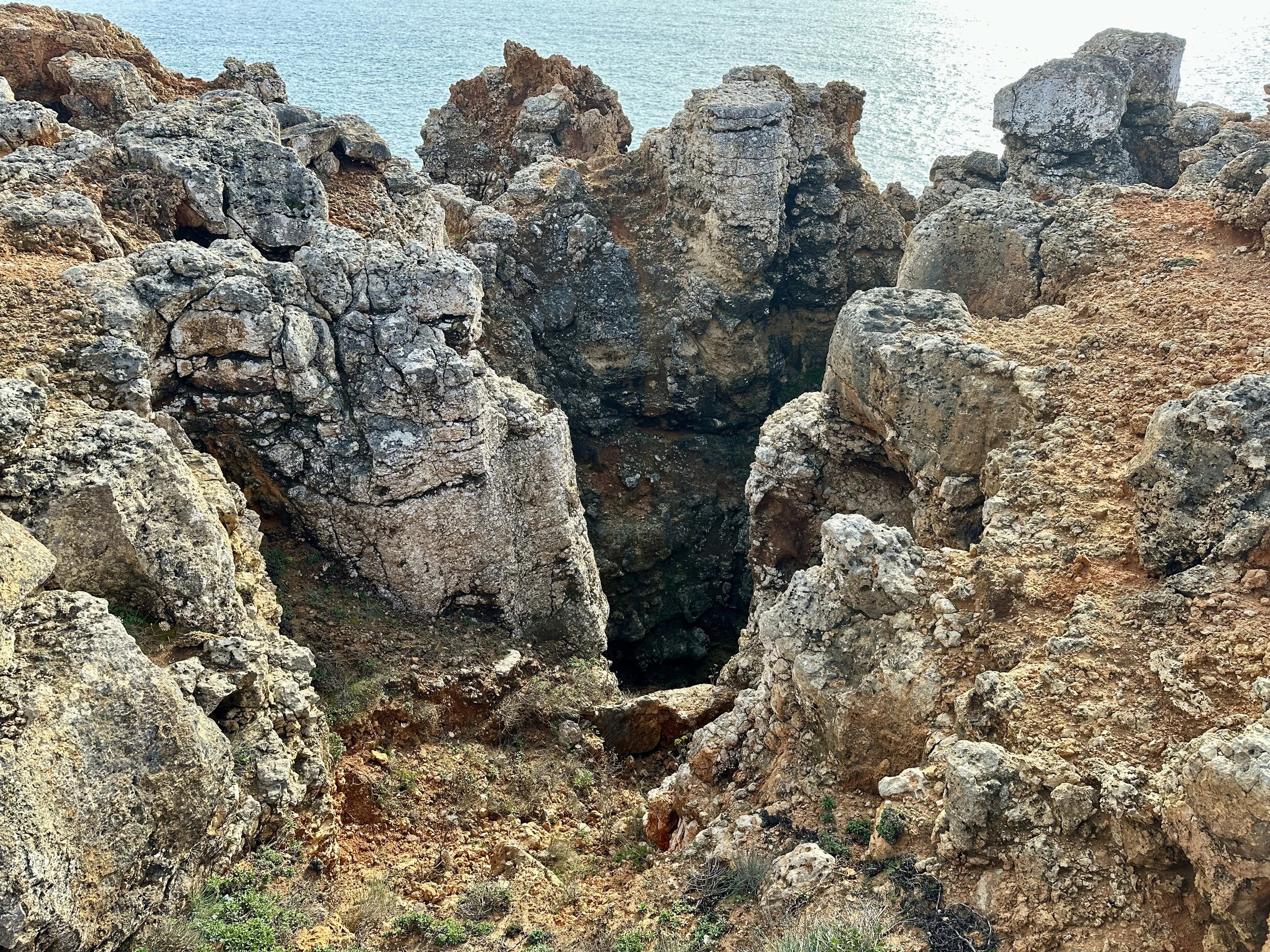
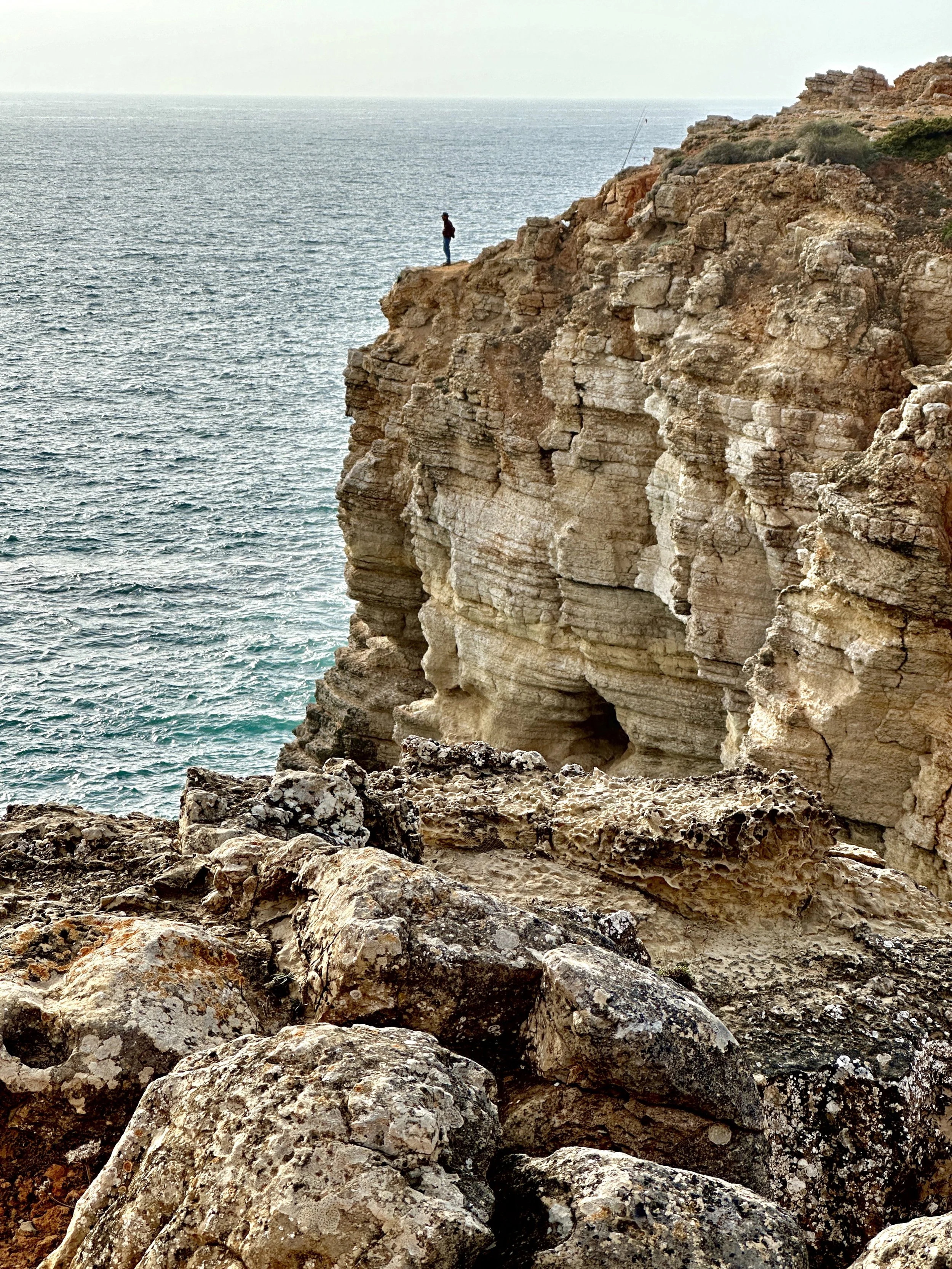
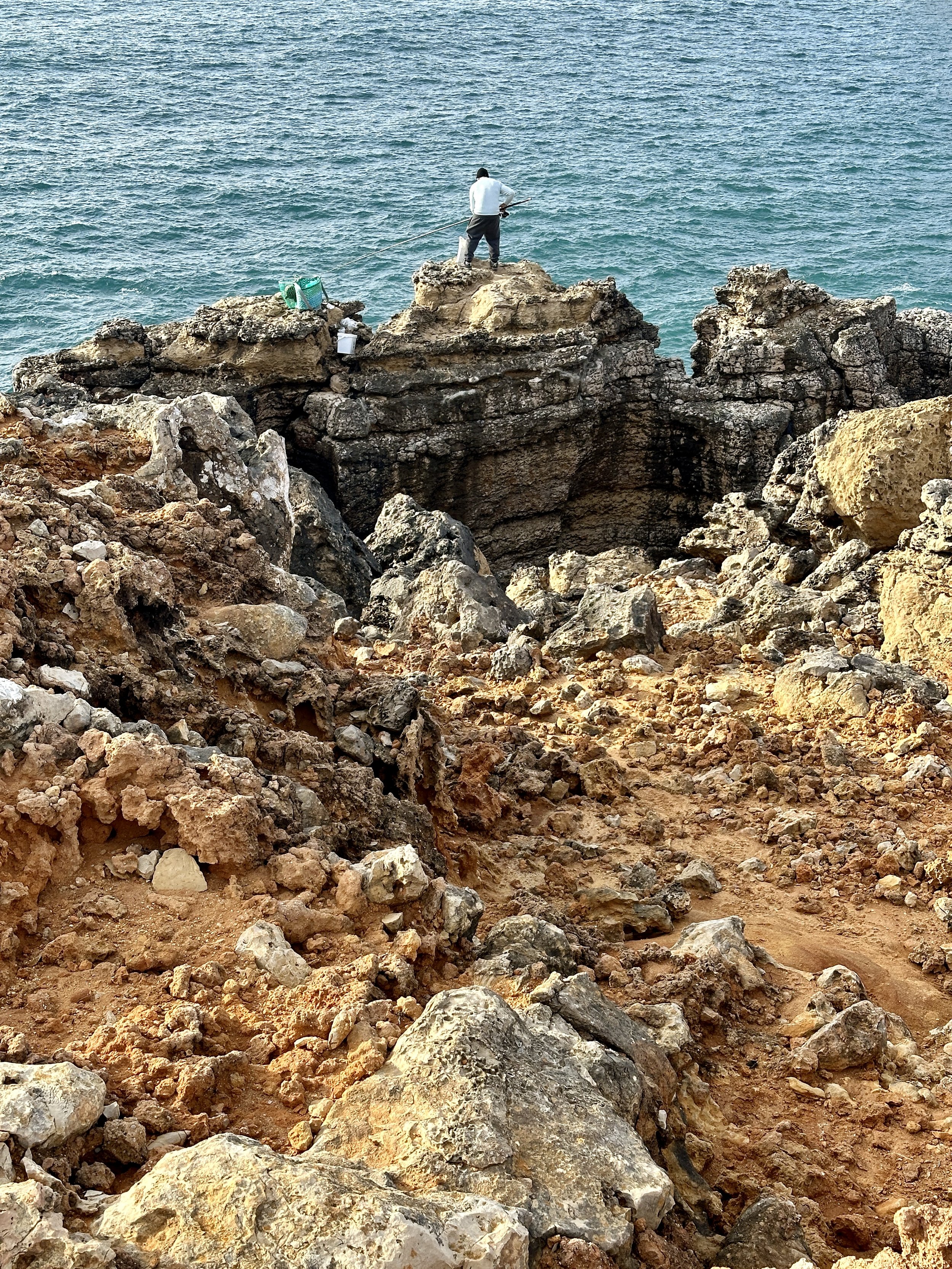
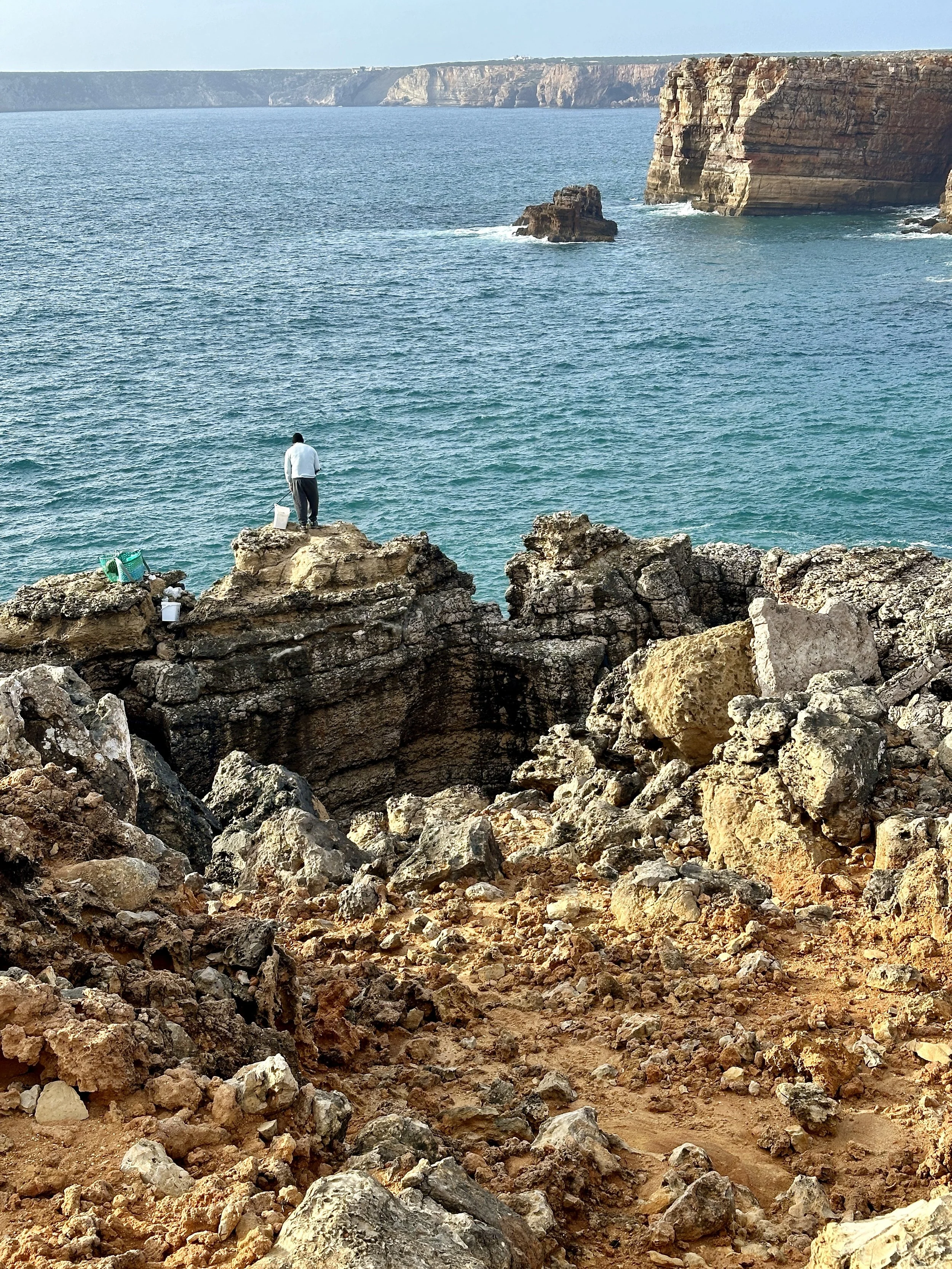
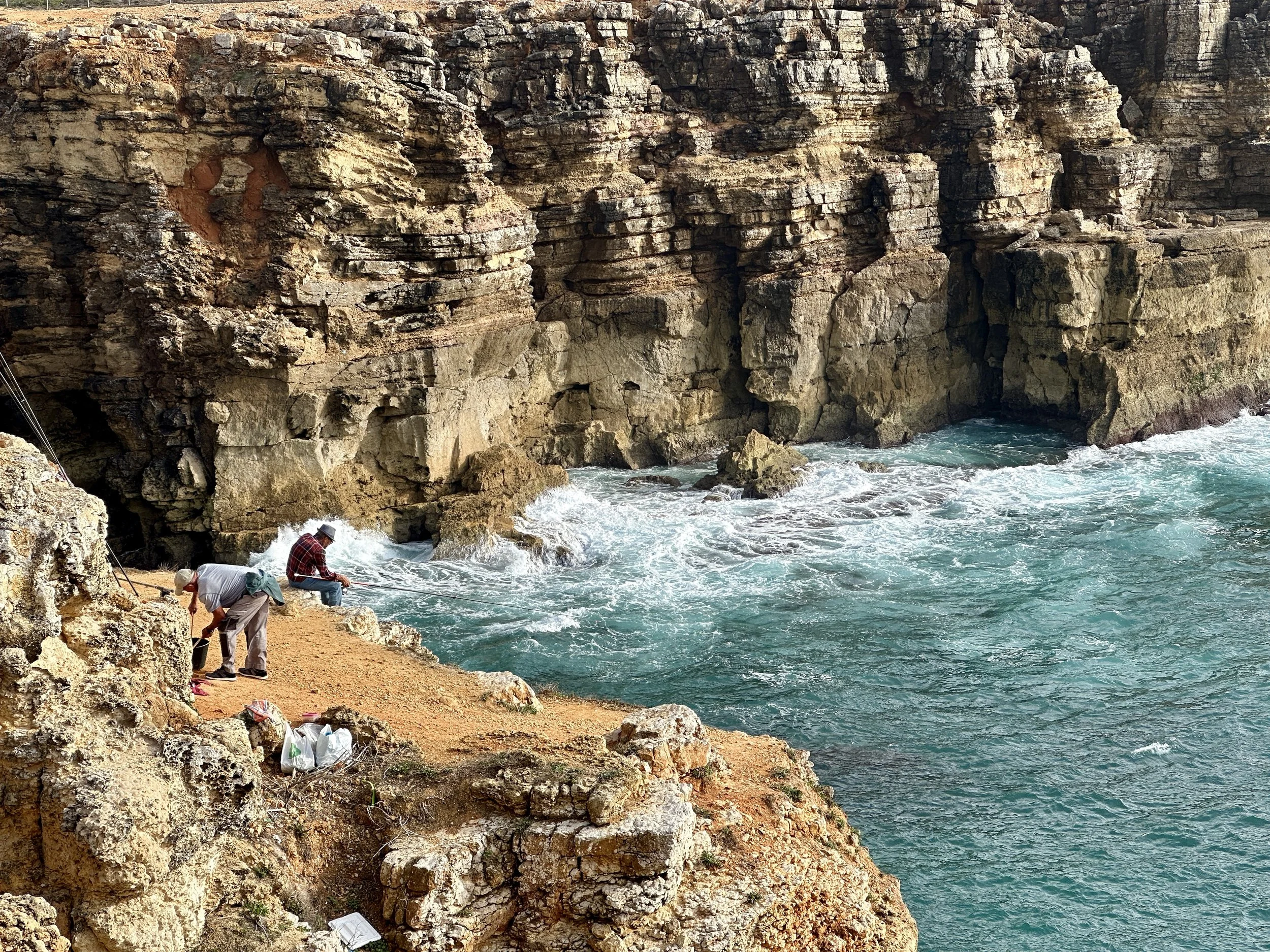
Approaching the outskirts of Sagres we also start to see fishermen braving those cliffs, balancing on pinnacles as they dangle 30-metre lines into the churn below.
CLIFF FISHING IN PORTUGAL
Unsurprisingly the tradition of clifftop fishing goes back generations. Casting from the pinnacles lets them reach deeper and choppier waters where bigger, more valuable bass, mullet, mackerel, sole and bream are hanging out.
But, obviously, it comes with risk. Some fishermen have to clamber down to their preferred spots, or get there with the help of ropes they’ve tied to their parked cars. And the clifftop spots themselves are inherently dangerous - unstable rock, careless footing, or a surprise gust of wind. In 2012, for example, cliff fishing resulted in 5 deaths and 3 serious injuries.
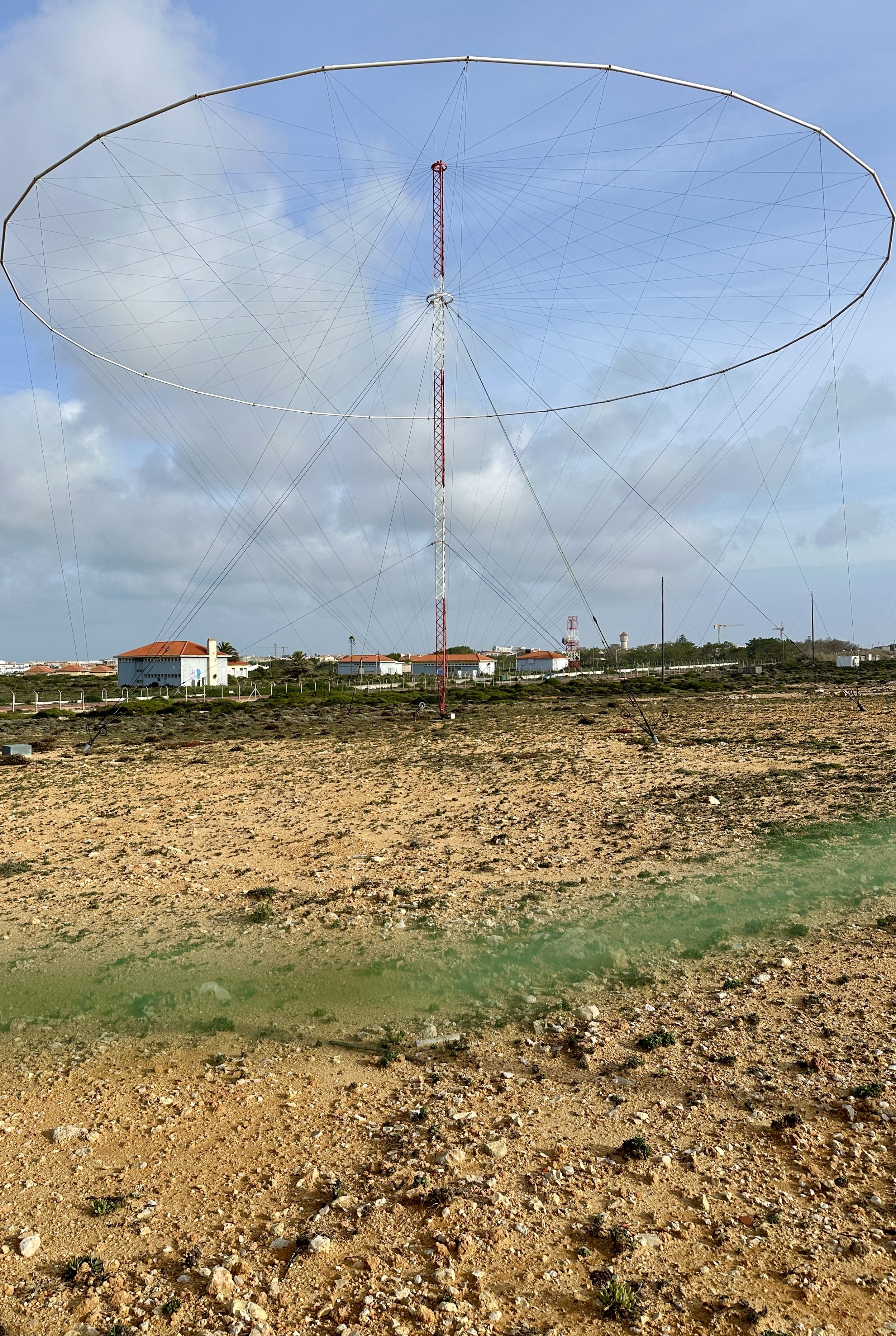
Opposite them are fenced off military areas with vast fields of communication towers and lines. It feels almost transgressive skirting so close to them, but the trail markers reassure us we (probably) won’t be shot.
Finally the path abandons the cliffs for the outskirt roads of Sagres. To celebrate we stop at the first gelato shop we see where I enjoy a chocolate passionfruit gelato more than I expect. Then we cut all the way across town to our hotel on the far west side.
It’s a gorgeous suite, and feels overindulgent - the full kitchen and living room aren’t going to see much use. But Antoaneta tries her best by hanging out there decompressing for a while.
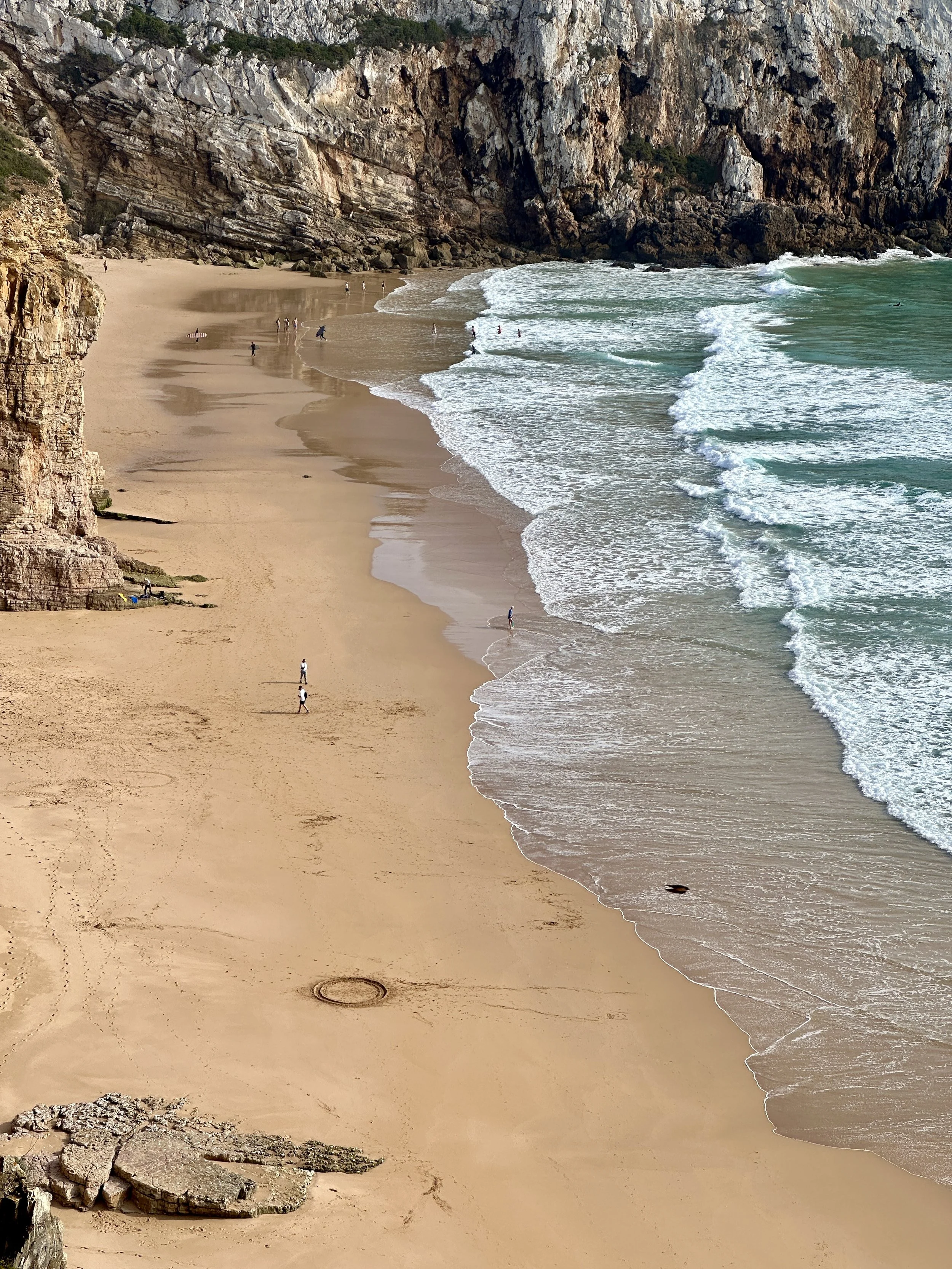
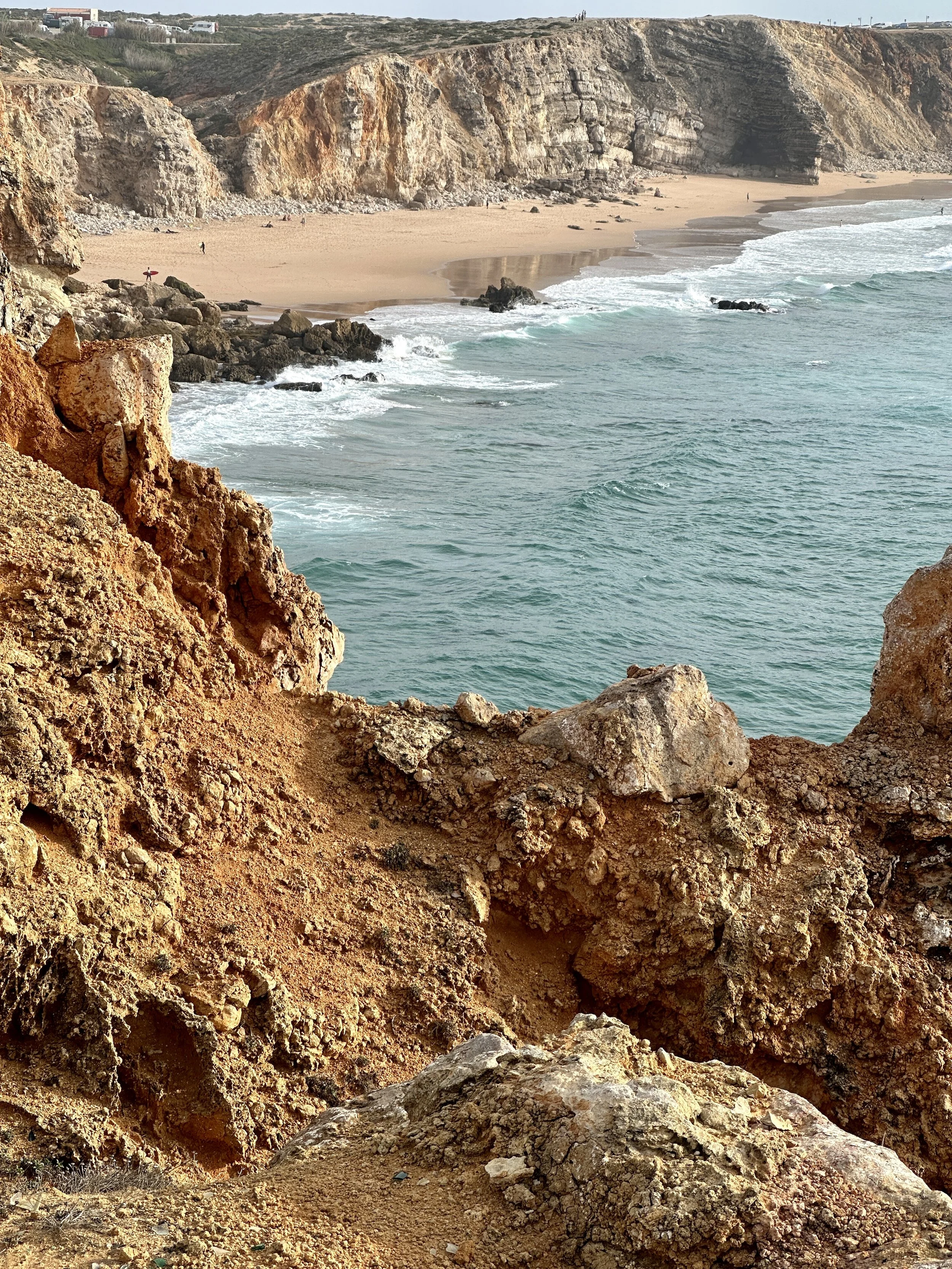
I, meanwhile, have a mission. When I mentioned I was hiking in Portugal, the editor I’m working with at my day job asked if by any chance I’d be getting as far as Sagres. I would! He said that he spent a delirious weekend at the beach there once hanging out with the surfers, so I swore (more to myself than him) that if I had time I would go down to that beach and take him a photo.
This is not a difficult mission - the beach is smack in the centre of town, very accessible. But I manage to accidentally introduce a little danger anyhow.
The way to the beach from our hotel is to follow a road arcing in a wide S shape to a parking lot just above it. Not being in a car, this seems silly. What’s more, there’s a break in the fence along the side of that road and - yes! - a clear dirt trail.
But once I’m on it, it’s a weirdly labyrinthine network of incredibly thin paths on sharp inclines, none of which seem to directly point to the beach. So I wind down them with a hand braced on the cliffside hoping that aiming in the right general direction will get me there. On the way it occurs to me: this, the most dangerous bit in seven days of hiking, is in the middle of a town, with cars clearly visible passing fifty meters away, all to save me maybe, generously, three minutes.
My choice of path eventually spits me out into a construction site but at least it’s beach-adjacent. So I sheepishly wind my way between bags of concrete and trucks to hit the sand. I guess the ordeal made the ‘mission’ label on this little jaunt a bit more defensible, at least.
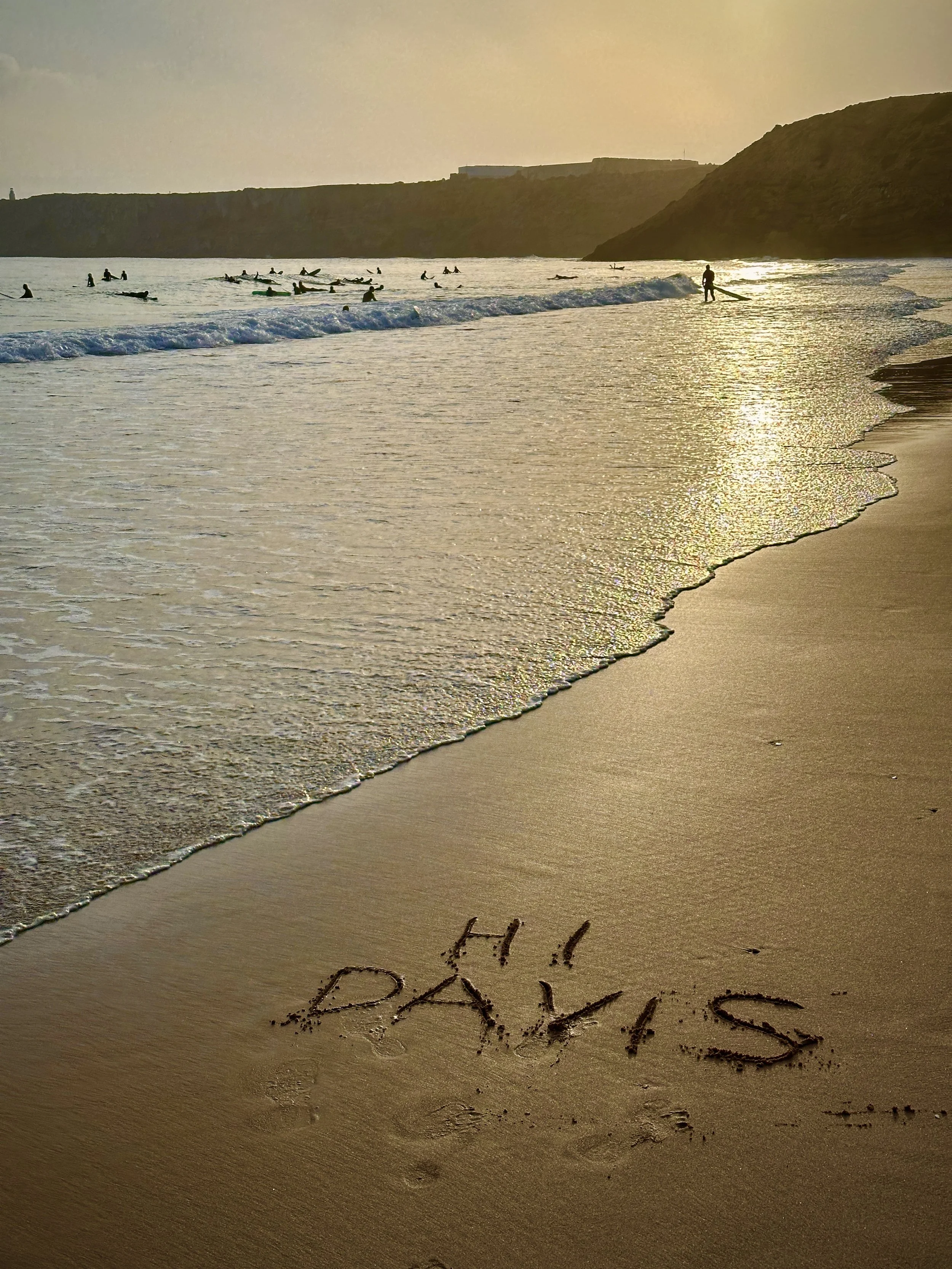
The beach seems populated by more novice surfers in classes which makes them even more fun to watch. After doing a very slow circuit up and down and getting the picture I owed the editor, I sit on a rock outcrop and watch them as the sun goes down. I already feel the need to etch this in my memory while the etchin’s good. Tomorrow is our last hiking day.
I finally drag myself away from the idyll and back up to the hotel (via the road, this time…) where we do a quick turnaround to Sagres’ main drag of touristy restaurants.
We’re spoiled for choice. Too spoiled. We kick that can down the road by stopping first for a drink at Dromedary, a combo eatery / microbrewery. I get a flight, knowing nothing about Portuguese beer. I still know nothing except that every beer in that flight was fantastic.
We’ve come to the can again. So we opt for a tapas place two doors down, because tapas is like not choosing. In which case we made a really good not-choice, because the tapas ends up being one of, if not the, best meals of the trip. It’s an unassuming place, lost in the competitive neon and sandwich boards of the strip, but every single thing we order is superb in its own unique way. We’re so taken with it we even go for dessert (crepes) just to extend the sampling.
But all good tapas must come to an end, and we need a decent sleep. Tomorrow promises to be the most arduous and longest stage of the hike - and, fittingly, our last.